
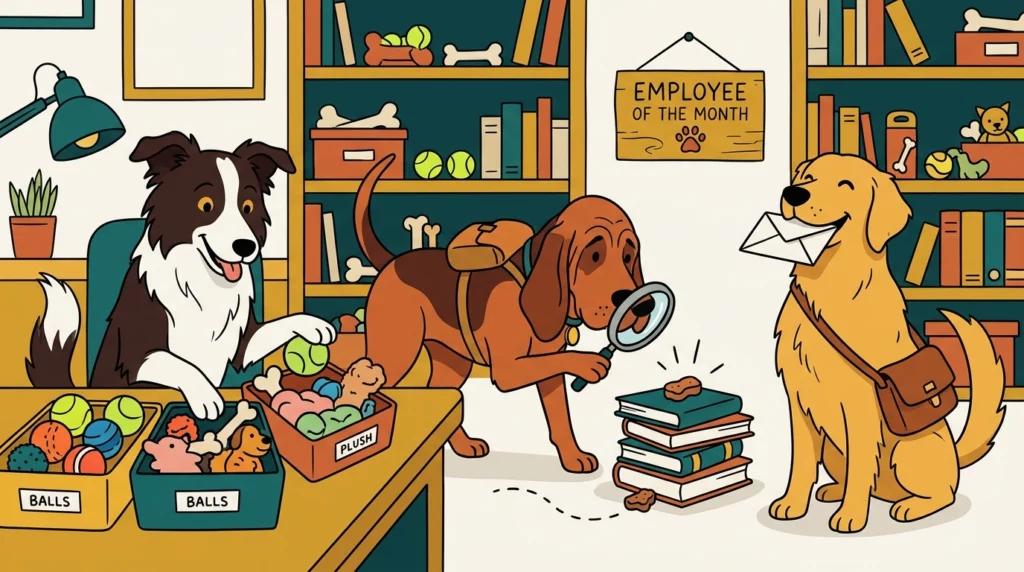
Hello, discerning humans and distinguished canine companions. Niki here. As a five-and-a-half-year-old English Setter, I pride myself on maintaining the absolute highest standards of behavior, intellectual engagement, and couch-nesting aesthetics. While my housemate Blu (a lovely but chaotic Griffon rescue) believes his primary job is to alarmingly bark at drifting leaves, I prefer tasks with a bit more… cognitive substance.
Many of our humans don’t realize that dogs—especially those of us from working, herding, sporting, or hound backgrounds—are genetically wired to perform specific tasks. When we don’t have a designated task, we get creative. And by “creative,” I mean we might decide our new job is to systematically deconstruct the living room rug. If your dog is exhibiting what you call ‘problem behaviors,’ they might actually just be seeking employment.
Let’s dive into why your pup needs a career path, the science behind canine mental stimulation, and a few paw-approved jobs you can assign them today.
The Psychology of the Working Canine

To understand your dog, you must understand their history. For centuries, dogs were bred to work alongside humans. Whether it was herding sheep, retrieving ducks, guarding property, or pulling sleds, we had a clear daily purpose. Today, most of us are “unemployed,” left to lounge on orthopedic beds all day while our humans stare at glowing rectangles.
While a life of leisure sounds luxurious, it often leads to frustration. According to The Tucson Dog, working breeds possess an innate drive to solve problems and stay active. If this drive isn’t channeled constructively, it manifests as anxiety, excessive barking, digging, or chewing.
Furthermore, scientific research published on NIH.gov highlights that cognitive enrichment is crucial for animal welfare. Providing dogs with mental challenges doesn’t just tire them out; it actively reduces stress and improves their overall behavioral health. It’s not just about physical exhaustion—it’s about mental satisfaction.
What Does “Giving Your Dog a Job” Actually Mean?
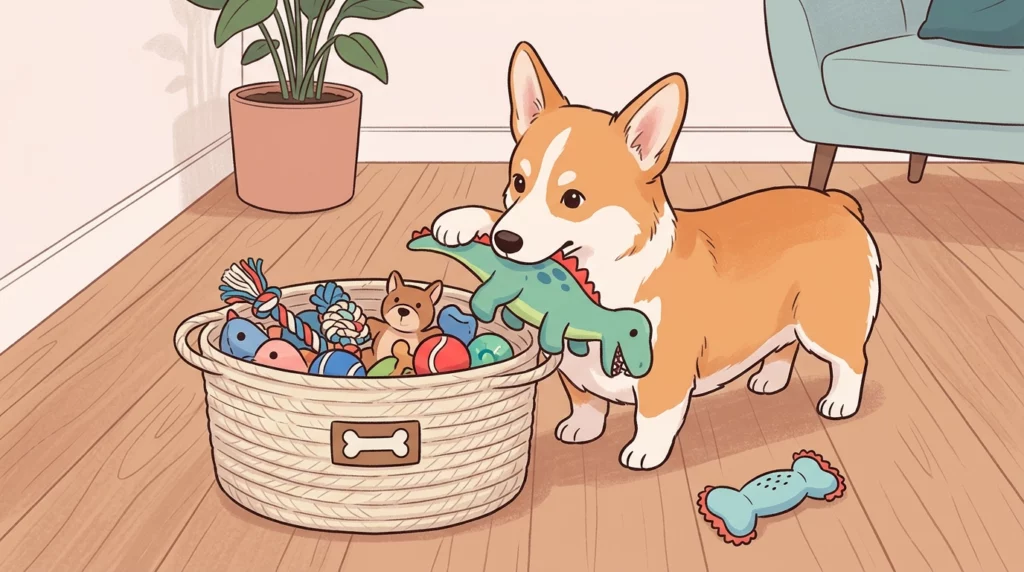
Before you print out a tiny resume for your golden retriever, let me clarify: giving your dog a job doesn’t mean sending them out to earn a paycheck (though paying for my own premium treats would be nice).
As explained by Hollindale Working Dogs, giving a dog a job means providing structured activities that engage their brain, tap into their natural breed instincts, and require focus and problem-solving. This shifts their mindset from chaotic self-entertainment to cooperative focus.
As the experts at Animal Talk point out, when we redirect these powerful instincts into acceptable outlets, we don’t just stop the bad behaviors; we build a deeper, more harmonious bond between dog and human.
5 Easy Jobs to Assign Your Dog Today
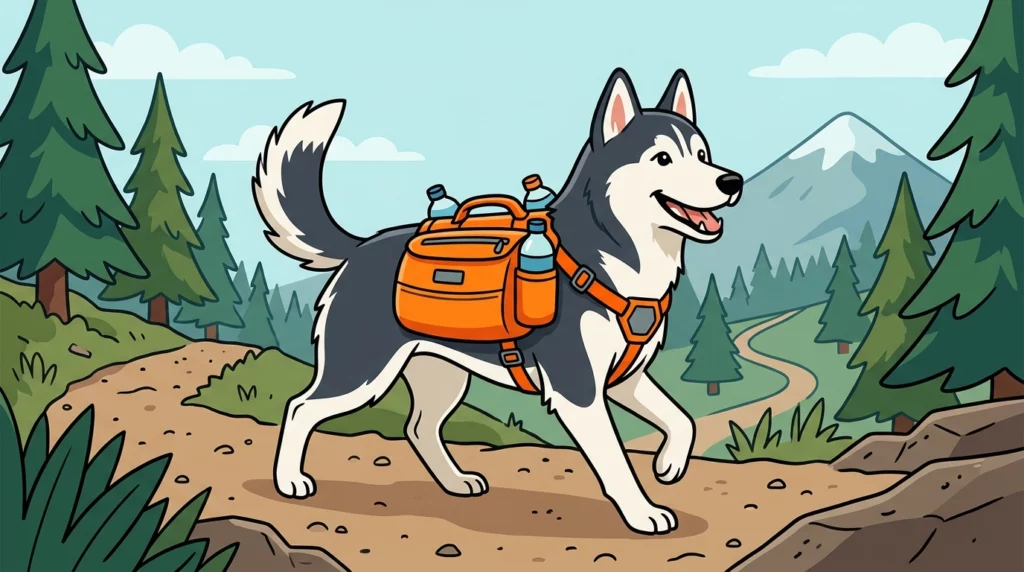
Ready to put your pup to work? Here are five structured, highly rewarding jobs you can easily set up at home, inspired by proven training techniques and real dog-owner communities like Reddit’s Dog Training forum.
1. The Toy Sorter (Great for Retrievers & Herding Breeds)
If your dog loves to pick things up, teach them to clean up after themselves. This is a classic job recommended by Reggie.com. You can train your dog to pick up their scattered toys and drop them into a designated basket on command.
Start by rewarding your dog for picking up a toy, then gradually guide them over to the basket, offering a high-value treat only when they drop it inside. Soon, they’ll view tidying up as a highly lucrative career.
2. The Scent Detective (Perfect for Setters, Hounds, & Pointers)
As a Setter, this is my absolute favorite. Our noses are incredibly powerful computers. You can put this sensory hardware to work by playing “Find It.”
Hide aromatic treats or a favorite toy around the house while your dog is in another room. Give a release cue like “Search!” and watch their tail wag as they methodically track down the scent. This mimics the natural hunting and tracking instincts in a safe, indoor environment.
3. The Professional Meal Puzzle Solver (Excellent for All Breeds)
Why serve dinner in a boring bowl when it can be an intellectual puzzle? According to the SPCA, mental stimulation during mealtime is one of the easiest ways to curb boredom.
Use stuffed puzzle toys, snuffle mats, or interactive dispensers. Forcing your dog to figure out how to extract their kibble mimics the natural foraging process. It slows down fast eaters and provides a satisfying mental workout.
4. The Backpack Carrier (Ideal for High-Energy Working Breeds)
Does your husky, German Shepherd, or Lab still have boundless energy even after a long walk? Give them a physical task by introducing a fitted dog backpack.
As suggested by Reggie.com, carrying a light, balanced weight (such as poop bags and water bottles) gives dogs a psychological sense of purpose. It makes them feel like they are on a mission, which naturally helps them focus on the walk rather than pulling or reacting to distractions.
5. The Obedience Champion (Best for Eager-to-Please Breeds)
A job can be as simple as practicing highly focused trick sequences. Experts at VCA Hospitals emphasize that using enrichment, predictable routines, and structured training schedules can dramatically reduce anxiety.
Set aside 10 minutes a day to teach complex tricks (like “spin,” “back up,” or “go to your place”). This requires immense focus from your dog, strengthening their impulse control and tiring their brain far faster than a mindless game of fetch.
Avoid the “Self-Employed” Dog
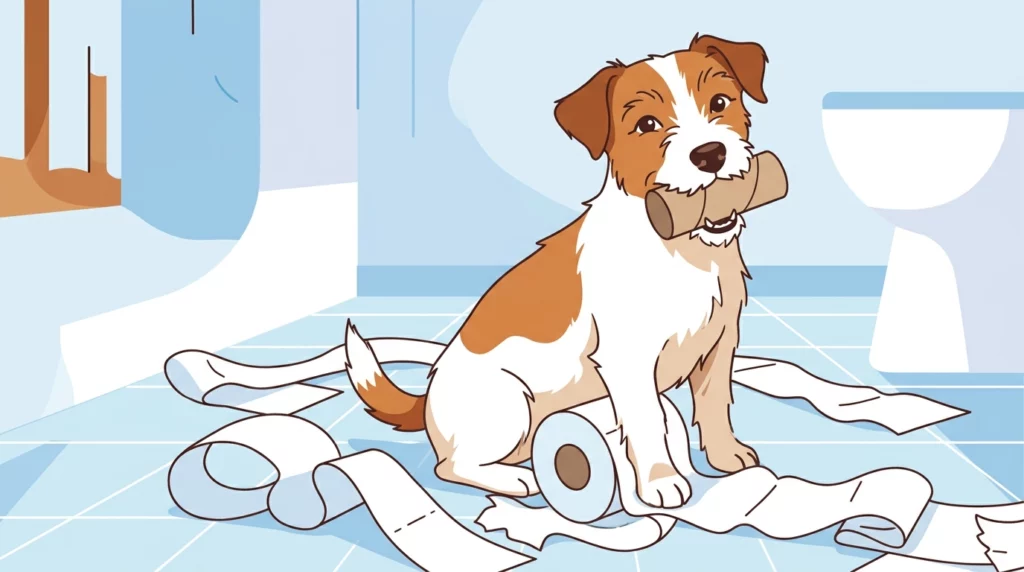
Remember, if you do not assign your dog a job, they will happily self-employ. Popular self-employed dog careers include:
- The Doorbell Alarm: Barking hysterically at any vibration within a three-mile radius.
- The Interior Designer: Shredding tissues, pillows, and drywall to improve the home’s feng shui.
- The Counter Inspector: Systematically scanning kitchen surfaces for unauthorized snacks.
By proactively choosing their job, you keep their mind occupied, their body healthy, and your home intact.
Niki’s Final Verdict
Every dog wants to be a good boy or girl; we just need a little direction to match our biological wiring. Whether your pup is a distinguished sporting dog like myself, a high-octane rescue like Blu, or a tiny terrier with a giant attitude, there is a perfect job waiting for them. Start small, keep it fun, and always pay your worker in high-quality treats.
Now, if you’ll excuse me, I must go perform my afternoon duty: finding the exact spot on the rug where the sunbeam hits perfectly. It’s tough work, but someone has to do it.