
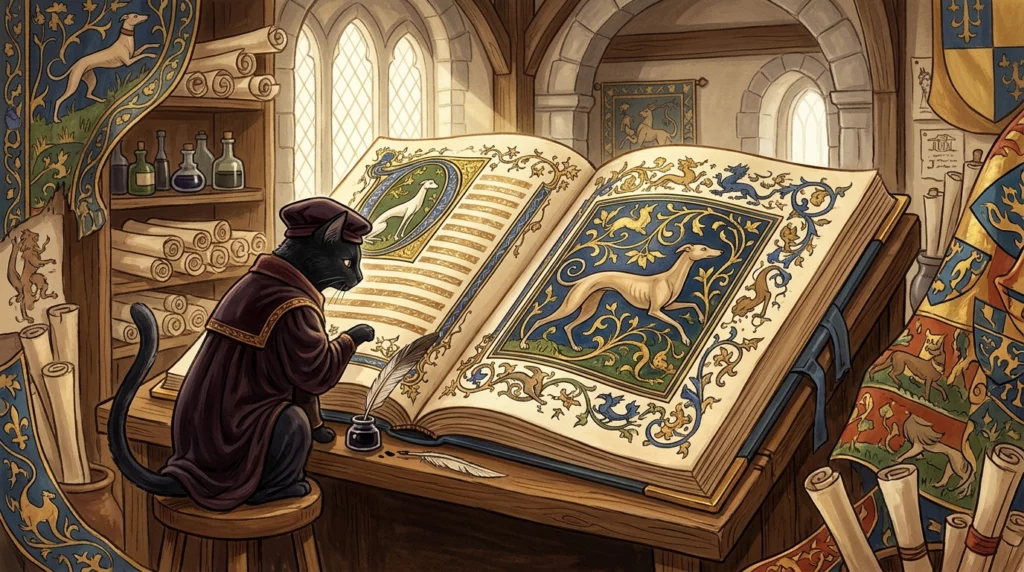
As the undisputed chief of the SnoutScoop pack, I—Pisino, a sleek black cat of dignified lineage and flawless instincts—spend a considerable amount of time managing canines. Blu is currently attempting to bark at a dust mote, while Niki is meticulously inspecting her food bowl to ensure it meets her exacting standards. It takes a sharp, focused feline mind to keep order around here. But as I flipped through history (a hobby of mine between 18-hour naps), I discovered something remarkable: medieval humans were just as besotted with dogs as modern humans are. In fact, Gothic art was practically run by them.
If you close your eyes and picture medieval art, you probably envision stern saints, gold leaf, and moody monks. Look a little closer at the margins of illuminated manuscripts, the weave of grand tapestries, or the base of carved limestone tombs, and you will find a canine parade. From swift sighthounds sprinting across vellum to tiny lapdogs nestling in noble skirts, dogs dominated medieval visual culture. Allow me, your resident feline scholar, to explain why.
1. Sighthounds and Status: The Ultimate Medieval Power Symbol
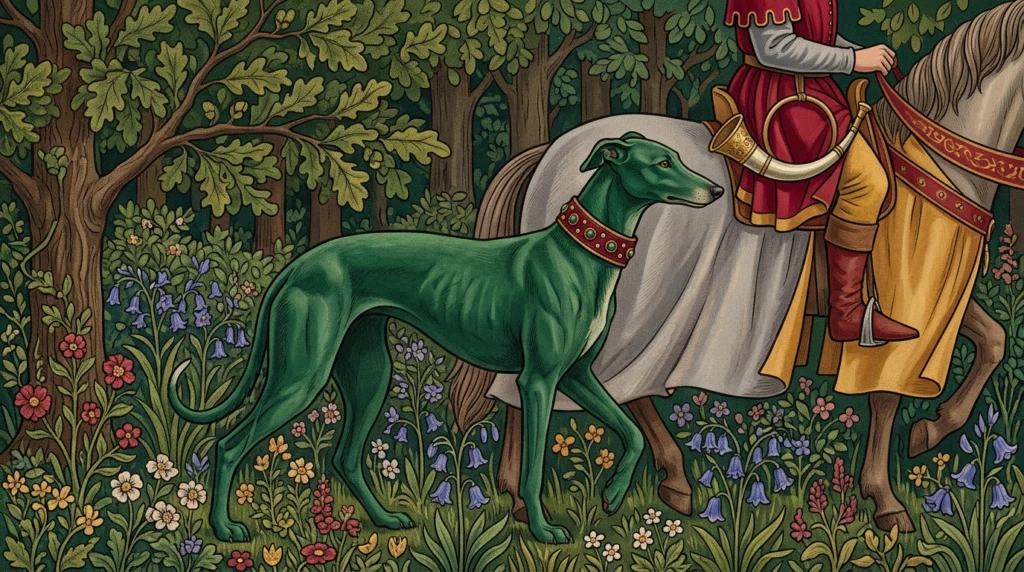
In the Middle Ages, you could not simply post a picture of your expensive sports car on social media. Instead, if you were a lord or lady of consequence, you commissioned a tapestry featuring your prized hounds. Noblemen and noblewomen were obsessed with hunting, and the dogs they bred—especially Greyhounds, Alaunts, and gaze-hounds—were high-status companion animals.
Take, for instance, the famous Unicorn Tapestries, housed at The Met Cloisters and detailed in Met Museum publications. Among the dense botanical weaves and mystical beasts, you will find incredibly accurate, deeply expressive renderings of hunting hounds wearing silver-studded leather collars. These were not generic animals inserted for decoration; artists depicted real, individualized dogs owned by wealthy patrons.
Similarly, in the celebrated late-15th-century tapestry series The Lady and the Unicorn at the Musée de Cluny, dogs feature prominently alongside lions and unicorns. In these masterpieces, hounds represent noble vigor, alertness, and aristocratic refinement. (I personally find their energy exhausting, but one must admire the craftsmanship.)
2. The Lapdog of Loyalty: Fido in the Margins
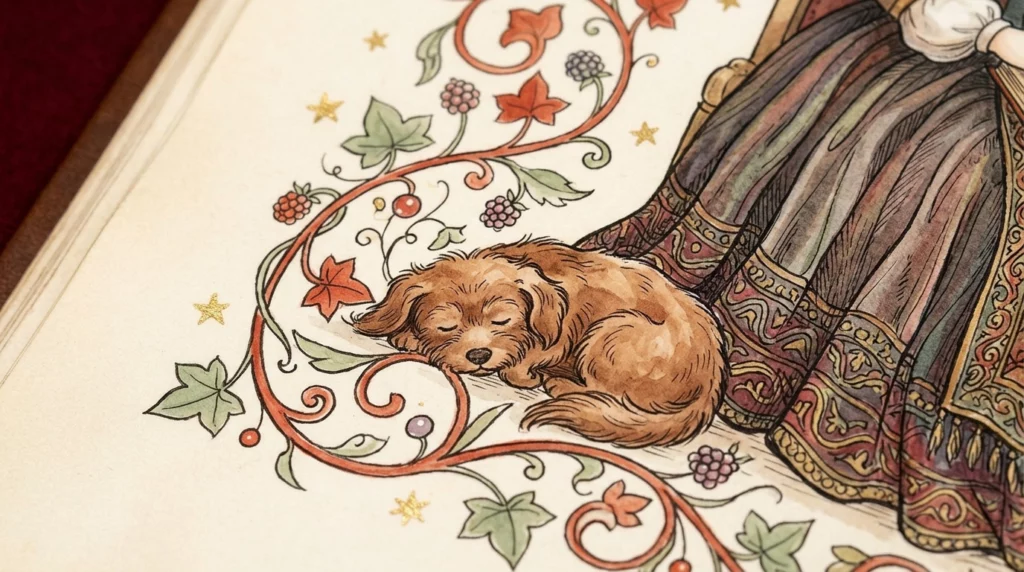
While massive hounds ruled the grand hunting scenes, tiny toy dogs dominated domestic space and religious manuscripts. Medieval aristocrats loved small lapdogs—often referred to as “chamber dogs” or “comforter dogs” (predecessors to modern Maltese, Spaniels, and toy breeds). They were kept warm in sleeves, fed treats from court tables, and given dedicated spots in family portraits.
According to essays on animals in medieval art from The Met, creatures in Gothic art carried rich symbolic meaning. The dog was the universal symbol of fides (faithfulness and fidelity)—which is, incidentally, where the classic dog name “Fido” originates.
Because of this symbolism, small dogs frequently appear:
- At the feet of women on tomb effigies: Signifying marital loyalty and eternal companionship beyond death.
- In wedding scenes and portraiture: Reminding viewers of trust and devotion between spouses.
- In prayer books (Books of Hours): Poking their snouts out of decorative foliage or playfully chasing butterflies in the margins, as curated in the British Library’s collection of medieval manuscript dogs.
Exhibitions curated by the Getty Museum highlight how medieval illuminators loved contrasting the solemnity of sacred texts with playful, mischievous animals in the margins. You might find a holy saint praying on the main page, while in the corner, a little terrier-like dog is joyously stealing a loaf of bread.
3. The Curious Legend of Saint Guinefort
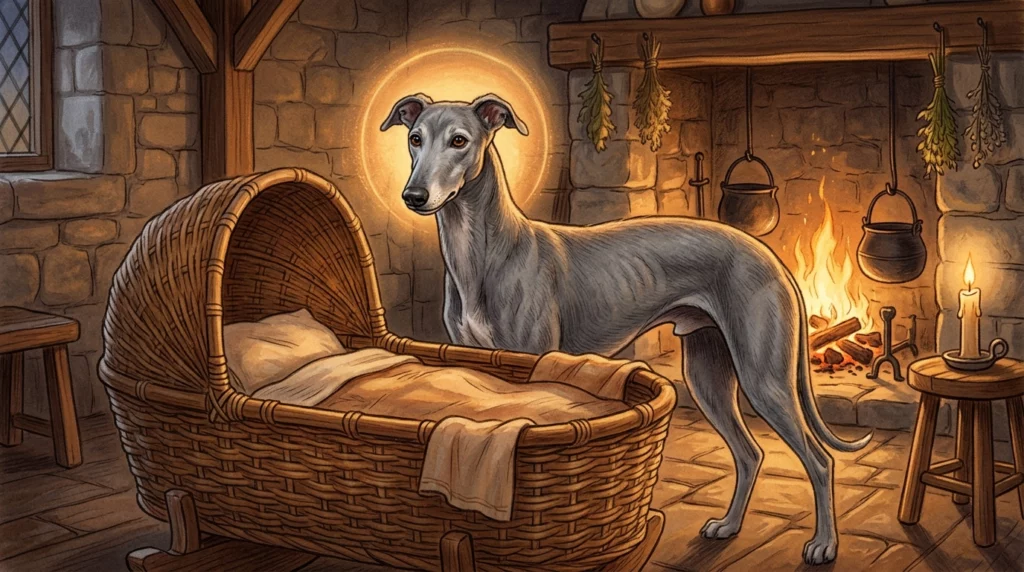
To truly understand medieval canine obsession, one must look at how far humans took their admiration. Beyond official church art, popular medieval culture created its own canine legends. As explored in historical analyses on History Today and documented by historical archives on Ancient Origins, 13th-century French peasants actually venerated a Greyhound named Guinefort as a saint.
The story goes that Guinefort bravely defended a noble infant from a venomous snake. When the baby’s father returned and saw blood near the nursery, he foolishly assumed the dog had harmed the child and killed the hound. Upon realizing Guinefort had actually saved the infant, the family buried the dog honorably, and local villagers began visiting the shrine to seek miraculous healings for sick children.
While church authorities eventually cracked down on worshipping a holy hound, the tale speaks volumes. Medieval culture held deep respect for canine bravery, devotion, and sacrificial loyalty—qualities that illuminated artists strove to capture in every stroke of ink and tempera.
4. From Medieval Vellum to the Printing Press
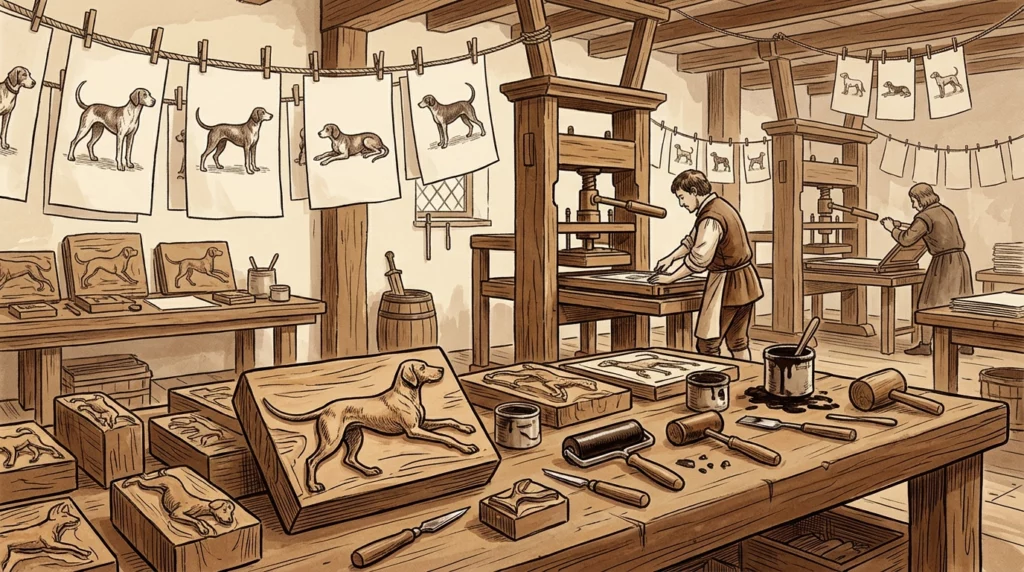
When Johannes Gutenberg and early printers brought about the print revolution in the 15th century, did dogs lose their starring role? Not for a second. Research highlighted by the CERL Blog on early printed books shows that woodcut artists immediately carried the canine tradition forward. Early printed fables, Bibles, and herbals were filled with charmingly chunky woodcut dogs barking at scholars, herding livestock, or sleeping under print shop tables.
A Feline’s Final Verdict
As a cat who prefers quiet dignity over frantic loyalty, I may not entirely understand why dogs feel the need to jump around, drool, or chase their own tails. But looking back through Gothic history, I have to give credit where it is due. Dogs did not just serve humans in the Middle Ages; they stole their hearts, claimed their lap space, and immortalized themselves across medieval art for centuries to come.
Now, if you will excuse me, Blu is looking at a wall with suspicious intensity, and I must step in to manage the situation. Stay curious, stay sharp, and keep loving your dogs—just as humans have done since the Middle Ages.