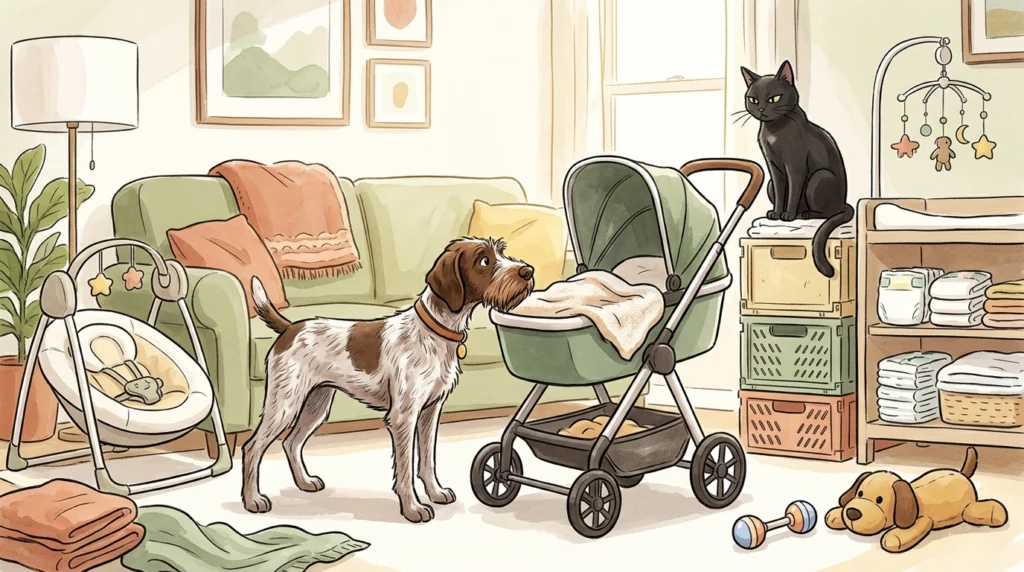
Yuna here! As SnoutScoop’s resident feline adventurer and chief inspector of suspicious cardboard boxes, I spend a lot of time observing human behavior. Lately, I’ve noticed a specific kind of human panic: the “we are having a tiny, bald human creature” panic. When a new baby is on the way, humans scramble around assembling cribs, buying ridiculously small socks, and completely forgetting that their four-legged furry roommate—the dog—has no idea why there is suddenly a motorized swing playing ocean sounds in the middle of the living room.
Dogs love routine. When a screeching, milk-scented tiny human enters their sanctuary, it can be a massive shock. Fortunately, science and veterinary experts have figured out exactly how to make this transition seamless, safe, and happy for everyone involved. Here is your step-by-step, science-backed guide to preparing your dog for a baby—curated by me, a cat who tolerates dogs, provided they stay well-behaved.
1. Start Months Before the Big Arrival
Do not wait until you bring a swaddled infant through the front door to explain the new house rules. According to behavioral guidelines from the ASPCA, training and adjustments should begin several months before your due date.
Why? Because dogs need time to build new daily routines without linking those changes directly to the baby. If your dog currently sleeps in your bed, receives attention on demand, or gets walks at exact, rigid hours, start shifting those habits early.
- Adjust routines gradually: Shift walk times, feeding schedules, and cuddle sessions in small increments so your dog adapts smoothly to unpredictable routines.
- Set up boundaries early: If the nursery will be off-limits or requires a calm entrance, install baby gates early. This helps your dog get used to physical barriers long before the baby actually sleeps in that room.
2. Desensitize to Sounds, Smells, and Mysterious Baby Gear
Babies come with a staggering amount of strange equipment: strollers, bouncy chairs, high chairs, and plastic gizmos that play erratic electronic lullabies. As the American Kennel Club (AKC) notes, introducing these novel objects before the baby arrives prevents your dog from feeling overwhelmed by sudden environmental shifts.
Sound Conditioning
Baby cries can be stressful or trigger predatory motor patterns in some dogs due to their high pitch. Play audio recordings of baby crying, babbling, and screaming at very low volumes while giving your dog delicious treats. Over several weeks, gradually increase the volume so the sound becomes associated with food and positive vibes.
Stroller Practice
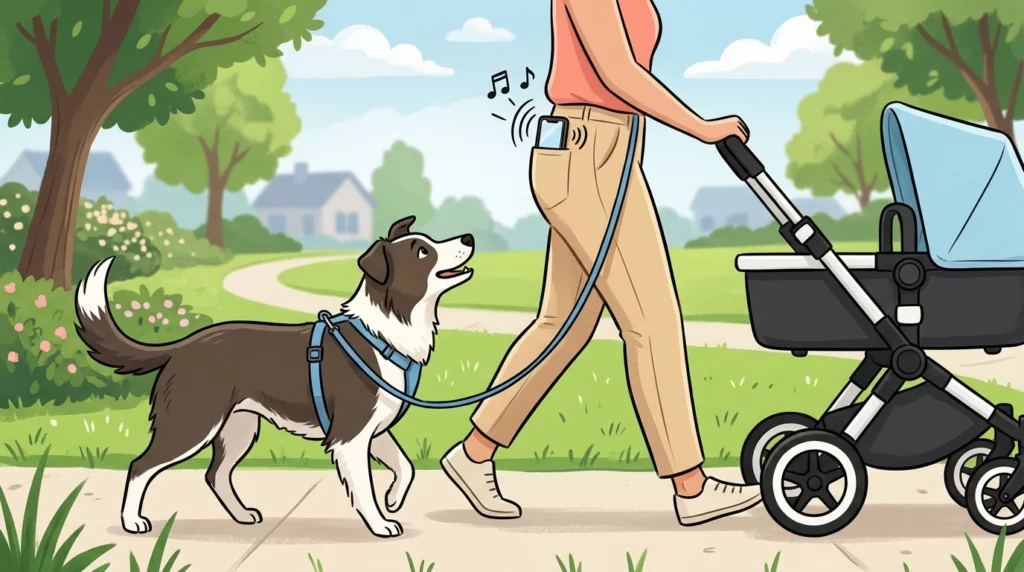
Practice walking your dog alongside an empty stroller. Pushing a stroller while managing a leash takes coordination, and your dog needs to learn how to walk calmly next to the wheels without darting across your path.
Scent Introduction
Scent is a dog’s primary lens for exploring the world. Start wearing baby lotion, powder, or baby oil on your skin so those new smells become familiar background scents in your home long before delivery day.
3. The Scent Swap Routine Before the First Hello
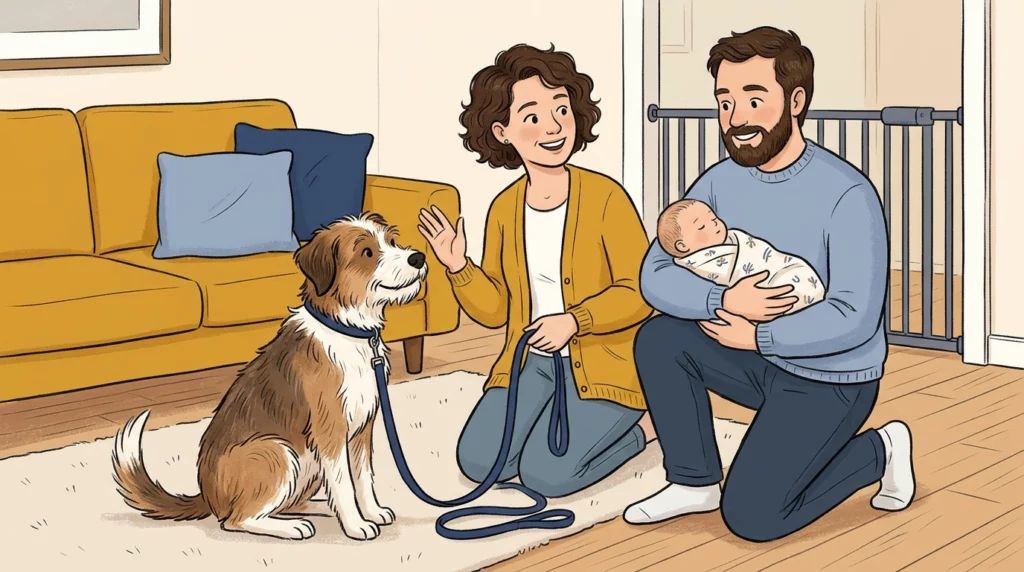
When the big day arrives and the baby is born, don’t rush straight home for a frantic group greeting. Experts at Veterinary Partner recommend using the scent-swap method while you are still at the birth center or hospital.
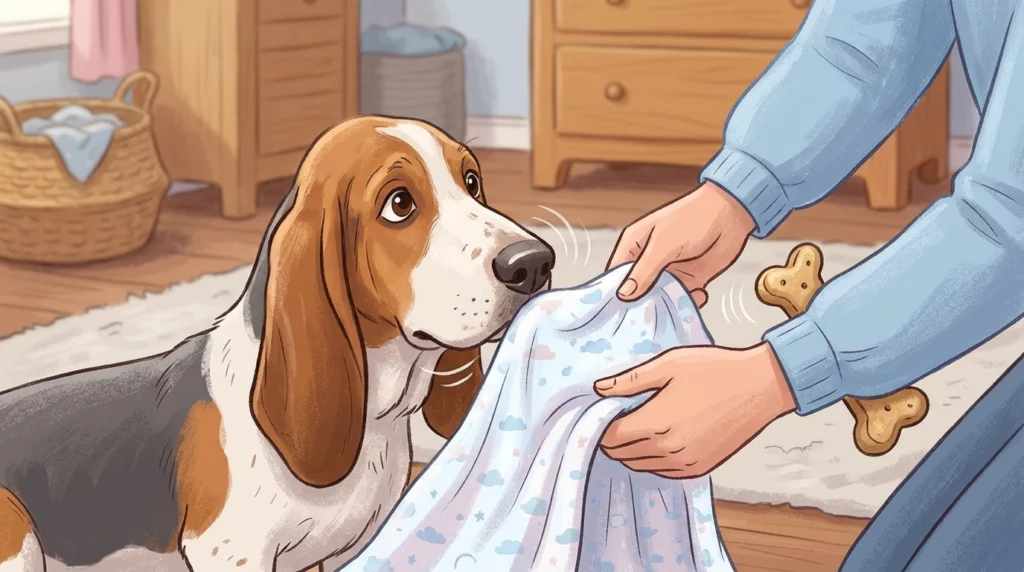
Have a partner or family member bring home an item the baby has worn or been wrapped in—such as a receiving blanket or hat. Allow your dog to sniff the blanket from a comfortable distance while offering calm praise and high-value treats. This creates a positive, safe mental association with the baby’s unique olfactory signature before any face-to-face interaction takes place.
4. Managing the Official First Meeting
When bringing baby home, keep the introduction low-energy, structured, and entirely stress-free. Practical safety advice from VCA Hospitals emphasizes a step-by-step introduction protocol:
- Greet the dog first: When you walk through the door, your dog will be thrilled to see you. Have someone hold the baby in another room while you greet your dog calmly to burn off initial excitement.
- Put your dog on a leash: Place your dog on a standard, non-retractable leash. Keep the leash loose—never pull it tight, as leash tension can communicate anxiety to your dog.
- Allow brief, calm sniffing: Have the baby held securely in an adult’s arms. Allow your dog to sniff the baby’s feet or blanket from a slight distance for a few seconds while offering gentle verbal praise.
- Reward relaxed behavior: If your dog exhibits soft body language (loose tail, relaxed posture, soft eyes), reward them with a treat and praise. If your dog seems overly excited or anxious, calmly increase distance and try again later.
5. Active Supervision and Safe Retreat Zones
A comprehensive research review published on PubMed Central (NIH) stresses that successful child-dog cohabitation relies heavily on active, uninterrupted parental supervision—regardless of how gentle or trustworthy a dog has historically been.
Guidelines from the American Academy of Pediatrics (AAP) and UC Davis Veterinary Medicine highlight critical safety principles every household must follow:
- Never leave a dog and baby alone together: Not even for a few seconds to answer the door or grab a clean diaper.
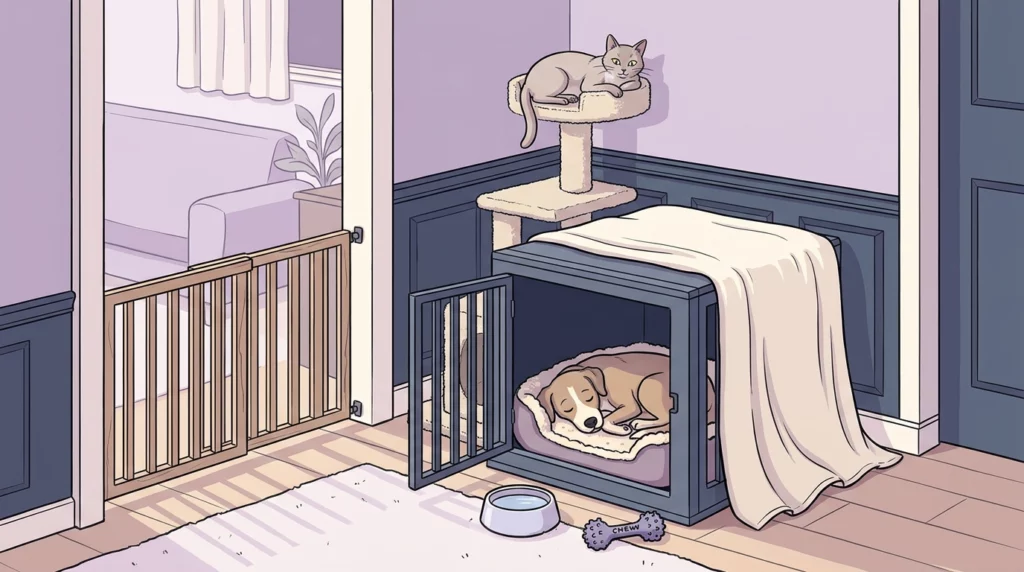
- Create a dog sanctuary: Ensure your dog has a dedicated safe space—like a crate, quiet room, or elevated daybed—where they can retreat when feeling overwhelmed. Teach children early that this space is strictly off-limits to humans.
- Learn canine body language: Dogs rarely bite without prior warnings. Watch for subtle stress indicators such as lip licking, yawning, head turning, body stiffness, or “whale eye” (where the whites of the eyes are visible). If you notice these, give your dog immediate, quiet space.
Yuna’s Final Verdict
Preparing your dog for a baby requires foresight, consistency, and plenty of high-value snacks (which, in my expert opinion, should also be shared with the household cat for supervising the process). By taking these science-backed steps early, your dog won’t just accept the tiny new human—they’ll grow into a calm, gentle, and lifelong family companion. Now, if you’ll excuse me, I have an empty stroller box that urgently requires my adventurous inspection!