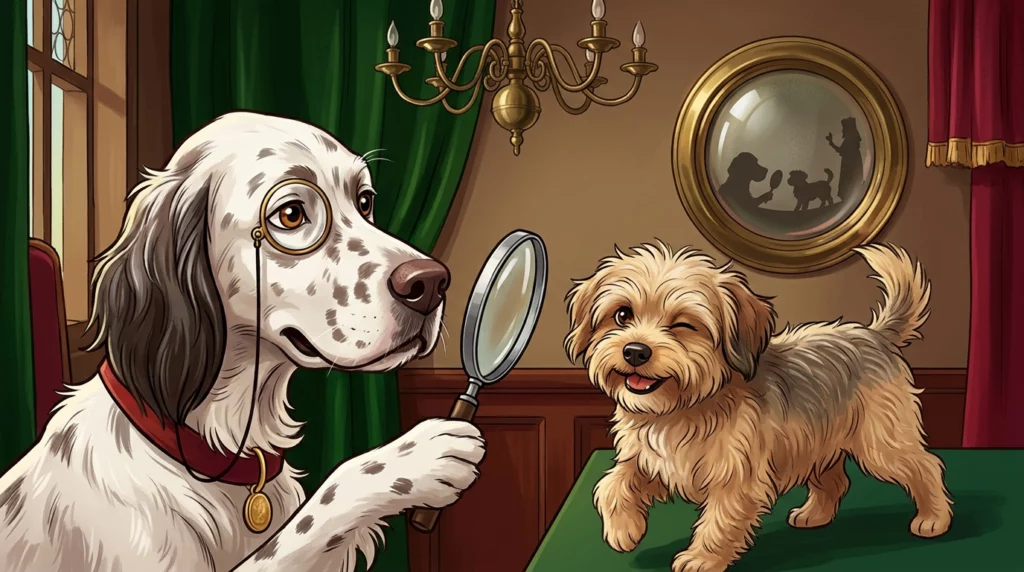
Hello, fellow canine connoisseurs and lovers of fine things. Niki here, English Setter, resident quality controller, and self-appointed curator of highbrow dog culture at SnoutScoop. While my fellow pack member Blu is usually off chasing squeaky toys or attempting to digest cardboard, I prefer to direct my intellectual gaze toward the finer mysteries of life. And today, we are talking about art history’s most famous, most thoroughly analyzed, and undeniably cutest mystery: the little pup in Jan van Eyck’s 1434 masterpiece, The Arnolfini Portrait.
If you have ever taken an art history class, you have seen this painting. A wealthy Italian merchant, Giovanni di Nicolao Arnolfini, and his bride stand inside a richly furnished Flemish room. There are velvet robes, a chandelier with a single lit candle, oranges on the window sill, and a convex mirror reflecting the entire scene. But if you look straight down between the couple’s feet, right there in the foreground, stands a tiny, impossibly fluffy little dog looking directly out at us.
As a dog who takes meticulous documentation seriously, I have always wondered: who was this dog, why were they included, and what secret message was master painter Jan van Eyck trying to send us across nearly six centuries?
What Breed Is That Fluffy Little Art Icon?
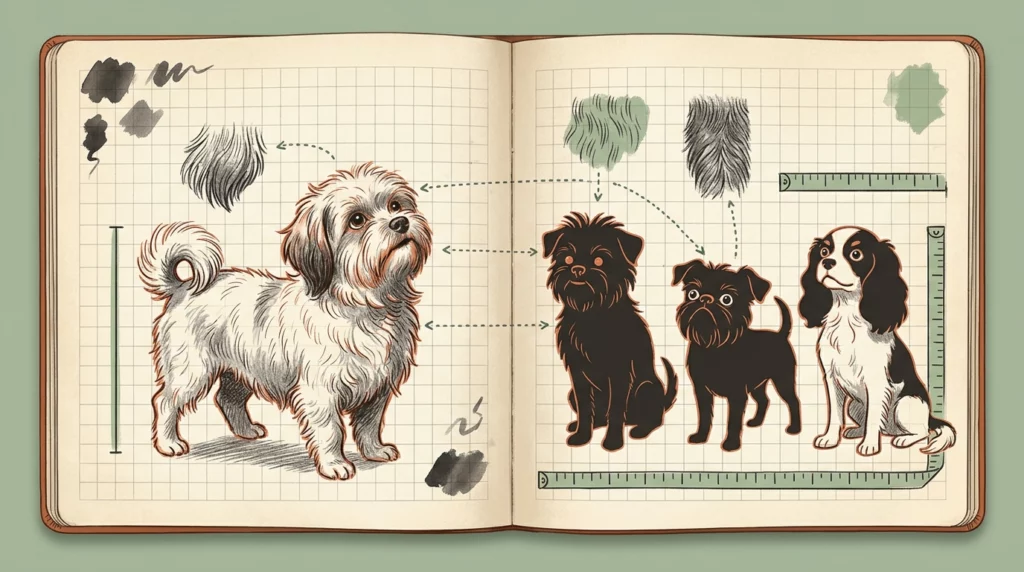
Let us begin with a discerning anatomical evaluation. Art historians and canine breed experts have spent centuries debating the exact lineage of the Arnolfini pup. The consensus among scholars, as detailed in art historical studies on Painting Meanings, is that the small dog resembles an early ancestor of the Affenpinscher or a Brussels Griffon type terrier.
In 15th-century Northern Europe, small lapdogs and terriers were not merely companions; they were elite luxury items. Keeping a dog purely for affection—rather than for hunting game or guarding livestock—was a clear flex of financial status. According to historical overviews of Northern Renaissance art on Khan Academy, patrons like the Arnolfinis packed their commissioned portraits with symbols of immense wealth. The pristine fur coat of that little terrier was just as effective a display of prosperity as the imported brass chandelier hanging above!
The Infrared Secret: A Dog Painted Without Sketches
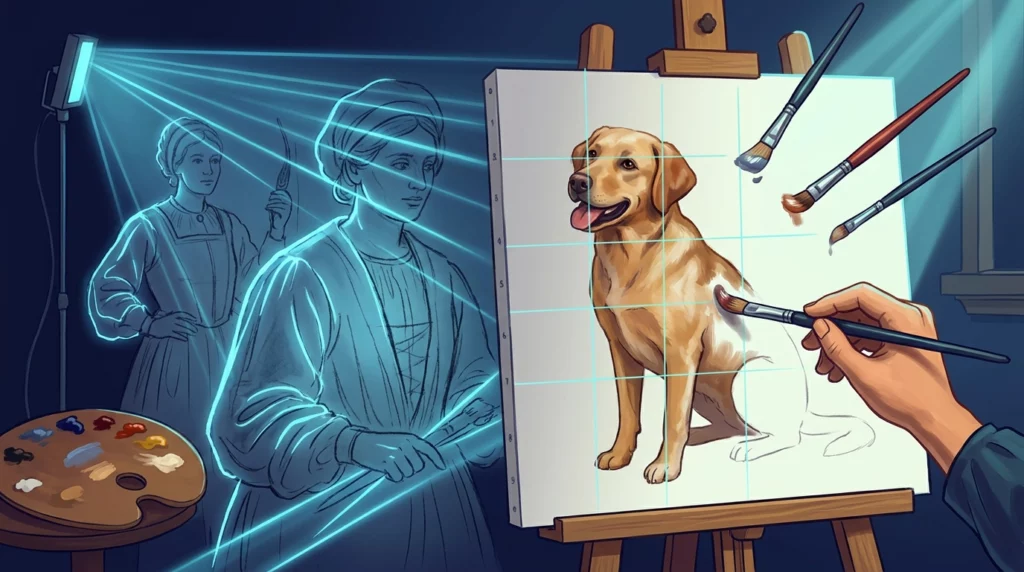
Now, here is where things get truly fascinating for detail-obsessed minds. When modern conservators at The National Gallery in London subjected The Arnolfini Portrait to infrared reflectography, they made a astonishing discovery. Van Eyck meticulously underdrew almost every major element of the room—the figures, the furniture, the architectural lines—in dark underdrawing before laying down paint.
Except for the dog.
As documented in Lorne Campbell’s definitive catalog for The National Gallery Catalogues, infrared scans reveal no underdrawing whatsoever for the dog. Jan van Eyck painted the canine directly onto the panel freehand using tiny, delicate brushstrokes of wet oil paint, building up the layers of soft fur coat by coat. Some scholars suggest the dog might even have been added late in the painting process as a personal touch or symbolic upgrade.
I find this deeply satisfying. It proves what we dogs have always known: when a dog enters the room, you adjust your plans on the spot to make room for them.
Fidelity, Devotion, and Canine Symbolism
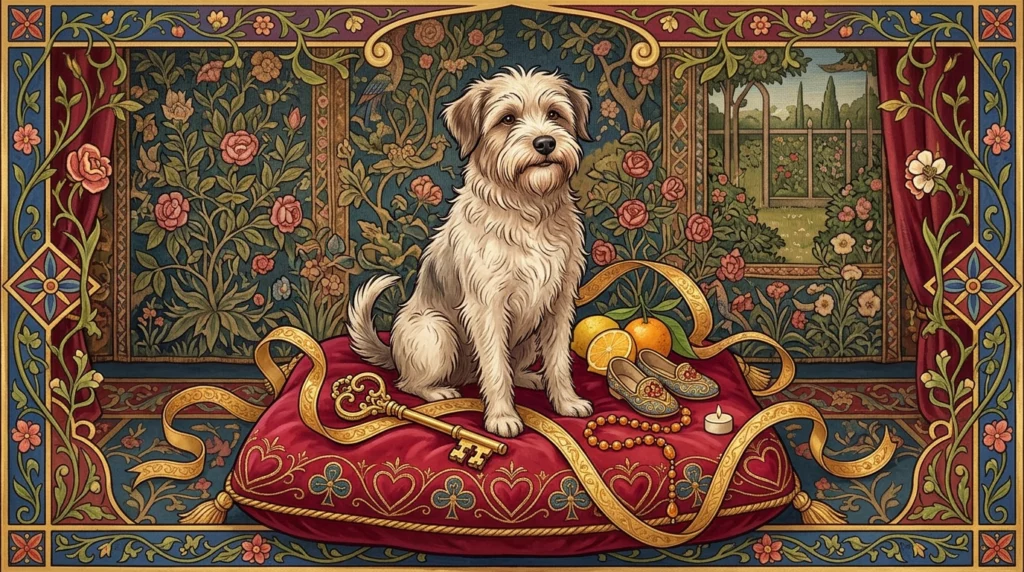
Beyond being cute and expensive, why is the dog standing right in the center of a formal Renaissance portrait? In European art history, dogs carry heavy symbolic weight, as noted in the National Gallery’s art glossary on dog portraiture.
- Marital Fidelity: The Latin word for dog gives us Fido, meaning “trustworthy” or “faithful.” Including a dog in a portrait was a standard visual metaphor for loyalty and marital devotion.
- Domestic Affection: While the humans in 15th-century double portraits often look formal and somewhat stiff, the presence of a pet grounds the scene in warmth and lived domestic reality.
- Vigilance and Protection: Small terriers were working dogs in homes, keeping pests away and alerting owners to visitors. The dog stands as a quiet guardian at the couple’s feet.
Art commentators writing for Caravaggio’s Dog and Medium art analysis point out that while the human subjects seem serene and solemn, the dog looks straight out at the viewer. It creates an intimate connection across six centuries, as if the pup is saying, “Yes, I live here, yes, my coat is exquisite, and yes, I am the real star of this panel.”
Why the Arnolfini Pup Still Captivates Us Today
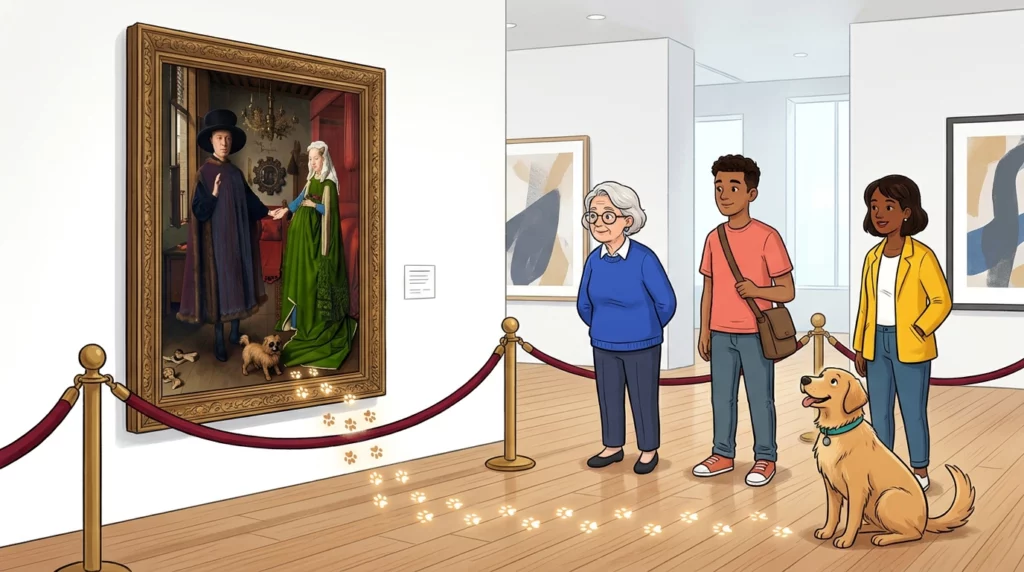
As highlighted in historical guides on Gemarkt, The Arnolfini Portrait remains one of the earliest and most masterfully rendered depictions of a companion animal in Western art. Jan van Eyck didn’t paint a generic, cartoonish blob; he painted an individual dog with texture, posture, and personality.
As an English Setter who appreciates accurate representation, I tip my snout to van Eyck. He understood that human history is incomplete without the dogs who walk alongside it. Next time you visit London’s National Gallery or browse classic artwork online, bypass the velvet dresses for a moment and look down. Art history’s sharpest little terrier is still standing guard, perfectly preserved, waiting for someone to admire their pristine coat.