Hello, dear humans. Niki here. As a highly discerning English Setter of five-and-a-half years, I pride myself on maintaining a certain level of dignity, poise, and household order. I do not, for instance, chew on baseboards, nor do I sing the tragic song of my people just because my humans have stepped out to buy groceries. Blu, our resident Griffon rescue, is still working on that level of Zen, but we are getting there.
It is a universal truth: we dogs love you. We love your scent, your weird upright walking style, and the way you accidentally drop pieces of cheese. So, when you put on those strange foot-harnesses (shoes, you call them) and walk out the front door, it can feel like our entire world has just vanished into the ether. For some of us, this causes more than just a little sadness—it triggers a full-blown panic attack known as separation anxiety.
If your pup is turning your home into a DIY demolition zone while you are away, do not despair. Today, we are going to dive into how to identify, understand, and conquer separation anxiety with patience, love, and a dash of science.
Is It Boredom or True Separation Anxiety?
First, we must play detective. There is a distinct difference between a dog who is simply bored and looking for a mischievous project, and a dog who is genuinely terrified of being alone. According to the SPCA, true separation anxiety is a distress response. It is not a conscious act of revenge or spite (we leave revenge to the cats, looking at you, Pisino).
Here are the classic signs of separation anxiety to watch out for:
- Destructive Behavior: Specifically focused on exit points like chewing doorframes, scratching window sills, or tearing up the carpet near the entryway.
- Vocalization: Persistent howling, barking, or whining that begins almost immediately after you leave.
- House Soiling: Having accidents indoors only when left alone, even if otherwise perfectly house-trained.
- Salivation and Panting: Finding your dog soaked in drool or pacing frantically when you return.
- Escaping: Attempting to break out of crates, rooms, or yards to find you, sometimes resulting in self-injury.
If your dog only chews on a stray sock because it was left tempting on the floor, that is likely a classic case of “opportunity chewing.” As detailed by the ASPCA, destructive chewing from boredom can usually be solved with better toy redirection and more exercise. True anxiety, however, requires a gentler, more systematic approach.
The Root of the Panic: Why Do We Do It?

Why do some dogs struggle so much with alone time? According to research compiled by VCA Hospitals, separation anxiety can be triggered by a variety of life changes. It is highly common in rescue dogs who have experienced the trauma of abandonment or multiple rehomings.
Other common triggers include:
- A sudden change in the household’s daily schedule (like returning to the office after months of working from home).
- Moving to a brand-new house or apartment.
- The loss of a family member or another household pet.
Understanding that this behavior comes from fear—not defiance—is the first step to helping your dog cope.
The Step-by-Step Desensitization Plan

Now, let us talk strategy. You cannot simply explain to us in English that you will “be back in twenty minutes.” (Though we do appreciate the soothing tone of voice!) Instead, you have to show us. Experts at the American Kennel Club (AKC) recommend a process of desensitization and counterconditioning.
Step 1: Defuse Your Departure Cues
We dogs are incredibly observant. We know that when you pick up your keys, put on your coat, and grab your wallet, you are about to vanish. Your dog’s anxiety actually starts building *before* you even walk out the door.
To break this association, perform these actions without leaving. Pick up your keys and sit on the couch. Put on your heavy winter coat and eat a bowl of cereal. Jingle your keys while reading a book. Over time, these scary triggers will lose their power, as outlined in the ASPCA’s guides on easing anxiety.
Step 2: Keep Comings and Goings Low-Key
I know it is tempting to throw us a grand farewell party or squeal with delight when you walk back through the door. But to an anxious dog, this highly emotional drama confirms that your departure is indeed a terrifying crisis, and your return is a miracle. Keep departures and arrivals entirely calm, quiet, and matter-of-fact. Ignore your pup for the first few minutes after you get home until they have settled down.
Step 3: Gradual Absences
Start by stepping out for literally three seconds. Walk out the door, close it, and immediately walk back in before your dog can panic. Reward calm behavior. Gradually build this up to thirty seconds, one minute, five minutes, and then twenty minutes. If your dog begins to show distress at any point, you have moved too fast. Take a step back to a time limit where they felt safe and build up again slowly.
Mental Stimulation and Distraction Tools
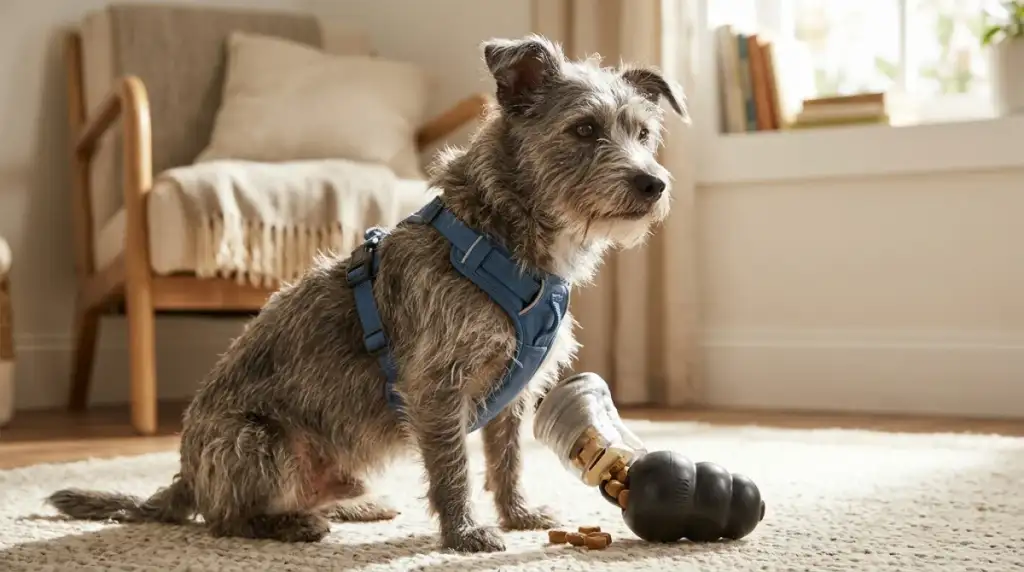
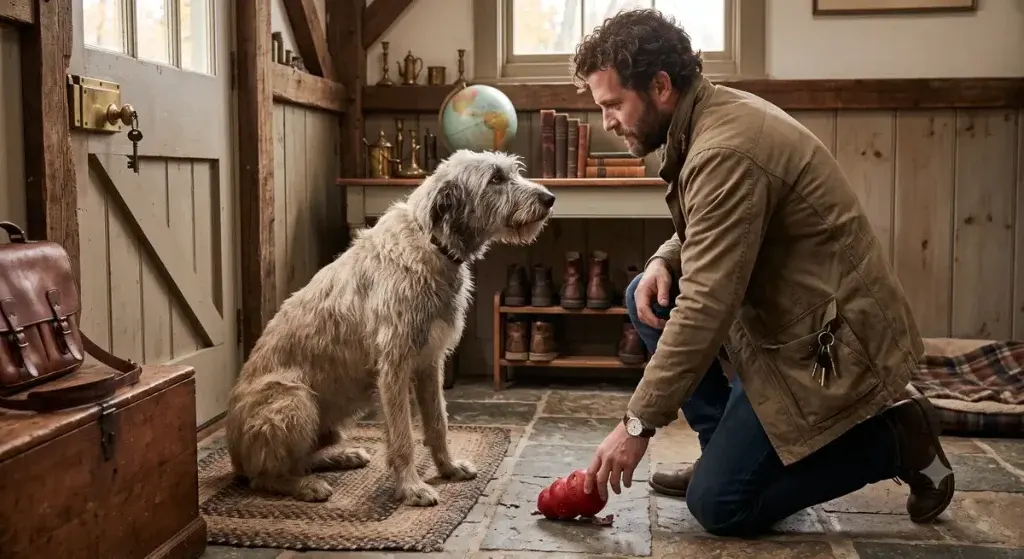
A busy brain has less room for panic. Providing your dog with high-value, long-lasting puzzle toys can completely shift their perspective on your departure. The ASPCA recommends using puzzle toys stuffed with delicious things like peanut butter, wet food, or wet kibble, and freezing them.
Give this frozen treasure to your dog *only* when you are leaving. Over time, your departure becomes associated with the absolute best treat of the day. Just remember to pick the toy up as soon as you return home so it remains a special “away-only” privilege!
Furthermore, physical and mental exercise before you leave can do wonders. A tired dog is a sleepy, relaxed dog. A long morning walk or a stimulating training session can help burn off excess energy before your departure, as suggested by VCA Hospitals.
When to Seek Professional Help
Sometimes, love and frozen peanut butter are not quite enough. If your dog is injuring themselves trying to escape, or if their panic is severe, it is time to call in the professionals.
According to ASPCA Pet Insurance, a veterinarian or a certified veterinary behaviorist can be your best ally. In severe cases, they can prescribe short-term or long-term anti-anxiety medications. These medications do not sedate your dog; rather, they lower the panic to a manageable baseline so that your positive reinforcement training can actually register in their brain.
A Note of Hope from Niki
To all the humans reading this: please be patient with us. We do not destroy your rugs because we are mad at you; we do it because we love you so much that your absence feels overwhelming. With time, structure, and consistency, we can learn to trust that you will always return.
Now, if you will excuse me, I hear the distinct sound of a cheese wrapper in the kitchen, and it is my absolute duty as Chief Content Quality Officer to investigate. Stay brave, stay patient, and keep those snouts happy!