As the undisputed chief of the SnoutScoop pack, I spend most of my waking hours supervising canine shenanigans. Between Blu’s erratic, high-velocity room-to-room sprints and Niki’s meticulously organized nap schedules, maintaining feline authority requires constant vigilance. Usually, I am immune to dog novelty. However, every so often, the canine kingdom produces something so biologically surprising that even I must put down my grooming routine and take a closer look.
Enter Narwhal the Little Magical Furry Unicorn—a stray puppy rescued in Missouri in late 2019 who captured global attention for having a second, perfectly formed tiny tail sprouting right out of his forehead. Naturally, the internet lost its collective mind. But behind the adorable photos lies a genuinely fascinating biological question: How and why does a dog grow an extra tail on its face?
The Story of Narwhal: A Forehead Tail Is Born
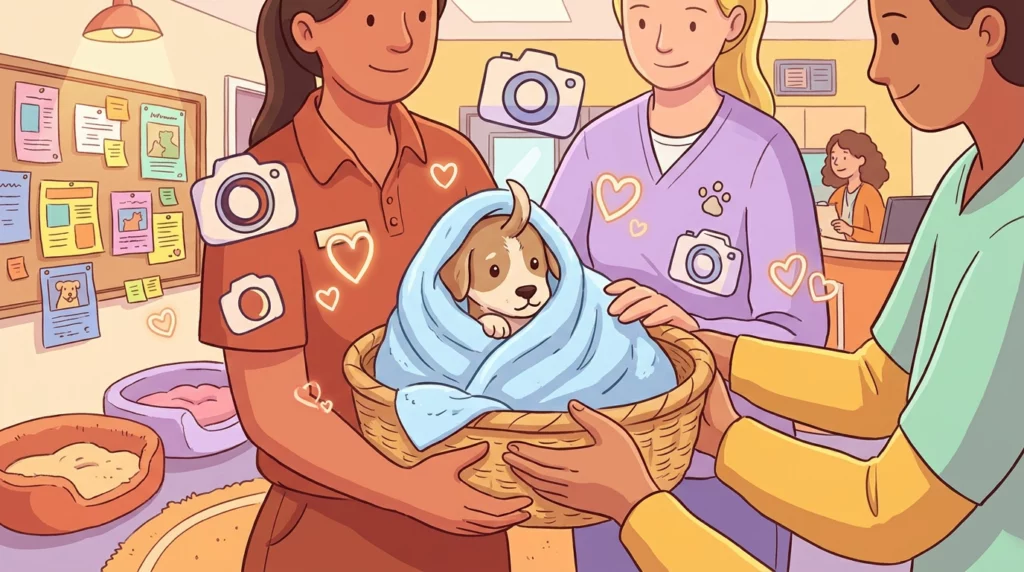
In November 2019, workers at Mac’s Mission, a special-needs dog rescue in Jackson, Missouri, took in a abandoned puppy with an injured paw and a very unusual headpiece. Between his expressive brown eyes sat a short, flopping tail—looking for all the world like a soft horn. The rescue playfully named him Narwhal, after the famed arctic whale known for its single long tusk.
As photos went viral, millions of people asked the exact same two questions: Does it wag? and Is he okay?
The answer to the second question was a resounding yes. As detailed by Live Science, veterinary exams showed that Narwhal was healthy, energetic, and completely unbothered by his extra accessory. As for the first question? No, the forehead tail does not wag.
The Anatomy Behind the “Unicorn” Horn
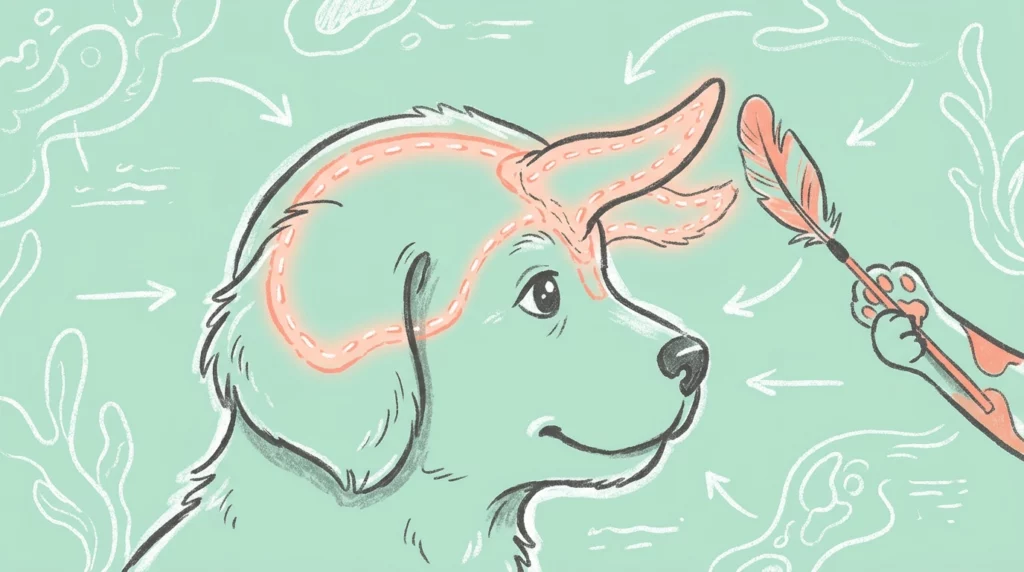
When veterinarians performed X-rays on Narwhal’s head, they discovered something intriguing about the structure of his extra tail. According to reporting from The Independent, the appendage contains skin, hair, and soft tissue, but it lacks the bone structure and muscle connections found in a normal tail.
Because there are no motor nerves or muscle attachments linked to his brain, Narwhal cannot wag his forehead tail when he gets excited. It simply rests there, fluttering slightly when he runs—which, according to rescue staff, only makes him look more majestic.
More importantly, the X-rays confirmed that the appendage was completely superficial. It was not connected to his brain, skull, or nervous system, meaning it posed no neurological danger to his health.
The Biological Mystery: Parasitic Twins and Embryonic Split

So, how does an extra tail end up on a puppy’s face in the first place?
While definitive DNA testing on Narwhal’s extra tissue wasn’t conducted at the time, geneticists and veterinary researchers have documented similar developmental phenomena across mammalian species. One leading scientific explanation discussed by researchers in Twin Research and Human Genetics is a form of asymmetric identical twinning known as heteropagus twinning or a parasitic twin.
In early embryonic development, a fertilized egg may attempt to split into identical twins. If that division is incomplete, one embryo may stop developing early on and be partially reabsorbed by the surviving twin. The absorbed tissue can sometimes develop into isolated body parts—such as a tail, extra limbs (polymelia), or localized skin structures—attached to the healthy puppy.
Veterinary literature contains several documented cases of heteropagus twinning in dogs. For example, a published veterinary case report on epigastric heteropagus twinning in a Chihuahua puppy documented additional limbs and tissue attached to the abdominal wall resulting from an undeveloped twin. Similarly, studies archived in PubMed Central explore congenital malformations and duplication anomalies in companion animals, showing how embryonic signaling disruptions can produce extra tail-like or limb-like structures during early gestation.
To Remove or Not to Remove?
When animals present with unusual appendages, pet owners often assume surgery is immediately necessary. However, veterinary medicine follows a very simple rule: if it doesn’t cause pain, pose a health risk, or impair normal function, leaving it alone is often the safest choice.
Because Narwhal’s extra tail did not affect his eyes, vision, or breathing, and lacked underlying bone structures that could become infected, veterinarians advised against surgery. Removing it would require general anesthesia and surgical risks with zero medical benefit for the pup.
Narwhal ultimately found his forever home right where his story began: he was adopted by Rochelle Steffen, the founder of Mac’s Mission. Today, Narwhal is a fully grown, happy, and healthy dog who serves as a mascot for special-needs animals everywhere, spreading awareness about rescue dogs who are a little bit different.
Pisino’s Final Verdict
As a cat who prides himself on flawless feline symmetry, I must admit that dogs never fail to surprise me. A second tail on the forehead sounds like something a kitten would dream up while dizzy on catnip, yet nature made it happen—and turned a stray puppy into a beloved ambassador for unique pets.
Whether a dog has three legs, half an ear, or an extra tail where his eyebrows should be, biology is full of quirky surprises. And while I will continue to keep Blu and Niki under strict surveillance, Narwhal gets a full stamp of approval from the Chief of the Pack.
Sources
- livescience.com
- smithsonianmag.com
- independent.co.uk
- cambridge.org
- nih.gov
- researchgate.net
- https://resolve.cambridge.org/core/services/aop-cambridge-core/content/view/13566A70C8E4CD1F51B08B0B13A31656/S1832427420000110a.pdf/twins_reared_apart_zygotic_division_after_artificial_inseminationtwin_research_reviews_selective_resuscitation_of_premature_twins_scientist_jailed_for_editing_twins_genes_sexual_arousal_patterns_in_mz_twins_discordant_for_sexual_orientation_mz_twins_with_jejunoileal_atresiamedia_reports_twin_girls_search_for_a_bone_marrow_donor_puppy_with_a_possible_parasitic_twin_twins_in_silicon_valley_surgical_separation_of_craniopagus_twins_twinbased_new_yorker_magazine_cartoon_twin_tragedies.pdf