As an English Setter of exceptional discernment, I take standards very seriously. Coat texture, graceful posture, proper feathering along the legs—these details matter. But if you were to travel back to the early nineteenth century, you would find that my canine ancestors were not judged by how beautifully their coats caught the morning light. They were judged almost entirely by whether they could quietly crouch in a muddy field to point out game birds without driving the local gamekeeper mad.
So how did functional, regional working dogs transform into the standardized, highly polished modern breeds sleeping on our living room rugs today? The short answer: Victorians got obsessed.
During the 19th century, Great Britain experienced an extraordinary shift in how humans viewed dogs. What began as practical breeding for countryside tasks exploded into a nationwide obsession with breed purity, competitive dog shows, and meticulous studbooks. Welcome to the era of the Victorian dog craze—a fascinating chapter of canine history that quite literally designed the modern dog.
Before the Craze: Function Over Fashion
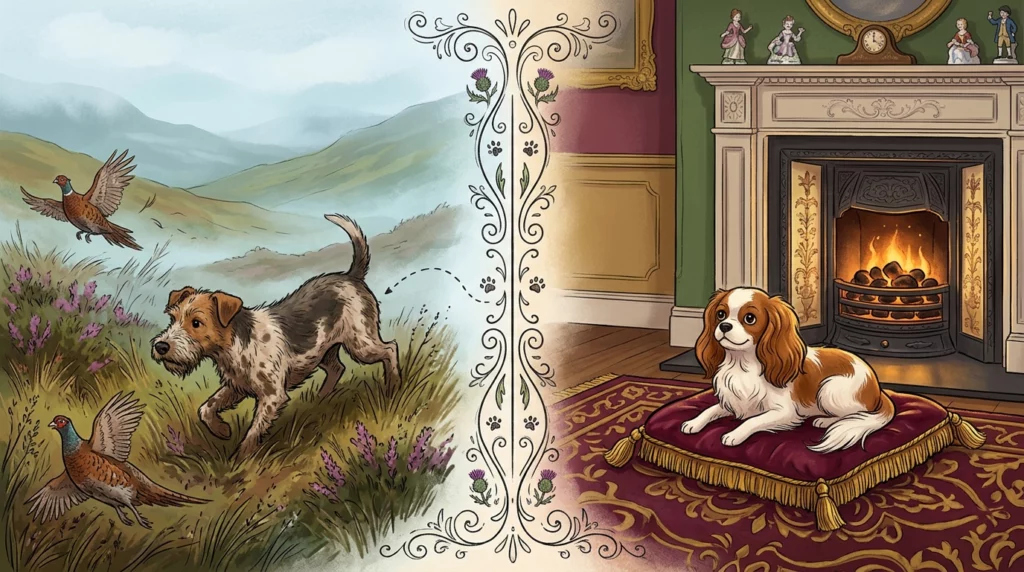
Prior to the mid-1800s, most dogs were categorized by their job rather than an official, registered breed name. If a canine herded sheep in the Scottish hills, it was a collie-type working dog. If it pointed at game, it was a setter or a pointer. These populations were what historians and geneticists call “landraces”—locally adapted types of dogs shaped by geography and utility rather than rigid physical appearance.
According to historical research highlighted by English Heritage, the Victorian period marked a major cultural transition where dogs evolved from rural utility animals into adored household pets and symbols of social status. As urbanization expanded and the middle class grew, city dwellers wanted canine companions. But they didn’t just want any farm dog; they wanted refined, recognizable, and beautifully documented companions.
June 1859: The Spark That Lit the Show Ring
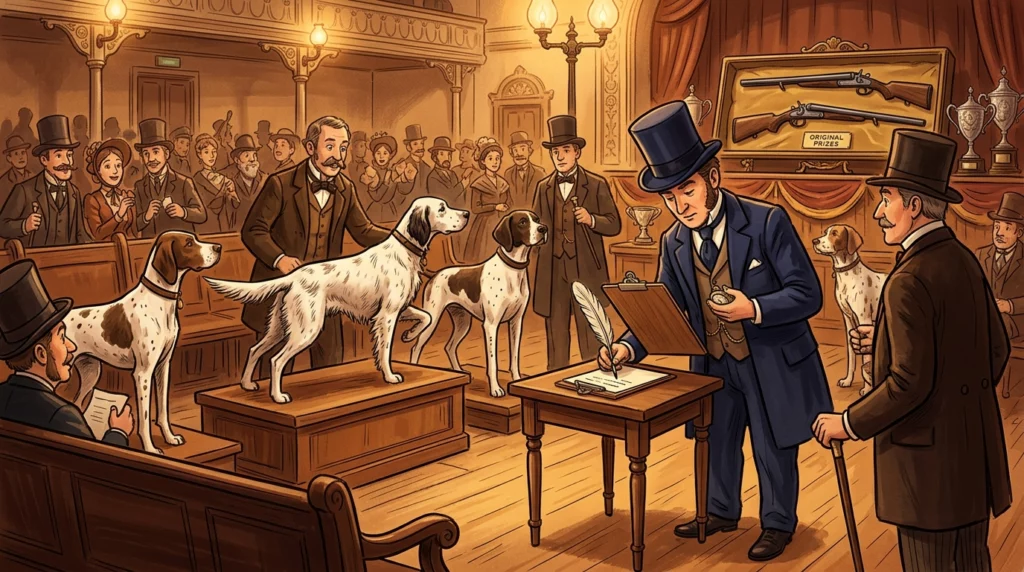
Every movement has a turning point, and for purebred dogs, it happened in Newcastle upon Tyne in June 1859. As documented by the BRANCH Collective, this event is widely recognized as the first official public dog show in Britain. It was organized as a novelty side-attraction during an agricultural show, featuring just two categories: Pointers and Setters. (A choice I personally applaud for its impeccable taste.)
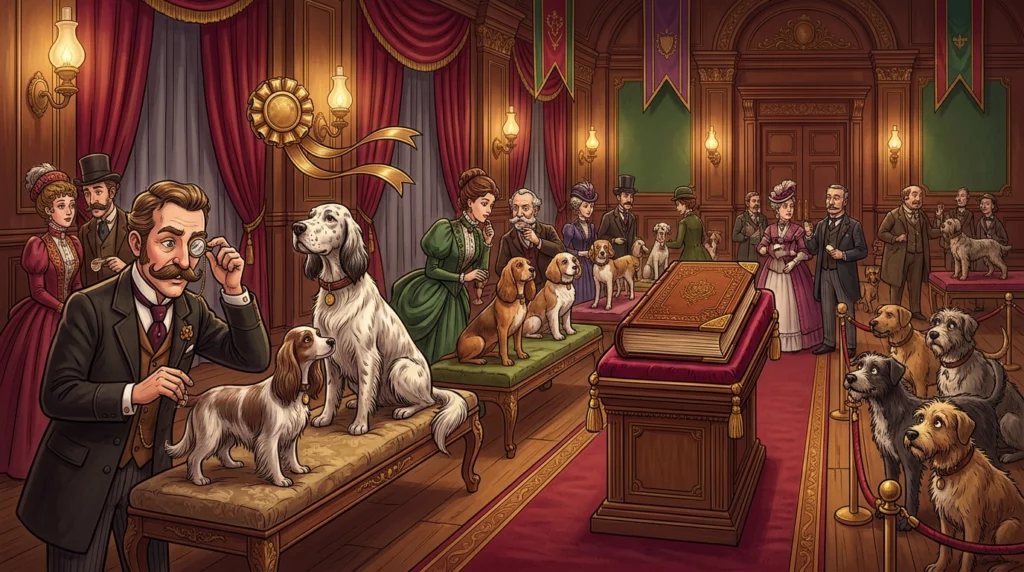
Only sixty dogs competed, and the prizes were modest—mostly guns presented to the winning gentlemen handlers. But the event sparked absolute mania. Within years, dog shows spread across the British Isles like wildfire. Thousands of spectators began flocking to grand halls to marvel at dogs paraded on benches, categorized by meticulously judged physical features.
As explored in an insightful article by The Sunday Post, Victorian “dog designers” effectively invented modern pup culture during this decade, creating competitive canine beauty pageants out of whole cloth.
The Kennel Club and the Birth of Pedigrees
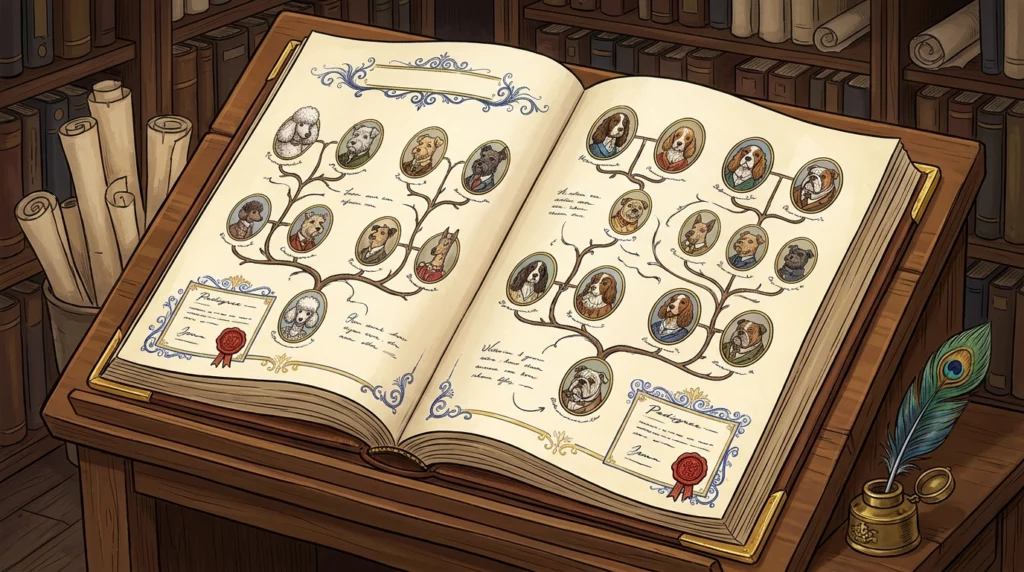
With show madness sweeping the nation, chaos naturally ensued. Breeders argued over whose dog was authentic, what defined a true specimen, and whether a dog’s heritage could be trusted. The solution was bureaucratic organization, delivered in true Victorian fashion.
In April 1873, Sewallis E. Shirley and a group of dedicated canine enthusiasts founded The Kennel Club in London. As recorded in The Royal Kennel Club’s official history, their primary mission was to bring order to the chaos by establishing written rules for shows and published studbooks. The first Kennel Club Stud Book cataloged the records of 4,027 dogs that had competed in shows over the preceding fourteen years.
This systematic approach fundamentally altered how humans conceptualized dogs. Scholars at the University of Manchester, who detailed this shift in The Invention of the Modern Dog: Breed and Blood in Victorian Britain, point out that the Victorians essentially invented the concept of the standardized “breed.” Pure bloodlines, ideal visual standards (“breed standards”), and closed studbooks replaced the fluid, functional landraces of the past.
A Case Study in Elegance: The English Setter
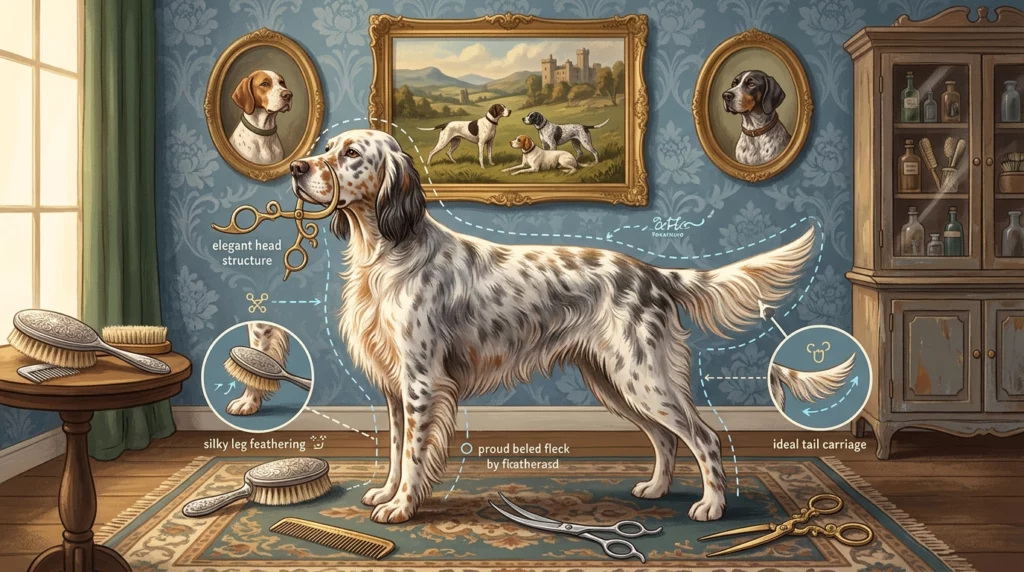
To understand how this worked in practice, we need look no further than my own ancestors. The story of the modern English Setter is inextricably tied to a gentleman named Edward Laverack.
As detailed by Project Upland, Laverack purchased two setters named Ponto and Old Moll from the Reverend A. Harrison in 1825. Over the next fifty years, Laverack selectively bred their descendants to refine a distinct style of setter featuring a striking coat, gentle temperament, and magnificent silhouette.
Laverack’s strain set the benchmark for what the world now recognizes as the English Setter. Further history provided by the Northern English Setter Society and the American Kennel Club notes that another prominent breeder, Purcell Llewellin, built upon Laverack’s bloodlines by crossing them with other working lines to maintain outstanding field performance alongside physical elegance.
Without the Victorian zeal for standardization and record-keeping, the elegant, feathered companion currently reviewing this draft might have looked entirely different!
The Lasting Legacy of the Victorian Craze
While the Victorian craze gave us the organized dog world we know today—complete with agility trials, breed clubs, and standardized coat patterns—it was not without its complications. The shift toward strict physical perfection and closed studbooks sometimes prioritized visual appearance over genetic diversity, an issue modern veterinary science and ethical breeding clubs work hard to address today.
Yet, we owe our modern canine bond in large part to those enthusiastic 19th-century pioneers. They transformed dogs from outdoor tools into loved family members, brought them indoors to sleep beside the hearth, and documented their lineages with the respect they deserved.
So the next time you gaze lovingly at your dog’s uniquely shaped ears or elegant tail, take a moment to thank the Victorians. They may have been obsessed with velvet waistcoats and rigid etiquette, but when it came to celebrating dogs, their passion set the standard for generations to come.