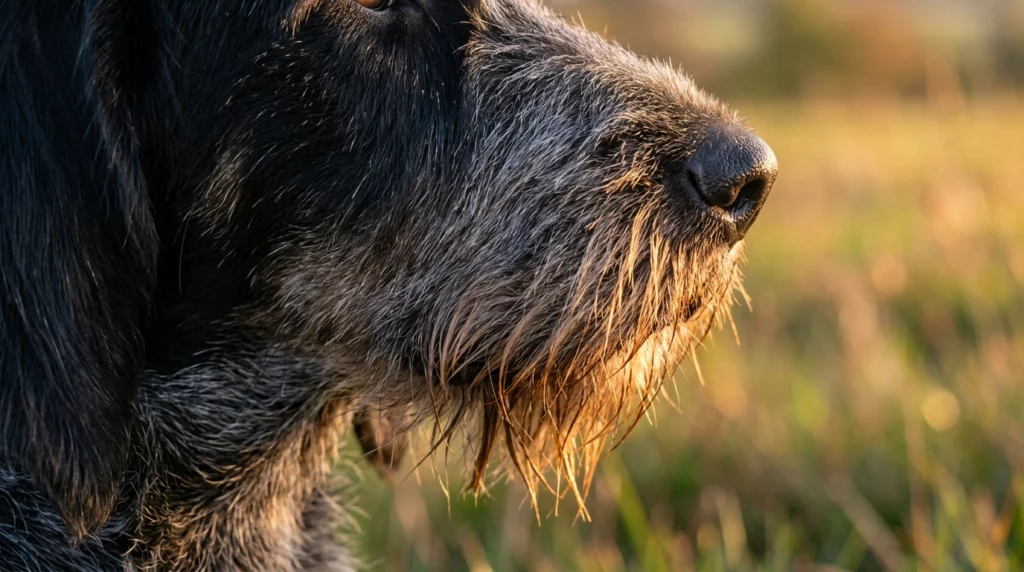
Hello, awesome humans! Blu here—your resident Griffon Bleu de Gascogne rescue, professional tennis-ball chaser, and certified good boy. Today, we need to talk about something very close to my heart, and even closer to my nose. I’m talking about those adorable, slightly chaotic, wire-like hairs sticking out of my face.
Yes, my whiskers!
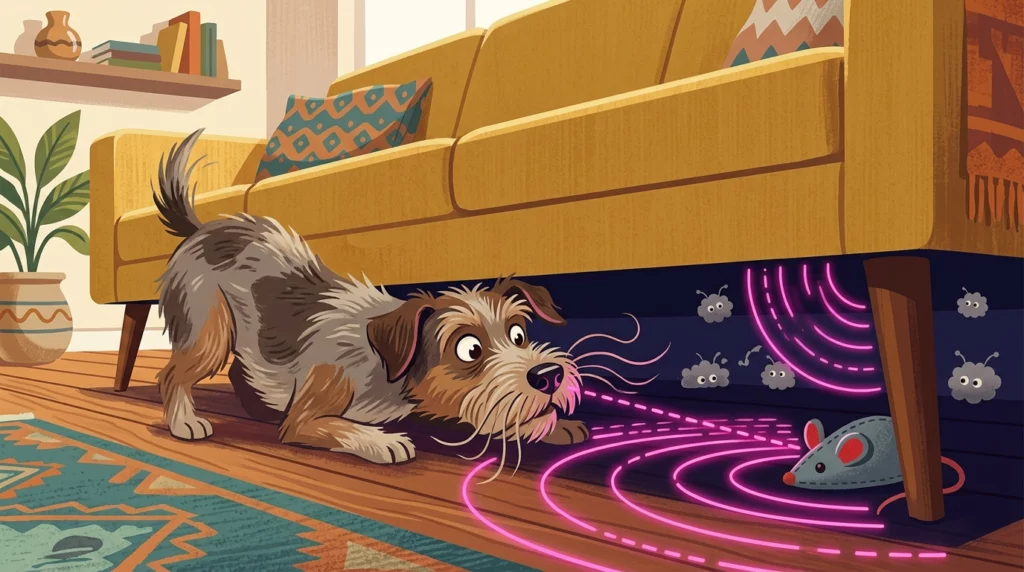
Now, I know what you’re thinking: “Blu, those are just your fancy mustache hairs that get peanut butter stuck in them.” While they do excel at peanut butter collection, they are actually so much more than that. They are my secret superpower. Whiskers are a high-tech, real-time sensory radar system that helps me navigate the world, avoid bonking my head, and figure out if I can squeeze into that small gap behind the couch where Pisino the cat dropped his toy.
Let’s dive into the fascinating science behind these magic hairs. Trust me, it’s mind-blowing!
What Actually Are Whiskers anyway?
To understand why whiskers are so cool, we have to look at how they’re built. Scientifically, they aren’t called whiskers at all—they are called vibrissae, which comes from the Latin word vibrio, meaning “to vibrate.” And boy, do they vibrate!
According to the veterinary experts at VCA Hospitals, whiskers are completely different from the rest of the fur on my body. While my normal coat is soft and great for cuddles, my whiskers are much coarser, thicker, and have roots that go three times deeper into my skin.
But here’s the real kicker: the base of each whisker follicle is packed with a massive concentration of highly sensitive nerve endings. Writing for Psychology Today, canine behavior expert Dr. Stanley Coren notes that a surprisingly large portion of a dog’s brain—specifically the somatosensory cortex—is dedicated to processing information received from these tiny facial hairs. Every time my whiskers brush against something, or even feel a slight breeze, they send lightning-fast sensory signals directly to my brain. It’s like having a dedicated fiber-optic internet connection just for my face!
The Whisker Map: Where They Grow (and Why)
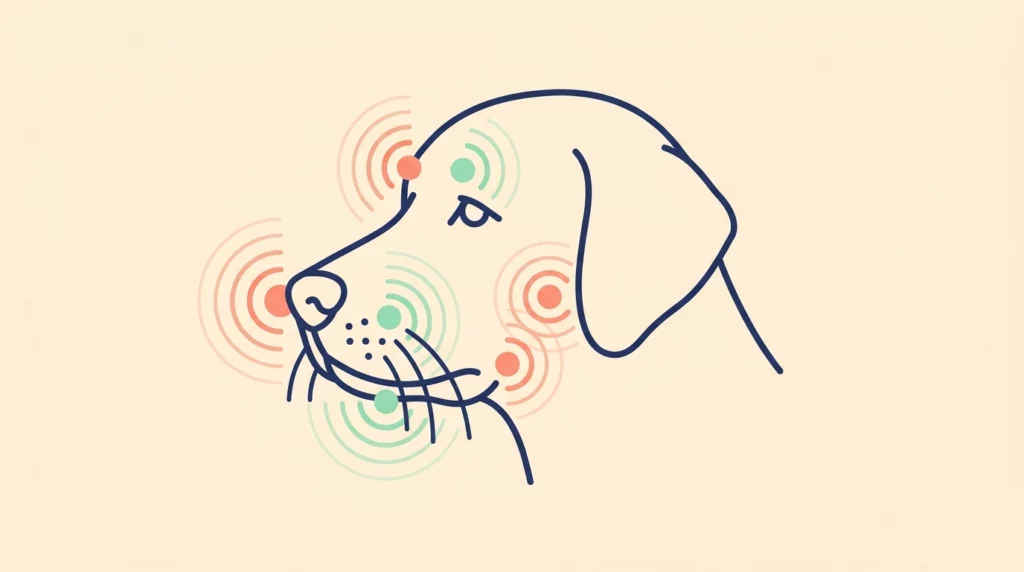
Most humans only notice the whiskers on our upper lips, but we actually have them mapped out in very specific zones across our faces. According to research diagrams on ResearchGate, domestic dogs have four primary groups of vibrissae:
- Mystacial Whiskers: These are the classic ones on our muzzles. They act like side-to-side curb feelers on a car, helping us judge distances and detect what is directly to our left and right.
- Superciliary Whiskers: These are located right above our eyes, almost like majestic eyebrows. They protect our eyes by detecting tall grass, brush, or low-hanging branches before we run headfirst into them.
- Genal Whiskers: Located on our cheeks. These help us navigate tight spaces and keep track of where our head is in relation to walls or openings.
- Mandibular/Interramal Tufts: These are the little whisker tufts located right under our chins. Since dogs can’t actually see what is directly beneath their mouths (we have a blind spot there!), these chin whiskers tell us if there’s food, water, or a pesky toy right under our jaw.
How My Whiskers Help Me Navigate the World

As a rescue dog with a lot of energy, I like to zoom around. Fast. You might wonder how I don’t run into walls when I do the midnight zoomies in a dark living room. That is the magic of whiskers in action!
Whiskers don’t even need to touch an object to detect it. As explained by Crown Vets, whiskers are so sensitive that they can detect subtle shifts in air currents. When I walk toward a wall, my movement pushes air ahead of me. That air bounces off the wall and back onto my whiskers. My brain registers that change in air pressure, warning me: “Whoa, Blu, abort mission! Wall ahead!”
Additionally, they help us with close-up vision. Dogs are famously far-sighted, and we struggle to focus on objects that are right in front of our noses. As detailed on Live Science, whiskers help bridge this visual gap by sending a 3D tactile map of our immediate surroundings to our brains. They tell us the size, shape, and even the texture of objects right under our noses.
Please, Keep the Scissors Away from My Whiskers!
Now, this is the super important part, and I need you to listen closely. Because whiskers are so incredibly vital to how we perceive the world, **you should never, ever cut, trim, or pluck them!**
Sometimes groomers trim them for “aesthetic” reasons to make our faces look cleaner, but this can actually be incredibly stressful for us. The team at Dogfulness emphasizes that whiskers are not decorations; they are vital sensory organs. Removing them is like putting a blindfold on a human, or taping your fingertips so you can’t feel anything.
According to Adopt-a-Pet, cutting a dog’s whiskers can cause temporary spatial disorientation. It makes us feel clumsy, confused, and insecure about our movements because our “radar” has suddenly gone dark. We might hesitate to jump onto things, misjudge distances, or become nervous in the dark. Don’t worry—if a whisker sheds naturally, that’s totally fine! It will grow back. Just please don’t cut them on purpose.
The Final Paw-Verdict
So, the next time you look at your dog and see those cute, twitchy face-wires, give them a little extra appreciation. They aren’t just there to look adorable (though they definitely help with my handsome look). They are sophisticated, evolutionary tools that help us navigate, explore, and safely share this big, beautiful world with you.
Keep those whiskers safe, keep the treats coming, and I’ll see you next time for more sniff-tastic dog facts!
Peace, love, and tail wags,
Blu