
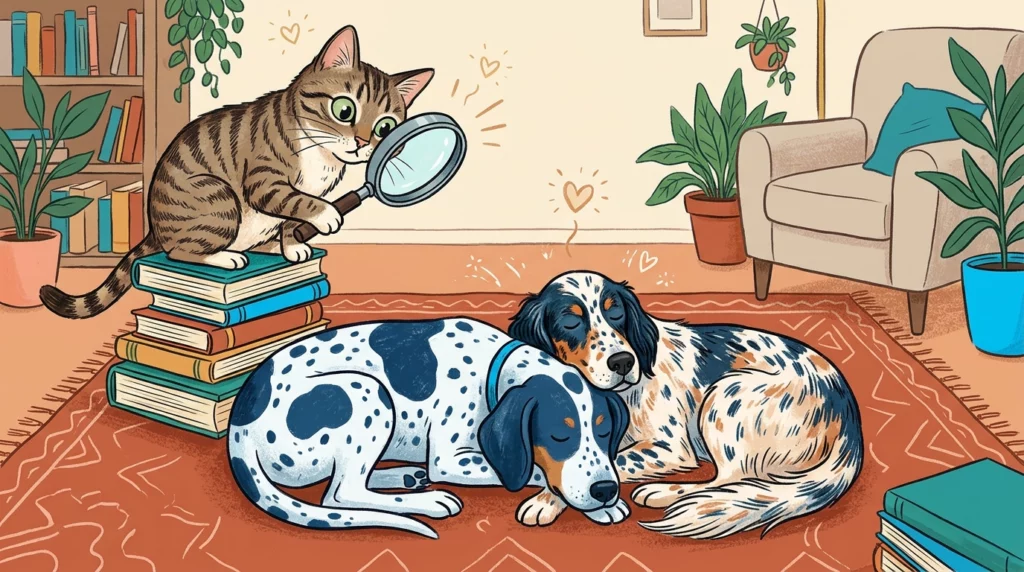
Hi there, curious human! Yuna here—SnoutScoop’s resident high-altitude acrobat, cat-in-charge of unexpected discoveries, and official observer of big canine roomies like Blu and Niki. When I am not practicing my bookshelf parkour, I spend a lot of time observing how dogs and cats navigate living under the same roof. Cartoon pop culture would have you believe that cats and dogs are natural-born mortal enemies destined to chase each other through dusty alleyways forever. But as someone who shares a living room with a couple of enthusiastic hounds, I had to ask: do dogs and cats actually become real best friends, or are we just awkwardly tolerating each other for the free kibble?
I decided to dive paws-first into behavioral science to find out what research says about interspecies bonds. spoiler alert: science proves that cats and dogs are not only capable of peaceful cohabitation, but we often form deep, affectionate friendships that would make even the crustiest skeptic swoon.
The Statistics: Myth vs. Household Reality
For a long time, the phrase “fighting like cats and dogs” was accepted as an absolute law of physics. However, modern animal behavior research tells a completely different story. A landmark study detailed on ResearchGate examined hundreds of dual-pet households and found that the vast majority of cats and dogs live together in harmony. Over 80% of owners reported that their pets shared space comfortably, and more than 60% observed genuine affectionate behavior, such as snuggling, nose-booping, and play.
Dr. Marc Bekoff highlighted similar findings in Psychology Today, pointing out that true friendship between species goes way beyond mere tolerance. Dogs and cats in blended homes regularly engage in mutual grooming, sleeping side-by-side, and greeting each other after periods of separation. As noted in an analysis by Companion Animal Psychology, cats are often the ones who set the boundaries in these relationships, but when given space and respect, cats willingly choose canine companionship.
Decoding the Foreign Language Barrier

If cats and dogs are capable of love, why did the myth of eternal enmity start in the first place? It turns out the biggest hurdle in our relationship isn’t hatred—it’s a massive linguistic misunderstanding.
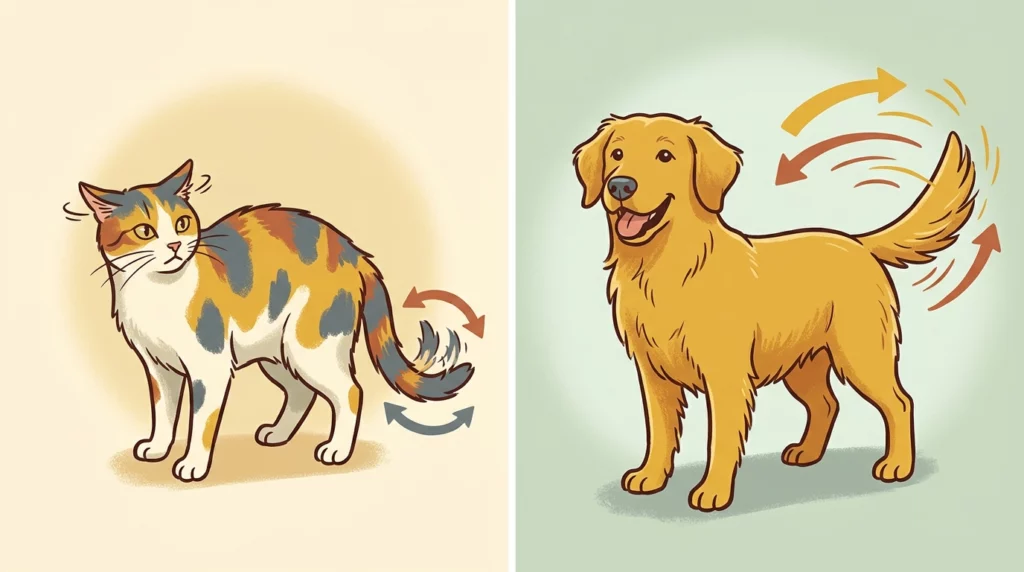
Think about it: feline and canine body language are almost complete opposites. A dog wags its tail to say, “I’m thrilled to see you! Let’s be pals!” A cat swishes its tail to say, “I am two seconds away from slapping you into next week.” A dog lowers its body to invite play; a cat crouches low to stalk prey. A dog purring? Dogs don’t purr, but when a cat purrs, it’s a sign of relaxation (or self-soothing), whereas a low growl from a dog means back off.
Despite this massive cross-species communication gap, research from Tel Aviv University published on TAU’s research portal and reported by ScienceDaily revealed something miraculous: when cats and dogs live together, they actually learn to read each other’s body language. Researchers observed that in successful feline-canine households, both species learn the opponent’s “dialect.” A dog learns that a twitching cat tail means “give me space,” and a cat learns that a dog’s play-bow isn’t a predatory threat. We literally become bilingual for each other!
What Makes a Great Dog-Cat Friendship Work?
Not every cat and dog instantly click, of course. Scientists have isolated several key factors that influence whether a cat and dog will become best buddies or distant acquaintances.
1. Early Introductions Matter (A Lot)
According to research highlighted by ScienceDaily, the age at which pets are introduced plays a huge role. Cats that are introduced to dogs before six months of age, and dogs introduced to cats before a year old, show significantly higher rates of friendship and mutual affection. Young minds are flexible, making it much easier for a kitten to realize that a big slobbery puppy is just a giant, weirdly shaped brother.
2. Respecting Feline Sovereignty
Let’s be real—cats like control. A study indexed on PubMed investigating cat-dog interactions found that cohabitation is smoothest when the cat feels safe and comfortable in their environment. When cats have safe high perches, private escape routes, and uninterrupted feeding zones, their stress drops dramatically, making them far more willing to approach a dog for positive interactions.
3. Personality Matching and Social Dynamics
Broader scientific insights into pet social dynamics, such as studies summarized on ScienceDaily, demonstrate that individual temperament often trumps species instincts. A calm, easygoing hound like Blu and an adventurous cat like me can find common ground quickly because our curiosity and enthusiasm match!
Yuna’s Guide: How Humans Can Help Us Become Besties

If you’re trying to build a peaceful multi-pet family, you don’t have to leave it all to chance. Behavior specialists at Animal Behaviorist Blended Families emphasize that humans play a vital role in mediating the early relationship stages. Here are a few evidence-backed steps to encourage feline-canine love:
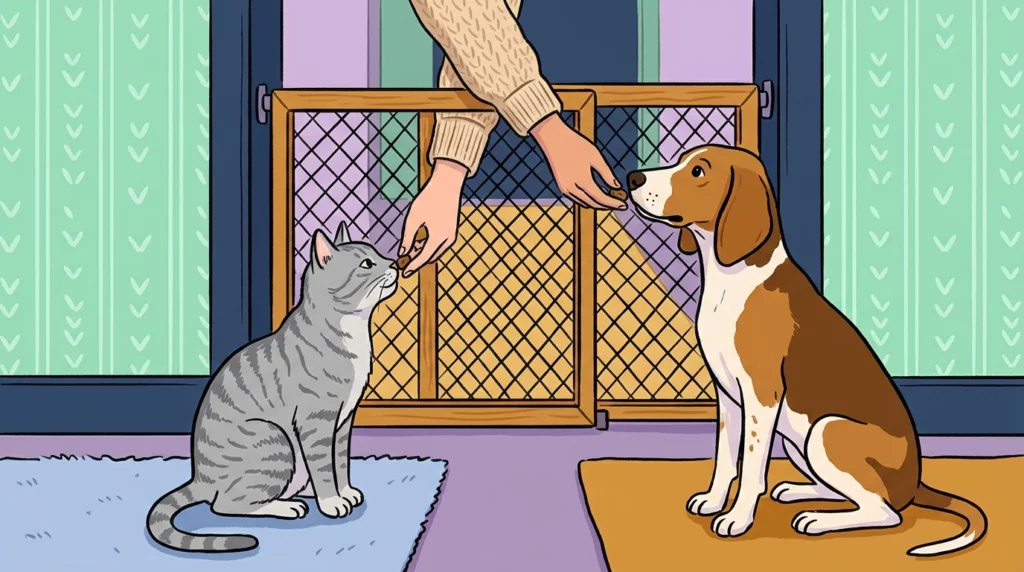
- Scent Swapping First: Before let us meet face-to-face, swap our blankets or rub towels on our cheeks and let us sniff each other’s scent. It lets us get used to the idea of a new roommate without any visual stress.
- Vertical Territory for Cats: Provide cat trees, shelves, or furniture paths where cats can observe the dog from a position of absolute security. Safe cats are friendly cats!
- Control the Initial Greetings: Keep dogs on a leash during initial meetings. Reward the dog with high-value treats for calm, quiet behavior when looking at the cat.
- Never Force Contact: Let the cat initiate physical closeness at their own speed. Forcing a cat into a dog’s space is a quick recipe for a clawed nose and hurt feelings.
The Final Verdict: Yes, We Can Be Best Friends!
So, do dogs and cats really become best friends? As a cat who loves exploring alongside her canine pals, I can comfortably say the answer is a resounding *yes*. Science proves that we can cross the species divide, master each other’s weird languages, and form deep bonds of love and companionship.
Whether it’s curling up together in a single sunny spot on the carpet or teaming up to raid the kitchen counter (hypothetically speaking, of course!), cats and dogs show us every day that friendship isn’t about speaking the exact same language—it’s about learning to understand each other with an open heart. Now if you’ll excuse me, I have a bookshelf to climb and a dog to pounce on from above!