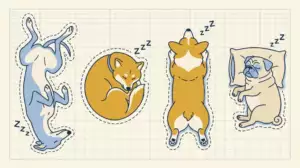

As the undisputed chief of the SnoutScoop household, I, Pisino, spend a great deal of my day observing my canine subordinates. While I pride myself on my elegant, private litterbox rituals, my canine housemates—specifically Blu, who has the coordination of a runaway shopping cart—insist on making their daily evacuations a dramatic, highly choreographed public performance.
You have undoubtedly witnessed it yourself: the pacing, the intense sniffing, and finally, the endless spinning. For years, I assumed Blu was simply trying to annoy me or perhaps looking for a broadcast signal. But as it turns out, there is actual, bizarre science behind this routine. Your dog is not just looking for the perfect patch of grass; they are actively aligning themselves with the Earth’s magnetic field. Welcome to the magnetic poop conspiracy.
The Groundbreaking (and Hilarious) Poop Study

In 2013, a team of researchers from the Czech University of Life Sciences and the University of Duisburg-Essen in Germany decided to tackle one of the greatest mysteries of our time. They spent two years tracking 70 dogs representing 37 different breeds. They measured the orientation of the dogs’ bodies during 1,893 defecations and 5,582 urinations.
The results, published in the journal Frontiers in Zoology and indexed on PubMed, were astonishing. Under calm magnetic field conditions, dogs showed a clear preference for aligning their bodies along the North-South axis when doing their business. Even more fascinating? They actively avoided aligning themselves along the East-West axis. This isn’t just a random habit; as reported by ScienceAlert, dogs are actually sensitive to the Earth’s magnetic forces.
For this monumentally quirky research, the scientists were awarded the prestigious Ig Nobel Prize in 2014—an award that honors achievements that “make people laugh, then think,” as noted by SN Explores. Personally, I think they deserved a royal medal for standing in fields measuring dog poop angles with compasses.
The Catch: Only in a Calm Magnetic Field

Before you run outside with your smartphone’s compass app to test this on your own pup, there is a catch you need to know about. This magnetic alignment only happens when the Earth’s magnetic field is completely calm.
The Earth’s magnetic field is constantly fluctuating. Solar flares, geomagnetic storms, and even subtle changes in the time of day can cause temporary shifts in the magnetic field. According to research highlighted by IFLScience, when the magnetic field is unstable, the dogs’ neat North-South alignment completely falls apart. In fact, the researchers only discovered the pattern once they threw out the data from days when the Earth’s magnetic field was fluctuating. When the magnetic “weather” is rough, your dog’s internal compass gets scrambled, and they will face whatever direction feels right at the moment.
Why Do They Do It? The Homing Instinct
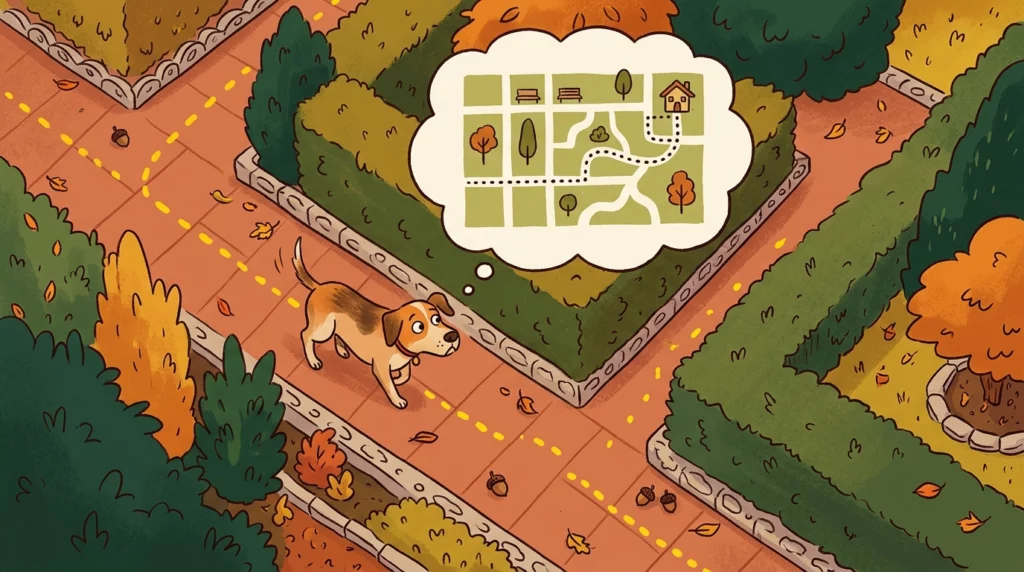
So, why on Earth (literally) do dogs care about magnetic poles when they are relieving themselves? While we do not have a definitive answer directly from the dogs—Blu was unavailable for comment as he was busy eating a sock—scientists have some compelling theories.
Many animals, including migratory birds, sea turtles, and bees, use magnetoreception (the ability to detect magnetic fields) for navigation. It turns out dogs possess this same sixth sense. A study published in eLife demonstrated that hunting dogs use the Earth’s magnetic field as a homing system to navigate unfamiliar forested areas. They often run a short distance along a North-South magnetic axis before embarking on their return journey, essentially “calibrating” their internal GPS, a phenomenon also detailed by Canine Fitness.
When it comes to the potty routine, aligning with the North-South axis might simply be a way for dogs to keep their internal map updated. According to Science Focus, aligning with the field lines might help them read their environment better, or it might just feel physically comfortable to align their bodies with the magnetic flow when they are in a vulnerable posture.
How to Test the Conspiracy at Home

If you want to play scientist and see if your own dog is a secret compass, you can easily conduct your own backyard experiment. Here is how to do it:
- Download a Compass App: Make sure you have a reliable digital compass on your smartphone.
- Observe the Weather (Space Weather, That Is): Check if there are any ongoing solar storms or high geomagnetic activity. On a quiet, normal day, your chances of seeing the alignment are much higher.
- Keep Your Distance: Do not hover too close, or you might distract your pup and disrupt their natural alignment. Watch them from a distance of about 10 feet.
- Record the Axis: Note the direction of their spine when they finally stop spinning and settle down. Are they facing North or South?
As The Guardian points out, you might need to record several weeks of data to see a clear statistical trend, but it is a highly entertaining way to spend your daily walks.
A Final Word from the Chief
While I still find the entire spectacle of canine elimination to be highly undignified, I must admit I have a newfound respect for Blu and his spin cycle. He isn’t just wasting time; he is communicating with the very core of our planet.
The next time your dog takes forever to find the right spot, do not lose your patience. They are just trying to sync up with the universe. And if you see me staring out the window with a look of quiet superiority, just know that my internal compass is already perfectly calibrated—no spinning required.