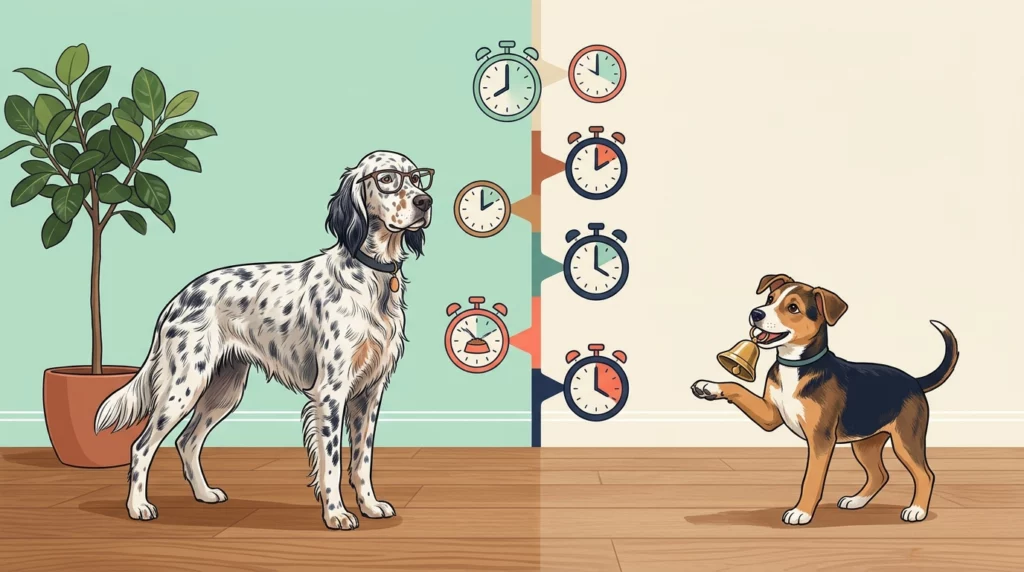
Hello, discerning dog lovers. I am Niki, a 5-and-a-half-year-old English Setter with impeccable tastes, a sleek coat, and exceptionally high standards for editorial accuracy. While my housemate Blu might treat life as one giant, noisy wrestling match, I prefer order, elegance, and above all, clean living spaces. Nothing disrupts a refined household quite like an unexpected puddle on a silk oriental rug.
House-training a new puppy can feel overwhelming, but I assure you that it is neither black magic nor an impossible dream. It is simply a matter of canine biology, consistent routines, and clear communication. With a few veterinary-approved principles, you can fast-track your puppy’s potty habits without losing your sanity or your flooring.
1. The Science of the Puppy Bladder
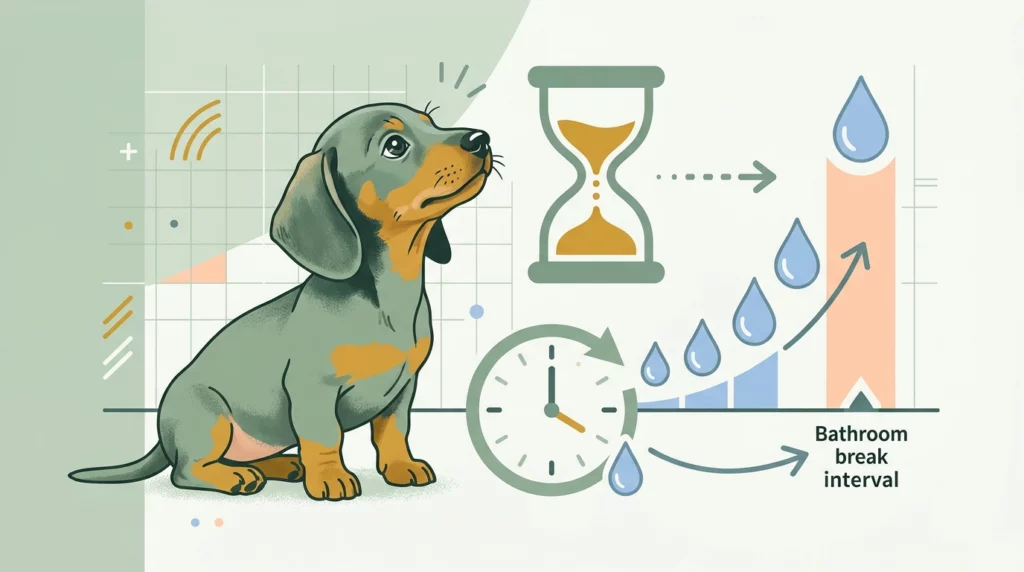
Before demanding perfect bathroom behavior, you must understand your puppy’s physical limits. Small bodies come with small bladders and rapid metabolisms.
A reliable rule of thumb shared by experts at the American Kennel Club (AKC) and VCA Hospitals is that a puppy can generally hold their bladder for about as many hours as their age in months. For example, an 8-week-old puppy (2 months) can hold it for a maximum of 2 hours. However, that timeline applies mostly to rest periods. During active play, excitement, or right after drinking water, that timeframe shrinks dramatically—sometimes to as little as 15 to 20 minutes!
Expecting an 8-week-old pup to sleep through an eight-hour night without a potty break isn’t just unrealistic—it’s biologically impossible. Setting reasonable expectations early prevents frustration on both ends of the leash.
2. Build a Sacrosanct Daily Schedule
Dogs thrive on predictability, and puppies in particular rely on structured routines to learn when and where bathroom breaks happen. According to guidance from the ASPCA and American Humane, establishing a rock-solid daily schedule is the single most effective way to eliminate mistakes.
Take your puppy out to their designated potty area at these exact key moments:
- First thing in the morning (immediately upon waking).
- Immediately after meals (digestion triggers bowel movements quickly in young dogs).
- Right after naps or resting periods.
- During and immediately following play sessions.
- Right before bed.
Additionally, keep feeding times consistent. Free-feeding (leaving food out all day) leads to unpredictable potty times. When you control when food goes in, you can accurately predict when it must come out.
3. Use Crate Training Wisely
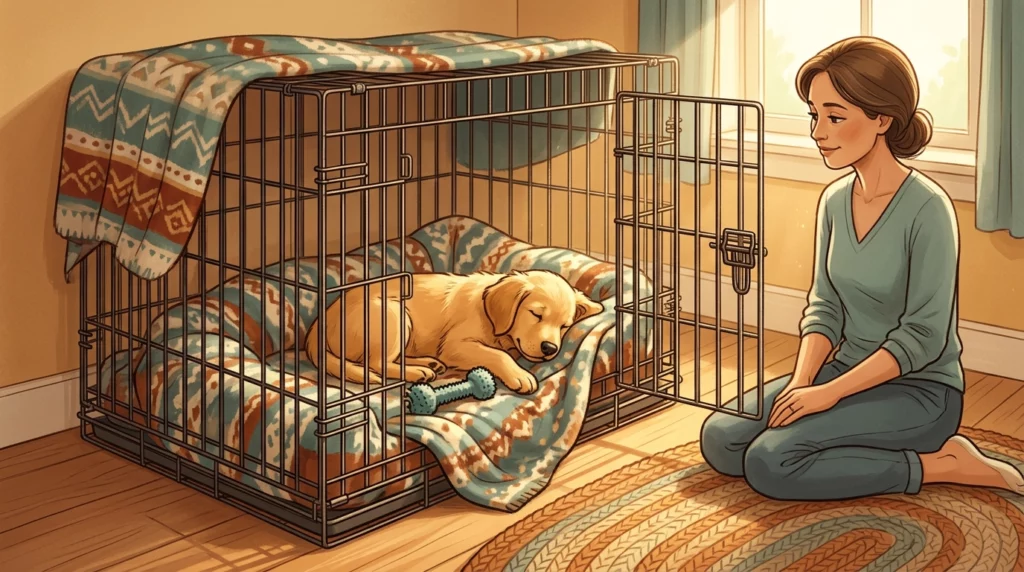
Some humans feel hesitant about using a crate, but when used properly, a crate is a safe, cozy den that works in harmony with a dog’s natural instincts. As noted by the Humane Society of Southern Arizona, dogs naturally avoid soil-ing the area where they sleep.
The secret to crate training success lies in proper sizing. The crate should only be large enough for the puppy to stand up, turn around easily, and lie down comfortably. If the crate is too spacious, your pup may decide to sleep in one corner and use the opposite corner as a bathroom.
When you cannot actively supervise your puppy—such as when cooking dinner or answering emails—the puppy should be safely resting in their crate or confined to a small, puppy-proof playpen area. When you are together, try the “umbilical cord” method: leash the puppy to your waist so they remain nearby, allowing you to catch subtle potty cues before an accident happens.
4. Perfect Your Reward Timing
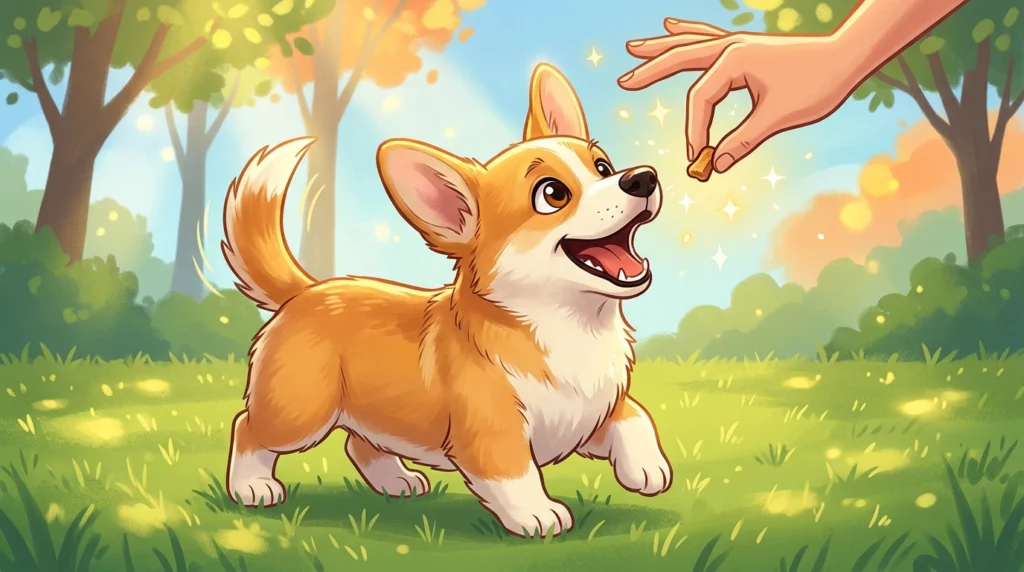
Timing is everything in dog training. As emphasized by the RSPCA, dogs learn by associating an immediate consequence with their precise action. To fast-track learning, reward your puppy the very second they finish eliminating outside.
Do not wait until you walk back inside the house to offer a treat. If you give a treat in the kitchen 5 minutes later, your puppy thinks, “Splendid, I am being rewarded for standing in the kitchen!”
Follow this high-yield strategy recommended by GeniusVets:
- Take your puppy outside to the exact same spot each time on a leash.
- Use a calm verbal cue like “Go potty.”
- Stand quietly and give them a couple of minutes to focus.
- The moment they finish, throw a mini-celebration! Praise enthusiastically and deliver a high-value treat within 2 seconds.
5. How to Handle Accidents Like an Expert
Even with the most rigorous Setter-level standards, accidents will happen. How you respond to these moments determines how fast your puppy learns.
Veterinary experts at Veterinary Partner (VIN) stress one vital rule: Never yell, scold, or rub a puppy’s nose in an accident. Punishment does not teach a dog where to go; it simply teaches them that humans are unpredictable and frightening when urine is present. As a result, the puppy learns to hide behind the sofa or under the bed next time they need to relieve themselves.
If you catch your puppy in the act, gently interrupt them with a calm “Oops!”, pick them up immediately, and carry them outside to finish. If you discover an accident after the fact, simply clean it up quietly. The learning window has already passed.
Always clean indoor accidents with an enzymatic cleaner. Regular household cleaners or ammonia-based sprays fail to eliminate organic scent markers. Ammonia actually smells similar to urine to a dog’s sensitive nose, attracting them right back to the same spot.
6. Learn to Read Canine Pre-Potty Signals
Puppies usually send clear behavioral signals right before they need to eliminate. You just need to know what to look for:
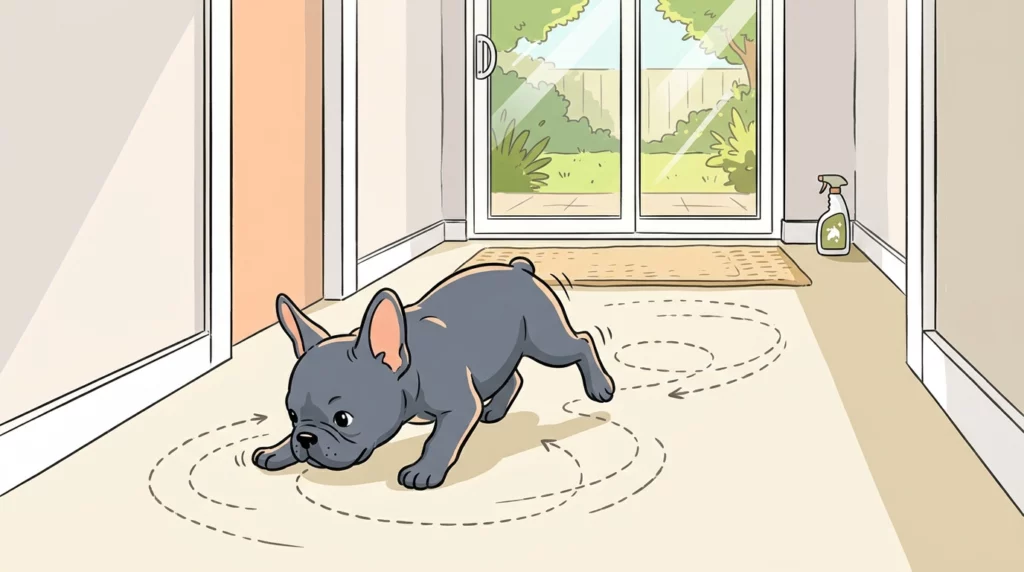
- Sudden sniffing of the floor in intense, rapid circles.
- Abruptly stopping play and wandering toward a doorway or corner.
- Whining, pacing, or uncharacteristic restlessness.
- Squatting or dropping their hindquarters slightly.
The moment you observe any of these cues, swift action is required. Escort them outdoors immediately!
A Final Word of Setter Wisdom
House-training is not a race, but a consistent practice built on patience, clear signals, and positive rewards. Celebrate the small victories, keep your enzymatic cleaner handy, and remember that every clean day brings you closer to a lifetime of harmonious living.
Now, if you’ll excuse me, I must check on Blu to ensure he isn’t chewing on my favorite throw pillow. Happy training!