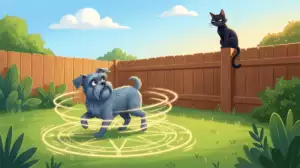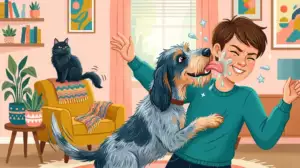
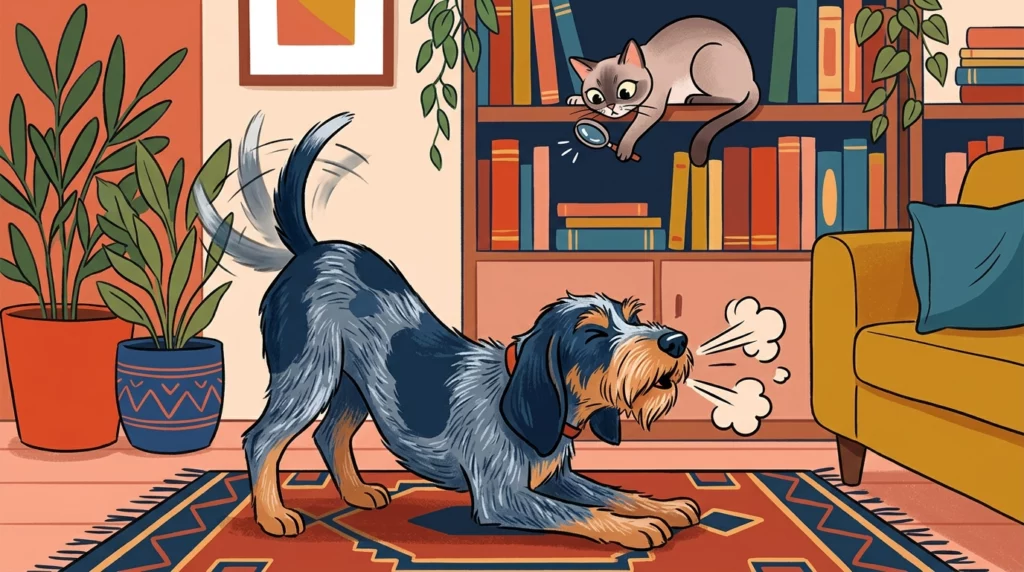
Hello, human friends! Yuna here, your resident chaotic feline adventurer and chief of backyard investigations. Usually, I spend my days scaling the highest bookshelves or silently judging the dogs from the top of the refrigerator. But lately, I’ve been observing a truly bizarre ritual. When my goofy foster brother Blu gets into a high-energy wrestling match with his toys, he stops, shakes his head, and lets out a dramatic, wet, snorty achoo!
At first, I assumed he was simply allergic to his own boundless energy. Or perhaps he was allergic to my sparkling, superior presence. But being a cat of science and intense curiosity, I decided to dig deeper. It turns out that when dogs sneeze during playtime, they aren’t actually coming down with a cold. They are using a highly sophisticated, secret communication method. Welcome to the mysterious world of the canine play-sneeze code!
The Universal Canine ‘Just Kidding’ Signal
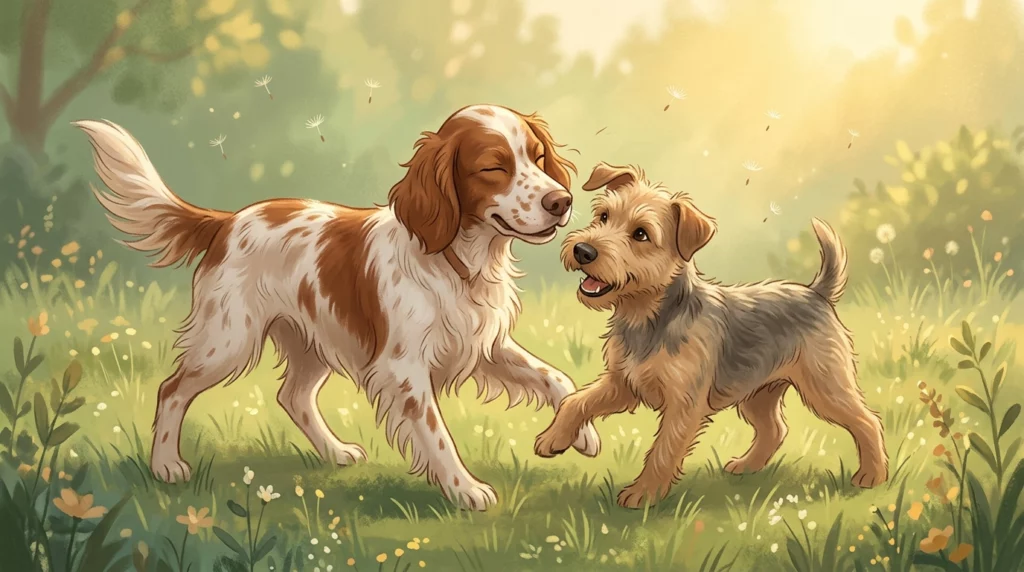
When dogs play, things can get pretty intense. They chase, tackle, growl, show their teeth, and bite each other’s necks. To an outsider (or a very calm cat), it can look like an all-out backyard brawl. So, how do dogs keep these mock battles from turning into actual warfare?
They use what animal behaviorists call “calming signals” or “meta-communication.” According to experts at Whole Dog Journal, the play sneeze is a vital way for a dog to say, “Hey, I know I just bit your ear, but I promise I’m just kidding! This is still a game!”
It is essentially a punctuation mark of peace. If a play session is getting a bit too rough, one dog will often pause, take a step back, and sneeze. This brief interruption acts as a reset button, letting the other dog know that their intentions are entirely friendly. As highlighted by Rover, it is a way to de-escalate the tension so the fun can safely continue. It’s like typing ‘LOL’ at the end of a text message that might otherwise sound a bit too aggressive.
How to Spot a Real Sneeze vs. a Play Sneeze
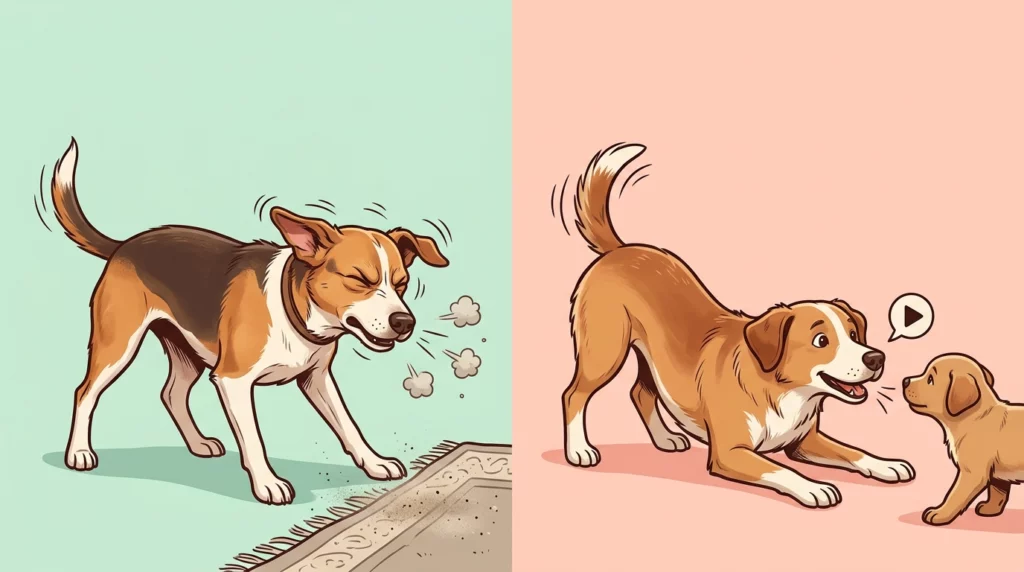
As a cat, my sneezes are delicate, rare, and deeply dignified. Dog sneezes, on the other hand, are a whole-body experience. But there is a clear physical difference between a sneeze caused by a tickly nose and a play sneeze.
According to the American Kennel Club (AKC), a play sneeze is typically much shallower. It is a fake sneeze generated from the nose and throat rather than deep within the lungs. When dogs play-sneeze, you will often notice they also curl their lips into a goofy “play grin,” wag their tails, and lower their front halves into a classic play bow.
An article on Chewy points out that dogs also sneeze simply because they get excited. When a dog is highly stimulated, they wrinkle their noses up in joy. This wrinkling naturally tickles their nasal passages, triggering an involuntary, happy snort. So, whether it is an intentional signal or a physical reaction to sheer excitement, it all translates to one thing: pure, unadulterated fun!
Democratic Wild Dogs: Voting by Sneeze!
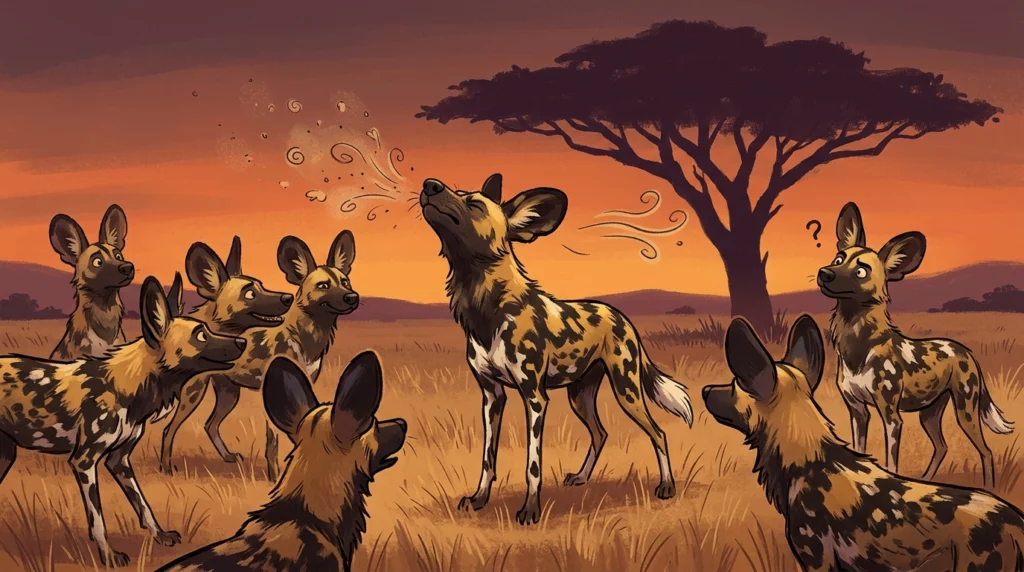
Now, if you think your domestic pup is clever for play-sneezing, prepare to have your mind blown by their wild cousins. I uncovered a fascinating study published by the Royal Society about African wild dogs (Lycaon pictus).
These wild canids take the play-sneeze code to a whole new democratic level. Before the pack sets off on a hunt, they gather for highly energetic social rallies. Researchers discovered that the pack actually “votes” on whether to start the hunt by sneezing!
As detailed by Africa Geographic, the more sneezes that occur during a rally, the more likely the pack is to head out and hunt. If the dominant pair wants to go, they only need a few supportive sneezes from the crowd. But if a lower-ranking dog wants to initiate a hunt, they need a massive quorum of sneezes (about ten or more) to convince the rest of the pack. Talk about nasal democracy! It turns out sneezing is deeply embedded in the canine evolutionary toolkit as a way to reach a group consensus.
When is a Sneeze More Than Just a Game?
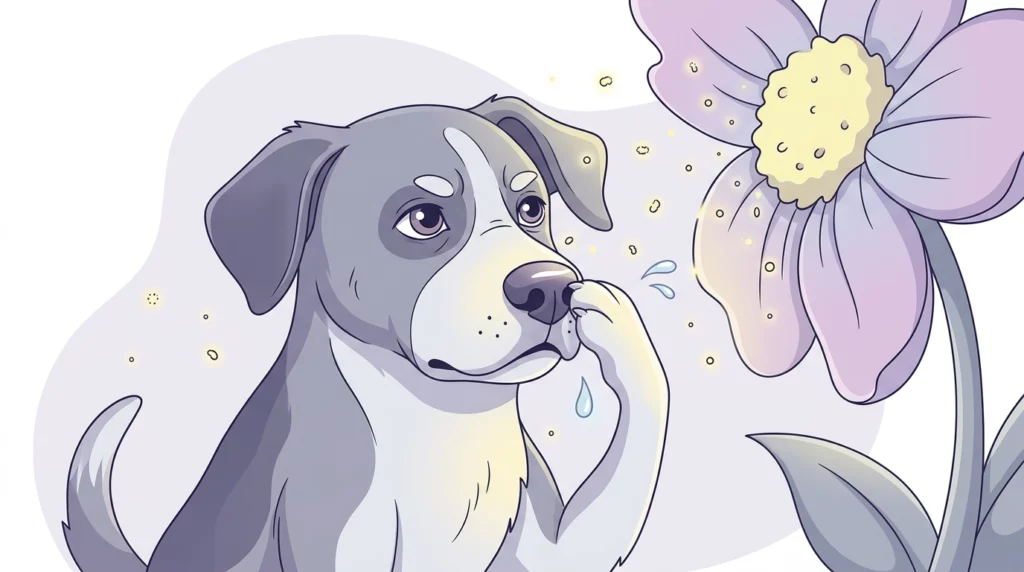
While play-sneezing is completely normal and incredibly endearing, there are times when a sneezing fit warrants a trip to the vet. If your dog is sneezing constantly when they *aren’t* playing, it is time to pay closer attention.
The Royal Kennel Club notes several potential culprits for non-play sneezing, including:
- Foreign Objects: Dogs love to sniff the ground, which means they can easily inhale blade grass, dirt, or dangerous foxtails that get stuck in their nasal passages.
- Allergies: Just like humans, dogs can be allergic to pollen, dust, household cleaners, or perfumes.
- Infections: Nasal mites, fungal infections, or respiratory illnesses like kennel cough can cause persistent sneezing accompanied by nasal discharge, lethargy, or coughing.
As explained in a piece on HuffPost UK, if your dog is sneezing excessively, shaking their head repeatedly, or has discharge coming from their nose, it is best to consult your veterinarian to rule out any underlying health issues.
The Final Verdict from Yuna
As a cat, I must confess that the canine play-sneeze is actually quite brilliant. While we felines prefer to communicate our boundaries with a subtle tail twitch, a sharp look, or the classic “knock-your-favorite-mug-off-the-counter” move, dogs have developed their own noisy, wet, and thoroughly entertaining dialect.
So, the next time your pup lets out a wet snort in the middle of a game of tug-of-war, don’t reach for the tissues. Smile, wave their favorite toy, and appreciate the fact that they are just letting you know they are having the time of their life.
Now, if you’ll excuse me, I see a stray shoelace that needs to be aggressively pounced upon. Until next time, keep exploring, keep playing, and don’t forget to sneeze!