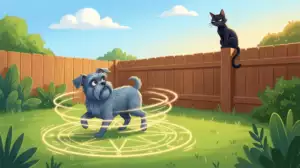
Woof! Hello my favorite human friends! It is me, Blu, your resident two-year-old Griffon Bleu de Gascogne rescue pup with the magnificent long ears and endless zoomie energy. Today, we are talking about two of my absolute favorite things in the whole world: kids and communication!
I love kids. They are soft, they laugh at my goofy bounds, and best of all, they drop high-value snacks like cheese sticks and animal crackers at random intervals. But as much as I adore small humans, sometimes we speak totally different languages. A kid might think, “Oh boy, a doggie! I’m going to run up and wrap my arms around his neck!” Meanwhile, a dog might be thinking, “Yikes, a tiny fast tornado is trapping me!”
To keep everyone tail-waggingly happy and safe, we need to help kids understand how we dogs express ourselves. So grab a bowl of kibble (or a pretzel, if you prefer) and let’s dive into the ultimate guide to teaching kids dog body language!
Why Kid-Dog Communication Matters
Before we learn the secret dog code, let’s look at why this is so important. According to data from the Centers for Disease Control and Prevention (CDC), millions of dog bites occur each year in the United States, and children are statistically the most common victims. Further analysis in CDC injury reports shows that kids aged 5 to 9 experience the highest rates of bite-related injuries.
Here is the kicker: most of these incidents do not happen with scary stranger dogs in dark alleys. As the American Veterinary Medical Association (AVMA) points out, the vast majority of dog bites happen during normal, everyday interactions with family pets or dogs the child already knows. Dogs almost always give warning signals before they react, but humans—especially little ones—often miss those subtle canine cries for space.
Translating “Dog Talk”: What a Happy Dog Looks Like
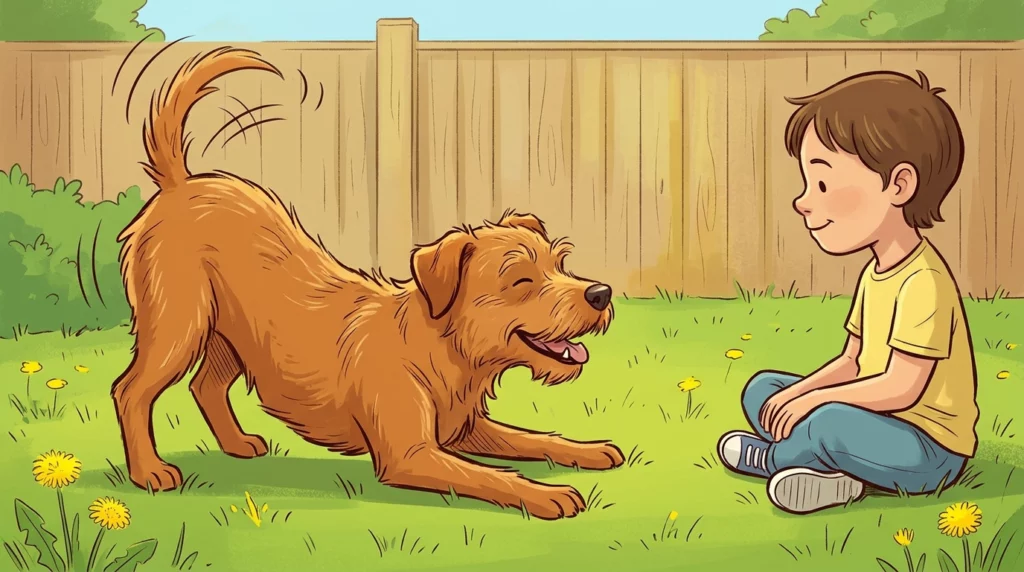
When a dog is happy and relaxed around children, their body looks loose and wiggly, kind of like cooked noodle pasta!
- The Loose Body: A comfortable dog has relaxed muscles. There is no tension in their shoulders or back.
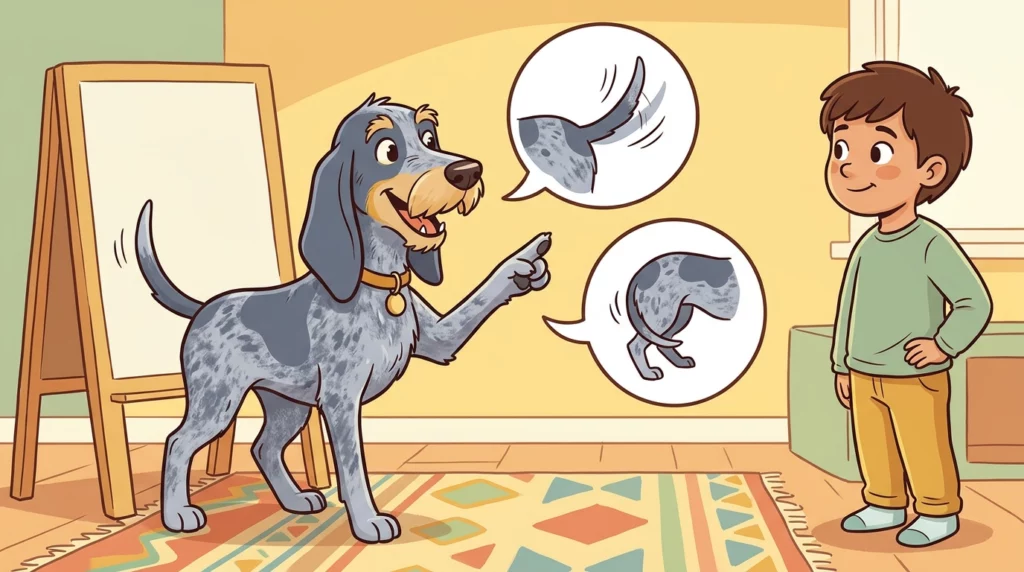
- The Whole-Butt Wag: A friendly wag is soft and fluid. In fact, as highlighted in Oregon Humane Society’s Parent Guide, a truly happy wag involves the whole hindquarters swinging, not just a rigid tail ticking like a clock.
- Soft Eyes and Floppy Ears: Our eyes look round or almond-shaped with soft expressions, and our ears sit in their normal, natural resting position.
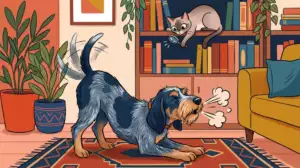
- The Play Bow: Front legs down, bottom up in the air! That is canine for “Let’s play a game right now!”
Deciphering Stress Signals: When a Dog Needs Space
Dogs are super polite creatures. We try really hard to ask for space gently before we ever resort to growling. Educational materials from San Diego Humane Society and canine safety resources at ASPCApro list several silent indicators that a dog feels overwhelmed or stressed:
1. The “Whale Eye”
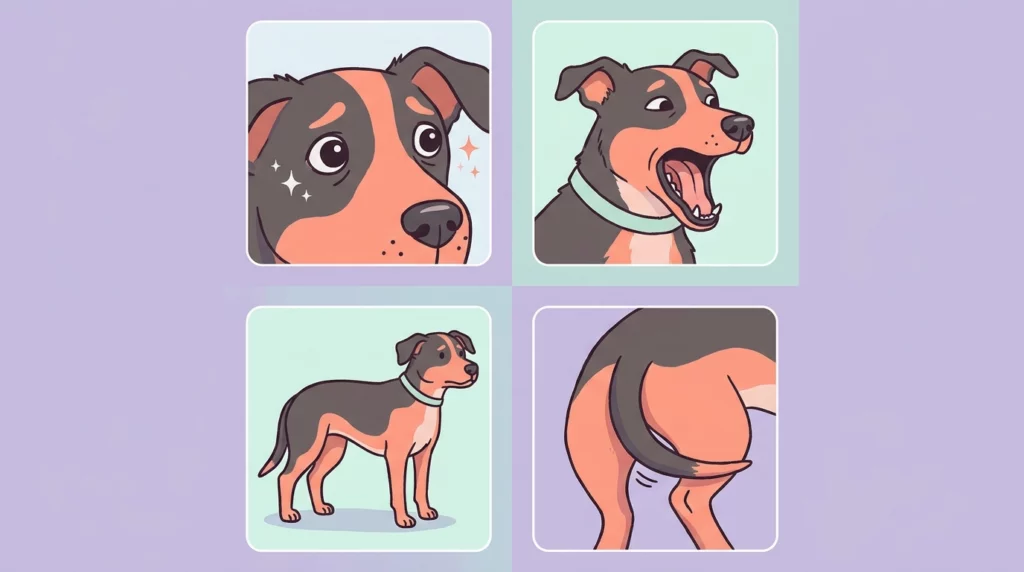
If you see the white part of a dog’s eye (the sclera) showing in a half-moon shape, the dog is feeling anxious or trapped. They are turning their head away while keeping their eyes fixed on whatever is making them nervous.
2. Yawning and Lip Licking (Outside of Mealtime)
If I lie down after a 5-mile run and yawn, I am sleepy. But if a child crawls into my personal space and I suddenly lick my lips, yawn, or pant heavily without exercising, that is a stress signal! It means, “I am trying to calm myself down, please step back.”
3. The “Freeze”
A happy dog is a moving, loose dog. If a dog becomes suddenly stiff, stops moving, and stares intently, that is a huge red flag. A freeze is a dog’s last warning pause before they take defensive action.
4. Tucked Tail and Low Ears
A tail clamped tightly between the back legs or ears pinned flat against the skull means fear. A scared dog is a dog that might react if pressed further.
Golden Rules to Teach Kids Today
To help kids remember how to act around us pups, organizations like LifeLine Animal Project recommend simple, memorable safety rules that parents can teach at home:
1. “Ask the Human, Then Ask the Dog”
Teach kids never to pet an unfamiliar dog without asking the owner first. Once the owner says yes, the kid should ask the dog by standing a couple of feet away and letting the dog choose to approach them. If the dog stays back, respect their decision!
2. “Be a Tree”
If an unknown or overexcited dog approaches a child, running and screaming makes us think, “Yay! A chasing game!” Instead, kids should stand still like a tree: fold their branches (arms in), plant their roots (feet together), and look at their toes until a grown-up arrives.
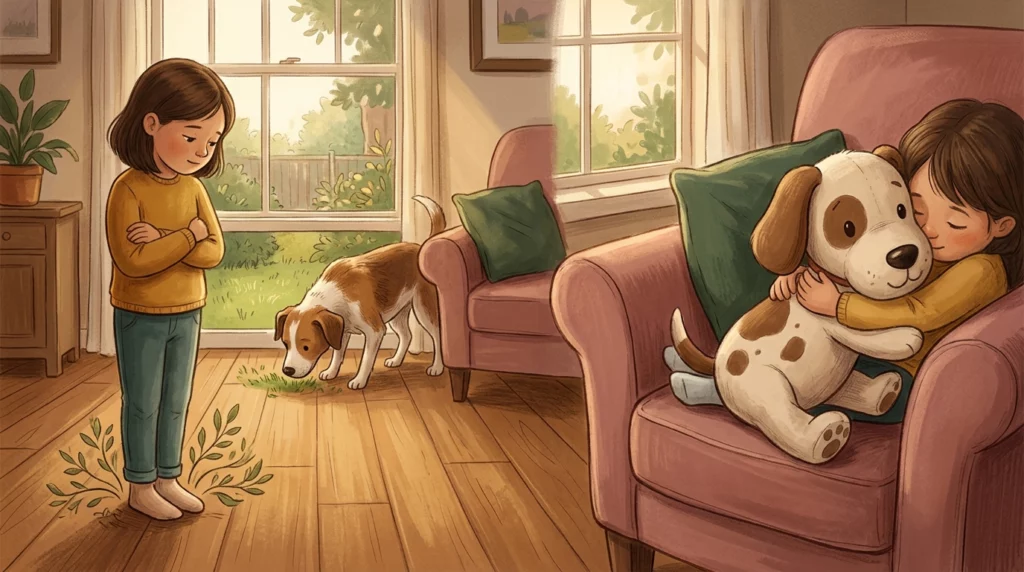
3. Hug the Stuffed Animals, Not the Real Dog
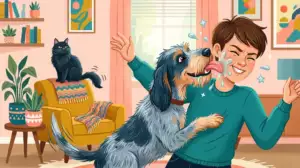
Humans express love by wrapping their arms around things. Dogs express dominance or restraint by putting their paws or body over another dog! Hugging puts a child’s face right next to a dog’s teeth and restricts the dog’s movement, which can feel terrifying to us. Teach kids to give gentle chest scratches instead of neck hugs.
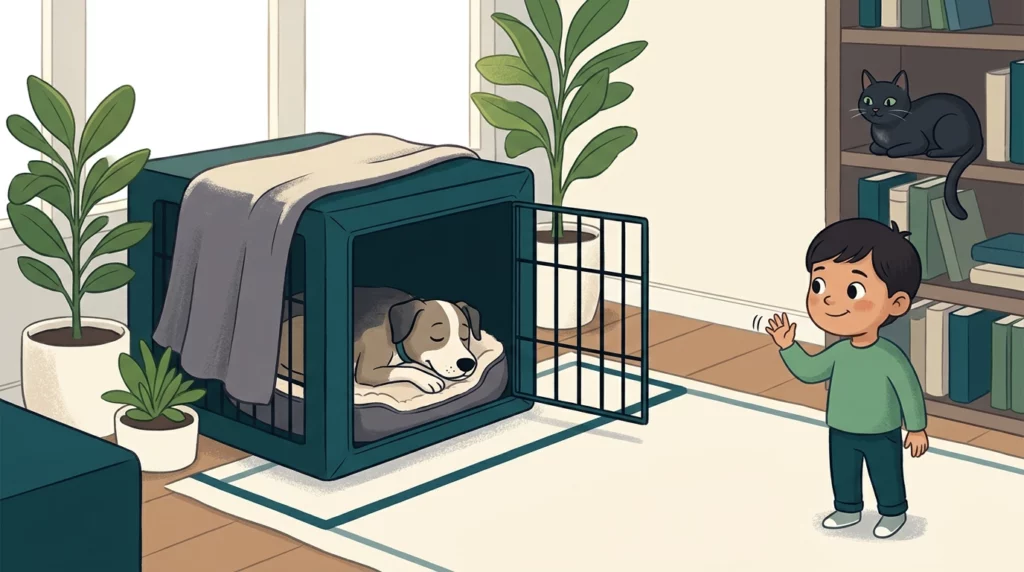
4. Honor the Safe Zone
As noted in bite prevention guides from Duncan Animal Hospital, children must leave dogs alone when they are eating, chewing a high-value bone, sleeping, or hanging out in their crate. A dog’s crate or bed should be an absolute sanctuary where kids never disturb them.
Never Punish the Growl!
Here is a secret tip from Blu’s canine brain: if a dog growls, do not yell at them! A growl is like a smoke alarm. It tells you, “I am uncomfortable and I need help!” If you punish a dog for growling, they might stop growling in the future—and go straight to a bite without warning next time they get scared. Instead, thank the dog for telling you how they feel, calmly remove the child from the situation, and figure out what made the dog anxious.
Making Learning Fun for the Pack
You don’t have to make safety sound scary! Turn reading dog body language into a game. Look at family photos or dog videos online together and play “Guess the Emotion.” Ask your kids: Is that tail stiff or loose? Are those ears relaxed or pinned back? What is that pup trying to say?
When kids learn to speak Dog, magic happens. Trust grows, belly rubs increase, and dogs and children can build the safest, sweetest, most tail-wagging friendships possible. Now if you’ll excuse me, I hear a cheese wrapper crinkling in the kitchen!