
Hello, my intellectually curious human friends! Niki here. As a highly discerning five-and-a-half-year-old English Setter, I take great pride in maintaining the absolute highest standard of canine journalism here at SnoutScoop. Today, we are putting on our metaphorical spectacles and diving headfirst into the fascinating, sometimes noisy, field of canine linguistics. Have you ever wondered why your resident four-legged companion insists on screaming at the mail carrier, or what that soft, rhythmic “boof” at three in the morning actually means? You are in luck. We are going to decode the canine lexicon together so you can finally understand what your dog is trying to tell you. Trust me, once you master the nuances of the dog bark, your human-canine bond will reach a level of mutual understanding you never thought possible. Let us begin our scholarly pursuit!
Before we analyze the specific vocalizations, we must look at the fascinating evolutionary science behind why we bark. Historically speaking, our wild ancestors like wolves do not actually bark all that much once they reach adulthood. It is true! Research published on PubMed suggests that barking in wild canids is relatively rare and mostly reserved for short-range warnings or defense. However, during the process of domestication, humans selectively bred dogs who kept their juvenile traits, a phenomenon known as neoteny. This means domestic dogs retained their puppy-like vocalizations, transforming the bark into a highly sophisticated, multi-purpose communication tool.
As pioneering researcher Dr. Sophia Yin discovered in her landmark 2002 study on CattleDog Publishing, dog barks are not just random, meaningless noise. They vary systematically in acoustic structure depending on the specific situation. While humans rely on complex verbal sentences, we dogs combine vocal pitches, rhythms, and body language to express a rich tapestry of emotions, needs, and desires.

To understand the dog dictionary, you must pay attention to three physical variables: pitch, duration, and frequency. Lower pitches generally mean “stay away” (threat or anger), while higher pitches translate to “come closer” (play or pain). Long, sustained sounds suggest a dog making a firm decision, whereas short, rapid-fire sounds signal excitement or sudden shifts in attention. With these rules in mind, let us dissect the classic barks:
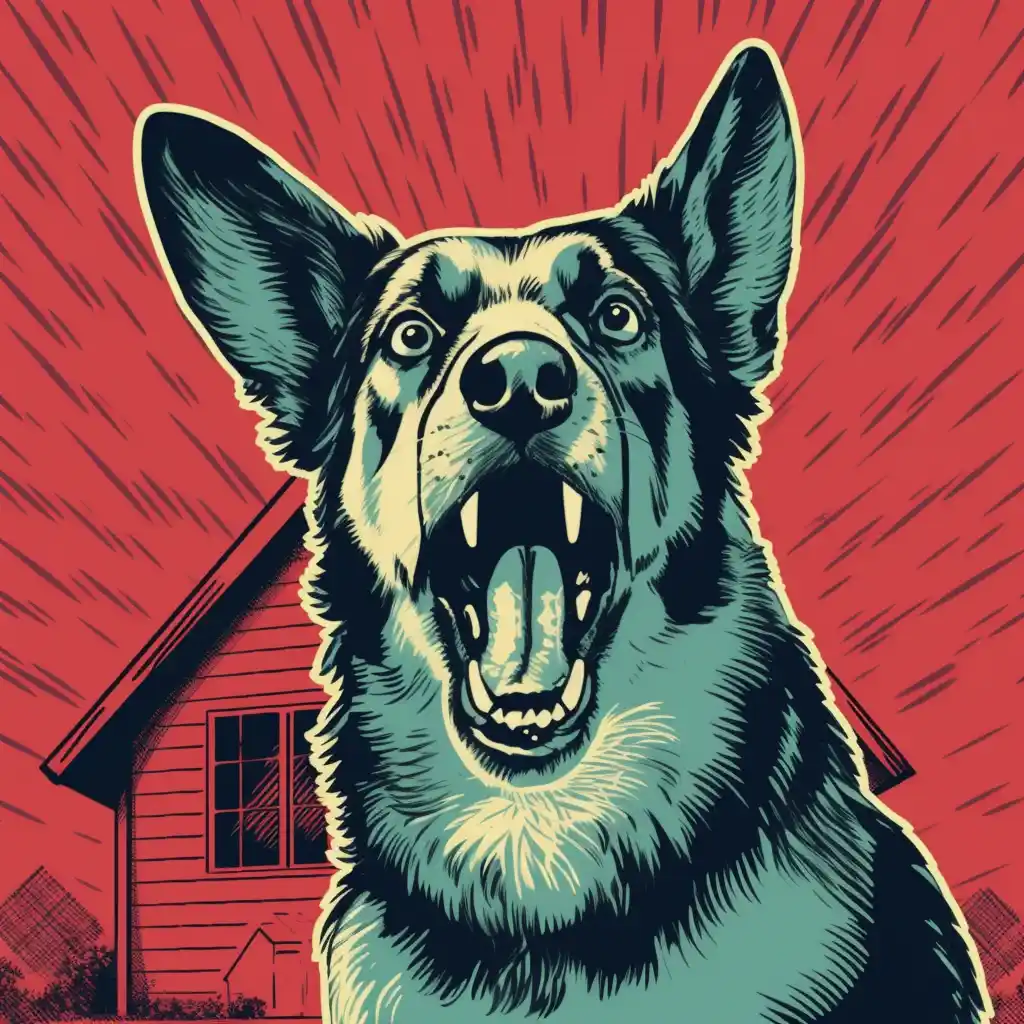
- Alert/Warning Bark: According to experts at the American Kennel Club (AKC), this bark is typically characterized by a lower pitch, and it is sharp, rapid, and highly repetitive. Your dog is acting as a sentry, letting you know that something unusual, like a suspicious package carrier or a particularly daring squirrel, is encroaching upon their sacred territory.

- Attention-Seeking Bark: Unlike the urgent warning bark, this vocalization is usually lighter, single, or spaced out with deliberate pauses. As noted by canine behaviorists on Psychology Today, a dog using this sound will often bark once or twice, then pause to stare directly at you to see if their performance achieved the desired result (like a treat, a walk, or a scratch behind the ears). It is essentially our way of saying, “Excuse me, human, look at how beautiful and deserving of a snack I am!”

- Fear/Anxiety Bark: When a dog feels overwhelmed, cornered, or anxious, their bark often spikes to a much higher pitch and a rapid, frantic tempo. As explained by the training experts at Ancillary K9, this type of barking can sound almost hysterical, occasionally mixed with whines or whimpers. It is a clear acoustic indicator that the dog is struggling with an unfamiliar situation, a sudden loud noise like thunder, or the scary reality of separation anxiety.

- Playful/Excited Bark: This vocalization is bouncy, lighthearted, and distinctly high-pitched. It often features stutter-barks, which sound like a breathy “huff-bark.” According to insights from Pawrpose, these happy sounds are almost always paired with classic friendly body language: a wildly wagging tail, relaxed facial features, and a dramatic play bow. It is our enthusiastic invitation to drop whatever silly human task you are doing and join us in a game of chase.
- Frustration/Protest Bark: If we are tied up, locked behind a baby gate, or watching a ball roll under the sofa where our paws cannot reach, our bark takes on a repetitive, flat, and persistent tone. As highlighted on Sniffspot, this bark is born out of a desire to control a situation we cannot physically reach. It lacks the sharp, defensive growl of an alert bark, sounding more like a continuous complaint.
- Pain/Injury Bark: Crucially, we must be able to recognize this type of vocalization. It is a sudden, sharp, high-pitched yip or yelp that sounds radically different from any social communication. It is an involuntary cry of distress, often accompanied by physical cues such as limping, cowering, or guarding a specific part of the body. If you hear this sound, check your dog immediately and consult a professional.
To truly master the art of canine translation, you must synthesize all these elements: tone, pitch, duration, and context. As the experts at The Dog Line emphasize, looking at the entire environment and the dog’s body language is the key to accurate translation. A low-pitched bark with a stiff posture means something very different from a high-pitched bark with a wiggly butt!

Sometimes, barking can transition from healthy communication to a symptom of an underlying struggle. Excessive barking is often a cry for help, signaling chronic boredom, severe separation anxiety, or even underlying medical discomfort. If your dog’s vocalizations are starting to feel a bit overwhelming, do not fret. Consulting a certified positive reinforcement dog trainer or your trusted veterinarian is an excellent way to get back on track.
Remember, barking is not a behavioral defect; it is our primary vocal language! By taking the time to listen, analyze, and decode our sounds with patience and love, you will build a stronger, more empathetic bond with your favorite pup. Until next time, keep your ears open, your treats handy, and your standards exceptionally high!