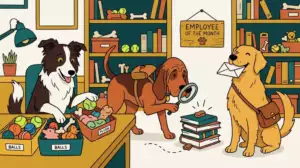
Understanding herding work
Explore herding as coordinated work involving a dog, a handler and livestock. Practical situations focus on preparation, control, animal welfare and the difference between instinctive interest and trained work.
Training mode
Understanding herding work
Questions covered in this exam
- What makes a sheepdog useful during a farm move?
- A farm needs protection from predators and help moving sheep. What distinction matters?
- During an organised herding exercise, who forms the working team?
- Must every organised herding exercise involve only sheep?
- A young dog shows interest in livestock. What does that establish?
- You want to explore herding with your dog. What is a sensible first contact?
- Two beginner dogs react differently near a pen. How should instruction respond?
- Sheep are being injured during a training session. What takes priority?
- You watch a demonstration from a public viewing area. What is the respectful choice?
- A pet circles frightened sheep on a walk. Is that harmless herding practice?
- Your dog has noticed stock beyond a hedge. When should you secure control?
- Before entering an unfamiliar herding event, what should you check?
- A working dog develops a limp halfway through the day. What should the handler do?
- A farm prepares for possible evacuation after flooding. What should its plan include?
- In a herding trial, why does controlled movement matter more than random speed?
- Is sheepdog work limited to organised competitions?
- Before a farm session, why inspect gates and fencing?
- Can a livestock guardian be assumed to know how to gather scattered sheep?
- A family dog loves chasing movement but has no livestock job. What is appropriate?
- After reading a herding quiz, what is a realistic next step for practical learning?