
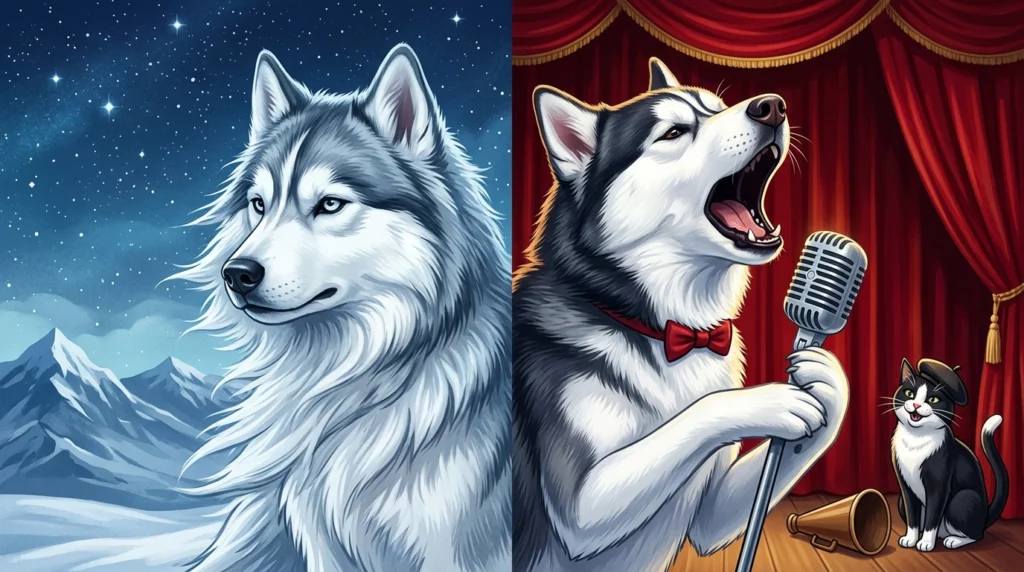
Hello, human friends! It is me, Yuna—your resident adventurous, curtain-climbing, chaotic explorer cat. Usually, I leave the writing to my highly analytical canine sibling Niki, or the overly energetic Blu. But today, I staged a keyboard takeover. Why? Because we need to talk about a breed of dog that matches my personal level of dramatic flair and chaotic energy: the Siberian Husky.
Huskies are the ultimate puzzles of the canine world. They look like majestic winter wolves, but they behave like dramatic opera singers who have lost their favorite toy under the couch. As a cat, I respect their commitment to vocal protests and escape-artist behavior. But behind all those hilarious viral videos is some of the most fascinating biology and history in the animal kingdom.
Grab your favorite spot on the couch, and let’s dive into ten mind-blowing facts about Siberian Huskies!
1. They Belong to an Ancient Siberian Lineage
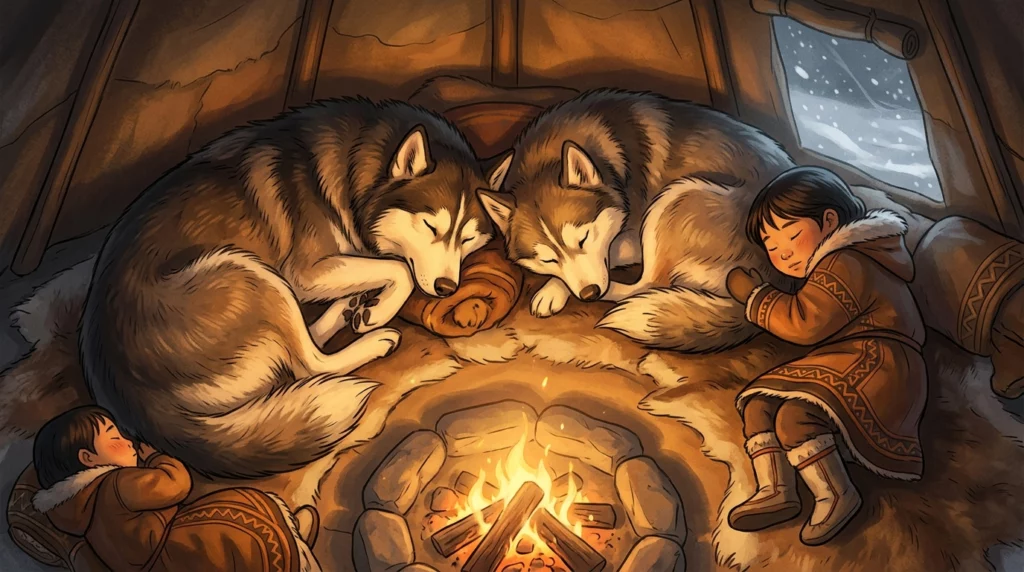
Huskies aren’t just your average backyard pups; they are living history. Recent genetic research published by Cornell University reveals that Arctic sled dogs, including the Siberian Husky, have a unique, deeply isolated lineage. This lineage traces back to specialized dogs that helped human hunters survive in the harsh, icy Siberian wilderness thousands of years ago.
According to research highlighted by ZME Science, these ancient dogs were essential companions to the Chukchi people of Siberia. They didn't just pull sleds; they were integral to family survival, providing warmth and protection in one of the most inhospitable environments on Earth.
2. Their Metabolism is a Scientific Mystery
If I run around the living room at 3:00 AM for ten minutes, I am completely exhausted and require a three-hour nap. A Husky, on the other hand, can run for hours and hours without ever hitting a wall. How? Because their metabolism is a literal marvel of nature.
Scientific studies on sled dog physiology, shared by Northern Wolf, show that these dogs can dramatically alter their metabolism during long runs. While humans and other dogs rely on glycogen and fat reserves that eventually deplete, Huskies can regulate their cellular energy use to avoid depletion. Research available on PubMed (NIH) confirms that sled dogs can run hundreds of miles without burning through their body's energy reserves, essentially switching to a highly efficient, self-sustaining fuel system. Talk about infinite zoomies!
3. The Secret Behind Their Piercing Blue Eyes
As a cat with gorgeous eyes, I know a good gaze when I see one. But Huskies are famous for those icy, crystal-blue eyes that look right into your soul. Scientists finally figured out the genetic trick behind this stunning trait.
A massive genetic study, reported by Smithsonian Magazine, analyzed the DNA of over 6,000 dogs. Researchers discovered that a duplication on canine chromosome 18, near the ALX4 gene, is strongly associated with those mesmerizing blue eyes. This genetic tweak, as detailed by Sci.News, decreases pigment production in the iris, creating that icy blue look even in dogs without merle coloring. It is a completely distinct genetic pathway from other blue-eyed dog breeds!
4. They Can Handle Cold Colder Than Your Freezer

If the indoor temperature drops below 70°F, I am immediately burrowing under three blankets. A Siberian Husky, however, is basically built like a walking, fluffy thermos.
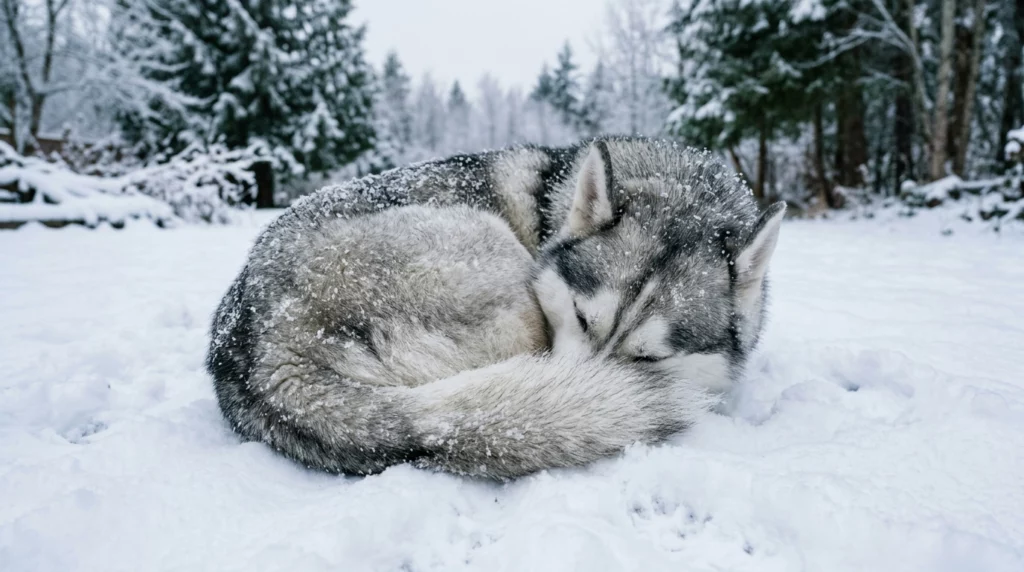
Huskies can comfortably tolerate and survive temperatures down to -50°F to -60°F (-45°C to -51°C), as noted by Husky Gifts. That is literally colder than the standard home freezer! A fun perspective shared by Sunday Roast Media reminds us that when humans are shivering in three layers of winter gear, a Husky is happily curling up in the snow, tucking their fluffy tail over their nose to warm the air they breathe.
5. They Don’t Bark—They Perform Dramatic Operas
If you have ever lived next to a Husky, you know they are incredibly expressive. But they rarely bark like other dogs. Instead, they howl, whine, and “talk.” Their vocalizations can sound like anything from a mournful siren to a toddler saying "noooo!" This howl is a deeply ingrained pack communication tool, which they use to bond with their human and canine family. Personally, I think they are just trying to imitate the majestic cries of us cats, but they lack our subtle refinement.
6. They Have a Magical Seasonal Nose
Have you ever noticed a Husky with a pink stripe down the middle of their black nose? This is called "snow nose" or winter nose. It is a form of temporary hypopigmentation caused by the breakdown of an enzyme called tyrosinase, which produces melanin (the stuff that makes skin and fur dark). Tyrosinase is sensitive to temperature, so during the cold winter months, their nose fades to a lighter pink or brown, only to darken up again when the summer sun returns.
7. They Are Professional Escape Artists
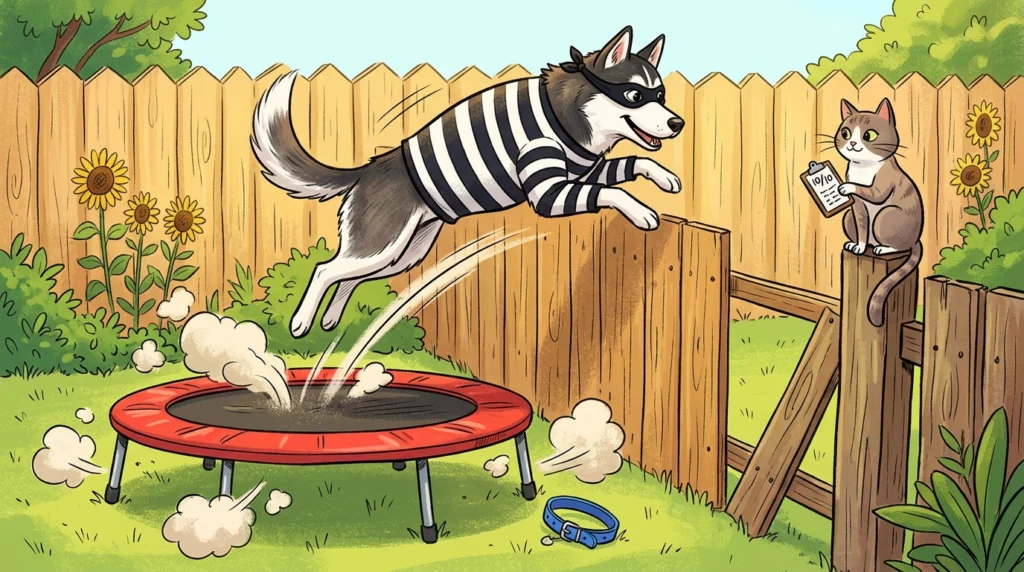
As an adventurous cat, I must tip my metaphorical hat to the Husky’s incredible ability to escape almost any enclosure. Six-foot fences? They can jump them. Dirt boundaries? They can dig under them. Latches and gates? They can figure out how to open them with their paws and teeth. They have an intense wanderlust and high intelligence, which means they view a backyard fence not as a boundary, but as an interactive puzzle waiting to be solved.
8. Their Double Coat Acts as Natural Air Conditioning
You might think all that thick fur would make them miserable in the summer, but the Husky’s double coat is a masterpiece of thermal engineering. The dense undercoat keeps them warm in freezing blizzards, while the longer guard hairs protect them from moisture and UV rays. In the summer, the shed-out coat actually helps insulate them against the heat. (Just be prepared for the "blow out" seasons, where your house will look like a snow globe exploded inside it).
9. They Saved an Entire Alaskan Town in 1925
We can’t talk about Huskies without honoring their legendary courage. In January 1925, a deadly diphtheria outbreak threatened the isolated town of Nome, Alaska. The nearest serum was over 600 miles away, and the ice was too thick for boats, while the air was too cold for the primitive planes of the era. A relay of mushers and their incredibly tough Siberian Huskies traveled the distance in just five and a half days in howling blizzards and minus-50 temperatures, delivering the life-saving medicine. Dogs like Togo and Balto became historical heroes, showcasing the ultimate endurance of the breed.
10. They Love the Pack More Than the Guard Duty
If you are looking for a fierce guard dog to protect your home from intruders, do not hire a Siberian Husky. They are exceptionally friendly, highly social pack animals. To a Husky, a stranger is just a best friend they haven’t licked yet. This deep-rooted pack mentality means they thrive on companionship and suffer easily from loneliness. They want to be right in the middle of whatever the family—or the resident cat—is doing.
Yuna’s Final Verdict
Siberian Huskies might be loud, shedding, chaotic balls of infinite energy, but they are also absolutely magnificent marvels of nature. From their ancient genetics to their bizarrely efficient metabolisms, they are truly one-of-a-kind. Just make sure you are ready for a lifetime of singing, hair on your clothes, and plenty of adventures if you decide to bring one into your home!
Now, if you’ll excuse me, I hear Blu trying to eat my favorite toy, and I must go administer some feline justice. Stay curious, friends!