

The View From the Summit (of the Bookshelf)

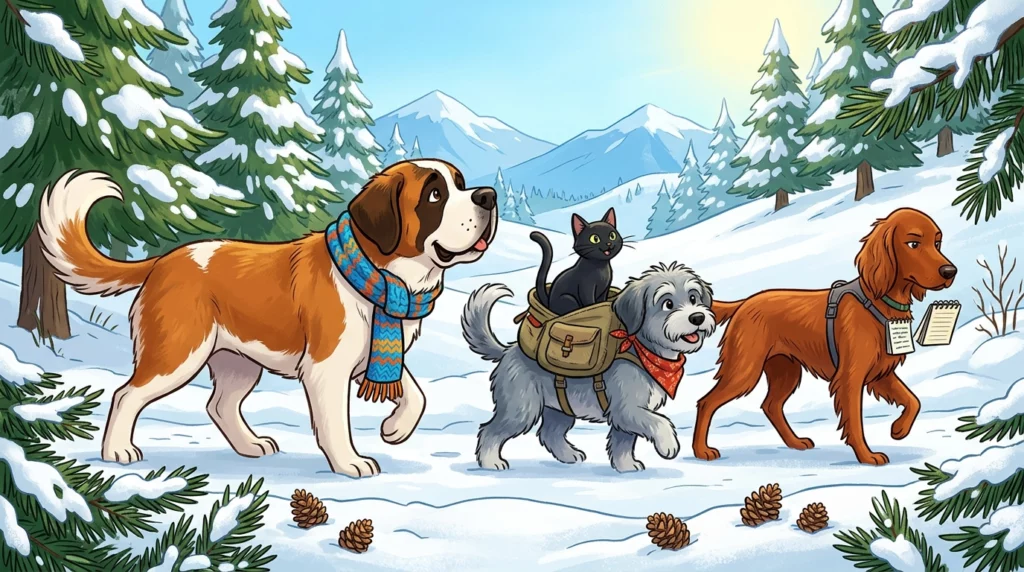
Hello there, fellow adventurers! It’s Yuna, your resident chaotic explorer and feline chief of high-altitude kitchen counter navigation. Today, I conquered the absolute peak of the living room bookshelf. From my lofty, dust-free summit, I looked down at the dogs sleeping on the rug and thought: What if they had to rescue me from a snowy crevasse?
Honestly? Blu would probably run in circles, and Niki would draft a safety report. But history tells us there is one dog breed designed specifically for epic, snow-bound heroics: the majestic Saint Bernard. But as a cat of science, intense curiosity, and slight skepticism, I had to dig into the archives. It turns out, much of what we think we know about these fluffy giants is about as real as a laser pointer dot. Let’s dive into 10 fascinating, alpine-fresh facts about Saint Bernards—and finally bust that famous barrel myth!
1. The Brandy Barrel is a Beautiful Lie
We’ve all seen the vintage postcards and cartoons. A freezing hiker is stuck in an alpine avalanche, and a heroic Saint Bernard trots up with a wooden collar-keg full of warm brandy. Well, I hate to knock over your cup of eggnog, but it never happened. As explained by Petful, this legendary accessory was actually invented by a teenager! In 1820, a 17-year-old English artist named Edwin Landseer painted a piece called Alpine Mastiffs Reanimating a Distressed Traveler. He added a tiny barrel of brandy around one dog’s neck because he thought it looked charming. The public loved it, the media ran with it, and a myth was born.
In fact, giving alcohol to someone suffering from hypothermia is actually a terrible medical decision. As noted by The Beer Connoisseur, alcohol dilates blood vessels, which causes warm blood to rush away from your vital core organs to your skin, lowering your overall body temperature. So, if a dog actually brought you brandy in a blizzard, it would be a very cozy way to freeze faster. No thank you!
2. They Originated in a High-Altitude Hospice
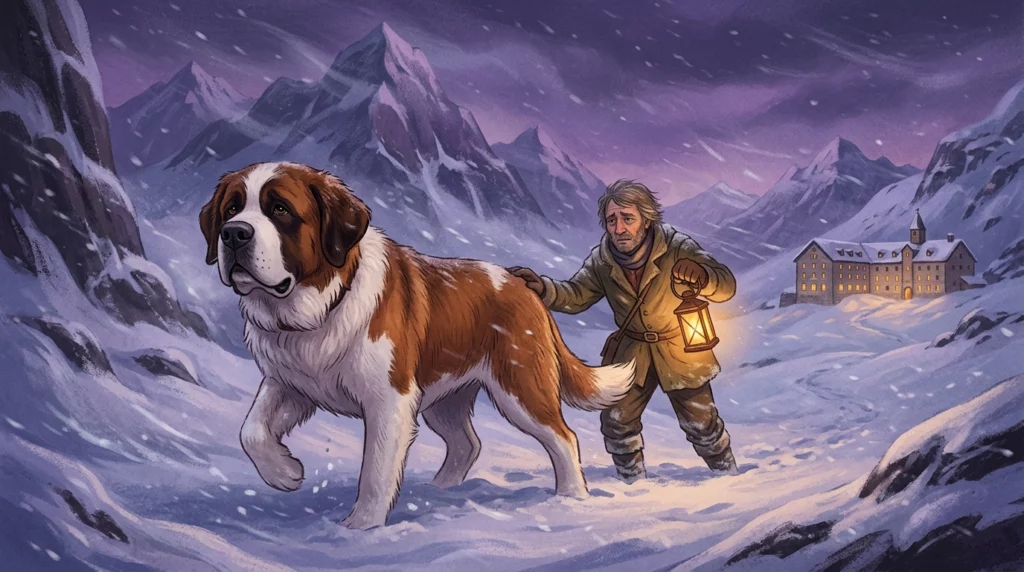
These dogs aren’t just from Switzerland; they are deep-rooted symbols of Swiss heritage. The breed gets its name from the Great St Bernard Pass, a treacherous, narrow route through the Western Alps between Switzerland and Italy. Around the year 1050, a monk named Bernard of Menthon founded a hospice there to help exhausted, freezing travelers. According to the Official Swiss Information Portal, monks at the hospice began breeding these massive dogs around the mid-17th century to assist with security, pathfinding, and clear-cutting paths through deep snow.
3. They Weren’t Always This Fluffy
When you picture a Saint Bernard today, you probably think of a massive, long-haired cloud of drool. But the original alpine rescue dogs actually had short, smooth coats. Later, the monks tried breeding them with Newfoundlands to give them longer, warmer coats. However, this backfired spectacularly. The long hair collected heavy ice and packed snow, weighing the dogs down and making them useless in deep-drift rescues. The short-haired variety remained the preferred working dog on the mountain slopes, while the fluffier pups became popular companions elsewhere.
4. The Legend of Barry, the Ultimate Hero
If there is a hall of fame for pets, a Saint Bernard named Barry der Menschenretter (Barry the lifesaver) is at the very top of the podium. Living at the hospice from 1800 to 1812, Barry is credited with saving more than 40 human lives. As detailed on Wikipedia, Barry was a legendary working dog whose courage defined the breed’s reputation worldwide. Today, his preserved body rests in the Natural History Museum of Bern, where visitors can still admire his incredible alpine legacy.
5. Barry’s Most Famous Rescue is Pure Alpine Magic
According to legend, Barry once found a young boy asleep and freezing in an icy cavern. Barry licked the child to wake him up, then coaxed the boy onto his back, carrying him safely through the snow back to the hospice. While historians debate how much of this story is embellished, it perfectly reflects the incredibly gentle, cooperative nature of these massive dogs. They were built for teamwork, not just muscle.
6. They Don’t Do Active Mountain Rescues Anymore
Sadly, if you get lost in the Alps today, you won’t be saved by a Saint Bernard. As the Smithsonian Magazine points out, modern search-and-rescue teams prefer lighter breeds like German Shepherds, Golden Retrievers, and Labradors. Saint Bernards are simply too heavy—averaging 120 to 180 pounds—to be lowered from helicopters or to navigate light, unstable snow crusts without sinking. Today, they have retired from active duty to enjoy a well-deserved life of leisure.
7. They Have Built-In “Snowshoes”
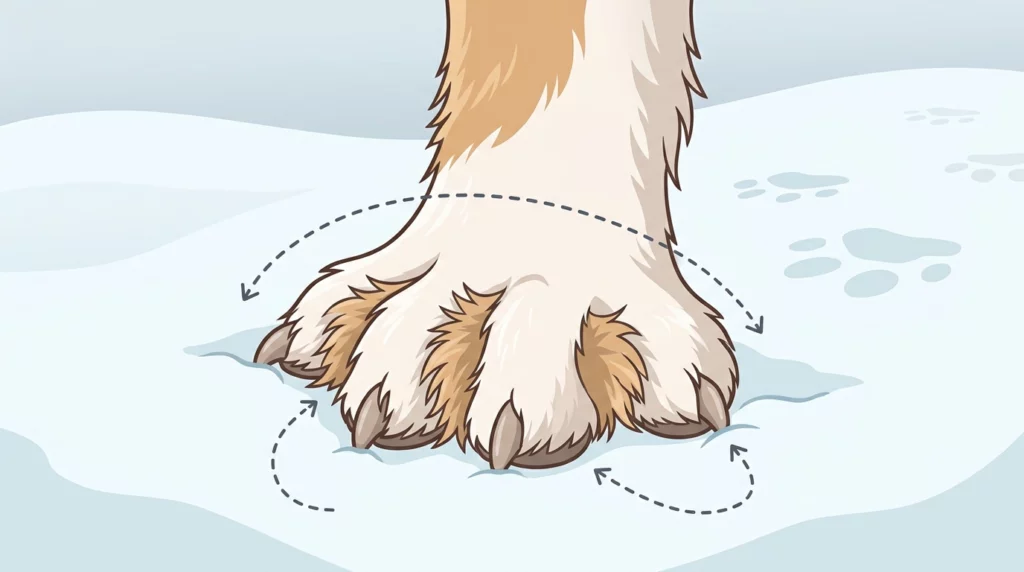
How did these massive dogs walk through feet of fresh snow without sinking? Nature gave them incredibly wide, heavy paws with flexible toes. Their feet naturally spread out to distribute their weight, acting exactly like snowshoes. As a cat who occasionally slips off the armrest during a simple nap, I am deeply envious of this level of built-in stability.
8. Their Ancestors Were Roman War Dogs
Before they were gentle lifesavers, their ancestors were formidable guardians. They descend from Molosser-type dogs, giant mastiffs brought across the Alps by ancient Roman legions. Over centuries, these warrior dogs settled in the alpine valleys, crossbreeding with local dogs to create the peaceful, hard-working helpers we know today.
9. The Tradition Lives On Through the Barry Foundation
Even though helicopters have replaced them in the field, Switzerland refuses to let the tradition die. The Fondation Barry (Barry Foundation) was created to manage the breeding program of these historic dogs. Every summer, they bring the dogs back to the Great St Bernard Pass hospice to keep the historical connection alive for tourists and dog lovers alike. They also serve as wonderful therapy dogs, bringing joy rather than rescue ropes.
10. An Uncanny Sense of Direction (and Danger)
The monks didn’t even have to train these dogs to rescue people; young dogs learned simply by imitating older ones. They possessed an uncanny ability to hear low-frequency sounds, allowing them to predict avalanches before they happened. Plus, their sense of smell is so powerful they could locate a human buried under several feet of snow from great distances, navigating back to safety through blinding whiteouts where humans were completely lost.
How Saint Bernards Captured Our Hearts
From their origins in freezing monasteries to their integration into early dog shows and historical canine circles (like the historic discussions archived in groups like Cruffa), Saint Bernards have captured human imaginations for centuries. They even became festive icons of winter comfort, famously celebrated in artwork, vintage holiday greeting cards, and historical design blogs like Field Grey.
So, while there may not be any brandy in those collar barrels, the true story of the Saint Bernard is even more comforting. They are gentle, courageous giants who proved that a warm heart can melt even the coldest alpine frost. Now, if you’ll excuse me, I need to figure out how to climb down from this bookshelf. I don’t think Blu heard my distress meows, so I’ll have to rely on my own four paws! Stay curious, adventurers!