Hello, discerning dog lovers. Niki here. As a five-and-a-half-year-old English Setter, I pride myself on maintaining a certain level of decorum, intellect, and precision around the SnoutScoop headquarters. While my esteemed colleague Blu—a delightful but delightfully chaotic Griffon Bleu de Gascogne—is currently busy trying to bark a rogue leaf out of the backyard, I prefer to focus my energy on the finer things in life. Specifically, science, history, and the extraordinary anatomy of our very own faces.
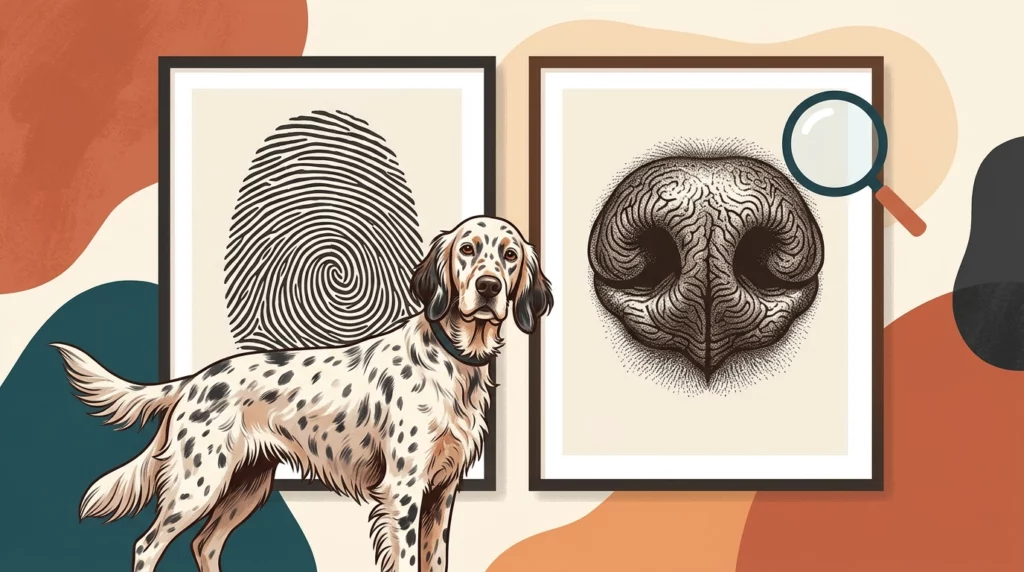
Today, we are going to talk about the snout. Not just how beautifully it functions to find dropped pieces of cheese from three rooms away, but how it serves as a completely unique, unrepeatable biological signature. Yes, I am talking about the dog nose print. Just like human fingerprints, our noses are uniquely ours. Let us dive into the fascinating, elegant science of canine nose prints.
The Fine Art of Rhinoglyphics
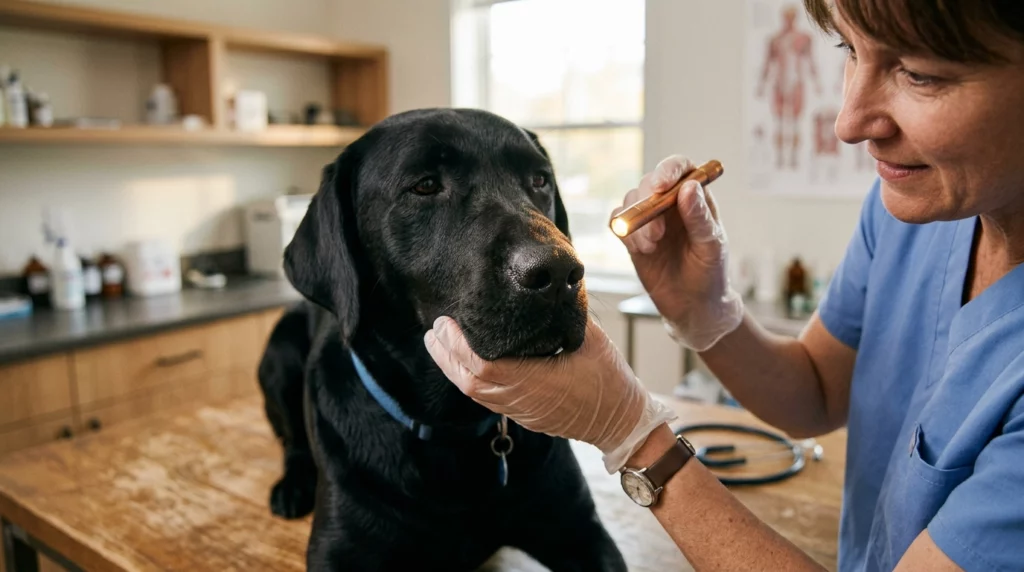
To the untrained human eye, a dog’s nose is simply a wet, leathery button designed for nudging your hand when you stop petting us. But if you look very closely—perhaps with a magnifying glass, if your dog is as cooperative and patient as I am—you will see a complex topography. There is a beautiful landscape of tiny ridges, bumps, valleys, and pits covering the hairless skin surrounding the nostrils (scientifically known as the planum nasale).
According to the veterinary experts at VCA Hospitals, these dermal ridges form a pattern that is completely unique to every individual dog. No two dogs on this green Earth have the exact same pattern of nose ridges. In fact, this extends to our feline roommates as well—even Pisino and Yuna have their own unique nose patterns, though getting a cat to cooperate for a close-up is a task I do not envy.
Even more fascinating, as noted in Psychology Today, these nose prints do not change as we age. A puppy’s tiny button nose has the exact same pattern of ridges and valleys that it will carry when it grows into a majestic senior dog. The nose simply scales up in size, but the biological architecture remains completely identical throughout our entire lives.
A Brief History of the Ink-Smeared Snout
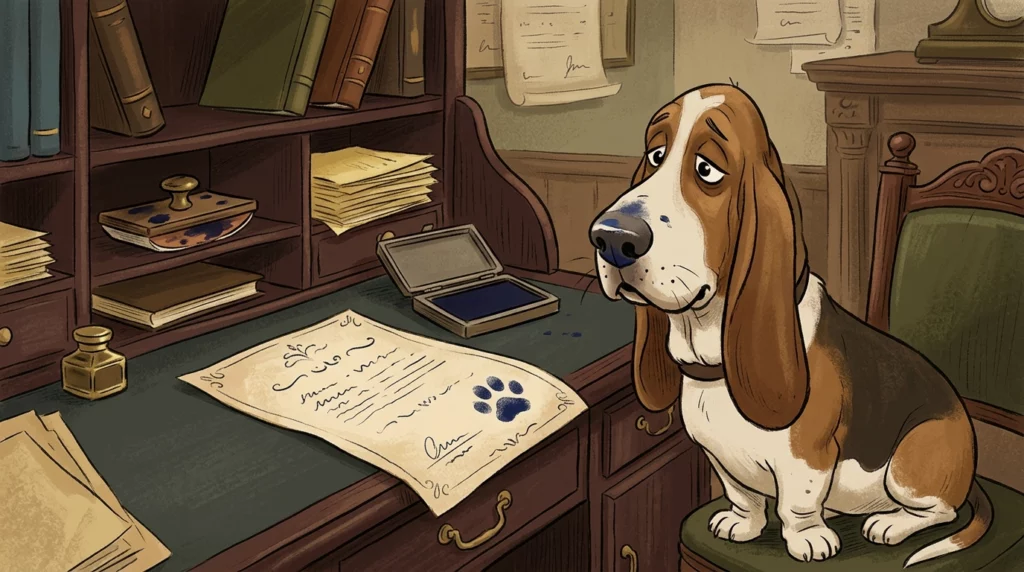
Humans have actually known about this biological phenomenon for quite some time. Long before advanced digital scanners, kennel clubs and registries utilized manual nose-printing to verify a dog’s identity. In fact, as highlighted by the American Kennel Club (AKC), taking ink nose prints was once a common practice to prevent fraud and prove a dog’s pedigree, particularly in the early to mid-20th century. The Canadian Kennel Club, for example, pioneered this practice as far back as the 1930s.
As you can probably imagine, this process was… messy. Getting a dog—especially a high-energy breed like a pointer or my dear friend Blu—to sit still while a human presses an ink pad onto their wet nose, and then presses that wet, ink-covered nose onto a piece of paper, is a recipe for absolute disaster. There were many stained carpets, inked human shirts, and smudged prints that looked more like modern abstract art than verifiable identification.
Thankfully, the scientific community realized that while the concept of the nose print was flawless, the execution needed a serious upgrade. You can watch a fun visual summary of this fascinating trait on this Science Enthusiast feature, which celebrates how our canine schnozzes are truly nature’s biometric marvels.
The Digital Age: There is an App for That!
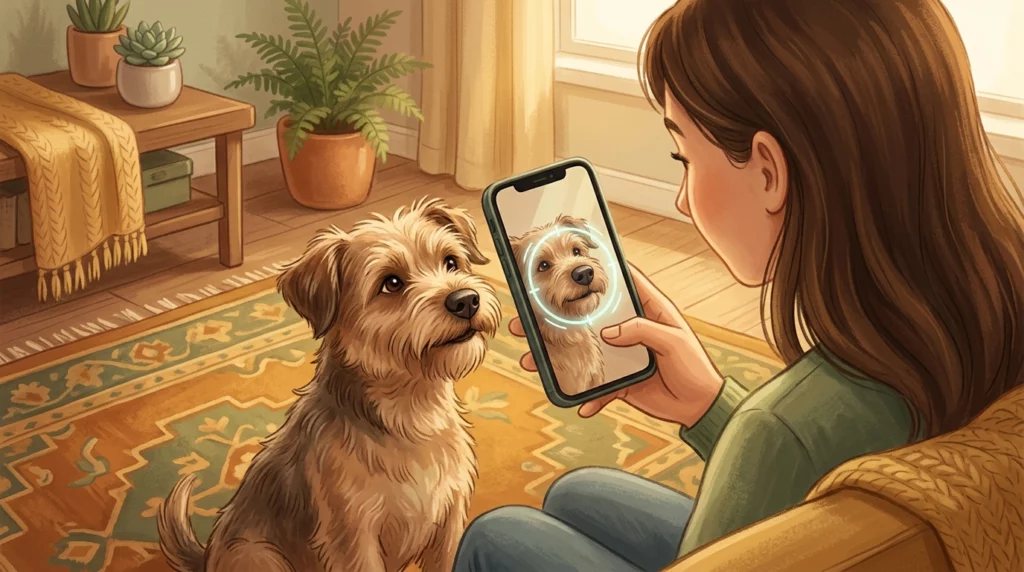
We live in a marvelous time where technology has finally caught up to our physiology. Why use messy ink when you can use artificial intelligence and the high-definition camera in your pocket?
Modern pet tech companies are now utilizing advanced deep learning algorithms to identify dogs based entirely on their nose prints. A prime example of this is Petnow, an innovative biometric identification app. Instead of relying solely on physical microchips—which can occasionally migrate under a dog’s skin, require specialized scanners to read, and can be uncomfortable to implant—Petnow allows pet parents to register their dog by simply scanning their nose with a smartphone camera.
The tech behind this is incredibly sophisticated. A peer-reviewed study published on PubMed demonstrates how deep learning-based algorithms can successfully recognize and classify canine nose prints with astonishing accuracy. The AI is trained to detect the unique patterns of ridges, even if the dog is moving slightly or if the lighting isn’t absolutely perfect. You can read more about how this groundbreaking tech is shaking up the pet industry on the Good News Network.
For pet parents who want to give this non-invasive safety net a try, you can easily download the Petnow App on the Apple App Store. It is a brilliant, stress-free backup system. If a dog loses their collar and tag, any finder with a smartphone could theoretically scan the dog’s nose and instantly identify their family. It is high-tech safety, simplified.
Why Our Noses Deserve All the Praise
While humans might use their unique fingerprints to unlock their phones or pass through airport security, we dogs use our unique noses to navigate, explore, and literally catalog the world around us. Our sense of smell is up to 100,000 times more sensitive than yours, but it is comforting to know that our noses also hold the key to keeping us safe and connected to the humans we love most.
Next time you are cuddling with your pup, take a gentle, close look at their nose. Admire the beautiful, intricate, completely unique pattern of tiny swirls and ridges. It is a masterpiece of natural design, completely exclusive to your best friend.
Now, if you will excuse me, I must go. I can hear Blu outside, and I suspect he has found another leaf that needs a stern, intellectual talking-to. Until next time, keep your noses wet and your standards high!