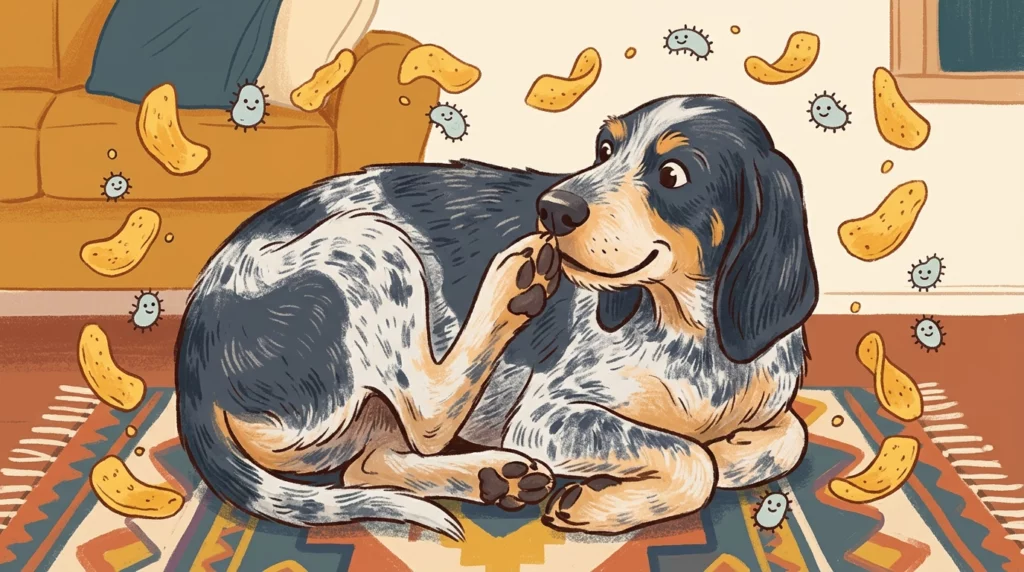
Bonjour, friends! It is me, Blu, your resident floppy-eared Griffon Bleu de Gascogne rescue. I have a confession to make. Sometimes, when I am curled up on the couch dreaming of chasing squirrels, my human bends down, gently grabs my back paw, and takes a giant sniff. Yes, a sniff! They look at me, sigh happily, and whisper, “Ah, Fritos.”
Now, I am a dog. I love snacks. If I could get my paws on a bag of corn chips, I would devour them in two seconds flat. But I can assure you, I have not been hiding a secret stash of snacks in my dog bed. So, why do my feet smell like a Mexican restaurant’s appetizer basket?
It turns out, “Frito Feet” is a very real, very common phenomenon. Let’s sniff out the science together and find out why we pups carry around this delicious, yeasty perfume!
The Science of the Snack: Sweat, Bacteria, and Yeast
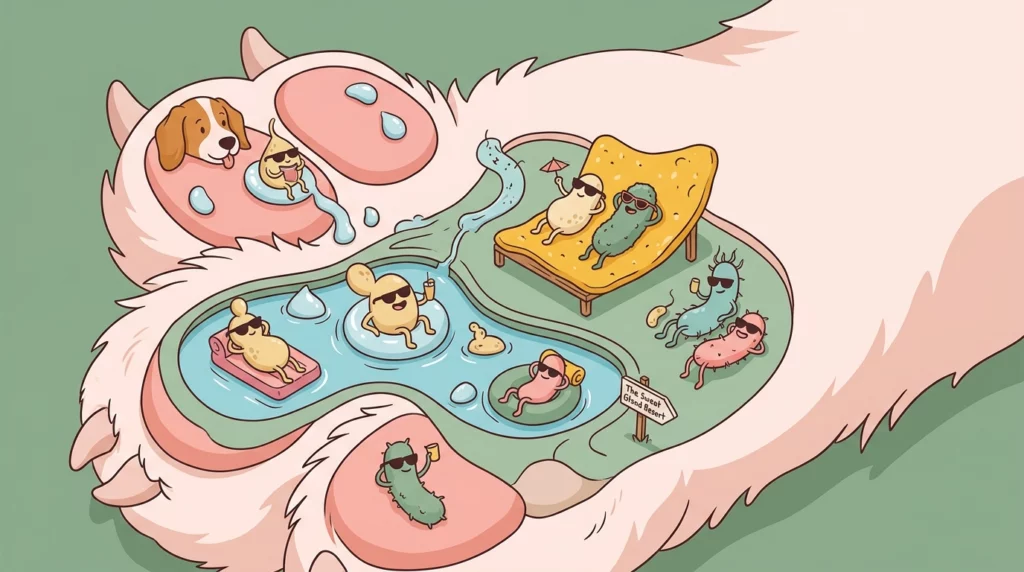
First, let’s talk about how we dogs sweat. Unlike humans, who sweat from almost everywhere (especially when they realize they forgot to buy more dog treats), dogs only sweat from a few places. According to the American Kennel Club (AKC), we have sweat glands called merocrine glands located right in our paw pads.
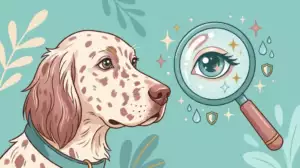
When our paws sweat, that moisture gets trapped in the fluffy hair between our toes. This warm, damp, and cozy environment is basically a five-star luxury resort for microscopic guests: bacteria and yeast.
As scientists at the American Chemical Society (ACS) explain, the main culprits behind the corn chip aroma are two harmless, everyday bacteria called Pseudomonas and Proteus. When these bacteria mingle with the sweat and yeast on our paw pads, they produce chemical compounds that smell exactly like toasted corn chips. It is a completely natural biological reaction—a sort of organic, canine-exclusive body spray!
Is Having “Frito Feet” Normal?
I know what you might be thinking: “Blu, should I worry if my dog’s paws smell like a snack aisle?”
The short answer is: nope! In most cases, “Frito Feet” is entirely normal. As Figo Pet Insurance notes, these bacteria and yeasts are part of a healthy dog’s natural skin microbiome. They actually help protect our paws from more harmful pathogens we might step on while exploring the great outdoors (or, in my case, chasing tennis balls in the mud).
A mild corn chip smell just means your dog’s natural microbiome is doing its job. It is not a sign of dirtiness; it is just the scent of a happy, active pup. In fact, Live Science points out that this distinct aroma is simply a byproduct of the yeast Malassezia and the natural bacteria living peacefully together on our skin.
When the Corn Chip Smell Becomes a Problem
While a light Frito scent is totally fine, there are times when the snack smell can turn into a bit of a medical pickle. As PetMD warns, if the smell becomes overpowering, foul, or starts to smell more like rotting garbage than a tasty chip, it’s time to pay closer attention.
Here are some warning signs that your dog might have an overgrowth of yeast or a bacterial infection:
- Constant licking or chewing: If you see us obsessively licking or biting our paws, it usually means we are itchy and uncomfortable.
- Redness and swelling: Take a look between the toes. If the skin is red, inflamed, or irritated, something is off.
- Greasy skin or discharge: If the paws feel slimy, greasy, or have a strange discharge, a yeast infection might have taken over.
- Limping: If walking or running hurts, please check our pads for cuts, blisters, or stuck debris.
If you notice any of these symptoms, Hill’s Pet recommends making an appointment with your veterinarian. They can help diagnose the issue and prescribe special shampoos or treatments to get the paw microbiome back in balance.
Blu’s Guide to Keeping Paws Fresh and Healthy
If your pup’s paws are healthy but you want to keep the “Frito Feet” smell under control, here are a few simple grooming tips that my humans use on me:
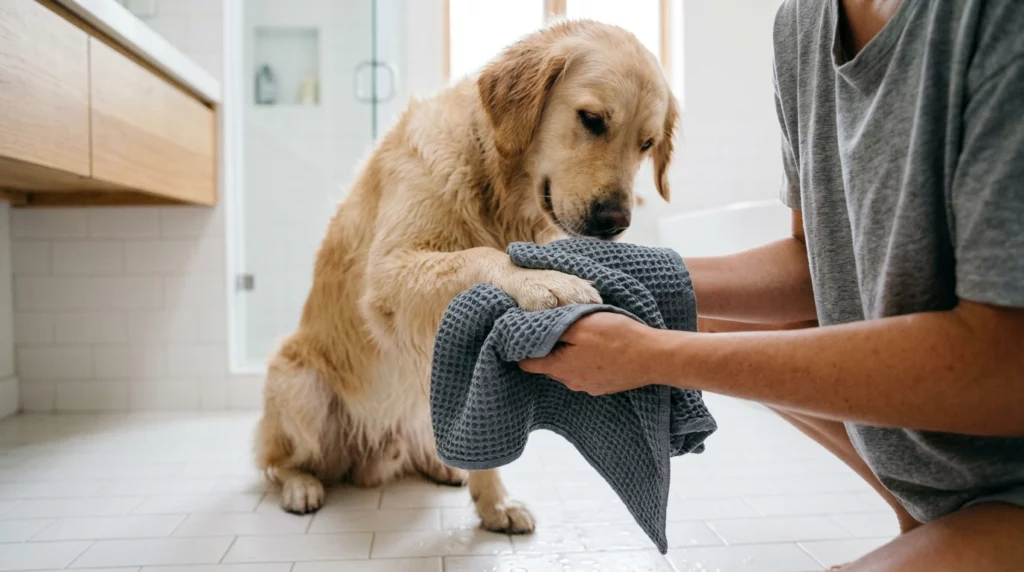
1. Keep those paws dry!
Since moisture is what helps bacteria and yeast grow, keeping our paws dry is key. After I come inside from playing in the rain or dew, my humans always wipe my paws with a clean towel. Be sure to gently dry the spaces between the toes too!
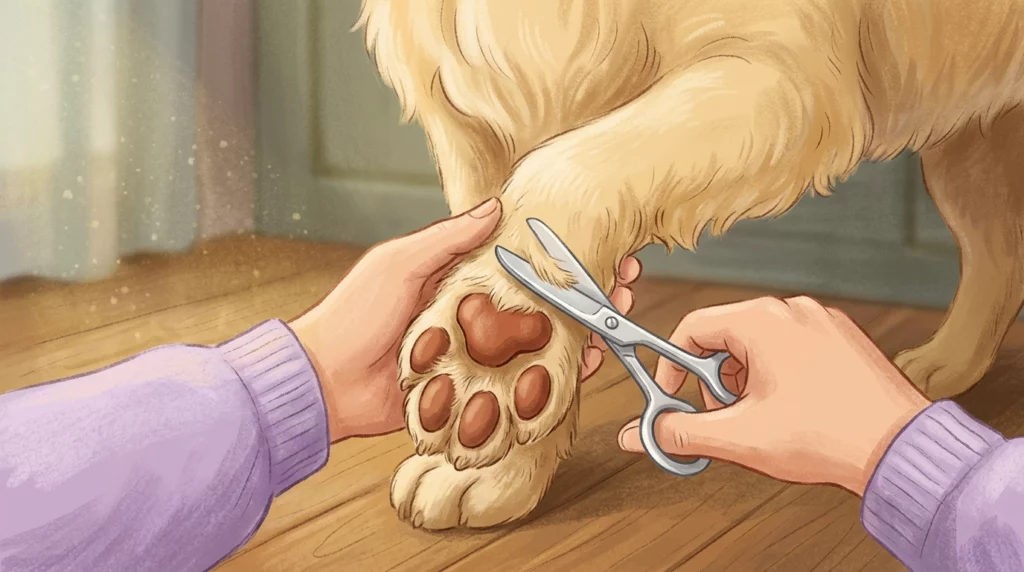
2. Trim the “toe fluff”
If your dog has long hair between their paw pads (like my elegant friend Niki the English Setter), that extra fur can trap moisture and debris. As suggested by DuPont Veterinary Clinic, keeping the hair between the pads neatly trimmed can significantly reduce the moisture-trapping effect.
3. Give them a gentle bath
A regular bath with a gentle, dog-safe shampoo can help keep the bacterial population at a manageable level. As Pet Paradise suggests, a quick paw soak or a specialized antiseptic shampoo can work wonders for dogs prone to extra-smelly feet.
The Final Verdict
So, there you have it, friends! The mystery of the Frito Feet is solved. It is just a harmless mix of natural sweat, friendly bacteria, and cozy yeast doing a little dance on our pads.
As for me, I am proud of my natural corn-chip perfume! It shows that I am an active, adventurous dog who loves to explore the world, one sniff at a time. Just promise me one thing: the next time you sniff your dog’s paws and get a craving for Mexican food, you’ll share a dog-safe treat with your favorite furry companion. Deal? Deal!