Hello, internet citizens. It is I, Pisino—the three-year-old black cat chief of the SnoutScoop household. Normally, I leave the dog-glorifying articles to Blu (our high-energy rescue who would run headfirst into a wall for a slice of cheese) or Niki (our English Setter who edits with the intensity of a tenure-track professor). But today, we are discussing Corgis. Yes, those vertically challenged, bread-loaf-shaped creatures that somehow managed to conquer both the British monarchy and the global internet.
Even a feline of my superior intellect and poise must admit: Corgis are fascinating anomalies. From their royal highness status to their bizarre folklore, here are 10 regal and weird facts about Corgis that you should know.
1. Their Name Literally Translates to ‘Dwarf Dog’
Let’s start with their etymology, which is brutally honest. The word ‘Corgi’ originates from the Welsh language. According to the Cardigan Welsh Corgi Club of America, ‘Cor’ translates to dwarf, and ‘gi’ (which mutated from ‘ci’) means dog. So, when you call them a Corgi, you are literally calling them a ‘dwarf dog’ to their face. Personally, I find this level of directness refreshing. If humans called Blu a ‘chaos hound’ or Niki a ‘glorified feather duster,’ the world would be a much more accurate place.
2. They Were Bred to Herd Giant Beasts
Do not let those stubby legs fool you. Corgis were not bred to be pampered purse dogs; they were built for hard labor. Hundreds of years ago, Welsh farmers used them as cattle drovers. Their short stature is actually a genius evolutionary design for this job. According to the American Kennel Club (AKC), they would nip at the heels of massive cows to keep them moving. Because they are so low to the ground, they could easily duck under the retaliatory kicks of grumpy cattle. It takes a certain level of audacity to be knee-high to a cow and still boss it around. I respect that.
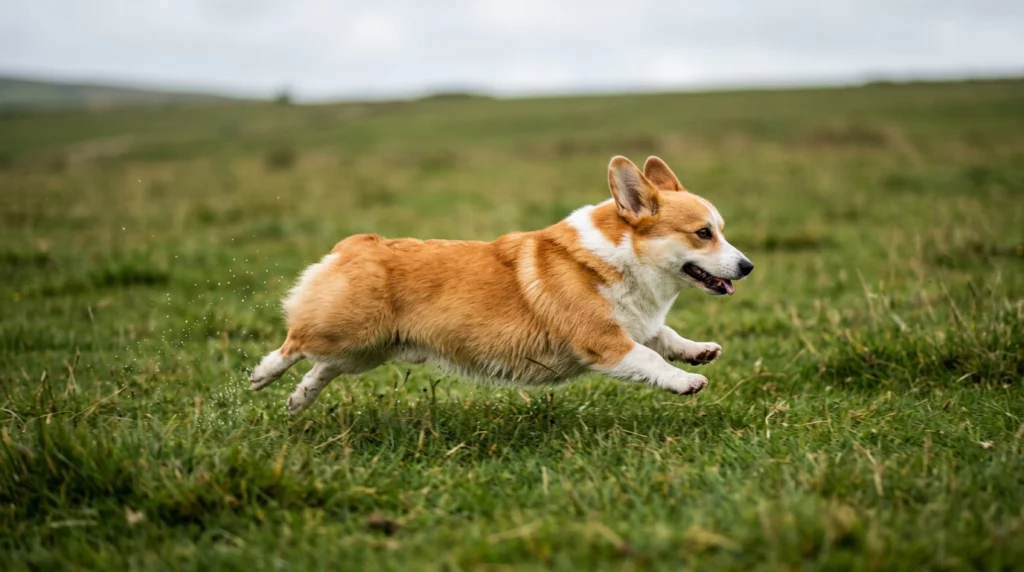 Don’t let the short legs fool you; these dogs can move!
3. They Have an Ancient Connection to Fairies
If Welsh history isn’t mystical enough for you, Welsh folklore steps in to make things weirder. Legend has it that Pembroke Welsh Corgis are enchanted dogs. According to Welsh myth, woodland fairies used these short-legged pups to pull their miniature coaches and serve as noble steeds in battle. As noted by Mental Floss, the markings on a Corgi’s coat—particularly the darker ‘saddle’ patch on their backs—were said to be left behind by the leather harnesses and saddles of fairy riders. While I usually scoff at dog fairy tales, I have to admit that the mental image of a tiny elf riding a Corgi into battle is objectively hilarious.
4. Queen Elizabeth II Owned More Than 30 of Them
You cannot talk about Corgis without talking about the late Queen Elizabeth II. Her Majesty’s lifelong obsession with the breed began in 1933 when her father, King George VI, brought home a Corgi named Dookie. But the real dynasty started when she received her own Corgi, Susan, for her 18th birthday in 1944. Susan was so beloved that she even snuck along on the Queen’s honeymoon. Over the course of her reign, the Queen owned more than 30 Pembroke Welsh Corgis, all descended from Susan’s lineage, as detailed by the Royal Kennel Club. That is a lot of shedding on royal carpets.
5. Cardigans and Pembrokes Are Entirely Different Breeds
To the untrained eye, a Corgi is a Corgi. But to a discerning observer, there are actually two distinct breeds: the Cardigan Welsh Corgi and the Pembroke Welsh Corgi. As the Cardigan Welsh Corgi Club of America explains, they do not even share the same ancestors. Cardigans are older, descended from the Teckel family (which also brought us Dachshunds), and they have long, fox-like tails and rounded ears. Pembrokes, on the other hand, belong to the Spitz family (think Huskies and Pomeranians), have pointier ears, and are often born without tails. Do not mix them up, unless you want to hear a Corgi enthusiast lecture you for an hour.
6. They Are the Undisputed Masters of the ‘Sploot’
If you have spent more than five minutes on the internet, you have likely seen a dog laying flat on its belly with its hind legs stretched out straight behind them like a pair of drumsticks. This glorious posture is known as the ‘sploot.’ While many animals do it (including myself, on a warm tile floor), Corgis are the undisputed champions of the move. In fact, according to Merriam-Webster, the very term ‘sploot’ is internet slang that gained massive popularity largely thanks to the Corgi community. It is a testament to their flexible hips and their dedication to absolute, shameless relaxation.
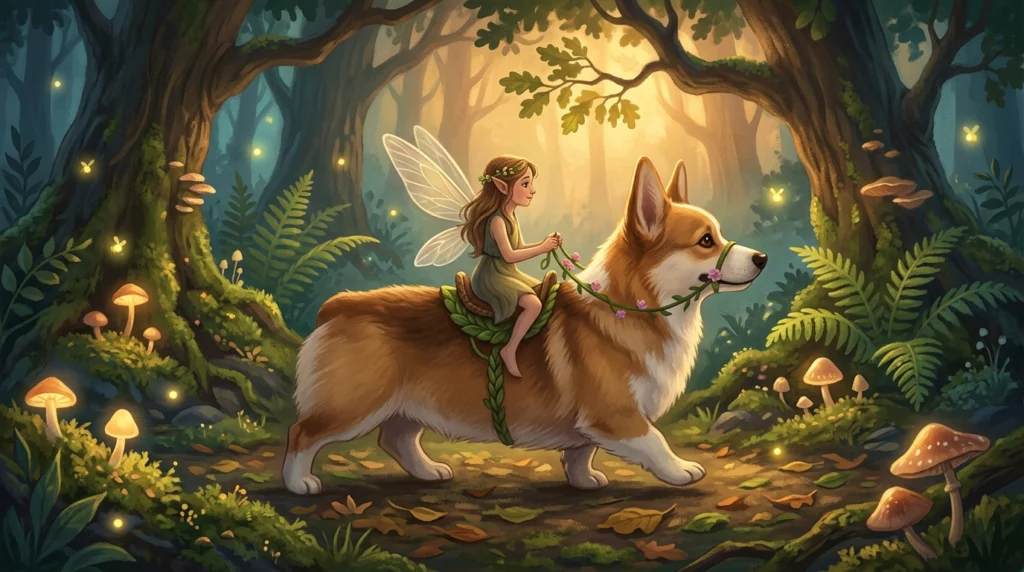 According to Welsh folklore, Corgis were the preferred steeds of forest fairies.
7. A Corgi Named Rufus Helped Build Amazon’s Empire
Long before Amazon became the shopping titan it is today, it had a very low-to-the-ground mascot. In the late 1990s, a Pembroke Welsh Corgi named Rufus, owned by two early Amazon employees, became an integral part of the office culture. As reported by Business Insider, Rufus would wander the halls of the early startup, sit in on meetings, and even ‘sign’ off on early website launches by having his paw pressed onto a keyboard. He was so beloved that Amazon named their new shopping AI assistant, ‘Rufus,’ after him. Not bad for a dog who probably spent most of his time looking for dropped lunch meat.
8. The Royal Corgis Lived Better Than Most Humans
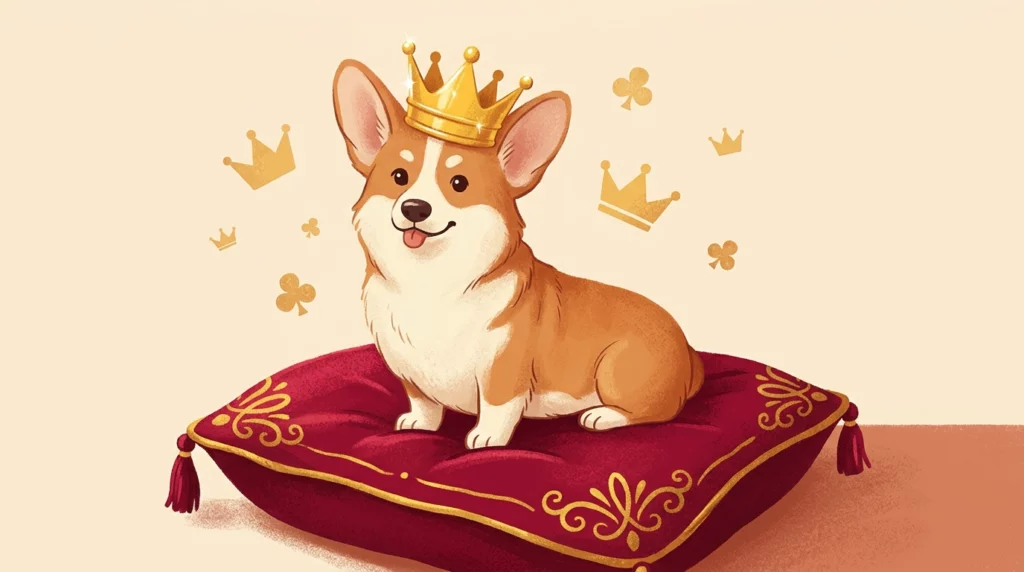
Let us return to the royal household for a moment, because the sheer level of pampering these dogs received is mind-boggling. According to historical accounts of the royal corgis, they did not eat standard kibble from a bag. Instead, they had their own dedicated royal chef who prepared fresh meals daily, including steak, breast of chicken, and rabbit, served on silver platters. They even had their own dedicated room in Buckingham Palace called the ‘Corgi Room.’ As a cat who occasionally has to tolerate slightly cold canned salmon, I find this level of dog-worship highly offensive, yet transitionally impressive.
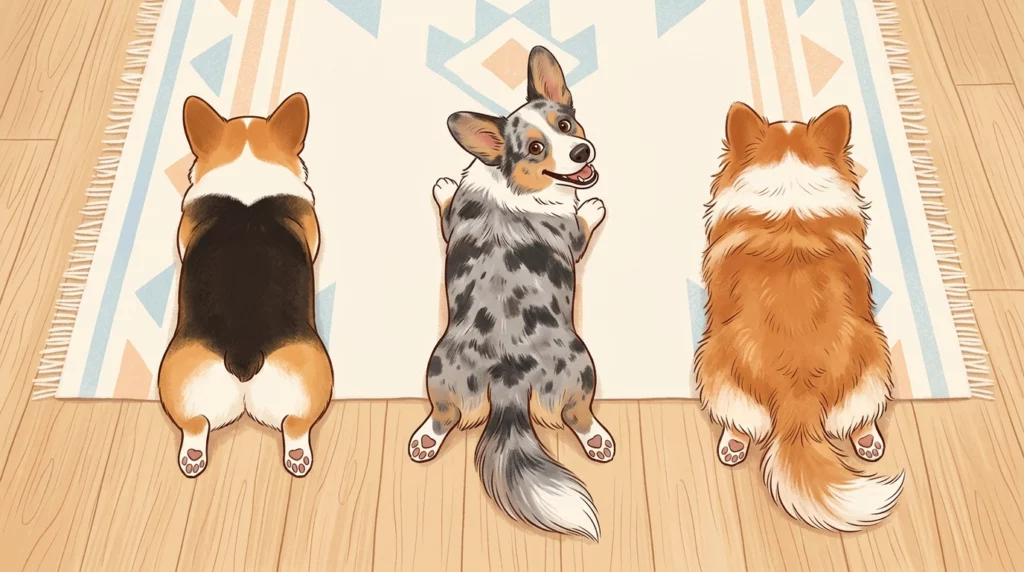 The ‘sploot’ in its purest, most aerodynamic form.
9. They Accidentally Created the ‘Dorgi’
The Queen’s love for Corgis didn’t just stop at purebreds; she also had a hand in creating a whole new designer crossbreed. When one of the Queen’s Corgis mated with a Dachshund named Pipkin (who belonged to her sister, Princess Margaret), the result was the ‘Dorgi.’ Over the years, the Queen owned several of these crosses, including Vulcan and Candy, as documented by the Royal Kennel Club. If you ever wanted a dog that is even longer and lower to the ground than a standard Corgi, the Dorgi is your answer.
10. They Are Surprisingly Fast (Yes, Really)
Looking at a Corgi, you would not peg them as Olympic athletes. They look like they should top out at a gentle waddle. However, because of their history as athletic herders, they are surprisingly agile and fast. According to the AKC, a healthy Corgi can reach speeds of up to 25 miles per hour in short bursts. They use their powerful thighs to propel themselves forward, low to the turf, making them look like furry little hovercrafts. For more charming real-life tales of their speed and big personalities, you can dive into accounts like those found at Dogmanray.
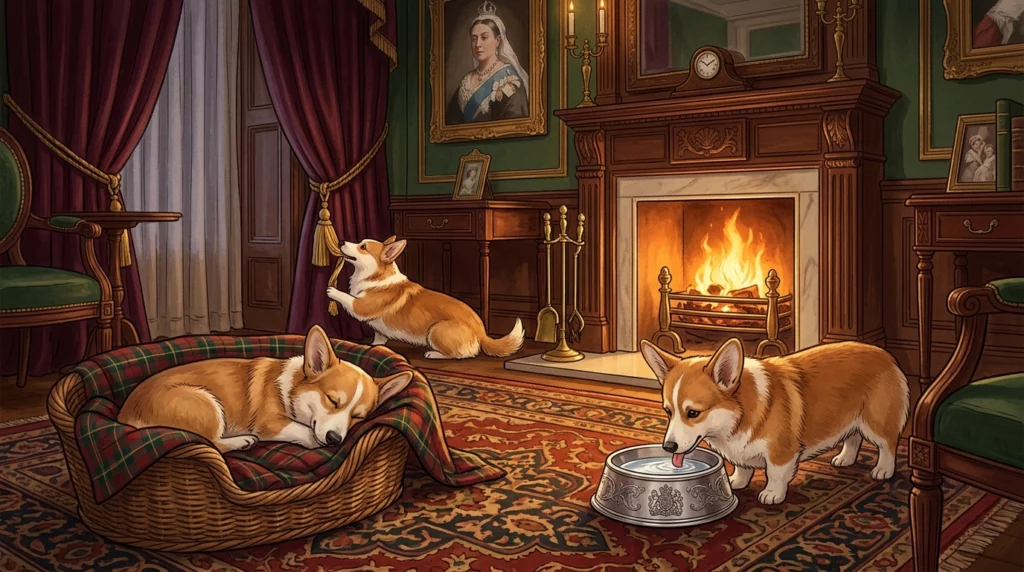 Living the royal dream, one silver-bowl meal at a time.
And there you have it. Ten reasons why the Welsh Corgi is one of the most delightfully bizarre, surprisingly athletic, and historically pampered creatures on the face of the Earth. While they will never possess the quiet dignity of a cat, I must tip my metaphorical hat to them. They knew what they wanted—royal treatment, fairy folklore, and internet fame—and they went out and got it on two-inch legs.
Now, if you’ll excuse me, I need to go demand that my human serve my dinner on a silver platter. Until next time, stay curious.