Hello, darling readers. Niki here. As a five-and-a-half-year-old English Setter of refined sensibilities, I must confess that I hold myself to rather high standards of deportment. While our beloved but decidedly chaotic Griffon Bleu de Gascogne, Blu, treats his tail like a runaway helicopter propeller, I view mine as an elegant instrument of precise communication and perfect physical balance.
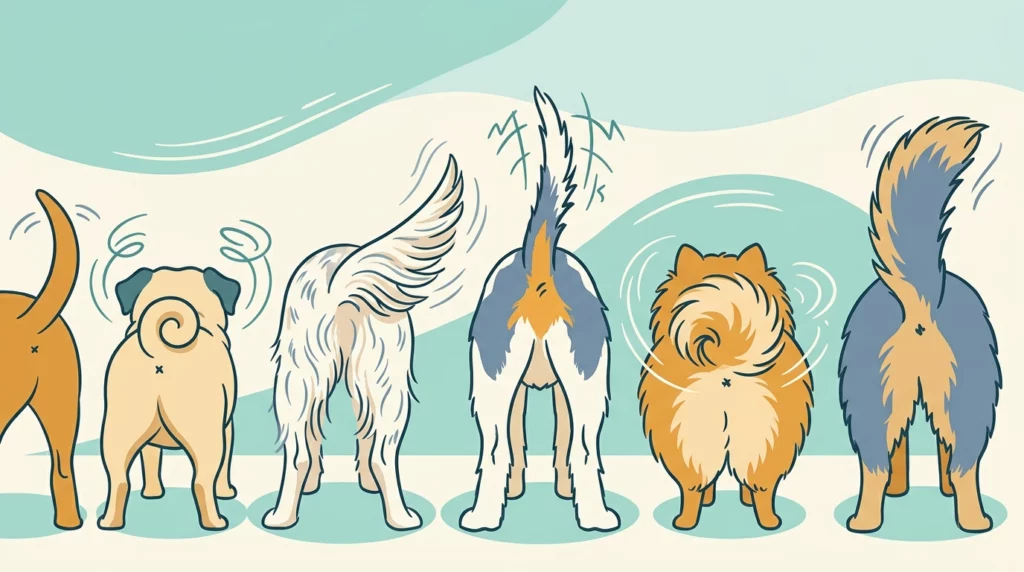
Whether your canine companion sports a feathered plume like mine, a joyous corkscrew, or a minimalist bob, a dog’s tail is a masterpiece of evolution. Today, I have personally curated ten scientifically sound, highly fascinating facts about our favorite wagging appendages. Let us dive into the details, shall we?
1. The Tail is Actually an Extension of the Spine

Many humans treat the tail as a mere accessory—a decorative tassel at the end of the dog. In truth, the tail is a highly structured anatomical extension of the vertebral column. According to the veterinary experts at PetPlace, a dog’s tail is made up of a series of bones called caudal vertebrae. Depending on the breed and size of the dog, a tail can contain anywhere from 5 to 23 of these specialized vertebrae, which are supported by a complex network of muscles, tendons, and nerves.
2. It Acts as a High-Tech Rudder
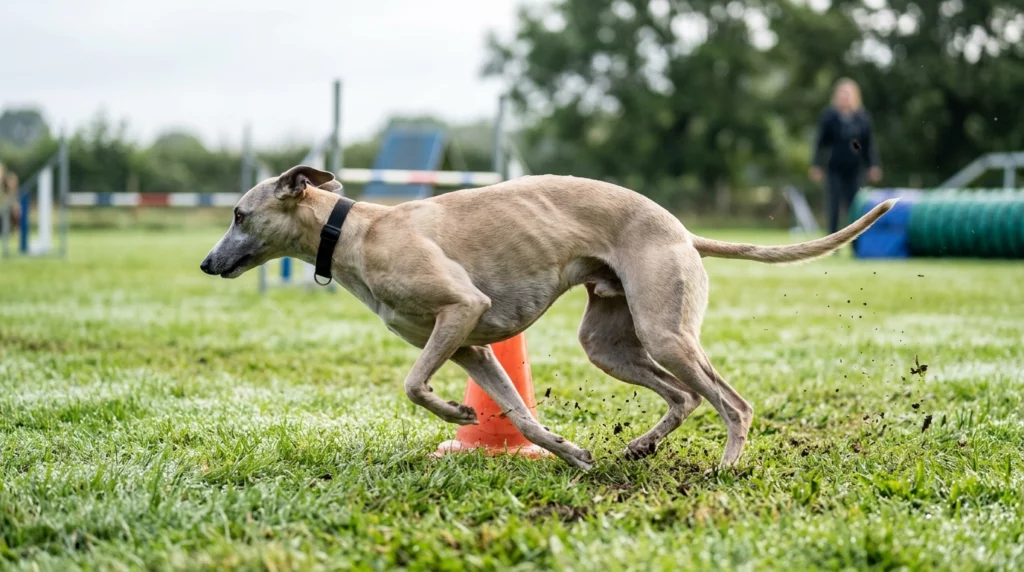
Have you ever watched a dog sprint after a tennis ball and make a sudden, gravity-defying turn? That isn’t magic; it is physics. As noted by the American Kennel Club (AKC), we dogs use our tails as a counterbalance. When we need to make a sharp turn while running, we throw our tails in the direction of the turn to keep our bodies upright. It also acts as a stabilizer when we are climbing steep terrain, walking along narrow paths, or swimming.
3. Left vs. Right: There is a Secret Wagging Code

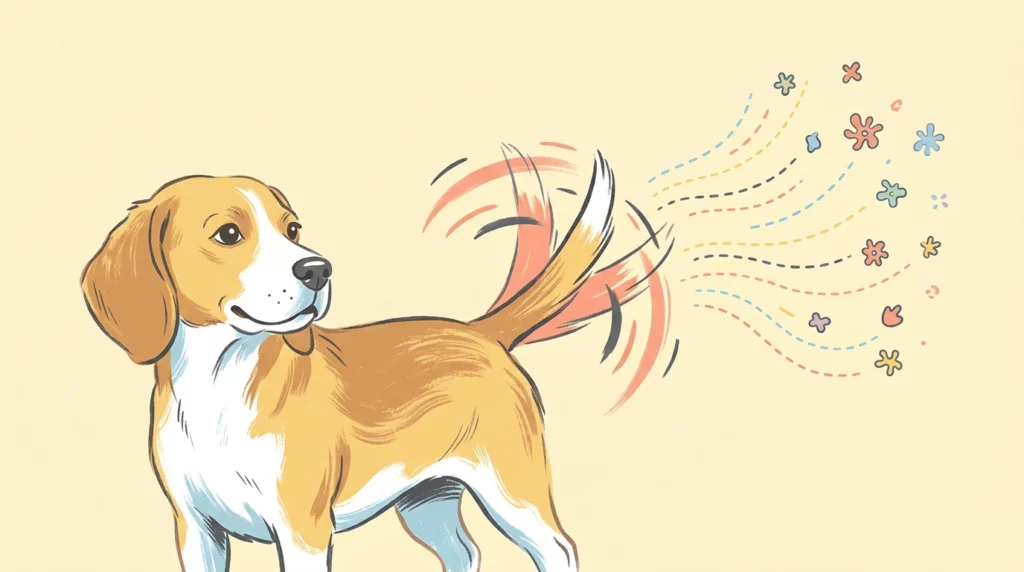
To the untrained human eye, a wag is just a wag. However, science tells a much more nuanced story. A groundbreaking study published in Current Biology revealed that the direction of a dog’s wag reveals their emotional state. When a dog wags their tail predominantly to the right side of their body, it indicates positive emotions (like excitement at seeing their human). Conversely, a left-biased wag indicates negative or withdrawal emotions, such as anxiety or encountering an intimidating dog. Even more fascinating? Other dogs instinctively understand this subtle asymmetry and react accordingly.
4. Puppies Are Not Born Wagging
As adorable as newborn puppies are, they do not enter the world wagging. In fact, they cannot! According to the AKC’s puppy development timeline, puppies only begin to wag their tails around three to four weeks of age. This is the period when they start to open their eyes, explore their surroundings, and begin social communication with their mother and littermates. Before this developmental milestone, they are far too busy eating and sleeping to bother with social commentary.
5. The Danger of “Limber Tail Syndrome”
While tails are robust, they are not invincible. Have you ever heard of “limber tail”? As detailed by the Cornell University Riney Canine Health Center, this is a painful condition where a dog’s tail suddenly hangs completely limp from the base, or sticks straight out for a few inches and then drops. Often caused by overexertion, swimming in cold water, or prolonged crate confinement, it is essentially a muscle sprain. Thankfully, with rest and veterinary care, most dogs recover their proud wags within a few days.
6. Tail Injuries Can Be Surprisingly Complex
Because the tail contains bones, blood vessels, and delicate nerves, injuries require prompt attention. According to the VCA Animal Hospitals, common tail issues include happy tail syndrome (where enthusiastic wagging leads to repeated bleeding from hitting hard walls), nerve damage from pulling, and even fractures. If a tail is injured near the base, it can affect the nerves that control urination and defecation—which is why you should never, ever pull a dog’s tail.
7. They Work Like Giant Pheromone Fans
When a dog wags their tail, they are not just showing joy; they are also broadcasting their personal scent profile. The tail helps spread pheromones produced by the anal glands, located just beneath the tail. When we wag, the movement essentially acts as a fan, wafting our unique scent into the air to let other dogs know we have arrived. A tucked tail, on the other hand, acts like a closed door, sealing off those scents when a dog feels vulnerable or wishes to remain unnoticed.
8. Tail Language Has Many Distinct Dialects
A wagging tail does not always mean “come pet me.” To truly understand us, you must look at the height and tension of the tail. The behavior experts at Ark-Valley Humane Society point out that a relaxed, mid-height wag generally means a happy, friendly dog. However, a high, stiff, rapidly vibrating tail indicates high arousal or potential aggression, while a low, slow wag or a tucked tail signals fear, submission, or anxiety. Reading the full context is crucial to keeping everyone safe.
9. Tail-less Dogs Have to Work Much Harder
Breeds that naturally have bobbed tails, or those that have been docked, face a unique social challenge. Because they lack a full-length tail, they cannot easily signal their intentions to other dogs from a distance. Research discussed by the AKC suggests that dogs with short or missing tails must rely much more heavily on other forms of communication, such as ear carriage, play bows, and facial expressions, to avoid misunderstandings with their peers.
10. Tail Anatomy Varies Wildly by Breed
Finally, we must celebrate the sheer variety of canine tails. Evolution has tailored our tails to match our historical jobs. For example, some water-loving breeds have thick, heavy “otter tails” that act as powerful swimming propellers. Sighthounds have long, whip-like tails that help them make high-speed adjustments while chasing prey. Northerly breeds, like Huskies, have bushy, curled tails that they can wrap over their noses to keep warm while sleeping in the snow.
There you have it—the complete, intellectually satisfying truth about one of our most expressive features. The next time you see your dog’s tail in motion, I hope you appreciate the brilliant biology behind every single wag. Now, if you will excuse me, I must go find Blu. He is currently chasing his own tail in the garden, entirely oblivious to the beautiful science of his own anatomy.