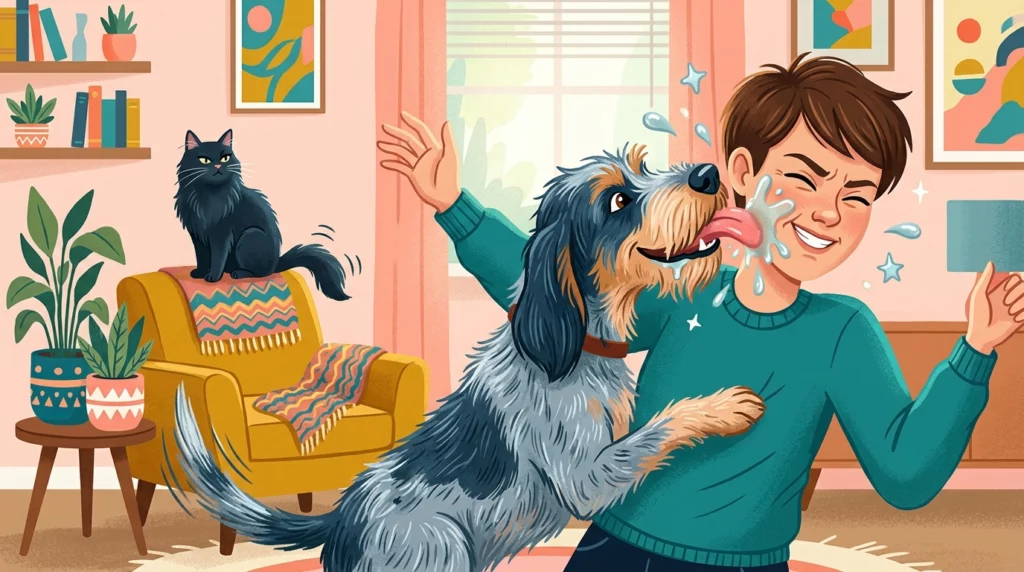
I am Pisino. As a three-year-old black cat who rescued a lovely human family (and graciously allowed two dogs, Blu and Niki, to share my roof), I understand the art of grooming. When I wash, it is a display of precision, hygiene, and quiet dignity. But when my canine housemates decide to express themselves, they use their tongues like giant, sloppy windshield wipers.
Blu, our energetic Griffon Bleu de Gascogne, will happily coat your entire face in a layer of lukewarm drool just for saying hello. Niki, being a refined English Setter, is a bit more selective, but even she will occasionally offer a polite, wet kiss to a human hand. Why do they do this? Is it pure love, or is there something more complex—and perhaps slightly gross—happening under the surface?
Let’s dive into the fascinating, scientific reasons why your dog treats your skin like a gourmet lollipop.
1. The Chemical Cocktail of Love (Oxytocin)
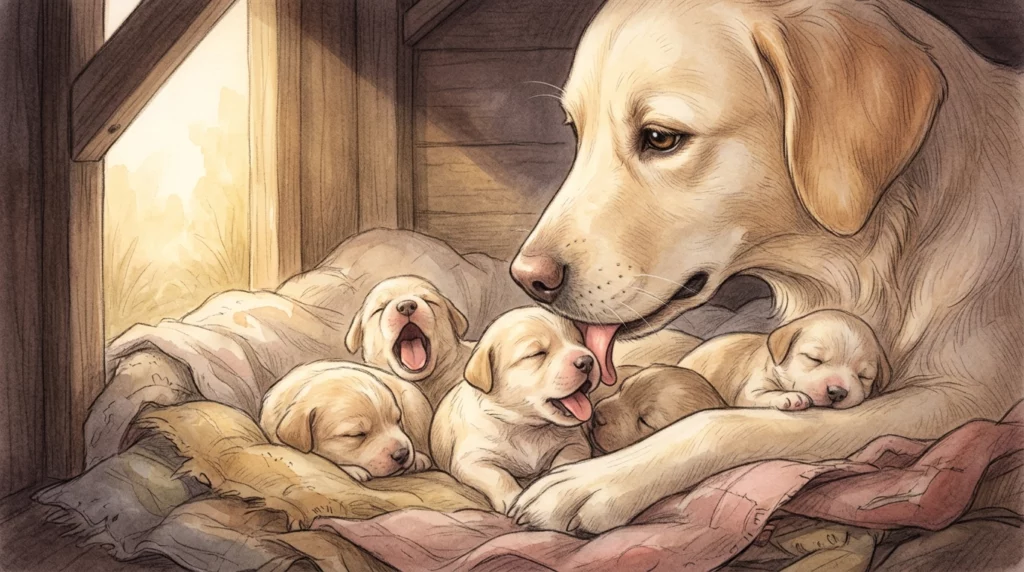
To understand why dogs lick, we have to look at their biology. When a dog licks you, it isn’t just a random physical reflex; it is a neurological event. According to the behavioral experts at VCA Hospitals, the act of licking triggers the release of endorphins and dopamine in a dog’s brain. It feels good to them, and it actively calms them down.
But it goes deeper than simple relaxation. This behavior is rooted in millions of years of evolution. Research published by the Proceedings of the National Academy of Sciences (PNAS) highlights how domestic dogs evolved genetic mechanisms that promote hypersociability and bonding with humans. When your dog licks you, both of your brains experience a surge in oxytocin—the legendary “bonding hormone.” In short, those wet kisses are a biological tool designed to make you fall deeper in love with them. (As a cat, I prefer to use a gentle headbutt, which is far less damp but equally effective).
2. You Taste Delicious (The Salt Factor)
While the emotional connection is real, we cannot ignore the culinary aspect of the human body. Humans sweat, and sweat is salty. To a dog’s highly developed sensory system, your skin is basically a walking snack.
The veterinary team at Pine Grove Veterinary Hospital notes that canine hand-licking is often a sensory exploration. Your hands are covered in fascinating scents, salts, and oils from everything you have touched throughout the day. When Blu licks my human’s hands after they’ve made a sandwich, he isn’t just saying “I love you.” He is saying, “I can taste the faint whisper of roast turkey on your knuckles, and I demand more information.”
3. Reading Your Mind (and Your Face)
Dogs are incredibly attuned to human body language and micro-expressions, far more than they get credit for. Licking can actually be a form of active communication and empathy.
A study published on PubMed (NIH) investigated how dogs respond to human emotional expressions. The research suggests that dogs use licking as a response to visual cues of human emotion—particularly when they sense tension, sadness, or joy. If you are crying, your dog might lick your tears not just because they taste salty, but as an pacifying gesture to comfort you and signal that they mean no harm. It is their way of saying, “I see you’re stressed, let me wash the bad feelings away.”
4. “Feed Me!”: The Wolf Heritage
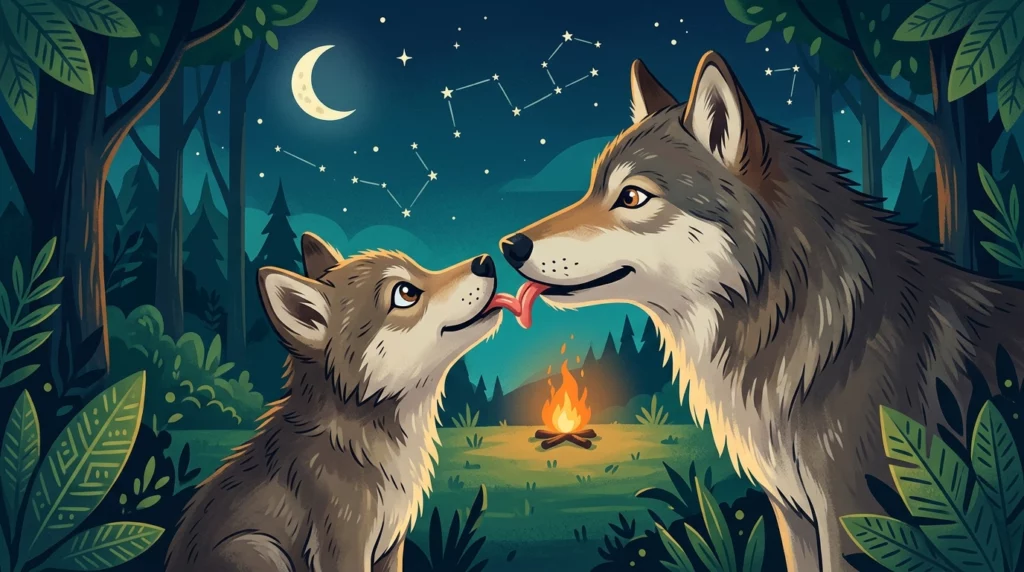
We also have to look at the ancestral history of these slobbering beasts. In the wild, when adult wolves return to the pack after a successful hunt, the puppies will run up to them and lick their mouths. According to the American Kennel Club (AKC), this wild behavior serves a very specific purpose: it triggers the adult wolf to regurgitate partially digested meat for the puppies to eat.
Thankfully, Blu has never expected my humans to regurgitate dinner for him (the kitchen floor is messy enough). However, that hardwired puppy instinct remains. Licking your mouth or chin is an ancient, deeply instinctual way of saying, “You are the provider of food. Please share.”
5. When Slobber is a Cry for Help (The GI Connection)
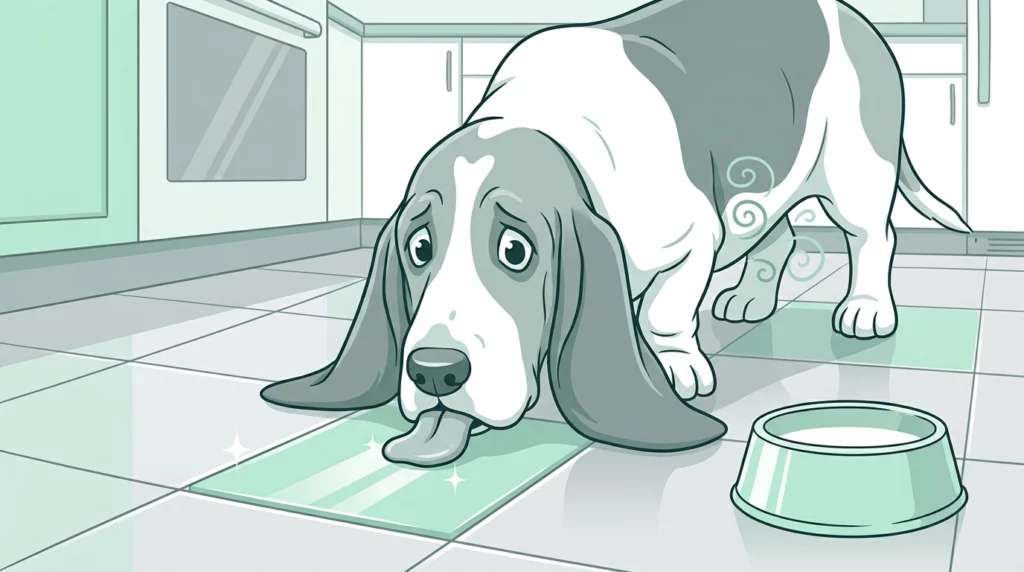
While occasional licking is normal and adorable, excessive, frantic licking can sometimes be a sign that something is wrong. If your dog is suddenly obsessively licking you, the floor, the walls, or their own lips, it might not be affection at all.
A clinical study on gastrointestinal (GI) disorders and licking behavior revealed a strong link between excessive licking of surfaces and underlying medical issues. Dogs suffering from acid reflux, nausea, irritable bowel syndrome, or abdominal pain often use licking as a physical coping mechanism to soothe their upset stomachs. If the slobber fest seems compulsive or out of character, a trip to the vet is highly recommended.
The Million-Dollar Question: Is Dog Saliva Clean?
We have all heard the old wives’ tale that “a dog’s mouth is cleaner than a human’s.” Let me, as a highly educated cat, dispel that myth immediately. It is absolutely false.
While dog saliva does contain some mild antibacterial proteins that help them heal their own minor wounds, it also carries a host of bacteria that do not belong on human skin. The Centers for Disease Control and Prevention (CDC) warns about Capnocytophaga, a type of bacteria commonly found in the mouths of healthy dogs and cats. While rare, this bacteria can be transmitted through bites, scratches, or close contact with saliva, and can cause serious infections in humans with compromised immune systems.
So, should you let them lick you? A gentle lick on your intact skin is perfectly fine for most healthy people. However, you should avoid letting your dog lick your open wounds, eyes, nose, or mouth. Keep the kisses hygienic, and everyone wins.
The Final Verdict
At the end of the day, licking is just a dog’s way of navigating our strange, hairless world. It is a mixture of ancient wolf instincts, sensory curiosity, a craving for salt, and genuine, chemical-driven affection.
While I will personally stick to my elegant purrs and occasional gentle head-taps to show my love, I have learned to tolerate Blu’s enthusiastic dampness. It may be sloppy, but it comes from a good place. Just keep a towel handy, humans.