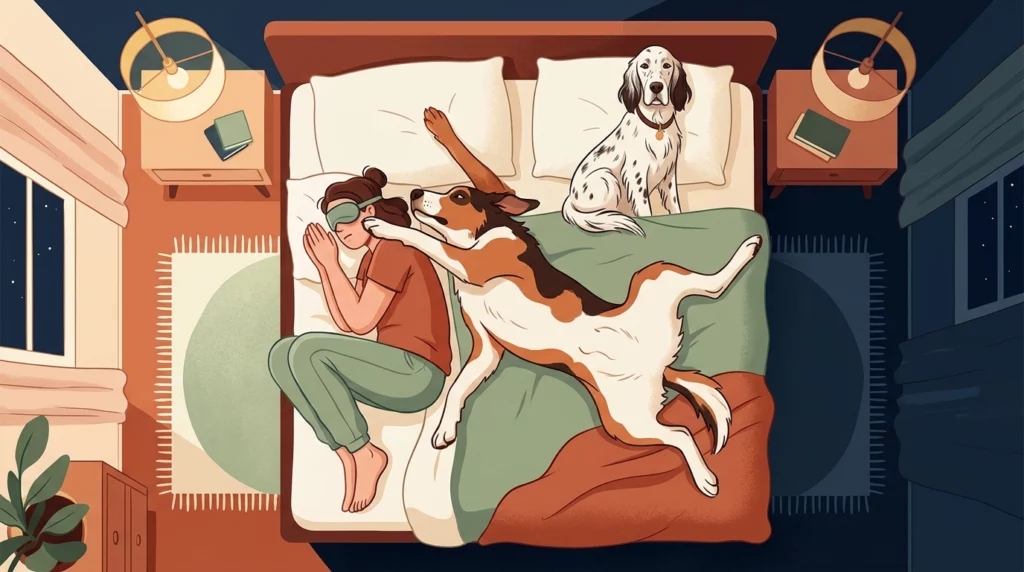
Greetings, discerning humans. It is I, Niki—a five-and-a-half-year-old English Setter of impeccable taste, superior intelligence, and highly refined standards. While my housemate Blu is currently asleep on the kitchen floor with his tongue out (bless his chaotic, Gascogne heart), I prefer my resting spots to be strategically selected for maximum comfort, thermal efficiency, and structural integrity. Naturally, this often leads me to the master mattress.
But this raises a highly debated question in the human world: Is sleeping with your dog actually bad for you?
While humans love to fret over this, I prefer to consult the data. As the resident quality controller here at SnoutScoop, I’ve dug into the scientific literature to analyze the pros, the cons, and the flat-out dirty truths about co-sleeping. Let’s look at what the science actually says.
1. The Sleep Quality Conundrum: Are We Waking You Up?
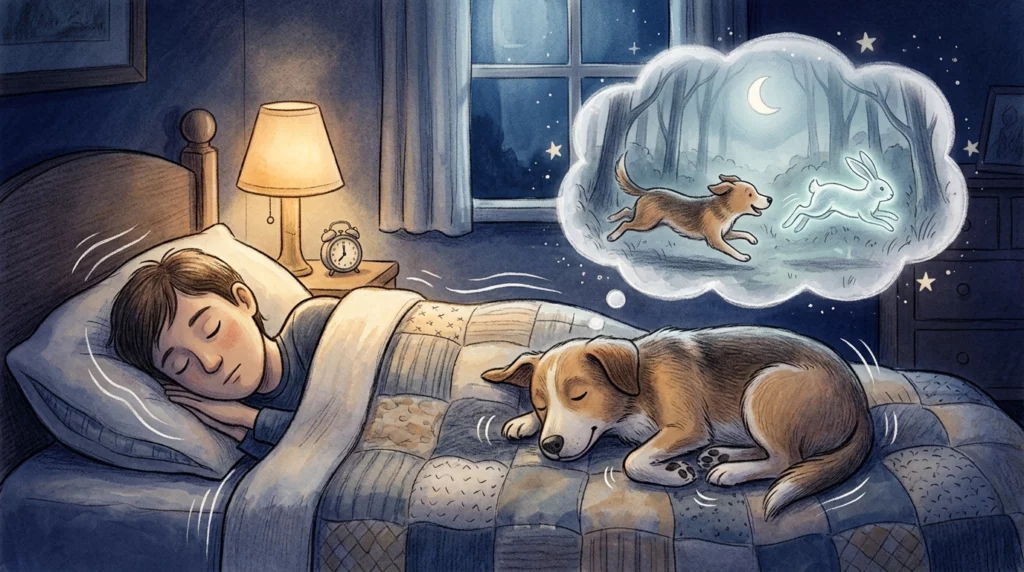
Let’s address the most common complaint: sleep disruption. Humans love to blame us for their morning fatigue. Granted, some of us (I won’t name names, but it rhymes with “Blu”) twitch, chase imaginary rabbits in our dreams, or hog the duvet like it’s our job.
The scientific community has actually spent a surprising amount of time measuring this. A famous study published in the journal Mayo Clinic Proceedings evaluated the sleep of humans and their canine companions using actigraphy (cool motion-tracking sensors).
The researchers discovered something fascinating:
- Having a dog in the bedroom allowed humans to maintain a very respectable sleep efficiency of around 83%.
- However, when the dog climbed directly onto the bed, that sleep efficiency took a slight hit, dropping to about 80%.
While a 3% drop might not sound like much, it can add up over time. If you find yourself waking up because your 80-pound Lab decides your ribcage is an excellent pillow, your deep sleep architecture is indeed being compromised. According to research in PMC9606909, consistent nighttime awakenings can disrupt your natural sleep cycles, leaving you feeling less than refreshed when the morning alarm rings.
2. The “Yuck” Factor: Zoonotic Risks and Germs
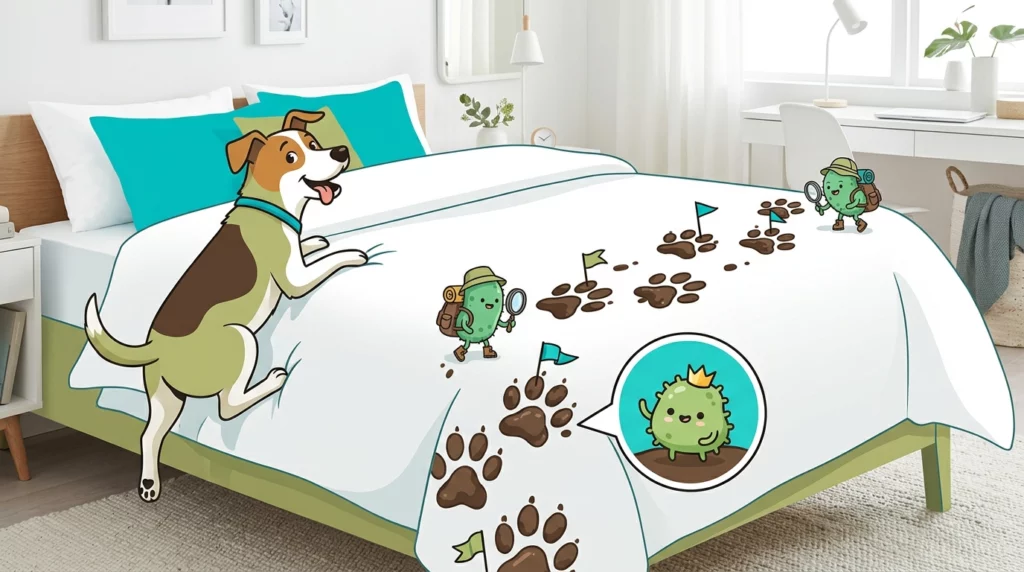
Now, let us discuss hygiene. I am a clean dog, but even I must admit that we dogs do not exactly use hand sanitizer. We walk barefoot outside, sniff questionable organic matter, and occasionally lick things that would make a human faint.
Some experts warn that sharing a bed can introduce some rather unpleasant pathogens into your sanctuary. A classic public health paper shared by the Centers for Disease Control and Prevention (CDC) highlights that while rare, sleeping with pets has been linked to the transmission of zoonotic diseases—diseases that jump from animals to humans. These include bacterial infections, parasites, and even things like MRSA or flea-borne illnesses.
Furthermore, researchers at UC Davis have warned against excessive bedtime intimacy, such as letting dogs lick your face or open scratches while in bed, as noted in reports on CBS News.
According to the veterinary experts at Point Vicente Animal Hospital, there is also the physical debris to consider. Dogs can carry ticks, fleas, and microscopic pollen on their coats right onto your Egyptian cotton sheets. If you are not keeping up with your dog’s parasite preventatives, you are essentially inviting a small ecosystem of microscopic freeloaders into your bed.
3. The Allergy Alert: Dander in the Duvet
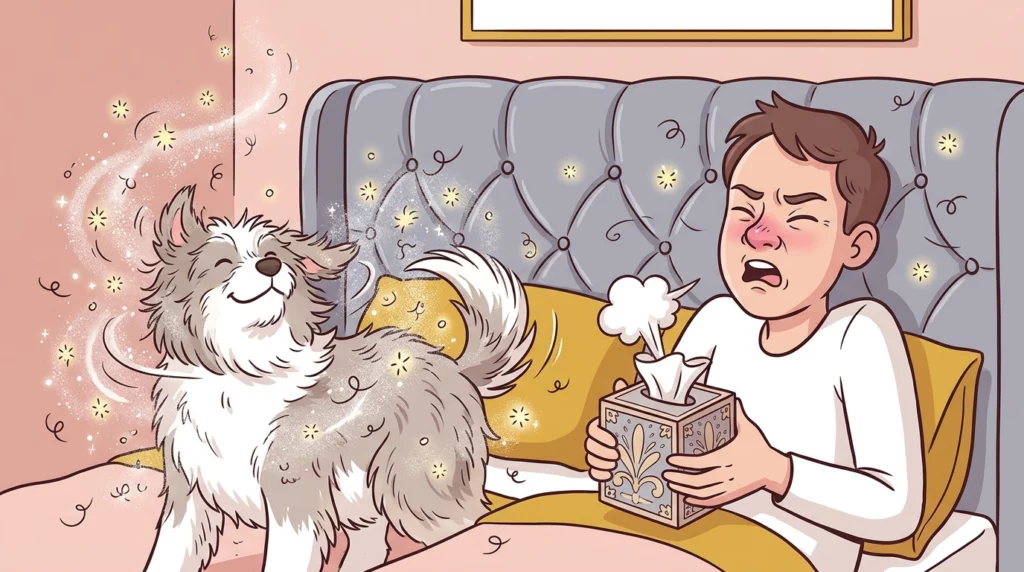
Even if you aren’t worried about exotic pathogens, there is a much more common culprit: allergies.
According to the American Lung Association, pet dander (dead skin cells), saliva, and urine contain proteins that are highly potent allergens. These microscopic particles stick to carpets, bedding, and pillows.
If you have even a mild sensitivity to dogs, inviting us to sleep directly under your nose for eight hours a night is a recipe for chronic sinus congestion, morning sneezing, and puffy eyes. It turns out that waking up feeling like you have a mild cold isn’t actually normal—it’s just your immune system reacting to my dander.
4. The Cozy Counter-Argument: Why We Do It Anyway
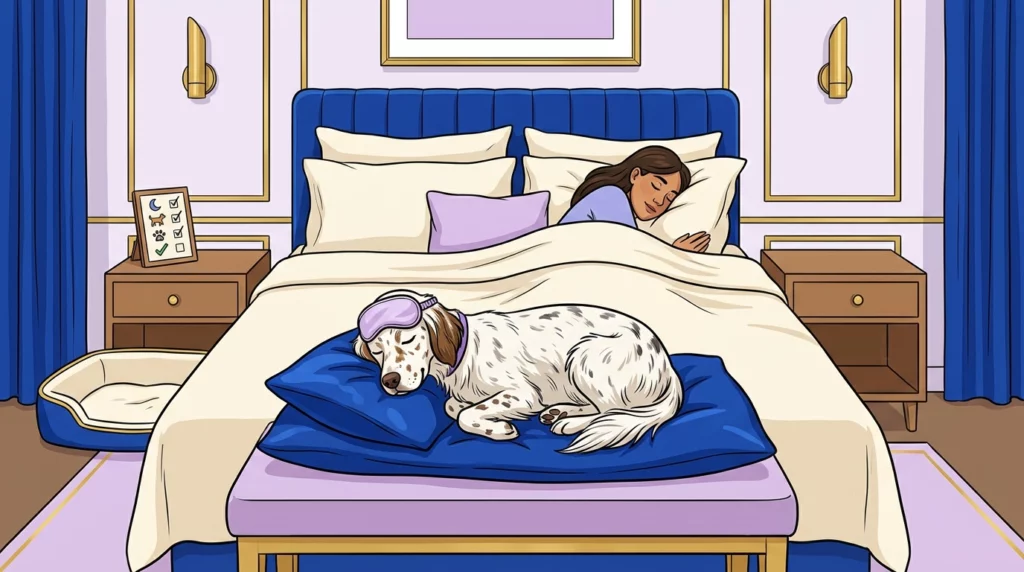
With all these warnings about bacteria, dander, and disrupted sleep, you might wonder why anyone lets us on the mattress at all. Well, because the emotional benefits are immense—and science backs this up, too!
According to a study on PubMed, many pet owners experience significant psychological benefits from co-sleeping. The presence of a dog in bed can provide:
- Anxiety Relief: The gentle rhythm of our breathing acts as a natural white noise machine, lowering your heart rate and reducing cortisol levels.
- A Sense of Security: Knowing that a vigilant protector (or in my case, an elegant sentinel) is nearby can help solo sleepers feel much safer.
- Social Support: For many, the physical warmth of a dog fights off feelings of loneliness and promotes a deep sense of companionship, as noted by researchers writing on the Independent.
For many humans, the mental health boost of a warm, loving snuggle far outweighs a minor dip in sleep efficiency.
Niki’s Rules for Sophisticated Co-Sleeping
As a compromise-oriented English Setter, I believe you don’t have to banish us to the cold floor forever. You simply need to establish some rigorous, high-quality protocols to keep everyone safe and rested:
- The Mayo Clinic Compromise: If your sleep is suffering but you love our company, place a comfortable dog bed directly next to yours. You get the security and closeness without the physical tossing and turning.
- Strict Hygiene Protocols: If we are allowed on the human bed, our paws must be wiped after outdoor excursions, and we must be bathed regularly.
- The Wash-and-Wear Rule: Wash your bedding in hot water at least once a week to keep dander and outdoor allergens to a minimum.
- Flawless Parasite Prevention: This is non-negotiable. Your dog must be on year-round flea, tick, and heartworm preventatives. No exceptions.
Ultimately, whether you share your bed with us is a personal choice. If you have severe allergies, asthma, or suffer from insomnia, it is probably best to keep the bedroom a dog-free sanctuary. But if you are a healthy, deep sleeper who finds peace in our presence, then by all means, pull back the covers.
Now, if you will excuse me, I see a perfectly sunlit patch of the master bed that requires my immediate, expert evaluation.