Hello, human friends! Blu here, your resident blue-furred, high-energy Griffon Bleu de Gascogne rescue. If you know anything about me, you know I have two settings: 110% zoomies, and fast asleep. But there’s a very specific thing I do right between those settings, and I bet your dog does it too.
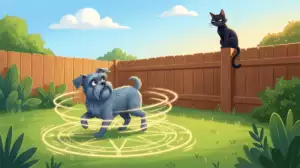
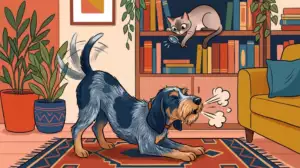
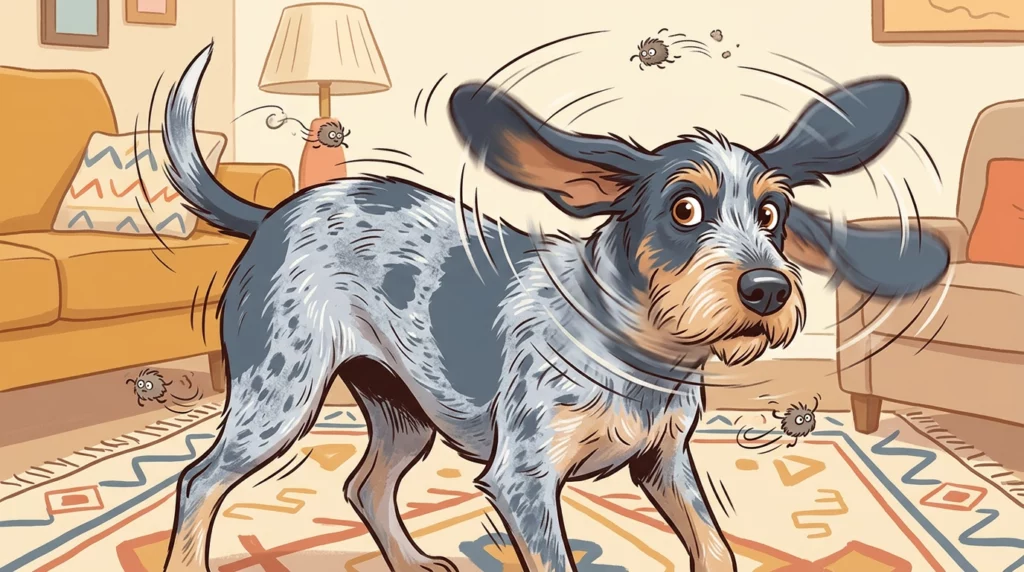
Picture this: I’m lying on the rug, dreaming of chasing squirrels. My human walks over, gives me a giant, loving squeeze (which I adore, mostly, though sometimes my personal bubble feels a bit squished), and walks away. Immediately, I stand up, plant my paws, and start a violent, head-to-tail vibration. BRRR-R-R-R-T! My floppy ears flap like helicopters, my skin twists like a washing machine on spin cycle, and I send a cloud of dust bunnies flying.
But here’s the kicker: I am completely, 100% dry. No bath, no rain, no puddle-jumping. So why do we dogs do the “wet dog shake” when we are bone-dry?
Niki, our incredibly smart and picky English Setter editor, told me I couldn’t just say “because it feels awesome” (even though it does). She made me dig into the actual canine science. It turns out, my goofy dry shaking is actually a mixture of cutting-edge neurology, emotional therapy, and evolutionary survival. Let’s dive in!
1. The “Tickle Science” (The Brand-New Neurological Discovery)
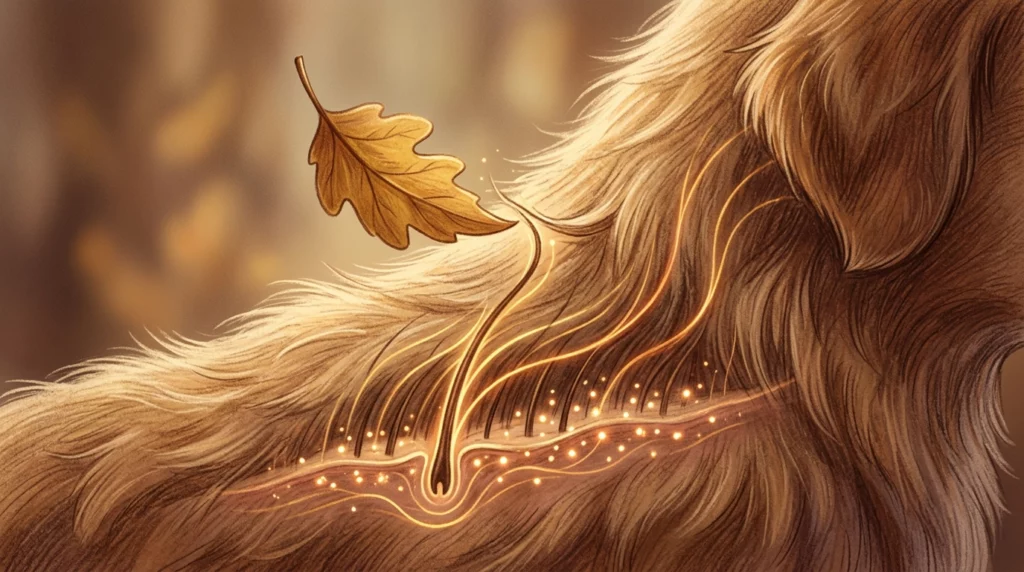
For decades, humans knew how we shook (we can shake off 70% of the water on our fur in just a fraction of a second—impressive, right?), but they didn’t quite understand the exact neurological trigger. That changed recently thanks to some brilliant scientists.
According to a groundbreaking 2024 study published in the journal Science and detailed on PubMed Central (PMC), researchers identified a very specific type of sensory receptor in mammalian skin called C-LTMRs (C-low-threshold mechanoreceptors).
As reported by IFLScience, these receptors are designed to detect light, touch-based irritants—basically, tickles! When water, oil, or a pesky crawling insect stimulates these receptors, it triggers a rapid-fire signal through the spinoparabrachial pathway straight to our brains, screaming, “SHAKE IT OFF!”
Even if I’m not wet, a single stray hair, a speck of dust, or a ticklish spot on my back can activate these C-LTMRs, sending me into a full-body automatic shake. It’s an involuntary reflex designed to protect us from parasites and skin irritants before we even realize they are there. Pretty cool, huh?
2. The Emotional “Reset Button” (Dumping the Adrenaline)
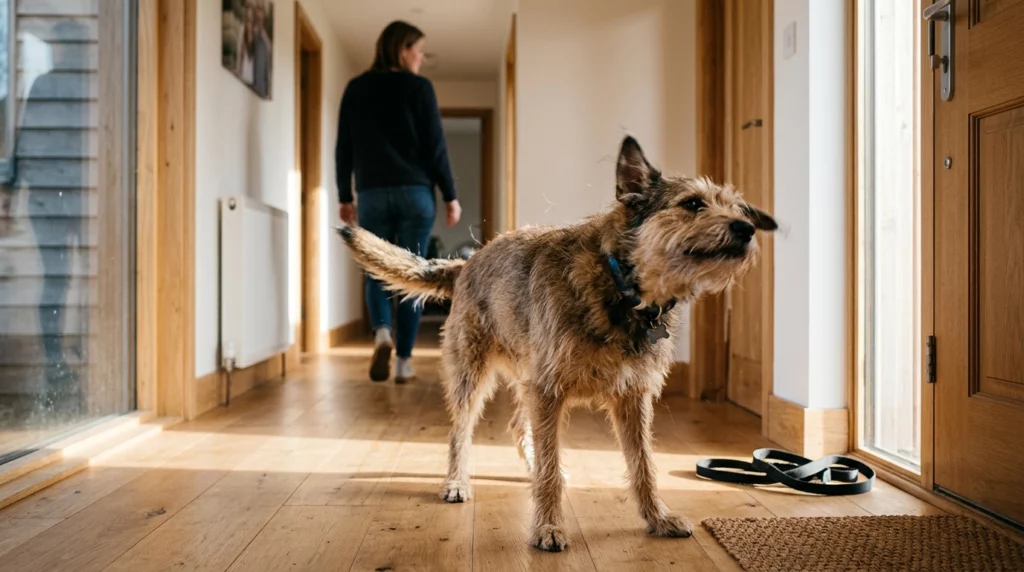
While the physical tickle reflex is real, a lot of our dry shakes are actually emotional. In the dog world, the dry shake serves as a physical “Ctrl+Alt+Del” for our nervous systems. We do it to discharge tension, stress, or even over-excitement.
Think of it as a physical release of built-up adrenaline. According to the dog behavior experts at the Worldwide K9 Academy, dogs frequently use the shake-off to transition from a high-arousal or stressful state back to a state of calm.
Here are a few classic scenarios where we use the “emotional shake-off”:
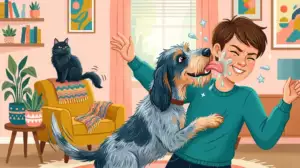
- The “Too Much Love” Shake: You hug us, squeeze us, or pet us for a little too long. While we love you, hugs can feel restrictive to our cursorial (running) nature. Once you let go, we shake to release that mild tension.
- The “Awkward Social Interaction” Shake: If I meet another dog on a leash and we have a tense sniff-test, once we walk away, I will usually do a giant shake. It’s my way of saying, “Phew, glad that’s over, let’s move on.”
- The Post-Vet Shake: The second we step out of the veterinary clinic doors? BZZZZT! Shake time. We are literally shaking off the anxiety of the thermometer and the cold metal tables.
3. Activity Transitions: Shaking Off the Sleep
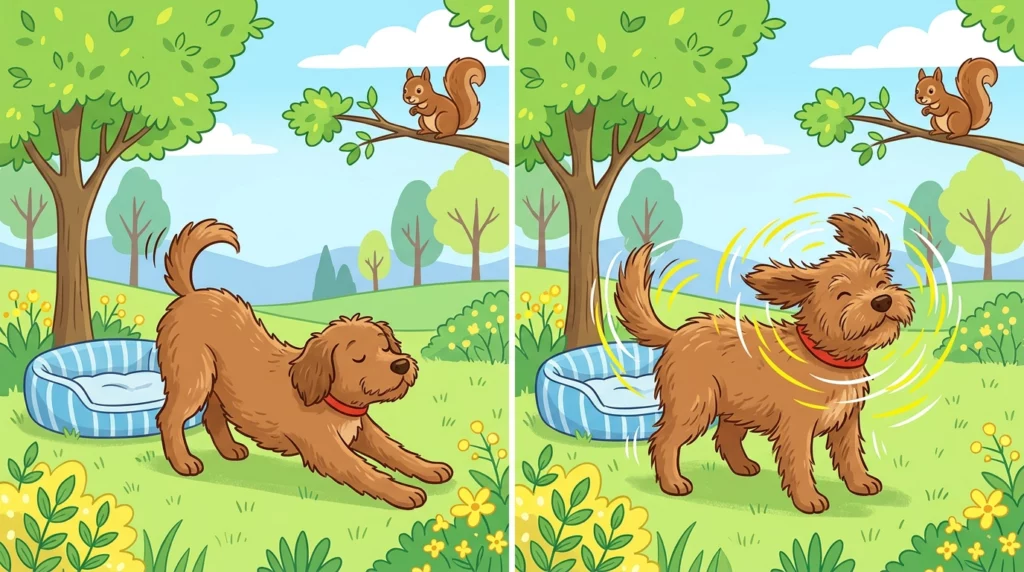
Sometimes, the dry shake is just a transition signal. If I’ve been napping on the couch for three hours and my human suddenly says the magic “W-A-L-K” word, I won’t just run to the door. First, I’ll stand up, stretch my front legs, and do a hearty dry shake.
In this context, the shake-off is a physical wake-up call. It gets the blood flowing back into our muscles, readjusts our fur, and prepares our body for action. It’s the canine equivalent of you stretching your arms over your head and yawning after a long flight.
4. Communication and “Calming Signals”
Canine body language is incredibly subtle. Shaking off is also what dog behaviorists call a “calming signal.” When we shake off in front of other dogs, we are sending a peaceful message: “I’m relaxed now, I mean no harm, and the tension is gone.”
Pisino, our resident black cat and self-appointed chief of the pack, absolutely hates when I do this near him because my floppy ears make a loud slapping noise. But even he respects the boundary! It’s a universal sign of de-escalation in the animal kingdom.
When is Shaking a Sign of Trouble?
While a normal “dry shake” is healthy and completely normal, as a responsible dog, I have to let you know when it might be a sign of a medical issue.
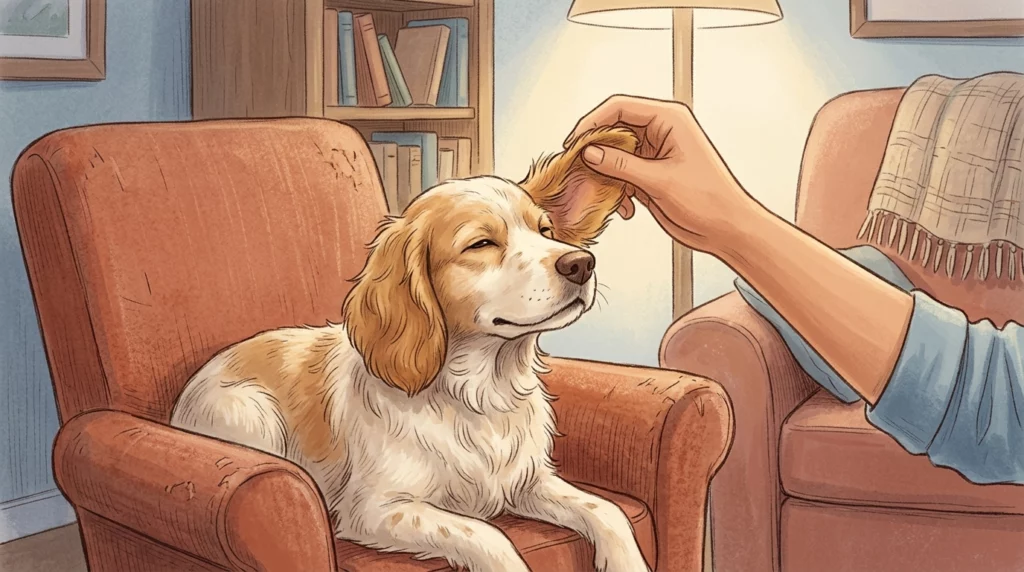
If you notice your dog shaking their head repeatedly (rather than a full-body shake), or if they are scratching at their ears and whining, this isn’t an emotional reset. It’s highly likely they have:
- An ear infection
- Ear mites
- A foreign object (like a grass burr or foxtail) stuck in their ear canal
- Skin allergies causing intense itching
If the shaking is localized to the head and happens constantly, please skip the behavioral analysis and head straight to your vet to get those ears checked out!
The Final Paw-Print
The next time you see your dog do a massive, dramatic shake-off after a training session, a veterinary visit, or a particularly intense petting session, don’t worry! We aren’t trying to shake dirt onto your clean floors (well, maybe a little bit). We are simply resetting our emotional batteries, clearing our minds, and getting ready for the next adventure.
Do you notice your dog dry-shaking after specific events? Let me know in the comments below! Now, if you’ll excuse me, Pisino is staring at me from across the room, which is highly stressful, so I need to go do a massive, floppy-eared reset shake. BRRR-R-R-T!