Greetings, humans! Yuna here. If you’ve been looking for me, I was probably perched on top of the kitchen cabinets, plotting my next grand adventure, or carefully batting a single pen off the desk to test gravity. (Gravity still works, by the way. You’re welcome.)
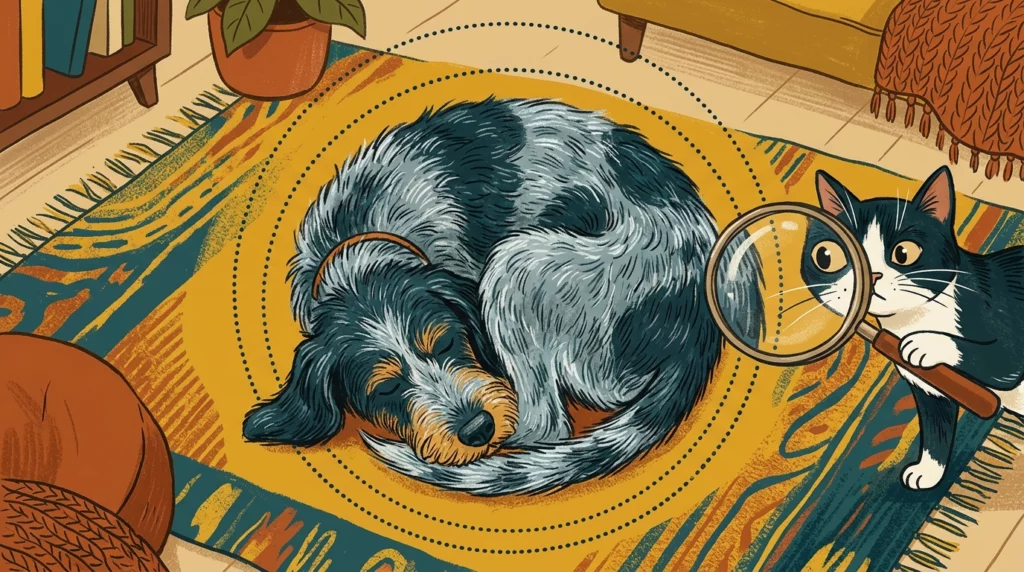
But today, my chaotic curiosity has been captured by something happening right on the living room floor. I’ve been observing the local canine specimens—specifically my big, goofy brother Blu and our elegant sister Niki. Normally, Blu is a whirlwind of floppy ears and boundless energy, while Niki maintains her proud, discerning Setter dignity. But when it’s naptime? They both do this highly amusing thing: they spin in circles and roll themselves into tight, compact, fuzzy little pastries.
Humans call it the “donut position.” Why on earth do these massive creatures squeeze themselves into tiny, spherical packages? I decided to do some feline detective work. It turns out this cute habit is actually a mix of wild history, clever engineering, and deep-seated instincts.
The Pre-Nap Spin: Clearing the Virtual Wilderness
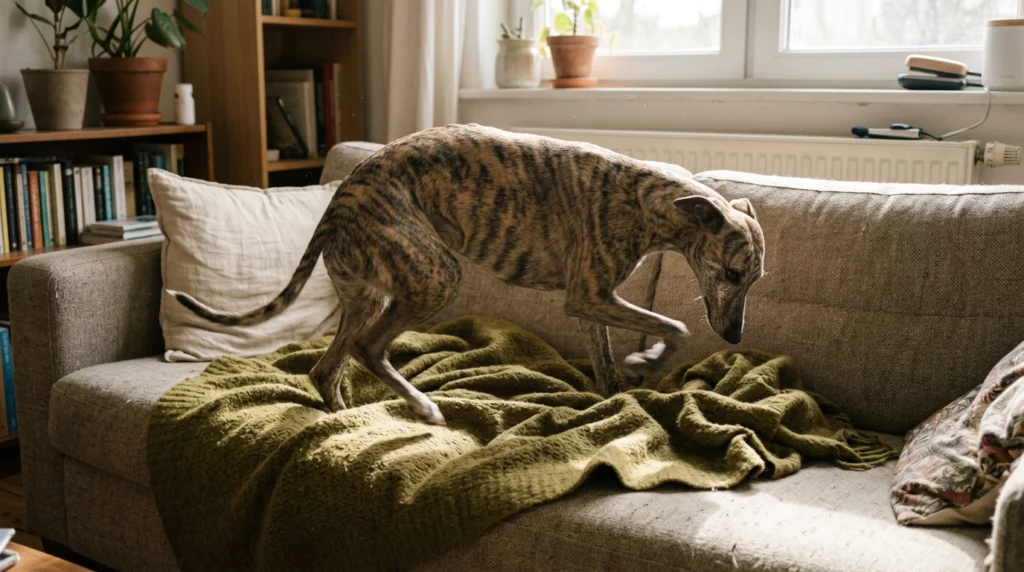
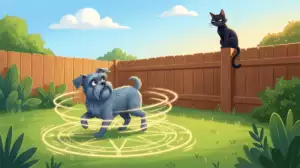
Before a dog can officially become a donut, they have to perform the sacred pre-nap dance. You’ve seen it: they walk in tight circles over and over on a perfectly flat couch before finally collapsing. As a cat, I find this highly inefficient, but there’s a brilliant reason behind it.
According to the experts at Reader’s Digest, this circling behavior is a direct inheritance from their wild ancestors. Long before cozy orthopedic dog beds existed, wild canines slept outdoors in tall grass, brush, and snow. Spinning in circles served a practical purpose: it trampled down the prickly vegetation to create a smooth, comfortable nest.
But that’s not all. This little dance was also a safety inspection. As VCA Animal Hospitals notes, turning around allowed wild dogs to scuff away any hidden rocks, sharp sticks, or uninvited guests like snakes and biting insects. It also gave them one last 360-degree sweep of their surroundings to check for predators before settling down. So, when Blu spins three times on his fluffy bolster bed, his brain is telling him he’s clearing out a safe spot in the ancient forest. Bless his big, dramatic heart.
Reason 1: Total Warmth Lockdown
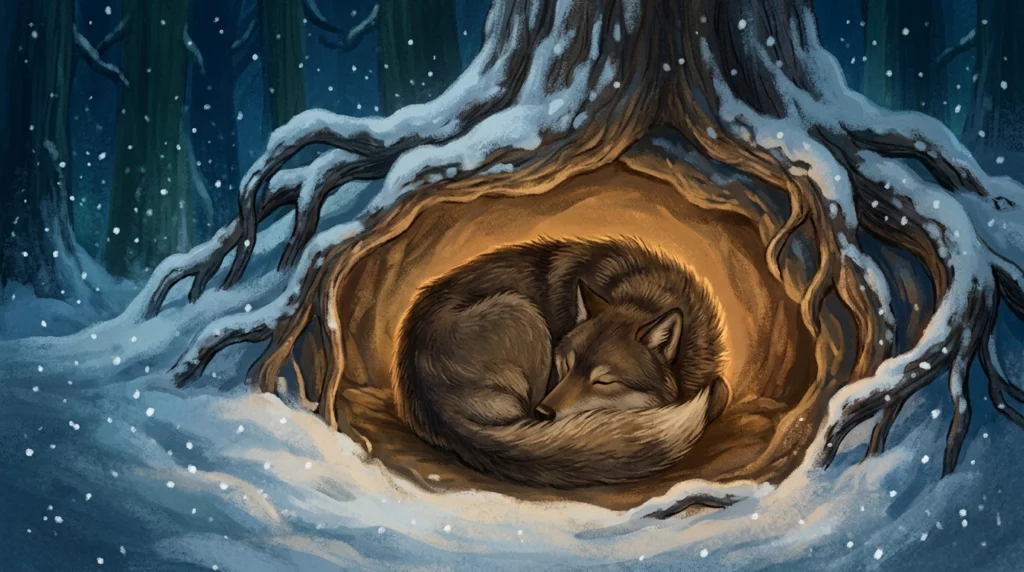
Once the nest is prepared, the tuck begins. The dog rolls onto their side, pulls their paws close to their chest, tucks their nose under their tail, and disappears into a furry spiral.
As we transition into cooler seasons, you’ll probably notice this pose happening a lot more often. That’s because the donut is the ultimate energy-conservation shape. According to PetMD, curling up tightly is an evolutionary strategy to conserve body heat. By tucking their limbs under their torso and keeping their nose nestled near their tail, they minimize the amount of body surface exposed to the cold air.
A helpful guide by Petplan points out that this position traps their own body heat right in the center of the curl. It’s essentially the canine equivalent of pulling a heavy duvet up to your chin. Even though our modern pups live in heated, draft-free homes, their internal biological thermostat still whispers: “Quick, tuck the toes or the cold wind will get them!”
Reason 2: Armor-Plating the Squishy Parts
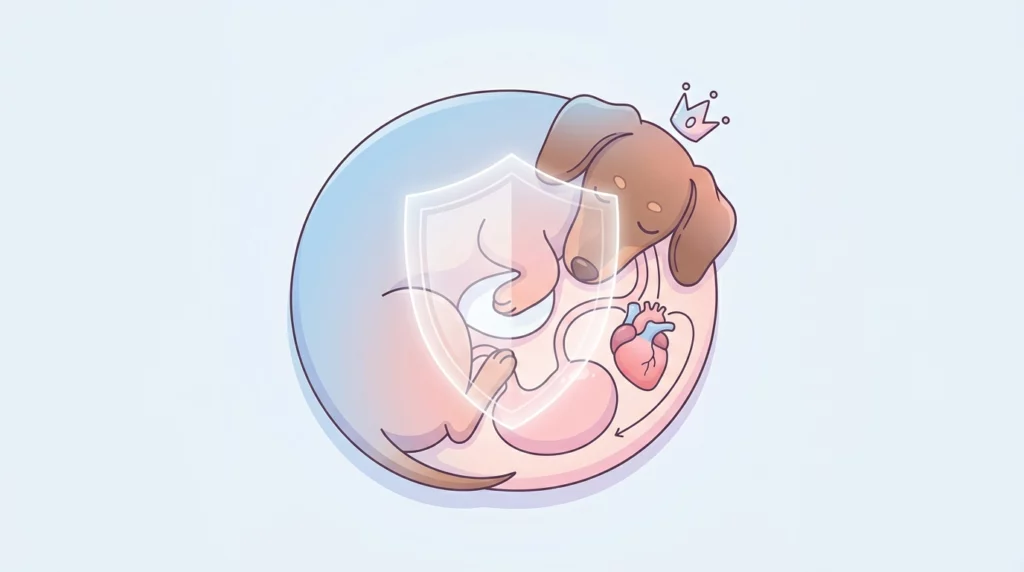
As a cat, I am highly aware of vulnerability (mostly because I like to remind Blu of his by playfully batting at his tail when he least expects it). In the wild, sleep is the most dangerous time for any animal.
When a dog sleeps flat on their back with their legs sprawling in the air—a hilarious pose we call the “crazy legs” or “sploot”—it means they feel incredibly safe. But if they feel even a little bit exposed, they default to the donut.
The RSPCA Queensland explains that curling up into a ball protects a dog’s vital organs from potential predators. Their soft belly, throat, and chest are safely shielded beneath their thick back fur, ribs, and limbs. It’s an ancient defensive posture. By protecting their most vulnerable parts, they can sleep deeply, knowing they aren’t leaving their “engine room” exposed to the world.
Reason 3: The Emotional “Do Not Disturb” Sign
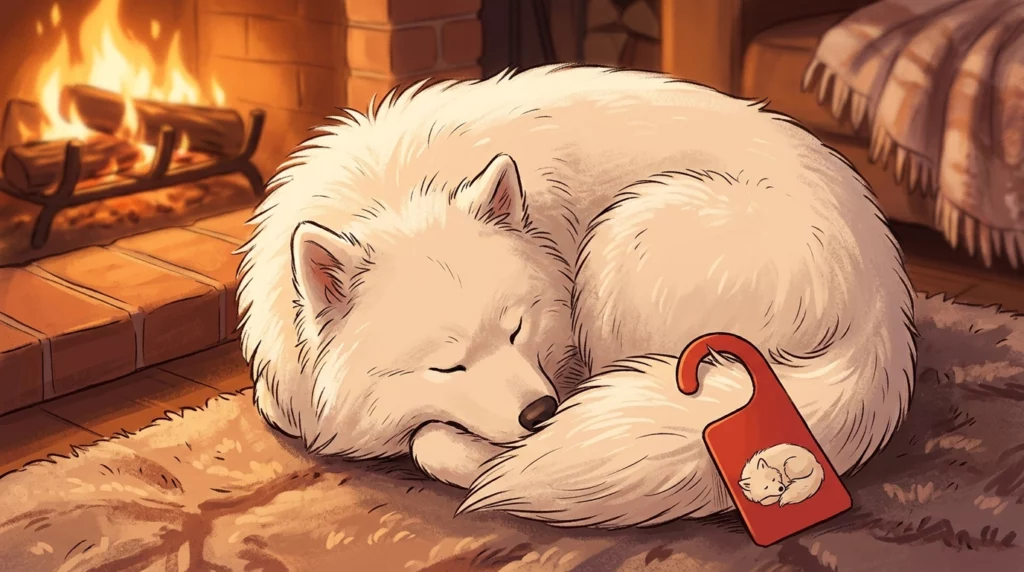
Sometimes, the donut isn’t just about physical temperature or physical predators; it’s about mental comfort.
If you have a rescue dog who has recently joined your family, or if you’ve taken your pup to a bustling new environment (like a pet-friendly hotel or a noisy family gathering), you might see them curl up extra tightly. VCA Animal Hospitals suggests that this tucked-in position helps dogs feel secure, grounded, and less conspicuous. It makes them a smaller target, both literally and figuratively.
Think of it as their psychological security blanket. It’s their way of creating a small, private boundary. When Blu or Niki is curled up like a tight little pastry, it’s a sign they want to feel safe, cozy, and undisturbed. (Though sometimes, I still find it highly tempting to gently poke the pastry just to see the sleepy tail-wag response.)
How to Decipher Your Dog’s Donut Habits
So, what should you do with this treasure trove of canine wisdom? Keep a watchful eye on your pup’s sleeping arrangements! Here is a quick Yuna-approved guide to decoding the donut:
- The Weather Indicator: If your dog usually sleeps stretched out like a starfish but suddenly rolls into a tight ball, check the room temperature. They might be telling you it’s time to turn up the heat or toss an extra blanket over them.
- The Social Barometer: If you’re hosting guests and your dog retreats to their bed in a tight donut, they might be feeling a bit overwhelmed by the noise and seeking comfort in their own biological shield. Give them some space to recharge!
- The Cozy Upgrades: Since donuts love boundaries, dogs who favor this pose will absolutely adore bolster beds with raised edges, cozy nesting blankets they can burrow into, or circular cave-style beds.
Now if you’ll excuse me, all this talk of sleeping has made me incredibly drowsy. I think I’ll go find a sunbeam on the rug right next to Blu. I won’t curl up into a boring dog-donut, though. I’m a cat; I’ll be forming a perfect, mathematically superior golden spiral.
What about your dogs? Are they classic donuts, wild back-sleepers, or chaotic sprawlers? Let me know in the comments below, and don’t forget to share your cutest sleeping pastry photos!