Hello, humans! Yuna here, your resident chaotic feline explorer. Today, I am taking a break from my busy schedule of chasing invisible wall-demons and knocking pens off desks to investigate a mystery that has baffled me for a long time. I’m talking about the ultimate, highly manipulative superpower possessed by my canine housemates, Blu and Niki.
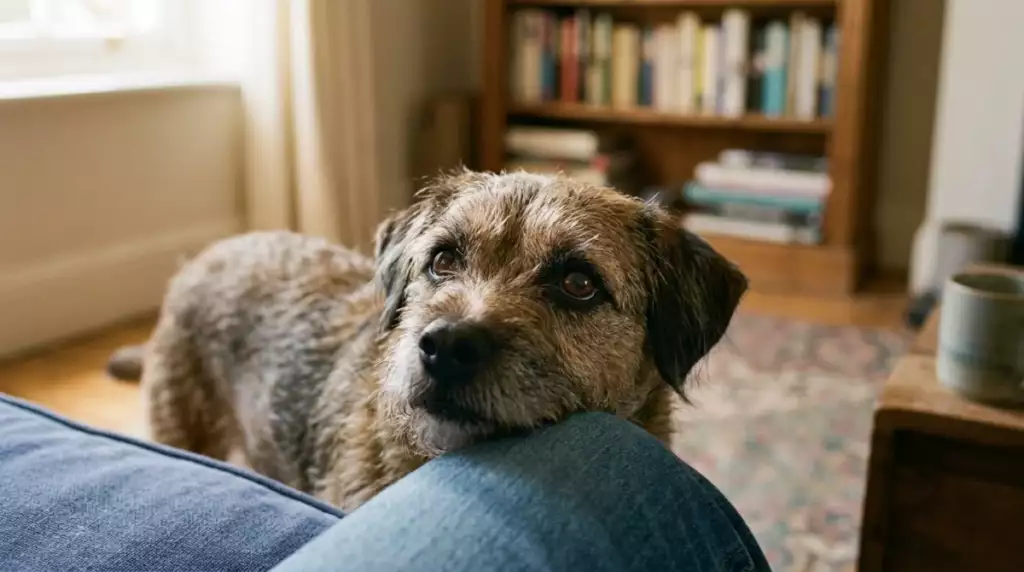
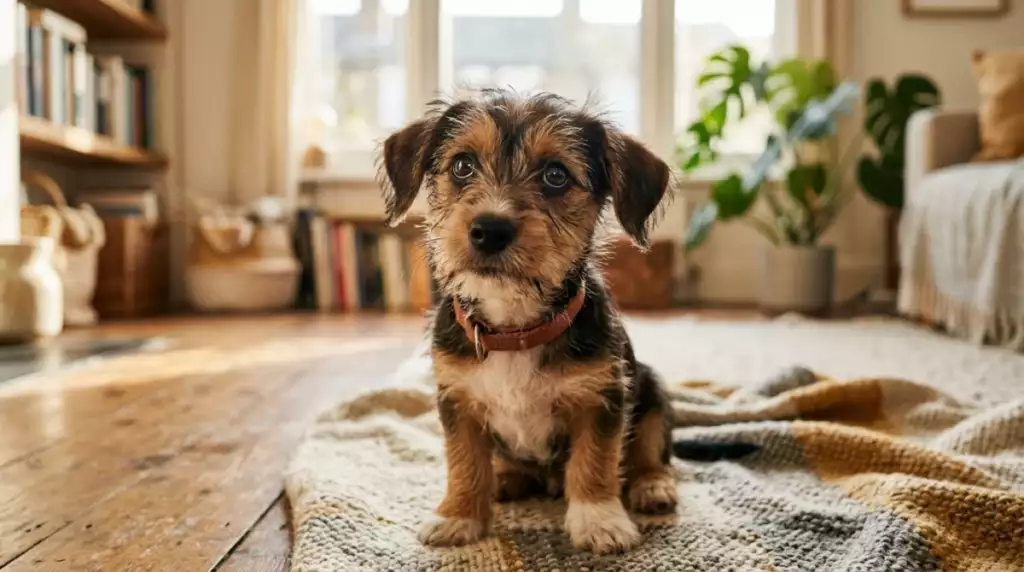
I have watched Blu, a dog with the energy of a localized hurricane, suddenly transform into a tragic, defenseless baby the moment someone opens a bag of cheese. He doesn’t meow politely. He doesn’t claw the sofa. Instead, he drops his chin, tilts his head, and raises his inner eyebrows. Suddenly, his eyes look giant, watery, and incredibly sad. And what do the humans do? They melt. They gasp. They hand over the cheese!
How do they do it? As a cat, I find this highly suspicious. So, I decided to do some digging into the science of this phenomenon. It turns out, those “puppy dog eyes” are not just a cute accident—they are a highly advanced evolutionary hack designed to bypass human brain defense systems. Let’s dive into the science behind how dogs evolved to look so cute.
The Anatomy of a Guilt Trip: The LAOM Muscle
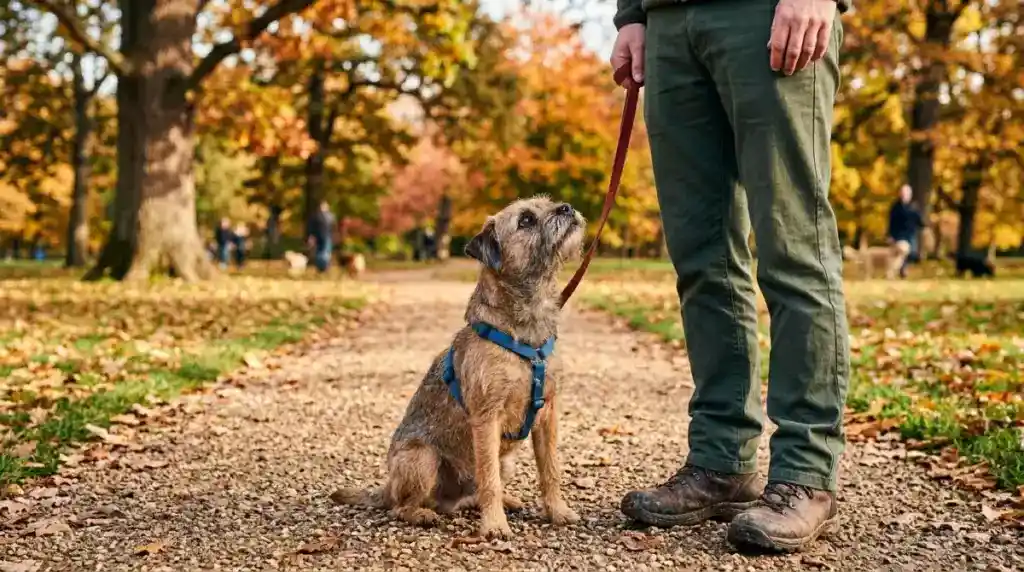
For a long time, scientists wondered if dogs always had this expressive capability. In 2019, a groundbreaking study published in the Proceedings of the National Academy of Sciences (PNAS) looked closely at the facial anatomy of dogs compared to their wild ancestors, wolves. The researchers discovered something fascinating: dogs have a specific facial muscle that wolves lack.
This muscle is called the levator anguli oculi medialis (LAOM for short, because we don’t have all day). What does this fancy muscle do? It raises the inner eyebrows, making the eyes look larger, rounder, and remarkably human-like. As highlighted by The Guardian, this muscle allows dogs to mimic a facial expression that humans associate with sadness or vulnerability. It triggers a nurturing, parental instinct in humans.
Interestingly, the PNAS study found that this muscle is highly developed in almost all domestic dogs, but virtually nonexistent in wolves. The only dog breed in the study that didn’t have it fully developed was the Siberian Husky, which is closely related to wolves. This suggests that as dogs were domesticated, humans unconsciously selected dogs that made this expressive face, leading to a rapid anatomical shift over just a few thousand years, as detailed by Dogs NSW.
The Shelter Superpower: How Eyebrows Help Dogs Get Adopted
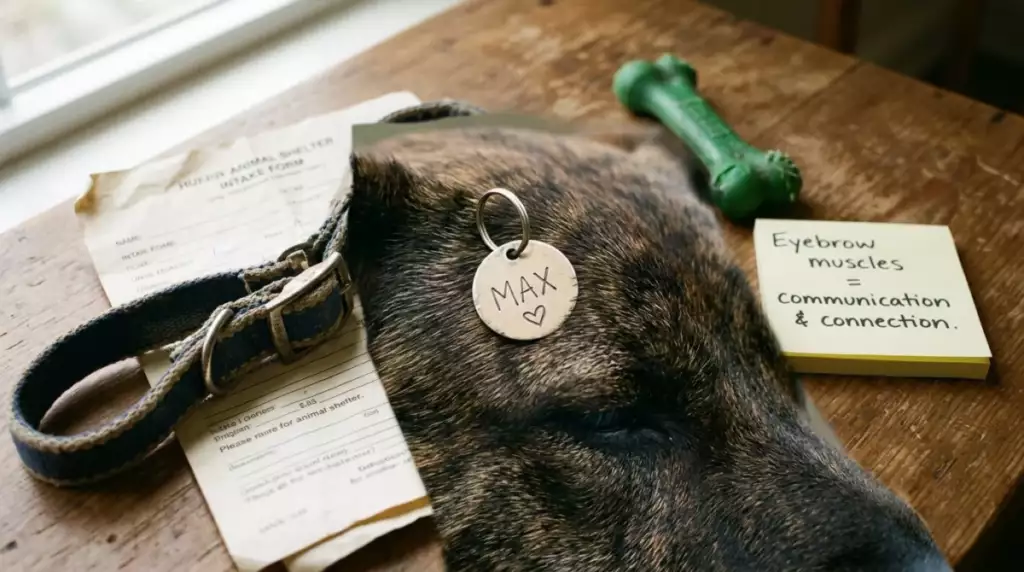
If you think this facial movement is just a minor trick, think again. It has real-world consequences for survival and success in the human world. A study published in PLOS ONE analyzed the behavior of shelter dogs to see what traits made them more likely to be adopted quickly.
The researchers tracked how often dogs raised their inner eyebrows (using a scientific tool called DogFACS). The results were clear: dogs who made this “puppy dog eyes” movement more frequently were adopted significantly faster than those who didn’t. No other behavior—not tail-wagging, not barking, not even friendliness—had such a direct impact on how quickly a dog found a home.
As Petplan points out, this movement makes the dog’s eyes look larger and more infantile, resembling a human baby. Humans are hardwired to respond to baby-like features, a concept known as “baby schema.” When Blu gives our humans that look, their brains are flooded with oxytocin, the bonding hormone. They aren’t just giving him cheese; they are responding to an evolutionary biological command!
The Plot Twist: It’s Not Just About Humans
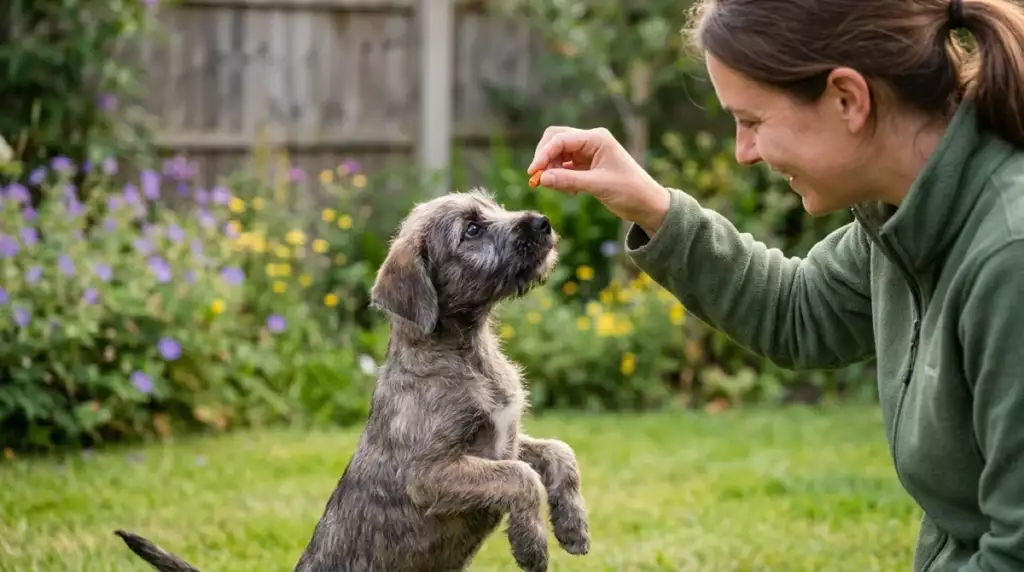
For a few years, the scientific consensus was simple: dogs evolved these facial muscles purely to communicate with and manipulate us. But science is always moving forward, and a recent plot twist has shaken up this theory!
According to research highlighted by The Independent, scientists decided to look beyond domestic dogs and wolves. They examined the facial anatomy of African wild dogs (Lycaon pictus) and discovered something shocking: these highly social wild canines also possess well-developed eye-brow raising muscles.
This discovery, reported in detail by Smithsonian Magazine, suggests that the ability to make “puppy eyes” didn’t evolve *just* because of humans. African wild dogs are incredibly social pack animals that rely heavily on silent communication during coordinated hunts. Being able to communicate with subtle facial expressions, like raising the brow, helps them coordinate movements in the wild tall grass without alerting prey.
As explained by Live Science, this means the facial muscles might have originally evolved to help wild dogs communicate with each other. When domestic dogs split from wolves, they simply took this existing social tool and redirected it toward their new, highly useful best friends: us. Wolves, who became more independent hunters, likely lost the muscle over time because they didn’t need it as much.
Why Cats Don’t Need the Eyebrow Trick
Now, as a cat, I have to ask: why didn’t we cats evolve these complex eyebrow-raising muscles? The answer is simple: we didn’t need to. Dogs are eager to please and desperately want you to know what they are feeling. They want to fit in as part of your human pack, so they use their faces to bridge the communication gap.
Cats, on the other hand, have perfected the art of the direct, unblinking stare. We don’t need to look sad to get what we want. We simply sit on your keyboard, knock your favorite mug toward the edge of the counter, or let out a highly specific, loud meow that sounds suspiciously like a human baby crying. We achieve the same result—treats, attention, and head scratches—without having to work our facial muscles into a state of mock tragedy.
Still, I have to give credit where credit is due. The evolutionary journey of the dog’s eye is a masterpiece of survival. By looking at us with those big, soulful, expressive eyes, dogs secured a permanent place on our couches, in our hearts, and, occasionally, in our snack cabinets.
So, the next time your dog looks at you with those giant, irresistible eyes, don’t feel bad about giving in. It’s not just a sign of a spoiled pup; it’s thousands of years of evolutionary history working exactly the way nature intended. Go ahead, give them that extra treat—science says you really don’t have a choice anyway!