Hello, discerning readers. Niki here. As a five-and-a-half-year-old English Setter of refined tastes, I take the quality of my rest very seriously. While some of my canine acquaintances—looking at you, Blu—flop down wherever and whenever like a discarded gym sock, I prefer a highly calculated, structurally sound approach to my slumbers. It must be elegant. It must be comfortable. And, above all, it must live up to my exceptionally high standards.
But as I observe my fellow canine citizens, I have noticed a fascinating phenomenon: sleep styles are not just personal preferences. They are deeply rooted in breed history, anatomical design, and evolutionary biology. Today, we are launching a rigorous, highly scientific (and thoroughly cozy) investigation into how different dog breeds sleep, what those strange positions actually mean, and why your dog might look like a broken folding chair when they are dead asleep.
1. The Greyhound “Roach”: Gravity-Defying Relaxation
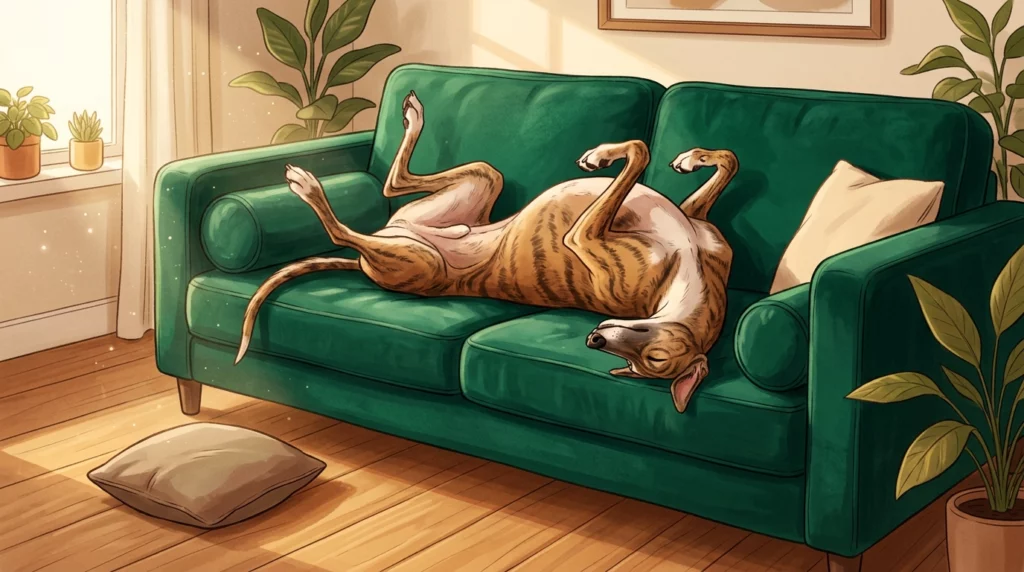
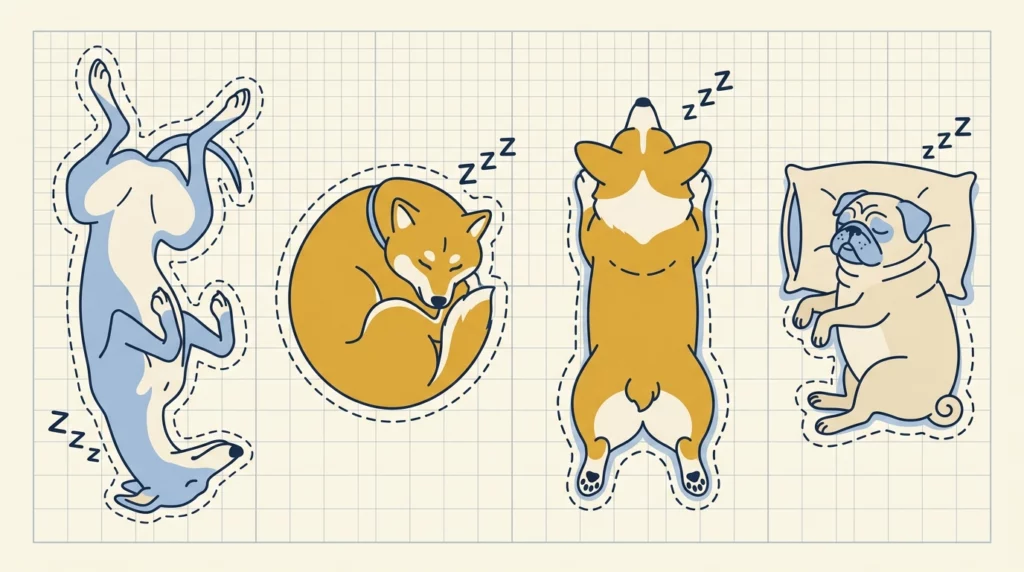
Let us begin with one of the most anatomically baffling sights in the canine world: the “Roach.” If you have ever had the pleasure of sharing your home with a Greyhound, Whippet, or another sighthound, you have likely witnessed this spectacle. The dog lies flat on its back, spine twisted in ways that defy physics, with all four legs pointing straight up into the air. It resembles nothing so much as a dead insect.
Why do they do this? To the uninitiated, it looks incredibly uncomfortable, but it is actually the ultimate compliment to your household environment. According to sighthound advocates at Greyhounds2.org, “roaching” is a sign of complete and utter security. Because a dog’s stomach is their most vulnerable area, sleeping belly-up shows they feel entirely safe in their surroundings.
Furthermore, sighthounds have very low body fat and thin coats. As explained by the Greyhound Adoption Program NSW, exposing their hairless bellies is an excellent way to dump excess body heat and cool down after a spirited run. When they are completely relaxed, their massive, athletic muscle groups fully let go, resulting in those wonderfully floppy, skyward-pointing paws. It is a sign of a very happy, very safe hound, even if it looks like they require an immediate chiropractic adjustment.
2. The Cozy “Donut”: The Warmth of the Wild
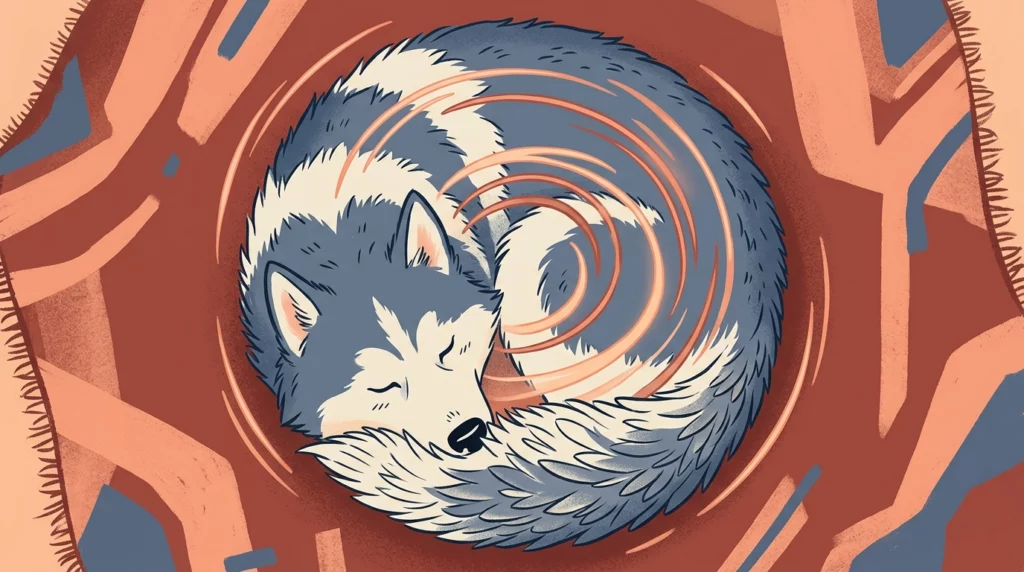
Next, we move to the polar opposite of the sprawled-out roach: the tightly curled “Donut” or “Croissant” pose. This is the signature style of Northern breeds like Siberian Huskies, Alaskan Malamutes, and Samoyeds, though many small, short-haired breeds favor it too.
In this position, the dog tucks their paws under their body and curls their tail over their nose, forming a neat, self-contained circle. This is not just an adorable attempt to look like a pastry; it is an evolutionary survival mechanism.
As detailed by Plato Pet Treats, this posture offers a massive thermal advantage. By curling into a tight ball, dogs minimize the surface area of their bodies exposed to the cold air, conserving vital core body heat. Just as importantly, this pose protects their most vulnerable internal organs from potential predators. If your dog curls up tight even in a warm, modern living room, they are simply listening to the ancient whispers of their ancestors, ensuring they stay safe, warm, and compact through the night.
3. The “Propped-Up” Snore: Navigating Anatomical Challenges
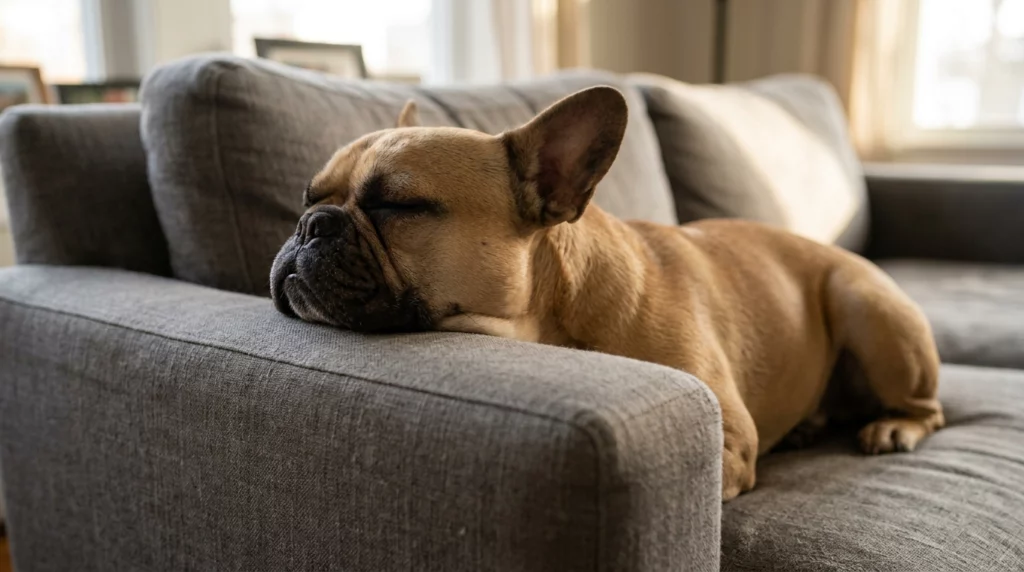
If you own a Pug, French Bulldog, or English Bulldog, you may have noticed they sleep in positions that look less like relaxation and more like an active balancing act. They often sleep with their heads propped up on the arm of a sofa, resting on a toy, or even sitting semi-upright with their chins resting on their chests.
While this can look incredibly endearing, there is a serious anatomical reason behind it. Brachycephalic (flat-faced) breeds frequently suffer from Brachycephalic Obstructive Airway Syndrome (BOAS). As explained by the American College of Veterinary Surgeons (ACVS), these dogs have shortened facial bones but the same amount of soft tissue in their airways, which can lead to breathing difficulties.
Because of this, flat-faced dogs often seek out elevated positions for their heads. Propping the head up on a pillow, toy, or the edge of a dog bed helps keep their upper airways open, making it much easier to breathe while unconscious. If you notice your brachycephalic dog struggling to sleep flat, snoring excessively, or waking up gasping, veterinary experts at Kentdale Vets emphasize the importance of monitoring these symptoms closely, as airway evaluations or surgeries can significantly improve their quality of life and sleep.
4. The “Sploot”: Cooling the Core
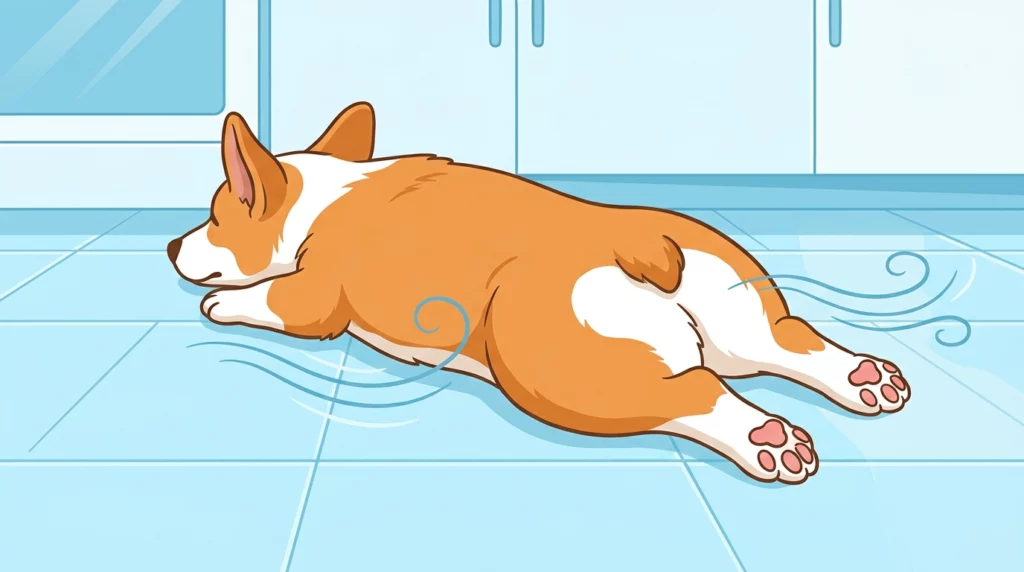
Ah, the “Sploot.” This is the preferred position of Corgis, Dachshunds, and occasionally, energetic sporting dogs like myself when we need a quick mid-day reboot. To achieve a proper sploot, a dog lies flat on their belly with their hind legs stretched out straight behind them, resembling a furry frog or a flying superhero.
The sploot serves two primary purposes: flexibility and temperature control. Breeds with highly flexible hip joints (like Corgis) find this stretch highly satisfying. More importantly, when a dog has been running around and needs to cool down quickly, pressing their relatively hairless belly directly against a cold tile or hardwood floor is the fastest way to transfer heat away from their body. It is the canine equivalent of flipping the pillow over to the cold side.
A Final Word from Niki’s Desk
Understanding your dog’s sleep style is about more than just capturing cute photos for your social media feed. It is a window into their comfort levels, their evolutionary history, and their physical health. A dog who roaches feels completely safe in your care; a dog who donuts is seeking comfort and warmth; and a dog who props their head up may be trying to breathe a little easier.
As the self-appointed editor-in-chief of sleep quality here at SnoutScoop, I encourage you to observe your dog’s nighttime habits. Ensure they have the right bed to support their favorite pose—whether that is a bolster bed for head-propping, a nesting bed for curling, or a spacious mattress for full-stretch roaching. After all, a well-rested dog is a happy dog, and a happy dog makes for a wonderfully peaceful household.
Now, if you will excuse me, all this intellectual analysis of slumber has made me incredibly drowsy. I am off to find a perfectly sunny patch of rug for a highly structured afternoon nap. Sleep well, everyone!