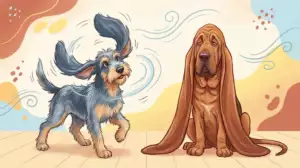
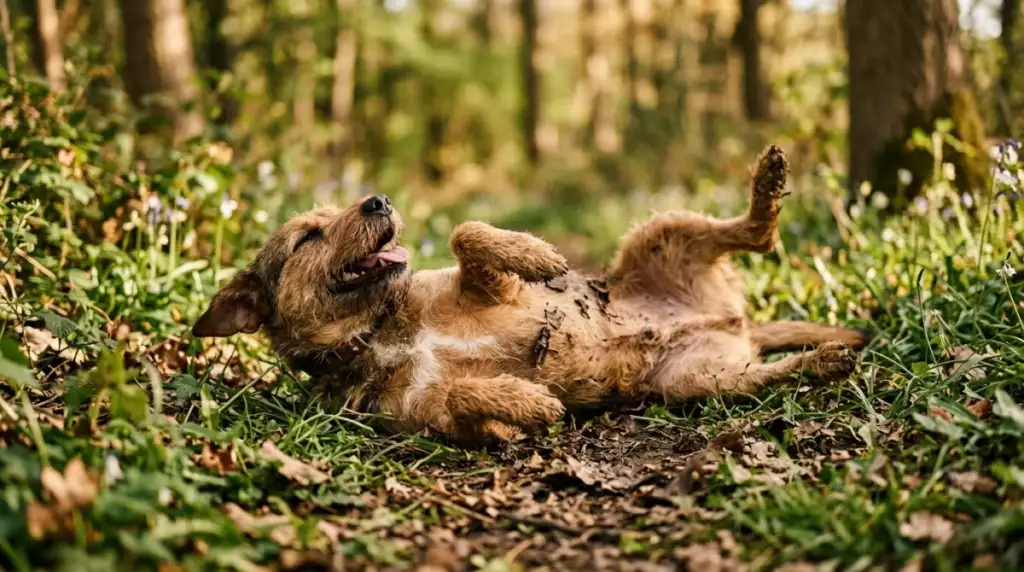
As a cat—specifically, a sleek, self-grooming, and thoroughly dignified black cat—I pride myself on my impeccable hygiene. My daily routine involves meticulous tongue-baths, ensuring that my coat remains a pristine, scent-free masterpiece. My canine subordinates here at SnoutScoop, however? Let’s just say their standards are… different. Take my friend Blu, for instance. He is a lovely dog, but the moment he catches a whiff of something rotting, fermented, or expelled from another animal’s digestive tract, he doesn’t run away. He throws his shoulder into it and slides with absolute, unbridled joy.
Why do dogs do this? Why do they abandon all dignity to perfume themselves with the essence of swamp-water and decay? To get to the bottom of this smelly mystery, I did some deep digging (metaphorically, of course; I prefer to keep my paws clean) into the canine psyche. Here is the actual, science-backed truth about why your dog loves to stop, drop, and roll in the grossest things imaginable.
1. The Ancestral Camouflage (Sneaking Up on Dinner)
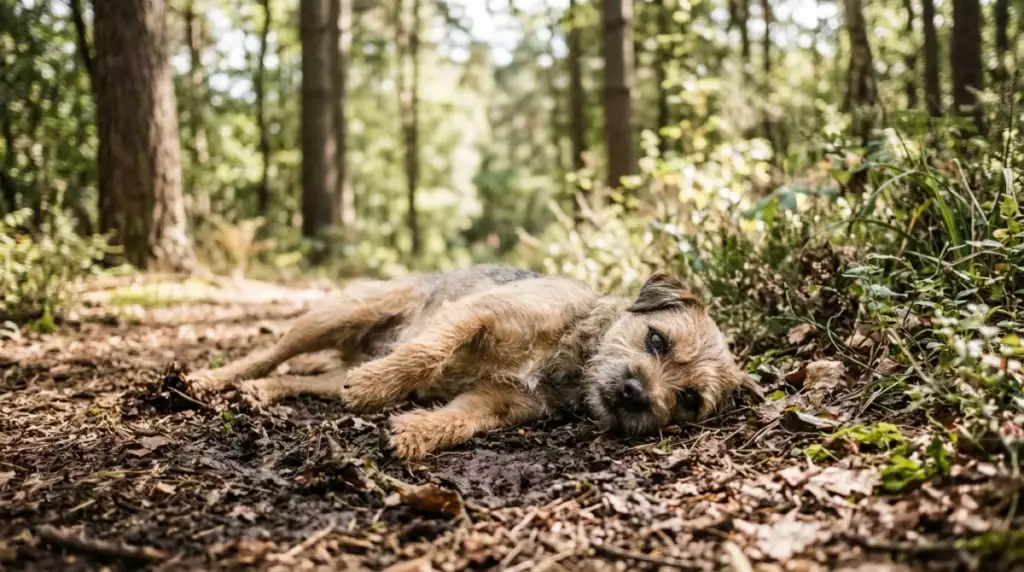
One of the most common theories goes back to the days before dogs had humans to open cans of premium wet food for them. According to the veterinary experts at VCA Animal Hospitals, rolling in smelly things might be an evolutionary hangover from their wild hunting ancestors.
If an ancient canine wanted to sneak up on an antelope, smelling like a predator was a terrible strategy. But smelling like rotten vegetation, mud, or the feces of another herbivore? That is the ultimate natural camouflage. By masking their own scent, wild dogs could get much closer to their prey without triggering alarm bells, as noted by the American Kennel Club (AKC). So, when your dog rolls in fox poo, they aren’t trying to ruin your afternoon—they might just be unleashing their inner stealth-mode hunter.
2. The Wolf ‘Press Release’
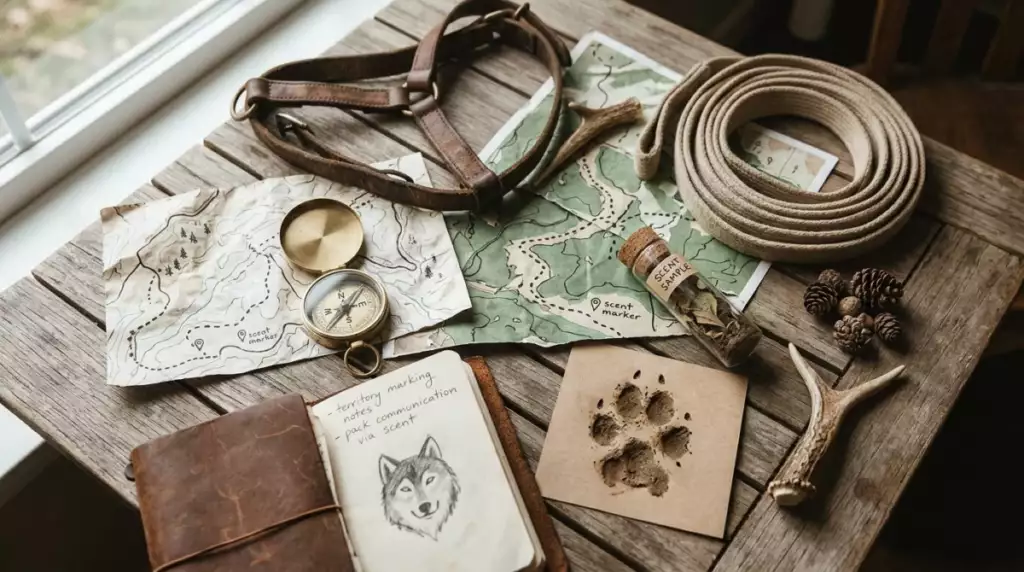
While camouflage makes sense, there is another fascinating evolutionary theory that has less to do with hunting and more to do with sharing local gossip. To understand this, we have to look at the behavior of wolves, the ancestors of our domesticated canine companions.
A landmark study published in the Canadian Journal of Zoology by researchers Ryon et al. (Ryon et al., 1986) explored scent-rubbing behaviors in wolves. You can also review this research via Semantic Scholar. The researchers discovered that when a wolf finds an interesting or novel scent (they tested various odors, including food, perfume, and motor oil), they will roll their face and neck in it, bringing the scent back to the pack.
When the scout returns, the other pack members sniff them thoroughly. It’s the canine equivalent of saying, ‘Hey, look what I found in the woods! Here are the exact coordinates.’ It is essentially a smelly social media status update, informing the community about local resources and discoveries.
3. The Ultimate ‘Look at Me’ Badge
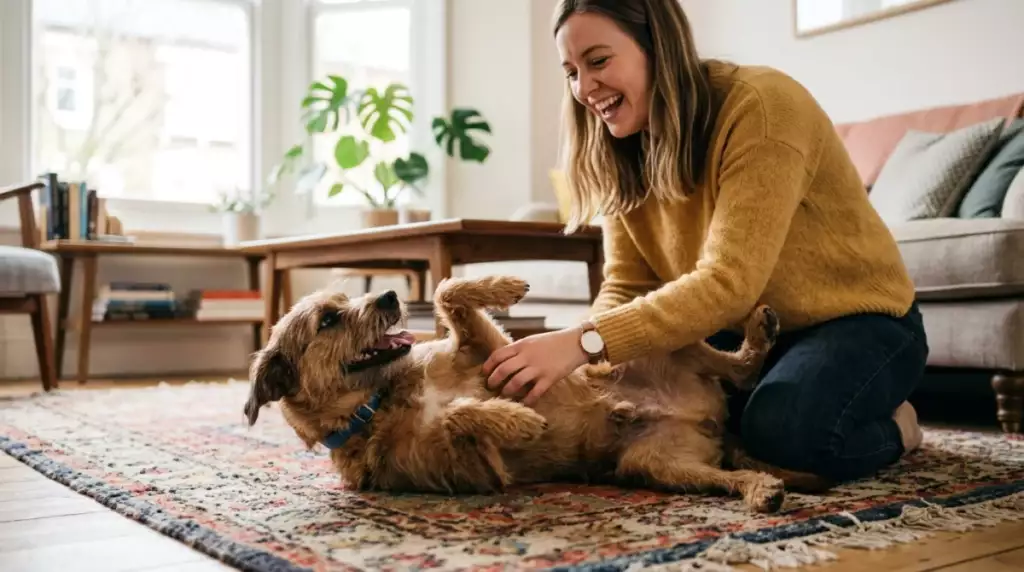
Canine communication is incredibly complex, and sometimes, a bad smell is a status symbol. As explained by YuMOVE, rolling in something vile is like wearing an expensive, flashy designer watch. It says to other dogs, ‘Look at me, I’m an incredibly successful explorer who found this amazing, pungent treasure.’
Additionally, Pedigree points out that this behavior can be a way of depositing their own scent onto the object while picking up the new odor, creating a complex, shared scent profile. It’s a sensory trade-off that we humans simply cannot appreciate with our highly inferior, non-canine noses. To them, it’s not a mess; it’s a beautiful scent mosaic.
4. The Anti-Perfume Protest
Let us talk about your choices in grooming products. Humans love scents like ‘Lavender Breeze,’ ‘Tropical Coconut,’ or ‘Fresh Linen.’ Dogs, however, find these highly artificial, chemical perfumes incredibly offensive and overwhelming.
According to the Whole Dog Journal, after a fresh bath, many dogs will immediately run out to the yard to find the nearest patch of dirt, grass, or animal droppings to roll in. They are desperately trying to scrub off the synthetic floral scent you just forced upon them and replace it with something reassuringly natural. To a dog, smelling like a chemical lavender field is unnatural and stressful; smelling like organic decay is comforting, grounding, and authentic.
How to Deal with Your Dog’s Smelly Adventures
Knowing why they do it doesn’t make the car ride home any sweeter when your pup smells like a decaying fish. As the chief of this household, I have observed my humans using several strategies to manage this behavior, backed by the experts at the Patton Veterinary Hospital:
- Master the ‘Leave It’ Command: This is your strongest line of defense. If you see your dog lock eyes with a suspicious pile and begin to drop their shoulder, a firm, pre-emptive ‘leave it’ can save you hours of scrubbing.
- Improve Your Recall: Ensure your dog has a reliable recall so you can call them away from tempting scent patches before they execute the dreaded ‘stop, drop, and roll.’
- Choose Unscented or Dog-Friendly Shampoos: Avoid heavily perfumed, human-like shampoos. Opt for gentle, unscented, or lightly oatmeal-scented dog shampoos that won’t trigger an immediate ‘must-neutralize-this-smell’ rolling panic.
- Use Enzymatic Cleaners: If the deed is already done (especially with fox poop), regular soap might not cut it. Use an enzymatic shampoo or a mixture designed specifically to break down organic odor molecules rather than just masking them.
A Final Cat-Spective
While I will never personally understand the appeal of wearing the perfume of a deceased rodent—as a clean cat, I prefer to smell like absolutely nothing—I have learned to tolerate my canine housemates’ weird quirks. It is a primitive, deeply ingrained instinct that connects them to their wild ancestors. So, the next time your dog decides to wear ‘Eau de Forest Floor,’ take a deep breath (well, maybe don’t breathe too deeply) and remember: they are just being dogs. Just make sure you keep the hose handy!