Hello, humans and fellow paws! Yuna here, your resident feline chaotic adventurer. Usually, my adventures involve scaling the living room curtains, hunting down invisible dust bunnies, or conducting my highly-rated, midnight parkour sessions across the kitchen counters. That, in my humble opinion, is real dance. But recently, I witnessed something on the glowing television screen that made my whiskers twitch in sheer disbelief: dogs dancing.
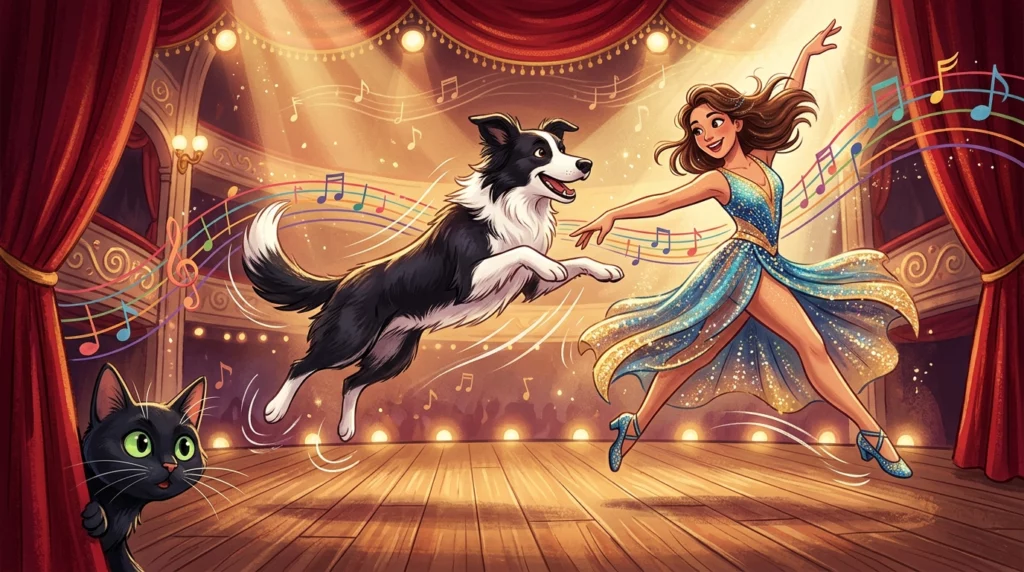
And no, I do not mean just spinning in circles for a piece of smelly cheese. I mean actual, choreographed, rhythmic, dramatic dancing to music with their humans. We are talking waltzes, salsa, and theatrical routines where dogs weave through legs, leap gracefully through the air, and back up on beat. Naturally, as a cat of taste, culture, and extreme curiosity, I had to investigate how the canine world went from basic backyard fetching to Broadway-level performances.
Put on your dancing shoes (and grab some treats), because we are diving into the delightful, rhythm-filled history of Musical Canine Freestyle!
The Sparks of Innovation: When Obedience Met Rhythm
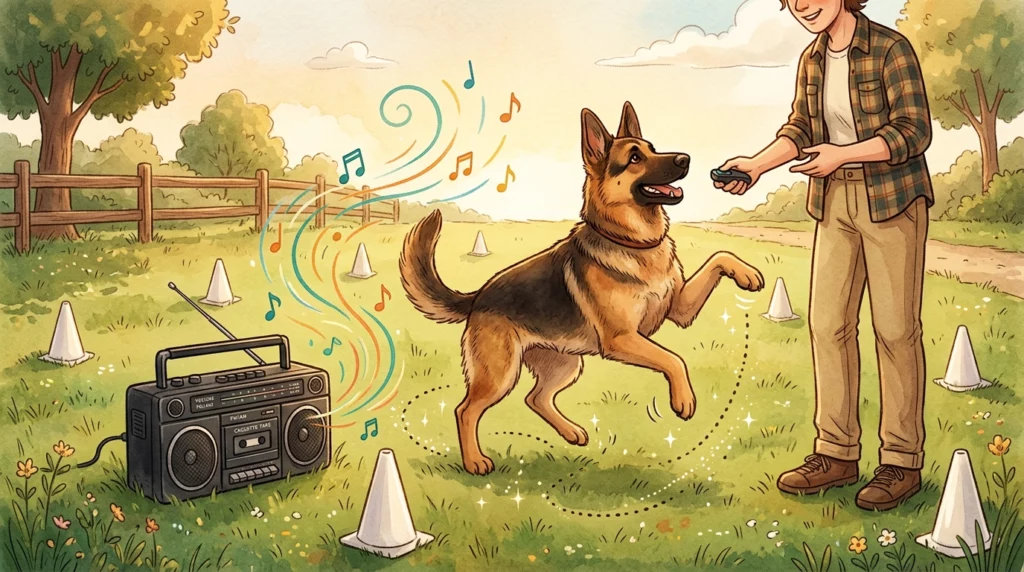
According to the history books (and my deep dive into trustworthy dog archives), dog dancing didn’t just happen overnight. It emerged in the late 1980s and early 1990s as a rebellion against boring, rigid obedience training. Imagine doing the same old “heel, sit, stay” routine over and over. Even a dog’s boundless enthusiasm has its limits!
Creative trainers in Canada, the United States, England, and Germany all had a similar epiphany at around the same time: What if we added music?
In 1990, a legendary British trainer named Mary Ray performed a demonstration of “Heelwork to Music” at the prestigious Crufts Dog Show, as documented by Heelwork to Music UK. She showed the world that a dog could perform precise obedience moves to a musical beat, transforming a routine test of discipline into a beautiful, flowing art form.
Meanwhile, across the Atlantic in British Columbia, Canada, a group called the Musical Canine Sports International (MCSI) was formed in 1991, which is widely considered the first official canine freestyle organization, as noted on Wikipedia. Over in the United States, trainers like Dawn Jecs were experimenting with incorporating music into training to help handlers find a natural rhythm and build a deeper connection with their dogs.
The Split: Heelwork to Music vs. Musical Freestyle
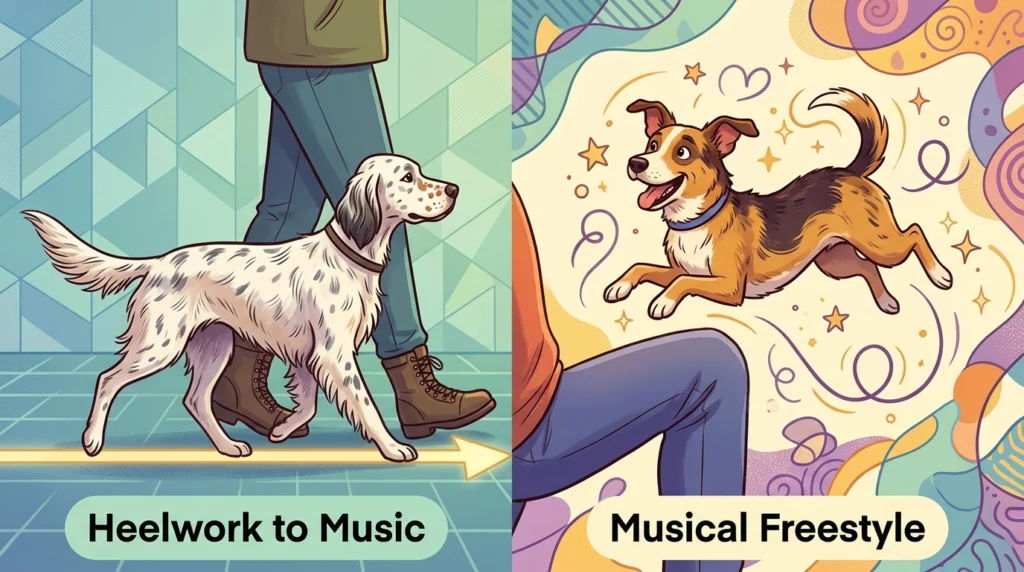
As the sport grew, it split into two distinct, beautiful categories. Because dogs love rules (unlike me—I treat rules as mere suggestions), they needed clear guidelines.
- Heelwork to Music (HTM): This style stays truer to its obedience roots. The dog must remain close to the handler, usually in one of several designated “heel” positions (like on the left, right, or facing the handler). According to the American Kennel Club (AKC), the dog must be in a heel position for the vast majority of the routine, moving in harmony with the music.
- Musical Freestyle: This is where the chaos—and the magic—happens! In freestyle, there are no strict heel position requirements. The dog can weave between the handler’s legs, jump over their back, spin, back up, and perform incredible tricks from a distance. The only limit is safety and imagination.
In 1995, Joan Tennille founded the Canine Freestyle Federation (CFF) in the United States, bringing structure and artistic theory to the sport. As the Canine Freestyle Federation guidelines explain, the sport is designed to showcase the dog’s athletic ability, joy, and the unique, harmonious partnership between dog and handler. Shortly after, in 1999, Patie Ventre founded the World Canine Freestyle Organization (WCFO), helping push the sport onto the global stage.
More Than Just Tricks: The Science of the Dance
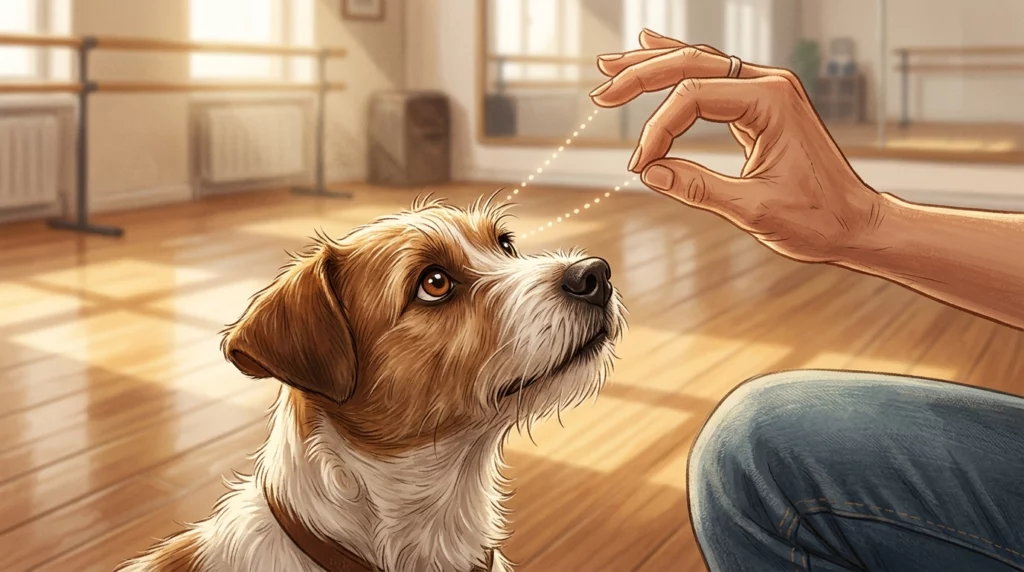
As a cat, I am naturally skeptical of anything that requires this much effort. Why dance when you can nap? But even I have to admit, there is some fascinating science behind why dog dancing is so good for our canine friends.
As highlighted by Petbook Magazine, musical freestyle is a massive brain workout. It is highly engaging cognitive training. Unlike simple trick training, freestyle requires the dog to pay intense attention to the handler’s subtle body language, shifts in weight, and the tempo of the music.
Furthermore, it is a fantastic physical workout. The routines build core strength, flexibility, and spatial awareness. For high-energy breeds, it is a perfect outlet for all that buzzing mental and physical energy. Writers at K9 Magazine emphasize that this sport builds an unbreakable bond of trust. Because it relies entirely on positive reinforcement, the dogs genuinely enjoy the process. They aren’t just performing; they are playing a giant, highly structured game with their favorite human.
How to Tell If Your Dog is a Future Star
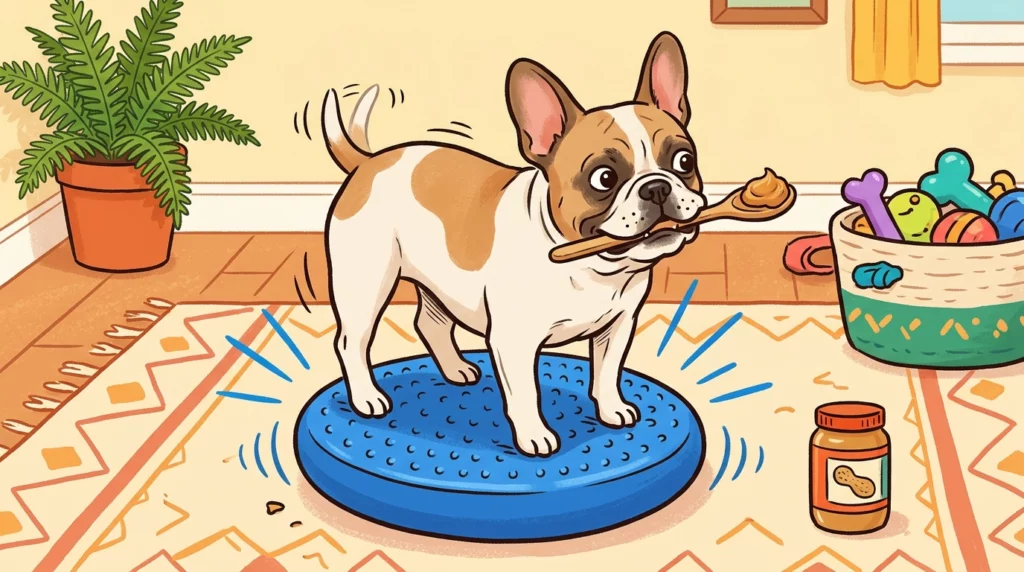
So, could your dog be the next canine Fred Astaire or Ginger Rogers? According to enthusiasts writing for Downeast Dog News, any breed, size, or age of dog can participate in freestyle. You don’t need a fancy pedigree. You just need a dog who:
- Enjoys learning new things and working for treats or toys.
- Has a basic foundation of obedience (knowing how to sit, stay, and pay attention to you is crucial).
- Does not mind a bit of noise or music.
Personally, I looked at our resident goofy Griffon rescue, Blu, to see if he had the makings of a star. He has the energy, but when he tries to spin, his long ears fly into his eyes, and he usually ends up sitting on his own tail. Niki, our elegant English Setter, certainly has the poise, but she looked at me with deep disdain when I suggested she dance to the tunes of ABBA. I suppose some of us are just meant to be the audience.
The Final Bow
From its humble beginnings in local obedience clubs to massive international competitions broadcast worldwide (including the famous Crufts championships reported on by The Guardian), canine freestyle is proof of how far humans and dogs will go to understand each other. It is joyful, creative, and just a little bit delightfully absurd.
What about you, humans? Have you ever tried putting on some music and dancing with your dog? Do they look at you like you’ve lost your mind, or do they join in with a wagging tail? Let me know in the comments below! Now, if you’ll excuse me, I hear a very loud crinkly plastic bag in the kitchen that requires my immediate, chaotic attention. Stay curious!