
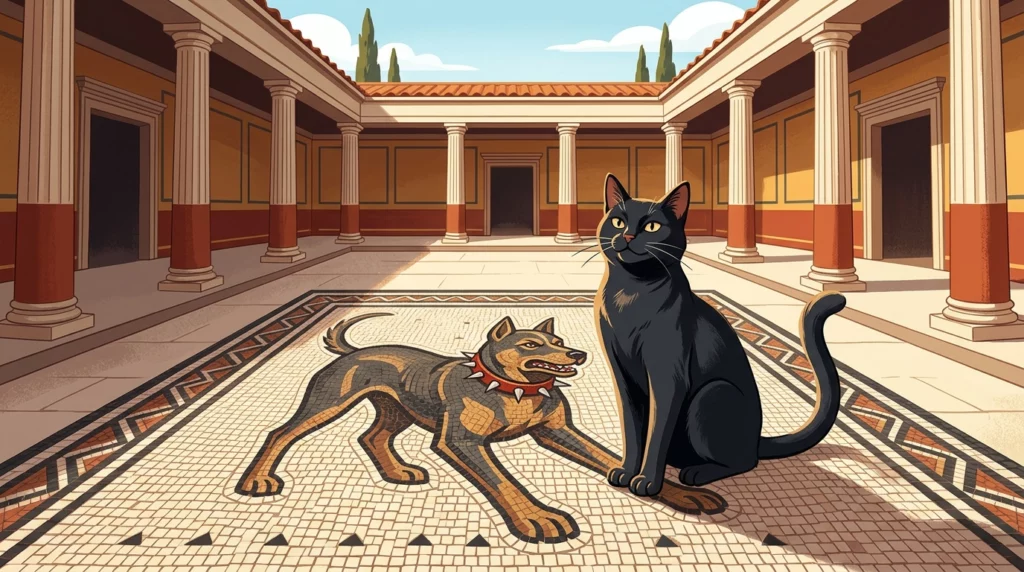
As the undisputed leader of the SnoutScoop household—and yes, that includes supervising the chaotic energy of Blu and the meticulous standards of Niki—I have a natural appreciation for proper boundary management. While I prefer to enforce my personal space with a sharp, silent glare, my canine subordinates require a bit more… public signage.
You have undoubtedly seen those tacky plastic “Beware of the Dog” signs nailed to suburban fences. They are functional, sure, but utterly lacking in aesthetic dignity. However, if we travel back roughly two thousand years, we find that the ancient Romans did security signage with far more artistic flair. Let us take a trip to the ruins of Pompeii to explore the fascinating history of Cave Canem, the world’s oldest known canine warning signs.
The Mosaic of the House of the Tragic Poet
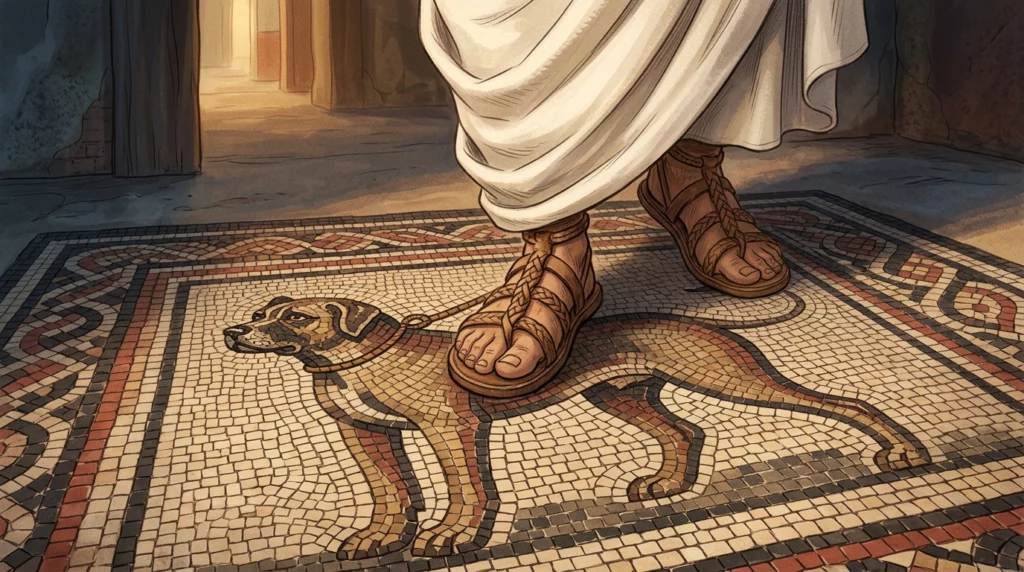
If you were an elite Roman citizen strolling through the bustling streets of Pompeii in the first century AD, you would eventually find yourself at the entrance of the House of the Tragic Poet (Casa del Poeta Tragico). As you stepped into the vestibule, or fauces, you wouldn’t find a muddy welcome mat. Instead, you would look down to see a stunning mosaic made of tiny black, white, and red stone tiles (tesserae).
The mosaic depicts a fierce, slender dog with a spiked collar, tensed on its hind legs as if ready to spring. Below this ancient canine security guard are the bold Latin words: CAVE CANEM.
Literally translating to “Beware of the dog” or “Beware the dog,” this archaeological marvel is the most famous example of its kind. According to official excavation records from Pompeii Sites, this house was a typical middle-class domus that became legendary for its sophisticated decorations, none more famous than our snarling mosaic friend. You can read more about the architectural context of this find on Wikipedia’s Beware of the Dog history.
But Was It Really a Warning?
While the modern interpretation of “Beware of the Dog” is a clear threat of canine-inflicted dental violence, historians argue that the Roman Cave Canem might have carried a different nuance.
In a fascinating analysis published on Medium by Roman Mosaic Workshops, scholars raise an intriguing question: Was this iconic mosaic actually meant to protect the *dog* rather than the visitor?
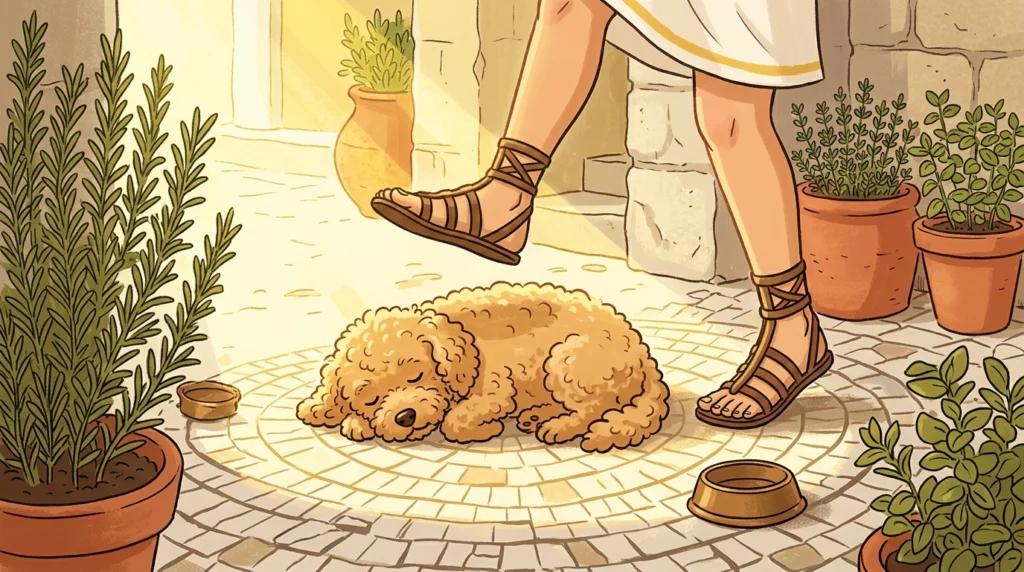
Roman homes were designed with open entryways that flowed directly from the noisy streets. Many wealthy Romans kept small, delicate lapdogs as companions, alongside their larger working dogs. A mosaic in the entryway might have been a friendly reminder to guests: “Please watch your step so you don’t accidentally crush our beloved Italian Greyhound.”
Alternatively, some historians on Reddit’s AskHistorians suggest the sign functioned as a status symbol. In Roman society, owning a well-trained guard dog was a mark of wealth and security. Displaying a beautiful mosaic of a fierce dog was the ancient equivalent of putting a high-tech security system decal on your window—it told the neighbors you had assets worth protecting.
The Mighty Molossian: Who Were These Dogs?
If the mosaic *was* warning against an actual guard dog, what kind of beast were visitors dealing with? They certainly weren’t dealing with floppy-eared goofballs like Blu.
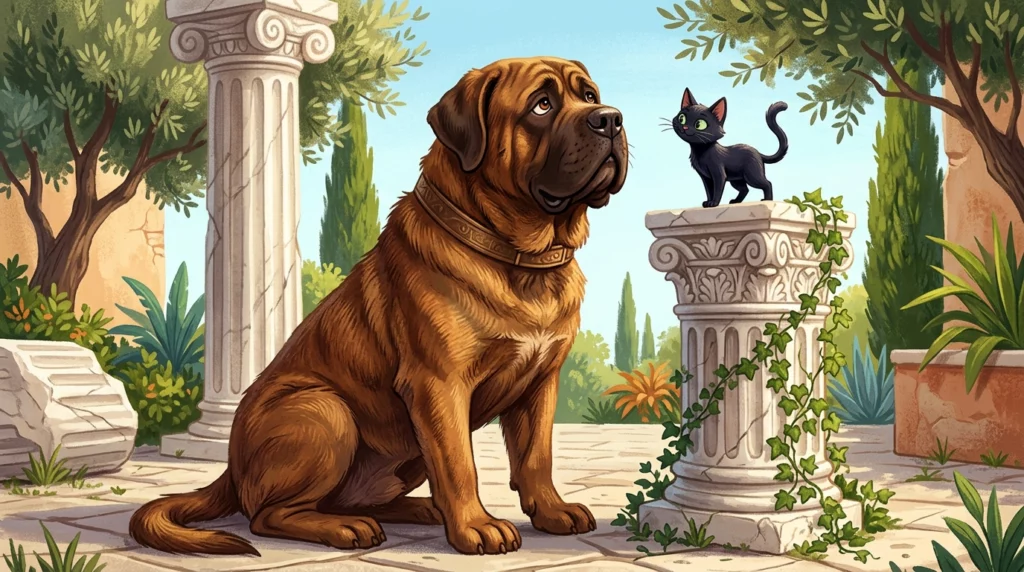
The premier guard dogs of the Greco-Roman world were the Molossians. As detailed in the Encyclopaedia Romana by the University of Chicago, the Molossian hound was a massive, powerful breed native to Epirus (modern-day Greece and Albania). These dogs were highly prized for their loyalty, physical strength, and sheer ferocity in battle and property defense.
The philosopher Aristotle praised the Molossian breed for its courage, and the poet Virgil wrote of their unmatched ability to guard the home against thieves and wolves. When a Roman put a Cave Canem sign at his door, he was reminding you that a direct descendant of these battlefield giants might be lurking just past the atrium.
The Grim Reality of Roman Guard Dogs
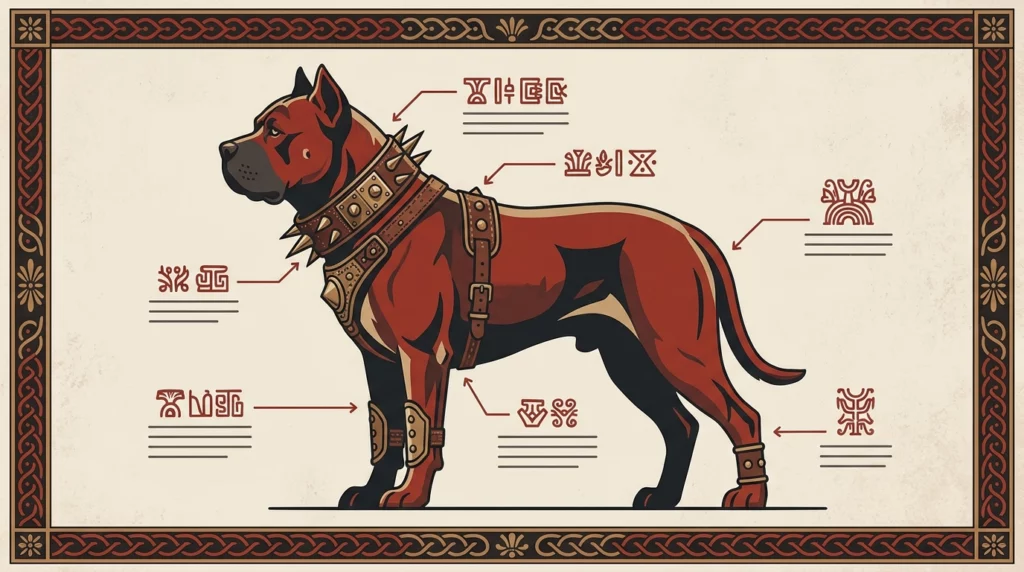
Sadly, we know these signs weren’t just theoretical. During the tragic eruption of Mount Vesuvius in 79 AD, Pompeii was frozen in time under layers of volcanic ash. While the mosaics survived, so did the heartbreaking remains of the animals that lived there.
According to historical accounts on Dogs in History, at the House of Vesonius Primus (also in Pompeii), archaeologists discovered the plaster cast of a real dog. The animal was found near the entrance, still wearing its bronze collar, chained to his post. As the ash fell and filled the house, the dog climbed higher and higher on its chain until it could go no further. It is a sobering reminder that while these dogs were celebrated in art, their lives as working security systems were often tough and demanding. You can learn more about the layout of these homes and where these animals were stationed by looking at the official tourist maps from the Pompeii Archaeological Park.
A Legacy Written in Stone
Today, the House of the Tragic Poet remains one of the most popular stops for tourists visiting the ruins. According to SeePompeii, the famous mosaic is now protected by a glass partition to prevent the millions of modern feet from wearing away the ancient tiles.
It is comforting, in a strange way, to know that human-canine dynamics haven’t changed all that much in two millennia. We still rely on dogs to watch our borders, we still brag about them to our neighbors, and we still feel the need to warn visitors before they step through the door.
As for me? I don’t need a mosaic. My silent, judgmental stare from the top of the bookshelf is more than enough to keep intruders at bay. But if you must have a dog to do your bidding, you might as well give them the classic, ancient Roman respect they deserve. Just remember to watch your step.