
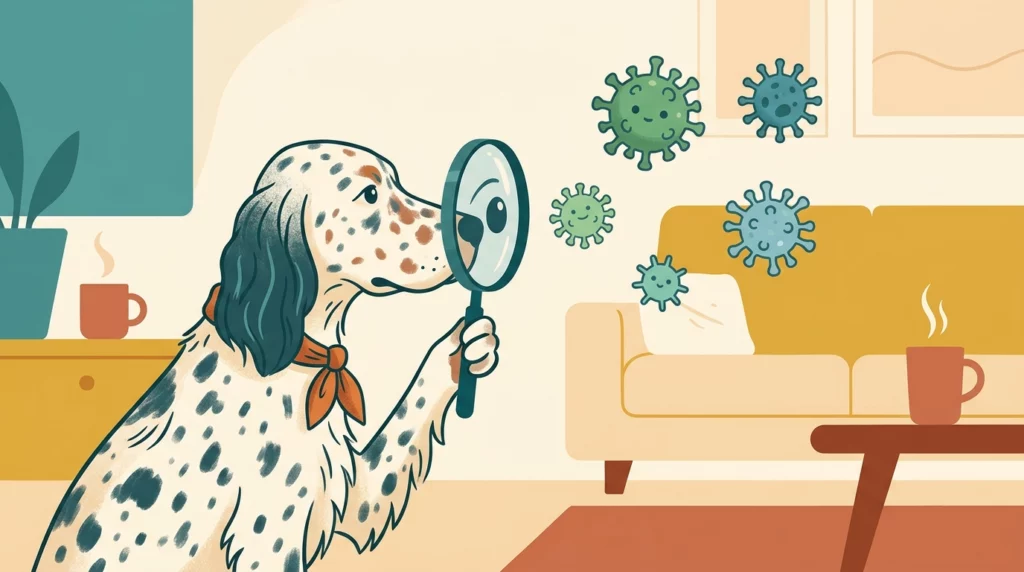
My dear human companions, it is I, Niki. As a five-and-a-half-year-old English Setter of refined tastes and a particularly discerning eye for biological accuracy, I find myself observing human behavior with a mix of affection and mild concern. Currently, my favorite human is curled up on the sofa under three blankets, clutching a mug of tea, and making noises that sound suspiciously like a sputtering lawnmower. Yes, it is flu season.
Naturally, being the loyal and highly empathetic creatures we are, our first instinct as dogs is to climb onto your chest, place our wet noses against your forehead, and offer therapeutic snuggles. But as my human sneezed for the fourteenth consecutive time this morning, a sophisticated question crossed my elegant mind: Can you actually give your dog the flu?
Being the chief quality officer here at SnoutScoop, I refuse to rely on backyard gossip or whatever our energetic friend Blu barks about. I have dug deep into the scientific literature to fetch you the absolute truth about human-to-dog viral transmission.
The Short Answer: Yes, But It Is Complicated

To put your feverish mind at ease: yes, it is technically possible for a human to pass certain influenza strains to a dog, but it is relatively rare. Historically, we doggos have had to worry far more about catching dog-specific viruses from our canine social circles at the park than catching a bug from your sneezes.
However, viral pathogens are notoriously crafty little shapeshifters. While most human cold and flu viruses do not easily bind to the receptors in a dog’s respiratory tract, the barrier is not completely impenetrable. According to a helpful breakdown on AirDog USA, while we dogs are highly resistant to typical human cold viruses, influenza is a slightly different story.
The Scientific Scoop: What is Reverse Zoonosis?

Let us indulge in a bit of high-level terminology to impress your veterinarian at your next visit. When an animal passes a disease to a human, it is called a zoonosis. But when a human passes a disease to an animal, science calls it reverse zoonosis (or anthroponosis).
For a long time, scientists believed this was a one-way street, but modern veterinary medicine has corrected this assumption. As detailed by the University of Florida’s Emerging Pathogens Institute, reverse zoonosis is actually much more common than we once thought. When humans became infected with the H1N1 influenza strain (popularly known as the swine flu) during the 2009 pandemic, researchers began documenting cases where pet owners passed this exact virus to their domestic cats and dogs.
A comprehensive study published in Frontiers in Public Health emphasizes that close contact between humans and their companion animals creates an ideal ecological bridge for these viruses to cross species boundaries. Furthermore, research compiled by the National Institutes of Health (NIH) confirms that companion animals are highly susceptible to reverse zoonotic transmission of several respiratory pathogens, including influenza A viruses.
Canine Influenza vs. Human Influenza
It is crucial to distinguish between the flu you have and the flu we typically get. Dogs have their own highly contagious respiratory viruses, collectively known as Canine Influenza Virus (CIV).
As the American Veterinary Medical Association (AVMA) explains, canine influenza is primarily caused by two specific strains: H3N8 and H3N2. These are highly contagious among dogs, spreading through barking, coughing, shared water bowls, and contaminated surfaces. Humans cannot catch canine influenza strains.
However, if you are diagnosed with a human strain of Influenza A (like H1N1), you must be cautious. As noted on Afludiary, several clinical studies have confirmed that dogs can seroconvert (develop antibodies) and exhibit respiratory illness after being exposed to H1N1-infected owners. So, while your standard winter sniffles might not bother us, a severe case of diagnosed influenza A certainly can.
How to Tell If Your Dog Has Caught the Flu
If you have been sick and suspect your dog might be joining you in misery, keep a sharp eye out for these symptoms, which are excellently outlined by Healthline:
- Sneezing and nasal discharge: A wet nose is normal; a constantly dripping, runny nose with thick mucus is not.
- Coughing: Watch out for a persistent, dry, hacking cough.
- Lethargy: If a high-energy dog like Blu suddenly refuses to chase a ball, or if a dignified dog like myself declines a walk, something is amiss.
- Loss of appetite: Turning down kibble or favorite treats is a major red flag.
- Fever: A warm, dry nose and ears can indicate an elevated temperature.
According to veterinary experts interviewed by PureWow, if your dog exhibits these symptoms, especially after you have been sick, it is best to contact your veterinarian. Do not, under any circumstances, give your dog human cold or flu medications, as these are highly toxic to our canine systems.
Niki’s Guide to Safe Snuggling When You Are Sick
I understand how difficult it is to resist our comforting presence when you are feeling poorly. We English Setters are practically professional comfort curators. However, to keep your beloved pup safe, I suggest practicing these hygienic boundaries until you are fever-free:
1. Practice Good Hand Hygiene
Wash your hands thoroughly with soap and water before filling our food bowls, handing us treats, or giving us those irresistible chin scratches.
2. Avoid Direct Face-to-Face Contact
As much as we love to lick away your tears (or your sweat), try to avoid letting us lick your face, nose, or mouth. Keep your sneezes directed into a tissue or your elbow, not our beautiful coats.
3. Limit Extreme Cuddling
If you are actively feverish and coughing, perhaps invite us to sleep at the foot of the bed rather than sharing your pillow. I know it requires immense self-control, but it is for our own good.
4. Keep Our Toys and Bowls Clean
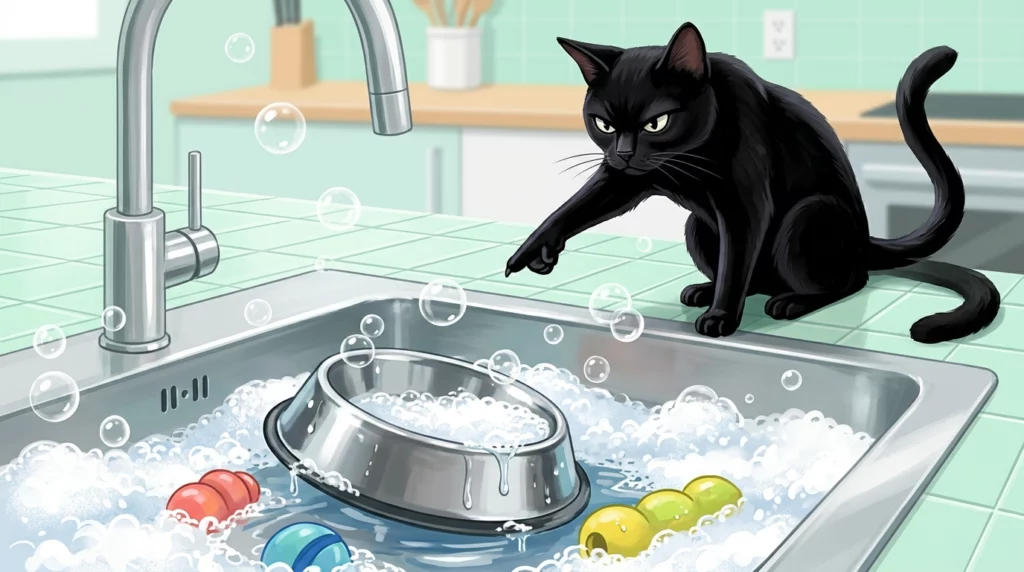
Clean our toys and food bowls regularly. If you have been handling our favorite squeaky toy with germy hands, give it a wash to prevent any viral particles from lingering.
The Verdict
While the risk of giving your dog the flu is relatively low, the scientific consensus is clear: we can, indeed, catch certain influenza strains from you. By practicing basic hygiene and exercising a bit of restraint in the cuddle department, you can keep your four-legged best friend healthy and happy.
Now, if you will excuse me, I must go supervise my human and ensure they are drinking their fluids. Stay healthy, wash your hands, and keep those standards high!