
Hello, fellow bookworms and dog lovers! Niki here. While Blu is currently outside trying to convince a sprinkler that he is its supreme commander, and Pisino is watching us both with his trademark silent judgment from the top of the bookshelf, I have been engaging in some highly intellectual pursuits. As the resident English Setter of the SnoutScoop crew, I pride myself on maintaining the highest standards of literature and research around here.
Today, I want to take you on a journey through the dusty shelves of literary history. Have you ever read a classic novel and thought, “There is no way a dog could be that heroic, that wise, or that beautifully dramatic?” Well, let me stop you right there. We dogs are indeed that spectacular. In fact, some of the most famous canine heroes in classic literature weren’t just products of a writer’s wild imagination—they were based on real, flesh-and-blood dogs who walked, shed, and stole hearts in the real world.
Grab a cozy blanket, settle in with your favorite pup, and let’s meet the real-life canine muses behind some of history’s greatest books.
1. Buck from The Call of the Wild: The Legendary Jack

If you have ever read Jack London’s masterpiece, The Call of the Wild, you know the thrilling, heart-wrenching tale of Buck. He’s a pampered pet who is kidnapped from his comfortable California home and thrust into the brutal life of a Klondike sled dog. It’s a story of survival, instinct, and raw power.
But did you know that Buck was real?
In 1897, a young, gold-hungry Jack London traveled to the Yukon during the Klondike Gold Rush. While he didn’t find much gold, he found something far more valuable: a dog named Jack. London leased a cabin in Dawson City from two brothers, Marshall Latham Bond and Louis Whitford Bond. The brothers owned a massive, beautiful dog who was a mix of Saint Bernard and Scotch Collie.
The Real Jack’s Legacy
This real-life dog, Jack, was the undisputed inspiration for Buck. He was highly intelligent, powerful, and possessed an incredible dignity that mesmerized the author. According to historical records kept by the Bond family, London spent hours watching the dog, taking notes on his behavior, posture, and interactions with other animals.
As detailed by historical accounts on All That’s Interesting, London later wrote to Marshall Bond, admitting that Buck was indeed based on their beloved family pet. Thankfully, unlike his fictional counterpart, the real Jack did not have to fight off wolves or endure cruel sled drivers; he returned safely to California with the Bond family to live out his days in comfort and peace. As a dog who highly appreciates a plush orthopedic bed, I am very relieved by this historical plot twist!
2. Nana from Peter Pan: Luath and Porthos
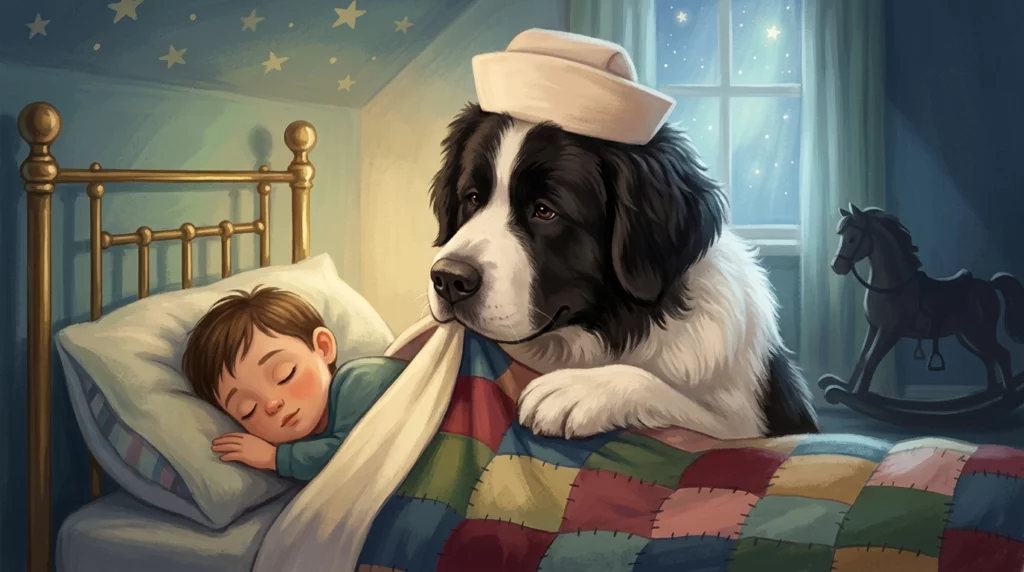
Now, let us fly over to Neverland—or rather, the cozy nursery of the Darling family. Anyone who has read J.M. Barrie’s classic stories or watched the theatrical plays knows Nana, the ultimate canine caretaker. Nana is the Darling children’s nursemaid, responsible for supervising bath time, administering medicine, and keeping the nursery in perfect order. Frankly, I think Nana sets an exceptionally high standard for domestic management, and I am currently drafting a proposal to get Blu to at least put his toys away.
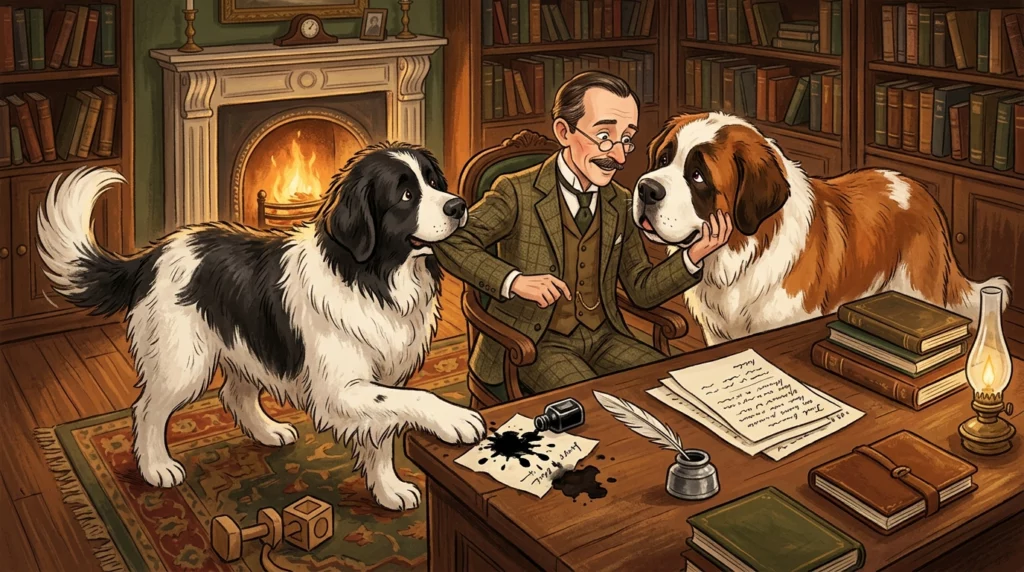
Author J.M. Barrie was a massive dog lover whose life was deeply intertwined with his pets. The character of Nana was actually a composite of two of his own beloved dogs:
- Porthos: A spectacular Saint Bernard who was Barrie’s constant companion in Kensington Gardens. Porthos was known for entertaining local children, which directly inspired Barrie’s interactions with the Llewelyn Davies boys—the children for whom he invented the story of Peter Pan.
- Luath: A gorgeous, giant Landseer Newfoundland that Barrie and his wife adopted later. It was Luath who provided the physical blueprint and behavioral quirks for Nana in the stage play and book.
From Family Pet to Stage Sensation
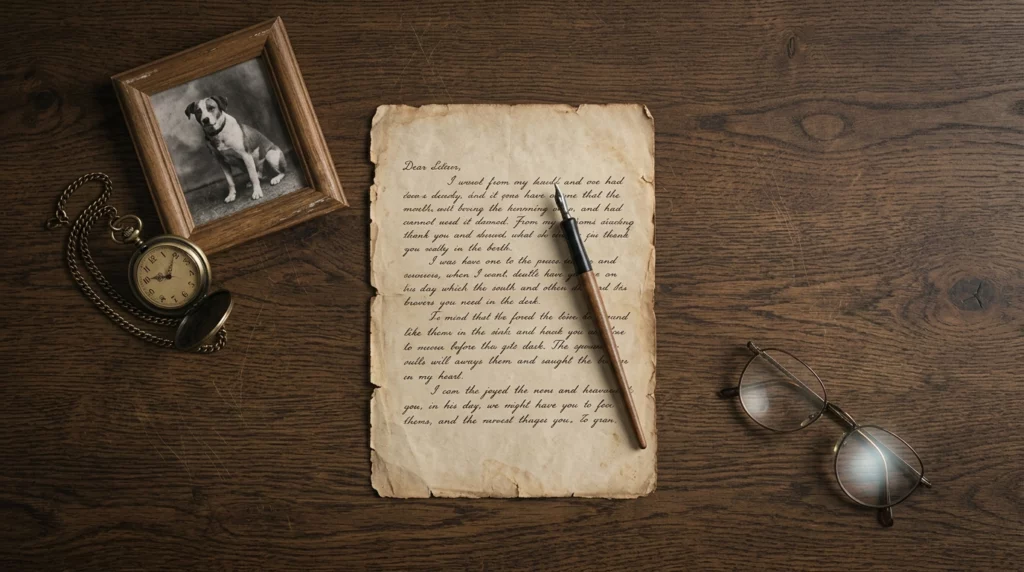
According to the Newfoundland Club of America, Barrie was so devoted to Luath that he closely modeled Nana’s stage directions after the dog’s actual movements. When the play first opened in London, Barrie even invited the actor playing Nana to his home to watch Luath play, practice walking like him, and learn how a giant, gentle dog carries objects in their mouth.
While Barrie’s theatrical notes and the text of the play clearly describe Nana as a Newfoundland, early stage productions sometimes struggled to find actors who could mimic the breed’s massive size, leading to some confusing casting choices over the decades. Yet, as noted in literary records on Margaret Muir’s literary blog, the real-life Luath remained the heart and soul of the character. Barrie’s deep affection for his dogs shines through in every protective, loving action Nana takes to protect her human pack.
Why Dogs Make the Best Muses
It’s no surprise to us dog lovers that authors turn to their canine companions when they need to inject genuine soul into their writing. Whether it is Homer’s ancient tale of Argus—the loyal dog who waited twenty years for Odysseus to return, as highlighted by the American Kennel Club—or J.M. Barrie’s playful romp in Neverland, dogs represent something pure. We don’t care about gold rushes or pirate ships; we care about loyalty, love, and keeping our family safe.
The next time you open a classic novel, take a closer look at the four-legged characters. Behind every heroic leap, every comforting nuzzle, and every dramatic bark, there was likely a real dog who once sat at an author’s feet, nudging their elbow for a treat while they tried to type.
Which literary dog is your absolute favorite? Let us know in the comments below! Now, if you’ll excuse me, I must go rescue a certain blue hound from his battle with the garden hose. Until next time, keep your tails wagging and your noses in a good book!