
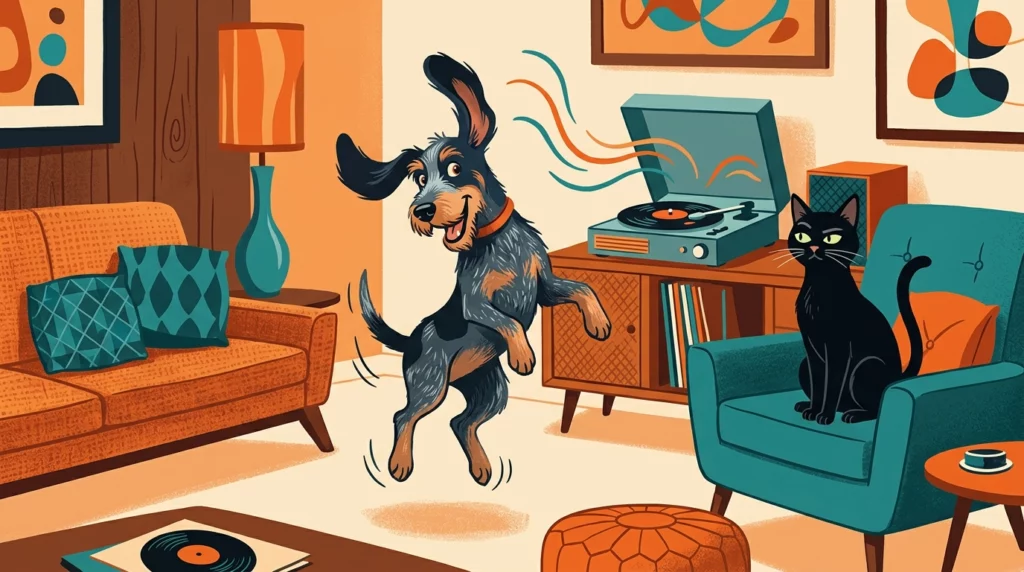
As the undisputed, sleek, black-furred chief of this household, my days are largely spent in quiet contemplation, strategic napping, and maintaining absolute order. It is a demanding job, made infinitely more challenging by my roommate, Blu. Blu is a Griffon Bleu de Gascogne who possesses the grace of a falling wardrobe and the impulse control of a caffeinated squirrel.
The other day, our humans put on some upbeat music. Within seconds, Blu was bouncing, his long ears flopping in a chaotic, asymmetrical blur. Our human squealed, “Look, Pisino! Blu has rhythm! He’s dancing!”
I squinted. To my highly sophisticated eyes, Blu was not “dancing.” He was vibrating to the frequency of sheer, unadulterated enthusiasm. But it did get me thinking. As a cat, I am naturally curious, and as the leader of this pack, I demand facts. Can dogs actually hear a beat? Do their brains process rhythm the way human brains do, or are they just reacting to our energy?
I did some digging into the scientific literature, and the answers are far more fascinating than Blu’s questionable dance moves suggest.
What is a Beat, and Why Do Humans Feel It?

To understand if dogs have rhythm, we first have to understand what rhythm actually is. In cognitive science, this is often discussed as beat perception and rhythmic entrainment. Entrainment is the magical brain mechanism that allows you to hear a song, find the steady pulse, and automatically tap your foot or nod your head in time with it.
According to research published on the paradox of rhythm, humans are incredibly unique in this ability. We don’t just hear sounds; our motor system actually synchronizes with the auditory stimulus. Our brains predict when the next beat will land, and we adjust our movements to match it perfectly.
In the animal kingdom, this is a shockingly rare trait. You might have seen videos of cockatoos rocking out to Backstreet Boys, or Ronan the California sea lion bobbing her head perfectly to Earth, Wind & Fire. But these are exceptions. Scientists have proposed the vocal learning hypothesis, which suggests that only species capable of complex vocal mimicry (like humans, parrots, and some marine mammals) have the neural wiring required to link the auditory parts of the brain with the motor parts.
Since dogs are not traditional vocal mimics—no matter how much Blu insists his dramatic, howling opera sessions are a form of high art—the biological deck is somewhat stacked against them when it comes to keeping a perfect beat.
The Canine Brain and Acoustic Patterns
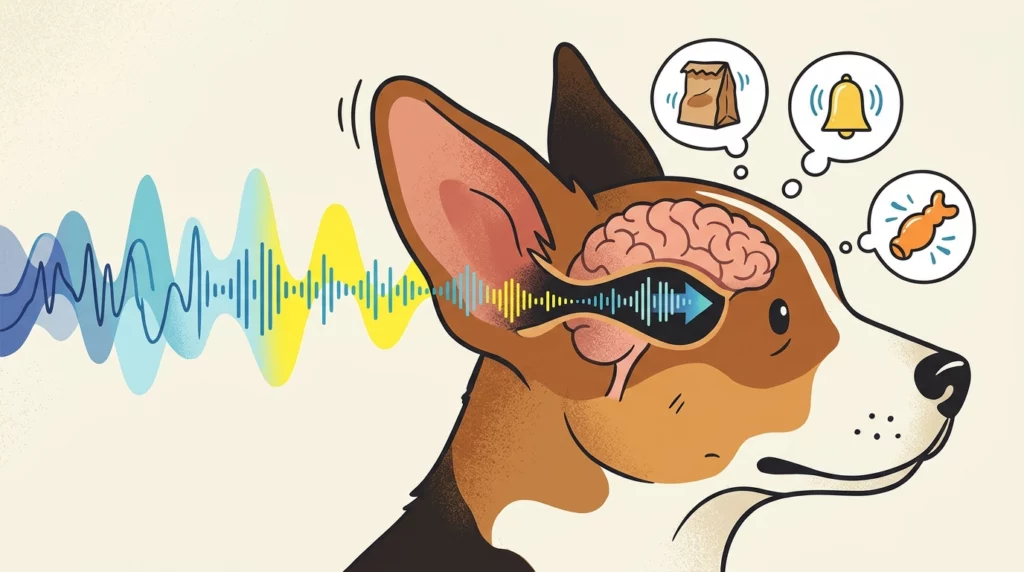
Just because dogs aren’t naturally inclined to start a drum circle doesn’t mean they are deaf to the structure of sound. In fact, canine auditory processing is incredibly sophisticated.
A study accessible via PubMed Central highlights how domestic dogs process complex acoustic environments. While dogs may not possess the automatic motor entrainment that makes humans tap their feet, their brains are highly sensitive to changes in pitch, tempo, and timbre.
Research on neural entrainment shows that mammalian brains do align their internal neural oscillations to external rhythmic stimuli. This means that on a purely neurological level, a dog’s brain waves do react to the pulsing rhythm of music. However, translating that internal brain synchronization into coordinated physical movement—like a choreographed dance—is where the connection falters.
When Blu hears a fast tempo, his brain registers the high energy of the acoustic pattern. He gets excited because the fast, repetitive tempo triggers a physiological response. But is he landing his paws on the “one, two, three, four”? Absolutely not. He is just enjoying the vibe.
The Illusion of the Dancing Dog
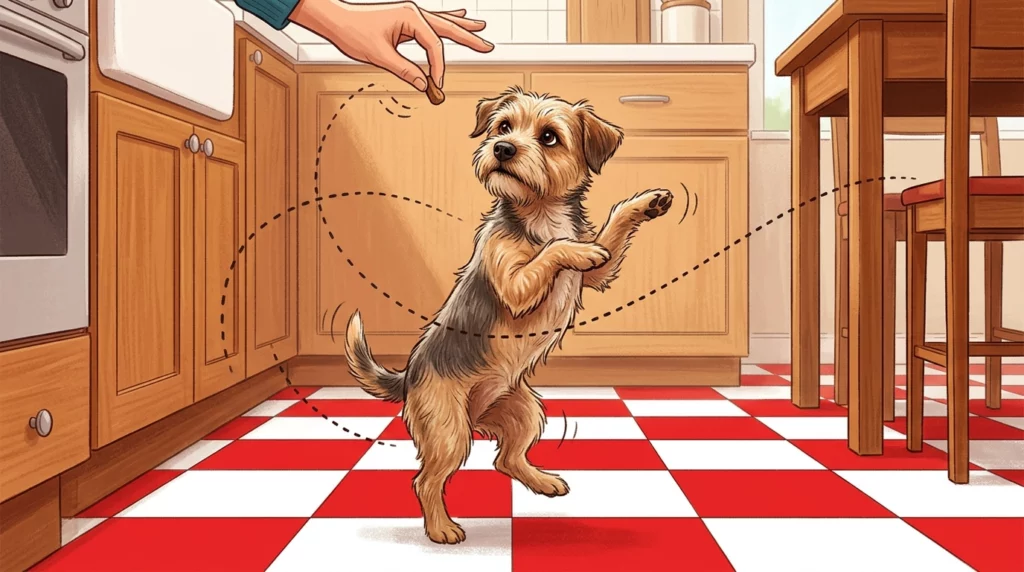
If dogs can’t naturally synchronize their movements to a beat, how do we explain those mind-blowing “canine freestyle” dance competitions? You know, the ones where a Golden Retriever perfectly heel-works and spins to a classical waltz?
The secret here isn’t that the dog is listening to the music and thinking, “Ah, a lovely three-quarter time signature!” Instead, they are responding to incredibly subtle, highly trained physical cues from their human partner.
In the field of dance studies, as explored in papers from Cambridge University Press, dance is defined by intentional, structured movement. When a dog “dances” with a human, they are performing a beautifully rehearsed chain of behaviors. The human uses their own body language—which *is* synchronized to the music—to guide the dog. The dog is keeping time with the human, not the band.
Additionally, dogs are masters at reading our emotions. If you start bouncing around and laughing, your dog will mimic your joy. They know that when the loud, rhythmic box makes noise, the humans get happy and occasionally drop snacks. It’s a win-win.
How Dogs Actually Respond to Different Genres
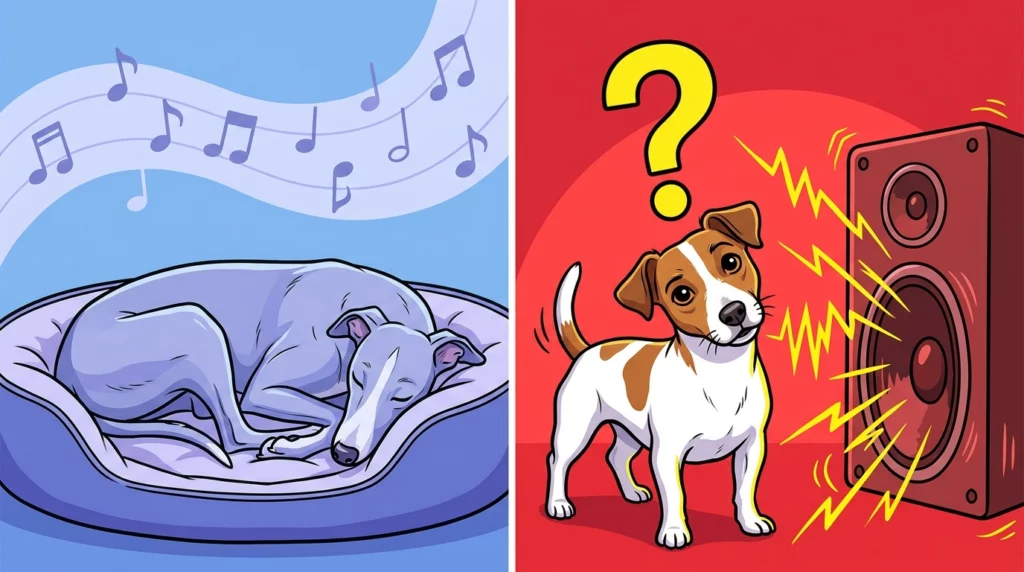
Even if dogs aren’t music theorists, they definitely have opinions on what’s playing. If you want to use rhythm and sound to influence your dog’s mood, science has some practical advice for you.
Numerous shelter studies have analyzed how different genres of music affect canine physiology and behavior. The results are surprisingly consistent:
- Classical Music: Often leads to more time spent resting and quiet behavior. The complex, fluid rhythms seem to soothe the canine nervous system.
- Reggae and Soft Rock: These genres actually scored the highest for reducing stress in dogs. The theory is that the slow, steady, heartbeat-like tempo of reggae is inherently comforting to them.
- Heavy Metal: As you might expect, fast, aggressive tempos and chaotic rhythms tend to increase barking, pacing, and overall anxiety.
So, while Blu might jump around to electronic dance music, it’s actually a slow reggae beat that will help him settle down after a long day of chasing his own shadow.
The Final Verdict from the Chief
To wrap up this scientific inquiry: can dogs hear the beat? Yes, they can absolutely perceive the temporal structure, tempo, and mood of music. Their brains react to the rhythm on a neurological level. However, their ability to actively match their physical movements to that beat in the way humans do is virtually nonexistent.
When Blu “dances” to the music, he isn’t showing off his innate sense of rhythm. He is celebrating the fact that his favorite humans are happy, noisy, and active. And honestly? I suppose there is some beauty in that. Even if it is incredibly loud and disrupts my afternoon nap.
Now, if you’ll excuse me, I need to go find a quiet sunny spot where no one is trying to teach a Griffon Bleu how to salsa. Keep your playlists smooth, your tempos slow, and your snacks close by.