
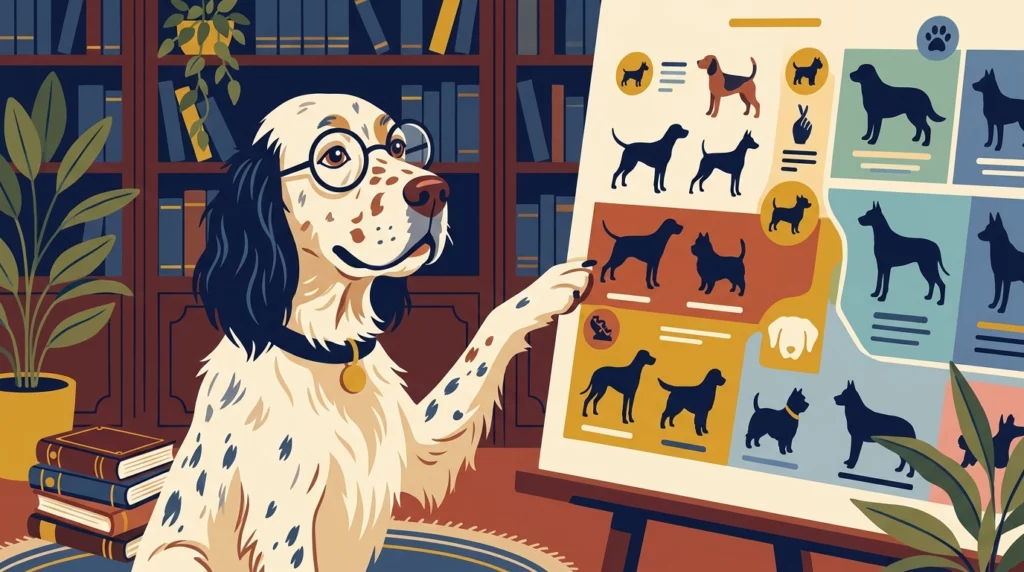
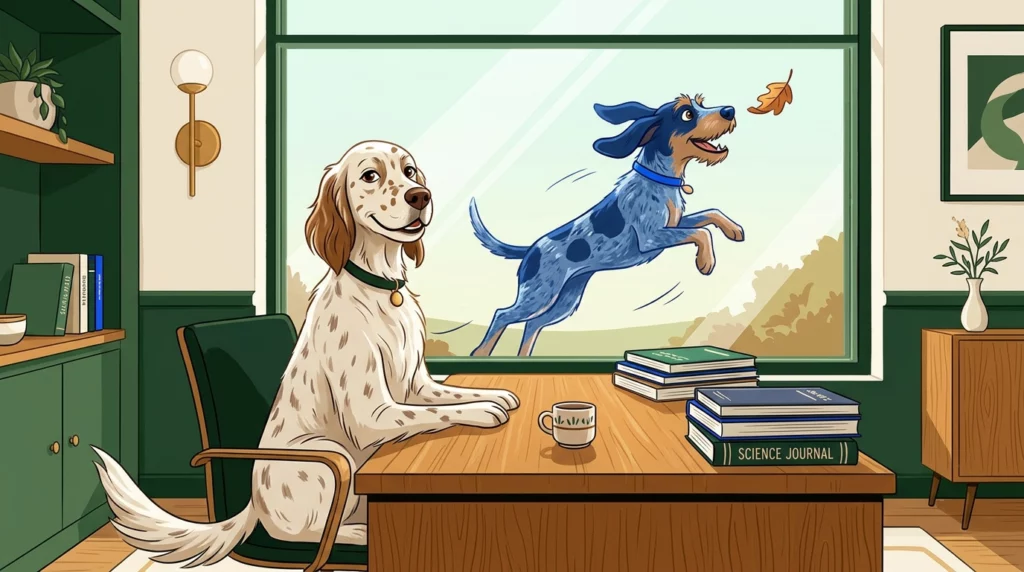
Hello, discerning readers. Niki here. As a five-and-a-half-year-old English Setter, I pride myself on maintaining a certain standard of elegance and intellectual rigor around the SnoutScoop headquarters. While my dear roommate Blu (a lovely but chaotic Griffon Bleu de Gascogne) is currently attempting to bark at a particularly suspicious-looking leaf outside, I have decided to use my superior cognitive faculties to tackle a question that has puzzled humans for generations: What actually makes a dog breed who they are?
We often talk about breeds as if they are absolute templates. We expect Golden Retrievers to retrieve gold (or at least tennis balls), and we expect Border Collies to balance your checkbook. But how much of this is historical design, how much is modern classification, and what does cutting-edge genetic science actually say about our dogs’ behavior? Let’s dive into the fascinating, peer-reviewed world of canine breed traits.
The Seven Circles of Canine Classification
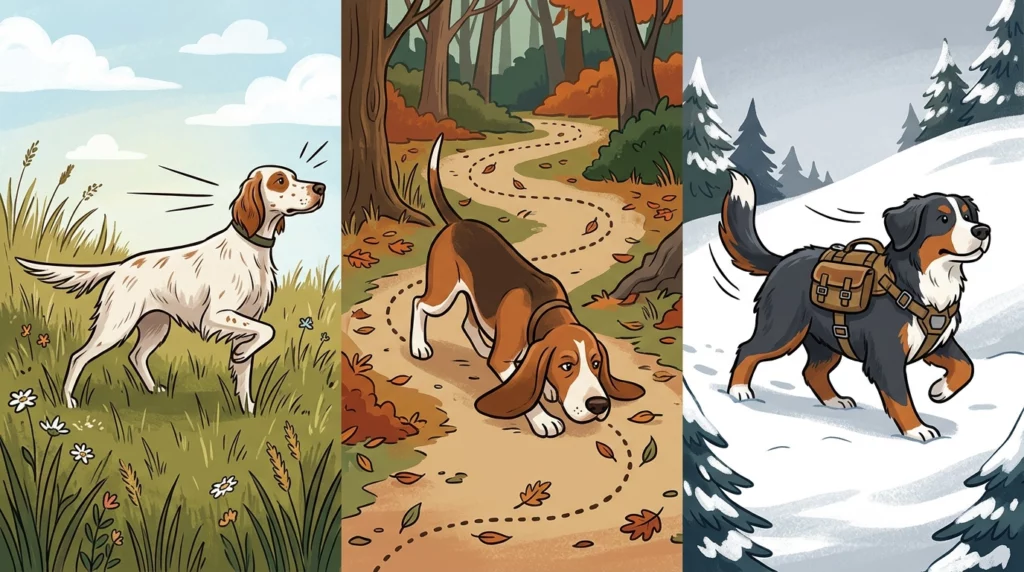
To understand dog breeds, we must first look at how humans have categorized them. The American Kennel Club (AKC) officially recognizes seven distinct breed groups, each established based on the historical roles these dogs were bred to perform. According to the AKC Dog Breed Groups guide, these classifications help us understand a dog’s natural instincts.
1. The Sporting Group
I may be entirely biased, but this is the pinnacle of canine refinement. The Sporting Group includes pointers (like my esteemed self), retrievers, setters, and spaniels. Historically bred to assist hunters by finding, pointing, or retrieving game, we are known for our high intelligence, easy trainability, and love for the great outdoors. We are also incredibly handsome, but that goes without saying.
2. The Hound Group
Hounds share a common ancestral job of hunting, but they split into two distinct categories: sighthounds (who use incredibly sharp vision and blinding speed, like Greyhounds) and scenthounds (who follow their noses over miles of terrain, like Beagles or our high-energy friend Blu). If you have ever wondered why a hound suddenly tunes you out to stare into the distance or glue their nose to the pavement, it is centuries of selective breeding at work.
3. The Working Group
These are the blue-collar professionals of the dog world. From Boxers to Siberian Huskies and Bernese Mountain Dogs, the Working Group consists of massive, strong dogs bred to guard property, pull sleds, or perform water rescues. They are fiercely loyal and require a job to do, otherwise, they might decide their job is reorganizing your living room cushions.
4. The Terrier Group
If you want a dog with the confidence of a seven-foot-tall warrior packed into a fifteen-pound body, you want a Terrier. Bred to hunt and destroy vermin, these dogs (like Jack Russells and Scottish Terriers) are famously spunky, determined, and possess a rather independent streak. They do not easily take “no” for an answer.
5. The Toy Group
Do not let their size fool you. Toy breeds, like Chihuahuas, Pomeranians, and Shih Tzus, were bred specifically to be cherished companions. They excel at keeping laps warm and commanding households with absolute authority. What they lack in physical stature, they more than make up for in sheer, unadulterated attitude.
6. The Non-Sporting Group
This is the eclectic, charmingly mismatched club of the canine world. Featuring breeds as diverse as the Bulldog, the Dalmatian, and the French Bulldog, the Non-Sporting Group is a catch-all category for breeds that do not quite fit into the other six categories but are beloved nonetheless for their unique personalities and appearances.
7. The Herding Group
Created in 1983, this group includes breeds like the Border Collie, German Shepherd, and Corgi. These dogs have an instinctual drive to control the movement of other animals (including, quite often, slow-moving human toddlers or highly annoyed house cats like Pisino). They are intensely smart and thrive on mental stimulation.
For a detailed breakdown of which specific breeds fall into these groups, you can explore the comprehensive AKC Breeds Sorted by Groups list or browse the official AKC Dog Breed Directory to compare individual profiles.
The Evolution of Breed: How We Got Here
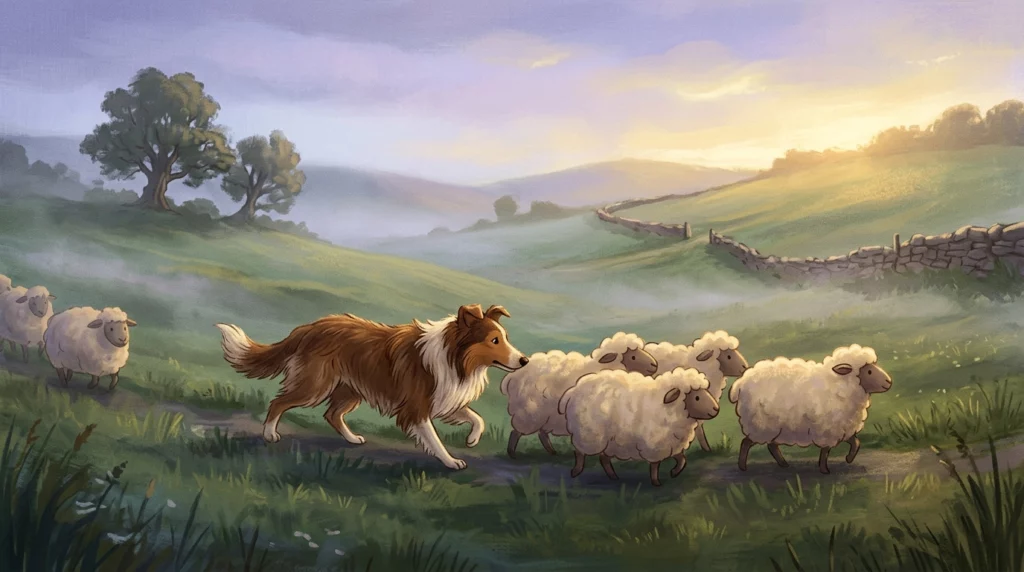
Dogs were the very first animals domesticated by humans, transitioning from wild canids to our closest companions over thousands of years. But the highly specific breeds we know today are actually a relatively modern invention.
As detailed in an article on the history of canine development by Groomerverse, most of our modern, highly standardized breeds emerged during the Victorian era in the 19th century. Before this “breed boom,” dogs were classified almost entirely by functional types (e.g., “water dogs,” “guard dogs,” or “earth dogs”) rather than strict aesthetic or genetic standards. Victorian breeders began keeping studbooks, emphasizing physical uniformity and pedigree, which gave rise to the precise breed standards we see today.
To trace these lineages even further back, scientists have mapped the canine family tree. According to an evolutionary mapping study featured in dvm360, researchers have used genetic sequencing to understand how geographical migration and human selection shaped different dog clades. This genetic mapping shows that while many breeds look vastly different today, they share deep evolutionary roots that dictate everything from their coat type to their metabolic rates.
The Big Question: Is Breed Destiny?
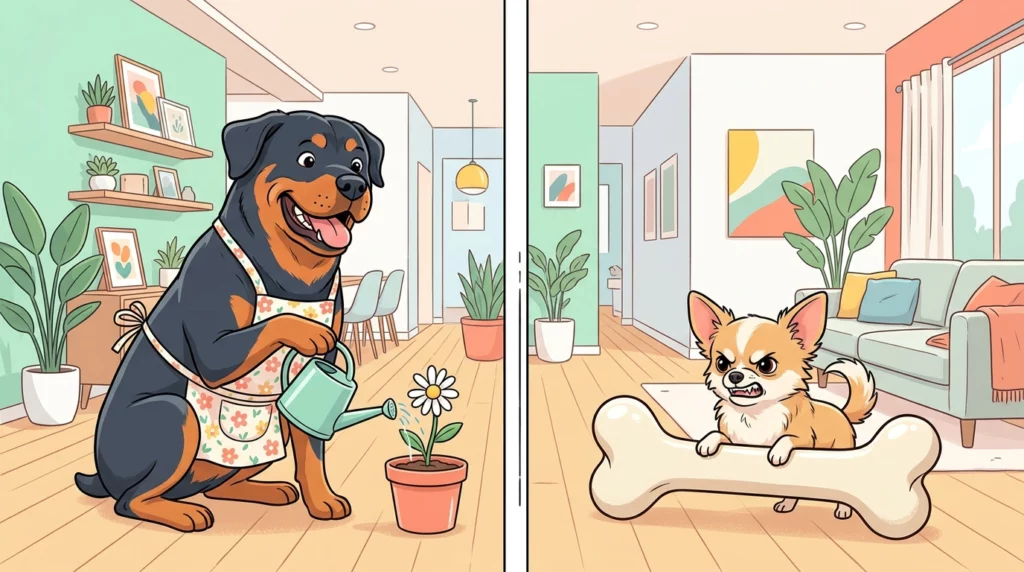
Here is where a discerning dog like myself must urge you to look at the actual data. Many humans adopt a dog assuming that a breed standard is a guarantee of behavior. If you get a Golden Retriever, they will be friendly; if you get a Beagle, they will howl. But does the science back this up?
A groundbreaking study led by the Broad Institute of MIT and Harvard analyzed the genomes and behavioral surveys of over 18,000 dogs. The results were highly illuminating: breed is actually a very poor predictor of an individual dog’s unique personality.
In fact, the study found that breed only accounts for about 9% of the variation in an individual dog’s behavior. While physical traits like coat color, size, and ear shape are heavily tied to genetics, complex behaviors are influenced by a massive web of environmental factors, socialization, and individual genetic quirks.
Further research published in the Proceedings of the National Academy of Sciences (PNAS) supports this nuanced view of canine genetics. While certain ancient behaviors—such as the urge to retrieve or howl—have a stronger genetic basis, individual personality traits like friendliness, fearfulness, or playfulness are highly unique to the individual dog, regardless of their breed label.
What does this mean for you, the devoted dog parent? It means that while my breed heritage makes me highly likely to freeze and point when I see a bird in the garden, my love for classical music and my distinct dislike of muddy puddles are uniquely *mine*. Similarly, your Siberian Husky might prefer napping in front of a fireplace to pulling a sled, and that is perfectly scientifically sound.
Niki’s Discerning Conclusion
Breeds are a wonderful piece of human and canine history. They offer us a fascinating glimpse into how our ancestors worked alongside dogs to shape the world. However, we must never let a breed label limit how we view our companions.
Whether your dog is a champion pedigree Poodle or a wonderfully chaotic shelter mystery mix, they are an individual. Respect their breed-specific instincts (yes, let the hound sniff!), but always get to know the unique soul behind the wet nose.
Now, if you will excuse me, I must go rescue the sofa cushions. Blu has decided that his inner “Working Group” heritage demands he excavate the living room floor. Until next time, keep your standards high and your treats plentiful!