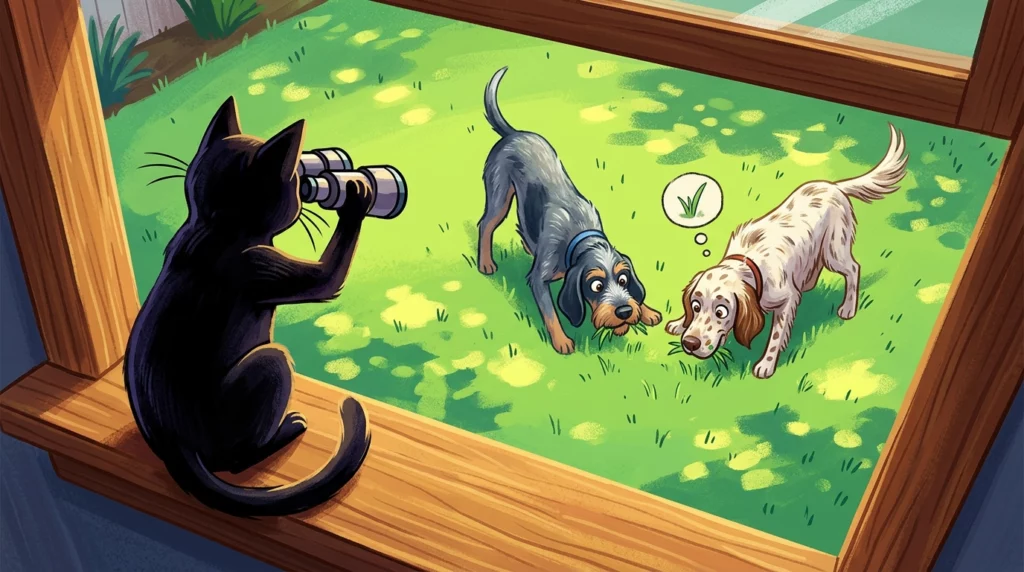
As the undisputed chief of the SnoutScoop household—a title I earned through sheer intellectual superiority, elegant whiskers, and a highly glossy black coat—I spend a lot of time on my windowsill. It is the perfect vantage point for observing the world, napping in the sun, and watching my canine roommates make absolute fools of themselves.
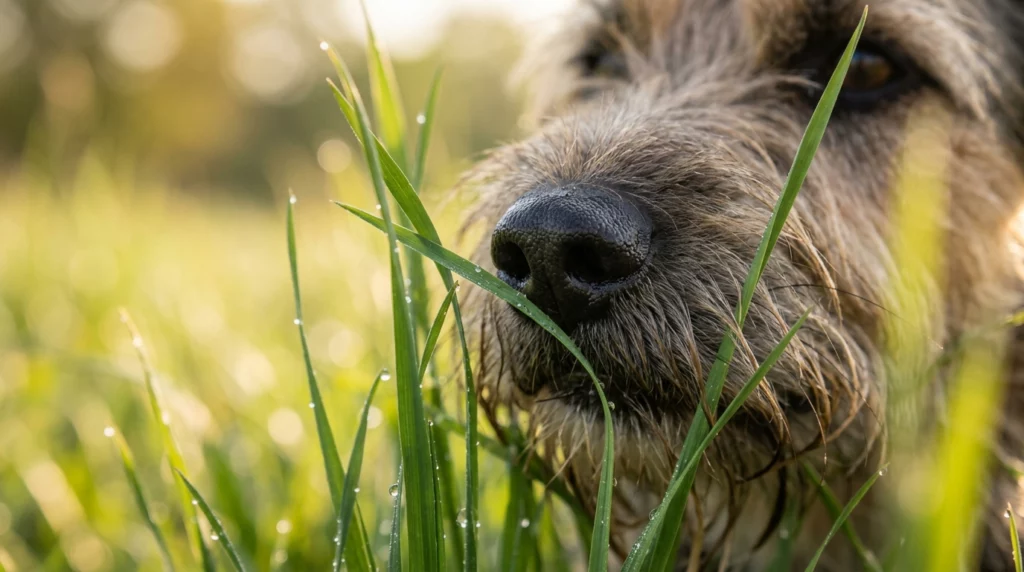
Lately, I’ve been observing a baffling phenomenon. Blu, our high-energy Griffon Bleu de Gascogne rescue, and Niki, our elegant English Setter, have been spending their outdoor time doing something highly unusual. They aren’t chasing balls, and they aren’t barking at the mail carrier. They are lower than usual, faces buried in the lawn, chewing. Yes, you read that right: they are acting like fluffy, four-legged lawnmowers.
Why on earth are these carnivores eating salad? Is it a secret canine ritual? Have they finally lost the last of their fragile doggy minds? Because I care about my subordinates (and because I pride myself on maintaining high standards around here), I decided to investigate. Grab a catnip tea, dear reader, as we dive into the actual veterinary science behind why dogs eat grass.
The Great Vomit Myth Debunked
If you ask the average human why their dog is eating grass, they will almost certainly say, “Oh, they must have an upset stomach. They eat grass to make themselves throw up.”
As a cat, I appreciate a good dramatic hairball spit-up as much as the next feline, but science tells us this common belief is actually a myth. In 2008, researchers at the University of California, Davis, led by Dr. Benjamin L. Hart, decided to put this theory to the test. They conducted a comprehensive study on canine grass-eating habits, surveying over 1,500 dog parents.
The results of the UC Davis veterinary study were eye-opening:
- Only 8% of dog owners reported that their dogs showed signs of illness or mild distress before eating grass.
- Only 22% reported that their dogs regularly vomited after consuming grass.
This means the vast majority of dogs who graze are perfectly healthy beforehand and don’t end up throwing up afterward. According to PetMD, grass-eating is actually a completely normal, common, and instinctive canine behavior. It is not a sign of medical distress in most cases.
Reason 1: The Call of the Wild (An Evolutionary Salad)
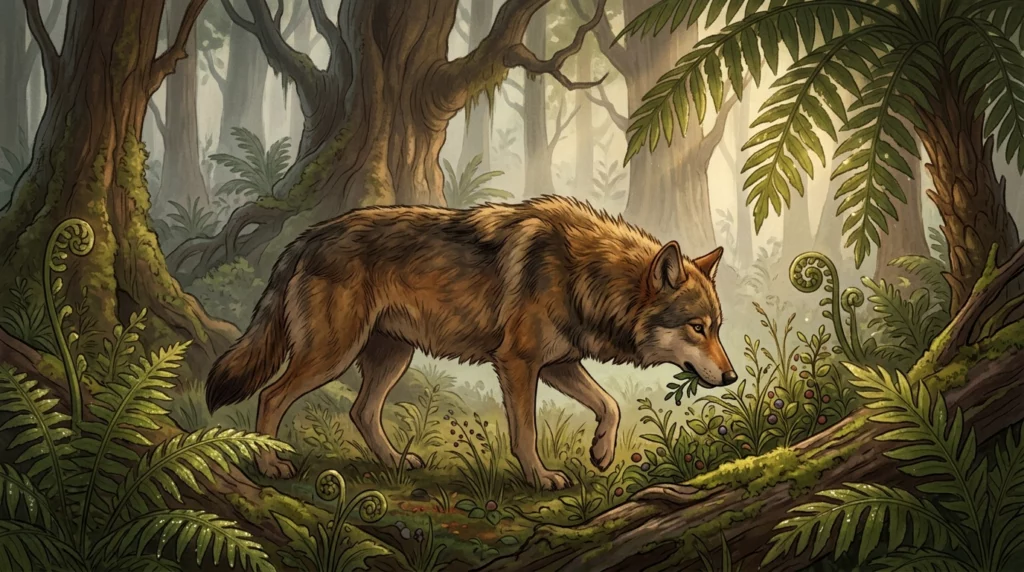
While dogs may look like pampered couch potatoes today, their wild ancestors were opportunistic predators. Wolves, foxes, and wild canids didn’t just eat pure meat. When they caught prey, they often consumed the entire animal—including the stomach contents of herbivores, which were packed with partially digested plants and grass.
Furthermore, scientific analyses of wild wolf stool samples regularly reveal grass and other plant matter. Evolutionary biologists believe that eating grass may have served a very practical purpose for wild canids: purging internal parasites. The rough, fibrous blades of grass wrap around intestinal worms, helping to physically sweep them out of the digestive tract. Even though Blu gets his regular veterinary parasite prevention, his DNA still remembers the ancient “lawn-cleaning” instinct.
Reason 2: Nutritional Instincts and Fiber Needs

Sometimes, the body just knows what it needs. If a dog’s daily diet is lacking in certain nutrients or fiber, they might instinctively seek out a green supplement.
According to VCA Animal Hospitals, grass is an excellent source of dietary fiber. Fiber is essential for keeping a dog’s digestive system running smoothly. If Niki feels her digestion is a bit sluggish, she might take a few bites of grass to help move things along. Think of it as their version of eating a high-fiber bran muffin in the morning.
If your dog is eating grass constantly, it might be worth chatting with your vet or looking at their kibble to ensure they are getting enough high-quality fiber and balanced nutrients. When dogs compulsively eat non-food items, it is a behavioral condition known as pica, which can sometimes point to nutritional deficiencies.
Reason 3: Because It’s Delicious (Organic Potato Chips!)

Let’s not overcomplicate things. Sometimes, dogs eat grass simply because they like it.
Have you ever noticed that dogs are highly selective about the grass they eat? Blu doesn’t just eat any old dry weed. He searches for the tall, juicy, bright green shoots of fresh spring grass. To a dog, these tender young blades are sweet, crunchy, and delightfully refreshing. It’s essentially the canine equivalent of a fresh, organic potato chip.
Additionally, dogs can get bored. If they are hanging out in the backyard with nothing else to do, grazing provides a tactile, sensory activity. It keeps their mouth busy and gives them a quick flavor reward.
Pisino’s Golden Rules of Lawn Safety
While grazing is a normal, healthy behavior, as the responsible chief of this pack, I must insist on a few safety rules. Normal grass won’t hurt your dog, but the environment around it can be dangerous. Here is what you need to watch out for:
1. Beware of Lawn Chemicals
This is the biggest threat. Fertilizers, herbicides, pesticides, and weed killers are highly toxic to dogs. Never let your dog eat grass from public parks, golf courses, or neighbors’ lawns where you cannot verify if chemical treatments have been used. If you treat your own lawn, ensure any products used are pet-safe and have dried completely before letting your dog out.
2. Watch Out for Parasites
While ancient wolves ate grass to clear parasites, modern dogs can actually catch parasites from dirty grass. Other animals (including stray dogs, cats, and wildlife) leave feces behind. Soil and grass can harbor microscopic parasite eggs like roundworms, hookworms, and whipworms. Keep your dog up-to-date on their veterinary-prescribed parasite preventatives.
3. Know Your Toxic Weeds
Not everything green in your yard is harmless grass. Common backyard plants and weeds, such as autumn crocus, azaleas, or sago palms, are highly toxic to dogs. Familiarize yourself with the plants in your garden to ensure your dog isn’t accidentally munching on something dangerous while grazing.
4. Recognize When to Call the Vet
While occasional grazing is normal, you should contact your veterinarian if:
- Your dog is eating grass compulsively and won’t stop.
- They seem lethargic, depressed, or refuse their normal food.
- They are vomiting repeatedly, especially if they are throwing up blood or bile without eating grass.
- They are showing signs of abdominal pain or changes in their stool.
The Chief’s Final Verdict
At the end of the day, if Blu and Niki want to pretend they are sheep for ten minutes in our safely untreated backyard, I will let them have their fun. It keeps them quiet, it’s a natural behavior, and honestly, it gives me a peaceful moment to enjoy my windowsill in silence.
If your dog is happily munching on some organic, chemical-free grass and showing no signs of distress, there is no need to panic. They are simply enjoying a natural, ancestral snack. Just keep an eye on where they graze, keep their parasite protection active, and let them enjoy their salad!