Knocking Books Off Shelves for Science: A Surprising Discovery
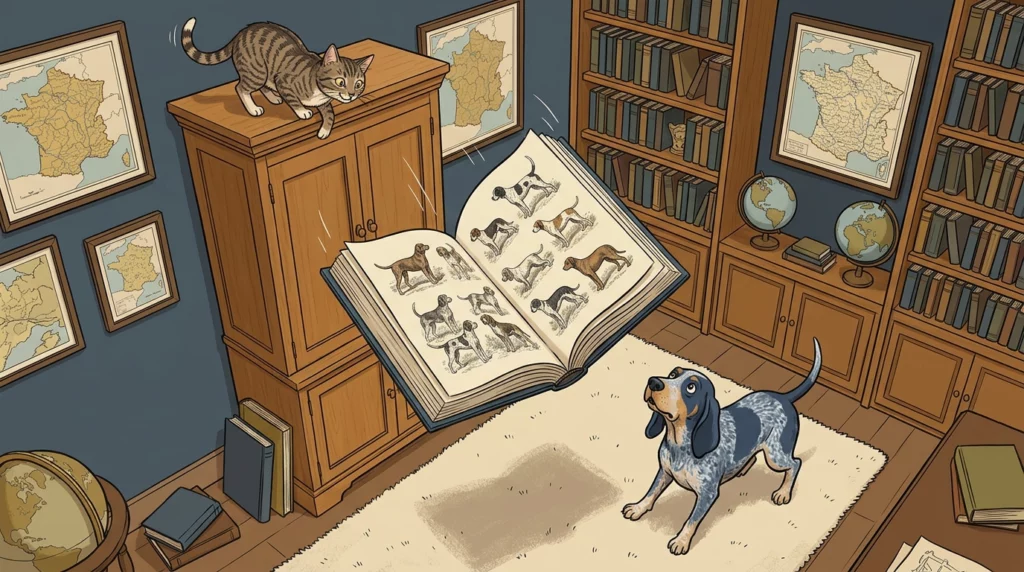
Hello, adventurous humans and curious creatures! Yuna here, your resident chaotic explorer of the SnoutScoop house. Usually, my daily duties involve testing gravity by nudging pens off desks, scaling the top of the bookshelf to survey my empire, and making sure Niki the English Setter does not get too smug about her editorial perfectionism.
However, during a recent high-altitude investigation on top of the study cabinet, I accidentally swiped a heavy cynological history manual onto the rug. As the pages fluttered open, a striking photograph caught my eye: a scruffy, blue-mottled hound with long, velvety ears and a look of pure, goofy determination. It looked identical to my loud, high-energy dog roommate, Blu!
Naturally, I leapt down to investigate. What I found in those yellowed pages stunned me so much I almost forgot to chase my tail: Blu’s entire breed, the Griffon Bleu de Gascogne, came dangerously close to vanishing off the face of the Earth after World War II. In fact, active breeding lines plummeted to near single-digit numbers before passionate hound lovers mounted a dramatic rescue effort. Here is the fascinating, true history of how my favorite giant blue goofball almost never existed.
Who Exactly Is the Griffon Bleu de Gascogne?
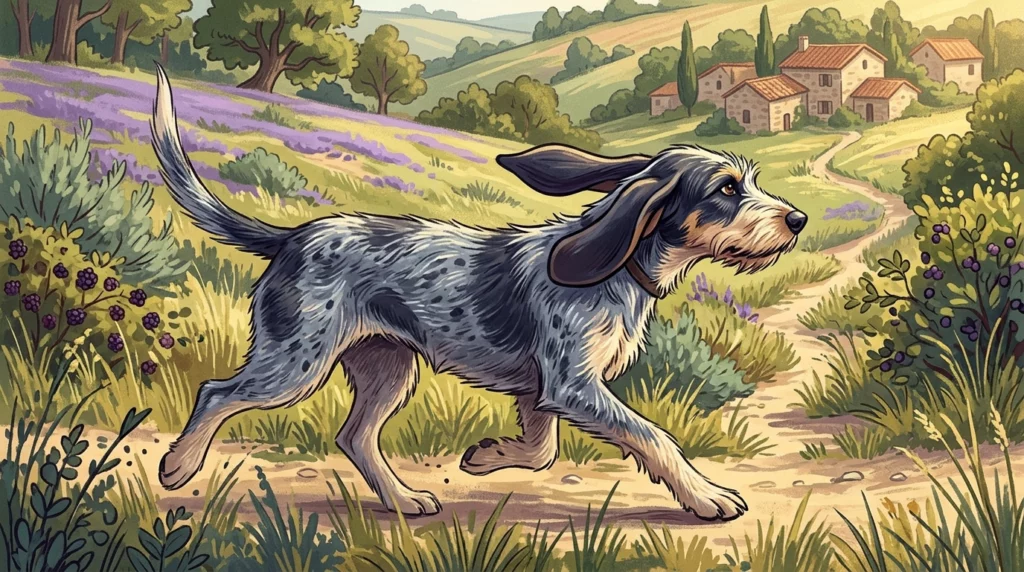
To understand how close this breed came to history’s dustbin, we first have to look at what makes a Griffon Bleu de Gascogne so special. Originating in the Gascony region of southwestern France, these dogs were bred as rugged scent hounds capable of navigating dense thickets, rocky terrain, and tough weather, as detailed in the official FCI breed standard.
The breed is a historical fusion of two incredible working lines:
- The Grand Bleu de Gascogne: An ancient, noble French hound famous for its incredible nose, deep booming bay, and distinctive blue-mottled coat.
- Wirehaired Hunting Dogs (Griffons): Scruffy, hardy working dogs introduced to give the breed a tough, protective coat that could withstand thorny underbrush and cold winters.
The result was a medium-to-large hound with an unmatched olfactory system, endless stamina, and a remarkably affectionate, gentle temper inside the home, a combination highlighted in Japhy’s breed overview and on Animalia.bio. But while they were beloved by local French hunters for generations, their narrow geographical footprint in rural France would soon make them vulnerable to historic disaster.
The Dark Days: How Post-WWII Chaos Nearly Wiped Them Out
The mid-20th century was a devastating era for many traditional European dog breeds, particularly large hunting hounds. World War II disrupted rural life across France, creating severe economic hardship, food shortages, and the widespread destruction of rural estates. Keeping large packs of working scent hounds became a luxury that few could afford.
As hunting practices shifted and rural populations migrated toward industrializing cities, specialized local breeds began to disappear. By the late 1940s and 1950s, the Griffon Bleu de Gascogne had hit a catastrophic bottleneck. Historical records highlighted by the Société Centrale Canine indicate that registered breeding dogs had dropped precipitously. In some regions, purebred specimens were so scarce that you could count the active working lines on your paws.
For a tense period in mid-century dog history, the Griffon Bleu de Gascogne was practically missing from public view. As noted by breed overviews from Goofytails and Milouchouchou, had a tiny group of dedicated enthusiasts not stepped in, the breed would have slipped silently into the history books.
The Great Revival: How Hound Enthusiasts Saved the Breed
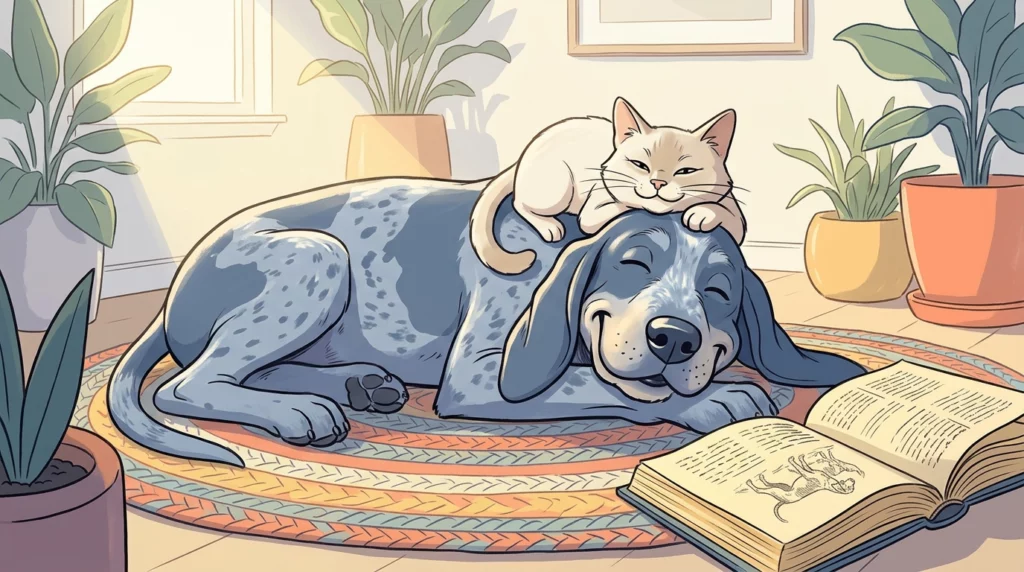
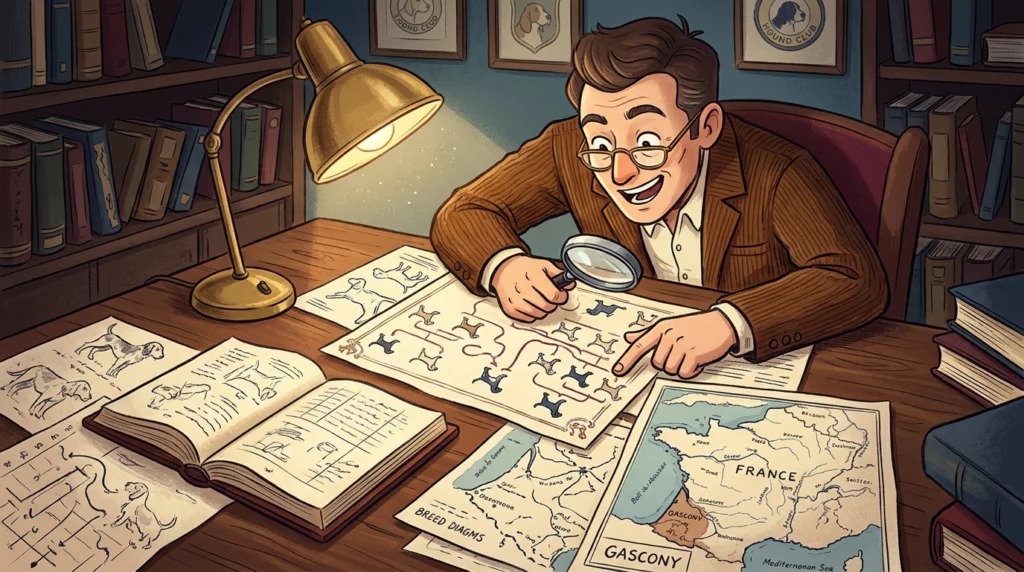
Thankfully for dog lovers, and for our household, the story did not end in the 1950s. During the 1960s and 1970s, a dedicated group of French breeders and hound aficionados realized that their beloved regional dog was on the brink of permanent loss.
These passionate cynologists launched a rescue mission across the Pyrenean foothills and Gascony countryside. They tracked down the few remaining authentic working hounds kept by rural farmers and isolated hunters. Through careful selection and record-keeping, as recounted by the Club du Bleu de Gascogne, they managed to reconstitute the breed while preserving its essential working traits: the weatherproof coat, the deep blue mottling, the keen nose, and the adaptable temperament.
The French Kennel Club and later the FCI formally solidified the breed standards, ensuring that the Griffon Bleu de Gascogne was officially back from the brink. While they remain relatively rare outside of Europe today, as observed in Zoomalia’s breed guide, their population is stable and growing in popularity among families who appreciate active, loving scent hounds.
Connecting History to Our Favorite Blue Goofball
Reading through this history made so many of Blu’s hilarious daily quirks suddenly make perfect sense:
- That Unstoppable Nose: When Blu puts his snout to the floor during walks, the entire world around him disappears. That intense focus was honed over centuries of tracking game across rugged French hillsides.
- The Scruffy Blue Armor: Blu’s rough, rustic coat is not just adorable, it was engineered by history to protect him from briars and sharp brush. It also traps an impressive amount of mud, which Pisino and I find deeply questionable.
- The Booming Bay: When Blu hears a suspicious delivery truck, he lets out a deep, melodic hound howl. In historical Gascony, that loud voice allowed hunters to pinpoint their dog’s location miles away through thick woodland. In our living room, it mostly just startles Niki out of her catnaps.
- The Gentle Heart: Despite their tough working history, Griffon Bleus were bred to live closely with human families and work peacefully alongside other dogs. That is why Blu is a total softie who loves snuggling on the couch just as much as running at full speed.
A Cat’s Final Verdict
As a cat, I am generally skeptical of anything that makes loud noises or accidentally steps on my tail while rushing toward a fallen piece of cheese. But looking at Blu now, watching him zoom around the yard with boundless 2-year-old energy, I feel a surprisingly warm sensation in my whiskers.
Dog history is not just about dates and kennel club standards; it is about the incredible resilience of animals and the human devotion that keeps unique breeds alive. Without those stubborn French hound lovers in the mid-20th century, our house would be far quieter, much less chaotic, and missing a big blue piece of its heart.
Do not tell Blu I said any of this, though. He will get competitive and try to challenge me to a race, and we all know cats run this house!