As a cat—and not just any cat, but the undisputed chief of the SnoutScoop household—I have a healthy, deeply logical suspicion of water. It is wet. It ruins my meticulously groomed fur. Unless it is dripping pristine and fresh from a leaky bathroom faucet for my personal entertainment, I prefer to keep my distance.
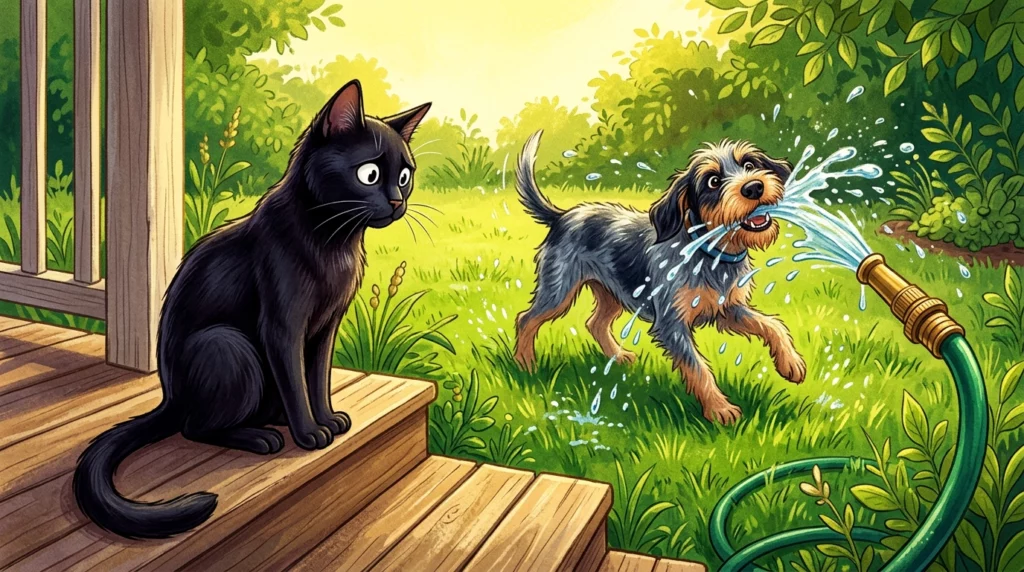
Dogs, however, lack this fundamental sense of self-preservation. Take my roommate, Blu. He is a lovely Griffon Bleu de Gascogne rescue, but when he sees a backyard hose, he loses what little decorum he possesses. He bites at the stream, snaps at the splashes, and behaves as if the water has insulted his ancestors. Even Niki, our highly dignified English Setter, can lose her composure when retrieving tennis balls from the lake.
While this wet, chaotic canine joy is amusing to watch from the dry comfort of my porch, it carries a hidden, life-threatening danger that many humans are completely unaware of: water intoxication. Yes, dogs can actually drink too much water, and as the responsible leader of this pack, it is my duty to explain why this happens and how you can keep your drooling companions safe this summer.
What is Water Intoxication? (The Scary Science)

In the veterinary world, this condition is known as hyponatremia. According to clinical resources like Iowa Veterinary Specialties, water intoxication occurs when a dog ingests an excessive amount of water in a very short period.
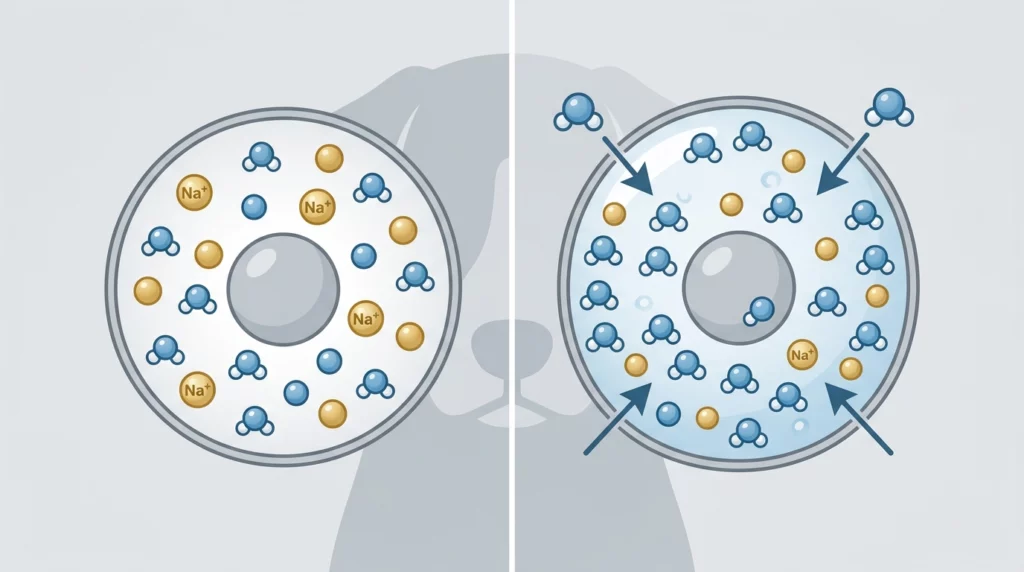
When this happens, the sheer volume of water dilutes the sodium levels in the dog’s extracellular fluid. Sodium is crucial for maintaining proper blood pressure and regulating nerve and muscle function. When sodium levels plummet, the body tries to compensate by drawing water into its cells. This causes the cells—including those in the brain—to swell. Because the brain is encased in a rigid bony skull, this swelling quickly leads to severe neurological complications and can be rapidly fatal if left untreated.
How Do Dogs Drink Too Much Water?
You might be thinking, ‘My dog would never drink that much from their water bowl!’ and you are probably right. Rarely does a dog develop hyponatremia simply by drinking from their dish. Instead, as noted by the Veterinary Poisons Information Service (VPIS), water intoxication is almost always accidental, occurring during recreational water activities.
Here are the primary ways our canine friends get themselves into trouble:
- Biting the Hose or Sprinkler: Dogs love to bite high-pressure streams of water, accidentally swallowing massive quantities in a matter of minutes.
- Diving and Fetching in the Water: When a dog swims with their mouth open to grab a ball or a toy, their mouth acts like a scoop, forcing water down their throat.
- Obsessive Pool Splashing: Some dogs obsessively bite at waves or splash frantically in kiddie pools, ingesting water continuously.
- Diving for Sinking Toys: Dogs that dive to the bottom of a pool or lake to retrieve items ingest water as they open their mouths underwater.
According to the American Kennel Club (AKC), smaller dogs are at a much higher risk simply because it takes a far smaller volume of water to dangerously dilute their sodium levels. However, highly energetic, water-obsessed larger breeds can also easily fall victim to this condition.
The Red Flags: Symptoms of Hyponatremia
Because water intoxication can progress with terrifying speed, you must be able to recognize the warning signs instantly. If your dog has been playing in or around water and begins showing any of the following symptoms, you must act immediately:
- Loss of coordination (staggering, wobbling, or looking ‘drunk’)
- Lethargy or extreme weakness
- Nausea and vomiting
- Bloating
- Excessive salivation or drooling
- Glazed eyes and dilated pupils
- Pale gums
As the condition worsens, it can lead to breathing difficulties, muscle tremors, seizures, coma, and death. The experts at the Animal Poisons Helpline emphasize that if you suspect your dog has water intoxication, you should treat it as a medical emergency and rush them to the nearest veterinary clinic. Do not wait for symptoms to clear up on their own.
How Veterinarians Treat It
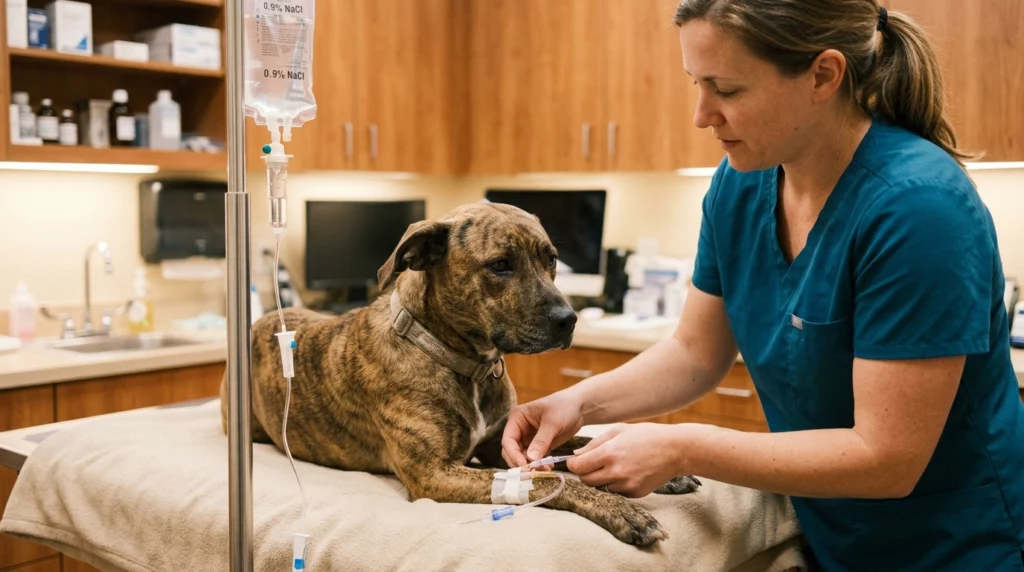
Please do not attempt to treat this at home. Trying to balance your dog’s electrolytes yourself can cause even more damage. As explained by the Independence Veterinary Clinic, veterinarians will carefully administer intravenous fluids containing hypertonic saline to safely restore sodium levels in the blood, monitor brain swelling with specific medications, and manage symptoms like seizures.
Pisino’s Rules for Safe Summer Splashing
I do not wish to ruin your dog’s summer fun. Even I can appreciate the necessity of cooling down when the sun is scorching, though I prefer air conditioning and a cold tile floor. To ensure your dogs stay safe, the Whole Dog Journal and Cornell University’s Riney Canine Health Center recommend practicing these simple prevention strategies:
1. Limit Hose and Sprinkler Play
While it is hilariously entertaining to watch your dog try to ‘fight’ the water hose, limit this play to just a few minutes. Better yet, avoid letting them bite directly at high-pressure water streams altogether.
2. Choose the Right Fetch Toys
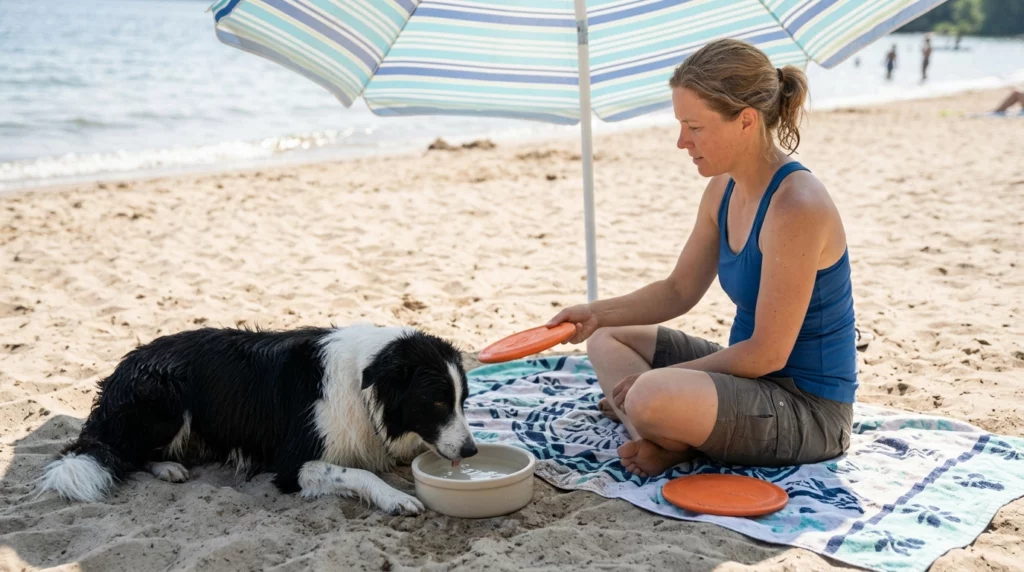
If your dog loves retrieving toys from the water, ditch the tennis balls. Round balls keep a dog’s mouth wide open, allowing water to pour right in. Instead, use flat, lightweight floating toys, like fabric discs or safe bumpers, which allow your dog to close their mouth more fully around the object while swimming.
3. Enforce Mandatory Rest Breaks
Dogs like Blu have no off-switch. They will fetch until they collapse. It is up to you, the human, to enforce frequent breaks. Take your dog out of the water every 10 to 15 minutes, dry them off, and make them rest in the shade so their body can process any water they may have accidentally swallowed.
4. Know Your Dog’s Swimming Style
Observe how your dog swims. Do they swim low in the water with their chin close to the surface, scooping up water as they paddle? If so, they are at a much higher risk and require strict supervision and shorter swim sessions, as emphasized in the AKC’s water safety guidelines.
Keep a Watchful Eye
Summer is a wonderful time for dogs to burn off energy and enjoy the great outdoors. But remember: just because water is natural doesn’t mean unlimited amounts of it are safe. Keep your sessions supervised, choose your toys wisely, and always pay close attention to your dog’s behavior after a swim.
Now, if you will excuse me, Niki is napping in the sunny spot on the rug, and it is my job to go wake her up by staring at her intensely. Stay dry, stay safe, and keep those dogs out of the deep end!