

Hello, human friends! It is me, Blu! Your favorite two-year-old Griffon Bleu de Gascogne. I am writing to you today with a very damp keyboard because, as my human constantly reminds me, I have a world-class set of jowls and an enthusiastic appreciation for licking. If there is a spot of peanut butter within a three-mile radius, my tongue will find it. I thought my tongue was pretty impressive—it can easily reach the very tip of my nose and clean my entire face in one swift swipe—but it turns out I am a mere amateur in the grand, wet world of biological slobber.
Today, I have put my high-energy sniffing skills to work to research the absolute wildest, longest, and most scientifically bizarre tongues in the animal kingdom. Grab a towel, because we are diving deep into the sticky, drooly science of record-breaking tongues!
The Dogs Who Ruled the Wet ‘n’ Wild Records

Naturally, we must start with my canine brethren. We dogs use our tongues for everything: tasting delicious treats, cleaning our paws, giving you giant wake-up kisses, and panting to keep cool. But some dogs were blessed with a little extra… biological length.
First, we have to pay tribute to the all-time historic champion. According to the Guinness World Records, the longest canine tongue ever recorded belonged to a beautiful Boxer named Brandy. Her tongue was an astonishing 43 centimeters (17 inches) long! Can you imagine the sheer volume of drool? I am utterly inspired. Brandy could probably lick a dropped potato chip off the floor without even getting up from her dog bed.
But what about the pups currently walking the earth today? The living record holder is a magnificent giant schnauzer named Rocky. As documented by Guinness World Records, Rocky boasts a tongue measuring 13.88 centimeters (5.46 inches). His owners say that when he pants, his tongue hangs down so low it looks like a beautiful pink necktie. I think Rocky and I would be great friends, though Niki, our very proper English Setter editor, would probably tell us to wipe our faces before sitting on the rug.
The Bat with the Ultimate Extension Cord
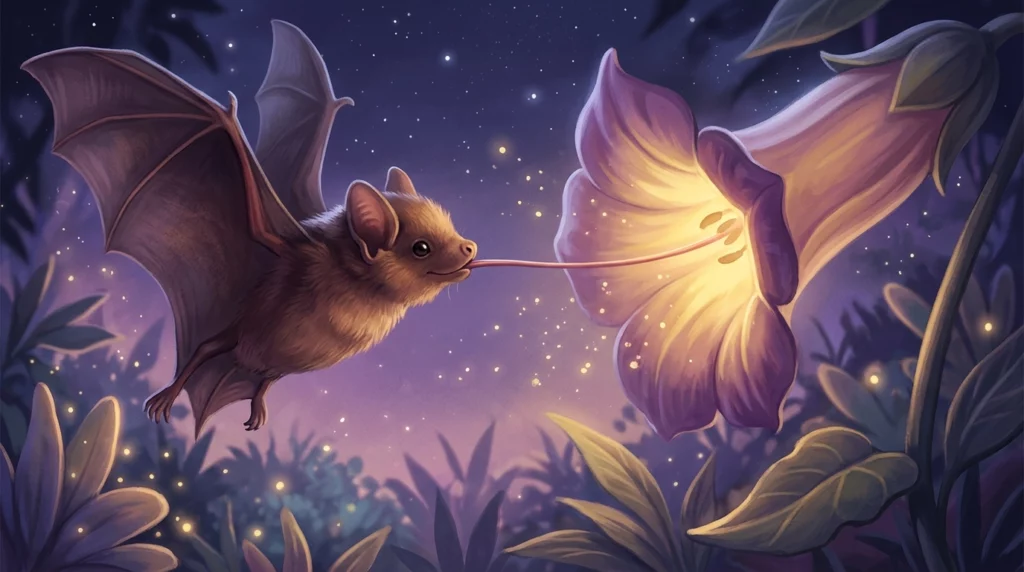
Now, while a five-inch tongue is highly respectable for a dog of Rocky’s size, the mammal world has a creature that makes all of us look like we have short, stubby tongues. Enter the tube-lipped nectar bat (Anoura fistulata).
This tiny bat lives in the cloud forests of Ecuador, and it holds the incredible record for the longest tongue for a mammal relative to body size. The bat itself is only about the size of a human thumb, but its tongue stretches to a mind-boggling 8.5 centimeters (3.3 inches). That is 150% of its entire body length!
According to the science enthusiasts at ZME Science, if I had a tongue proportional to this bat, my tongue would be over six feet long. I could lick the peanut butter jar from inside my crate while the jar is still sitting on the high kitchen counter! The bat uses this incredible built-in extension cord to reach deep into the long, tube-like flowers of the Centropogon nigricans plant to drink nectar. When the bat isn’t using its tongue, it actually stores the base of it inside its ribcage. Nature is so weird, and I love it!
The Chameleon: Rapid-Fire Sticky Spit Physics
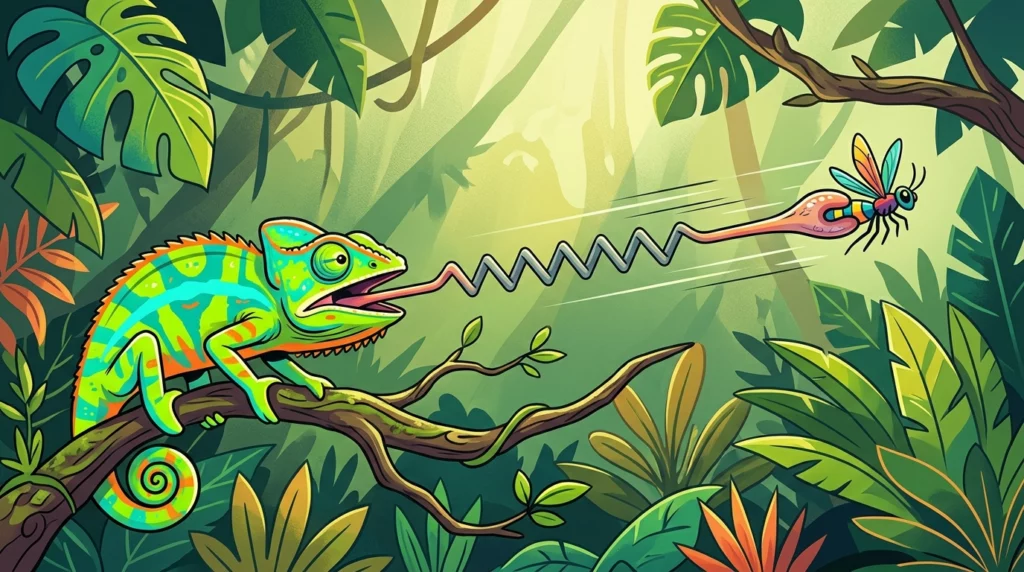
Of course, we cannot talk about bizarre tongues without mentioning the absolute kings of rapid-fire licking: chameleons. These lizards do not just have long tongues; they have weaponized them with highly advanced biological engineering.
A chameleon can launch its tongue out of its mouth at accelerations that would make a sports car look slow. But how do they actually hold onto their prey when the tongue hits? The secret is in the spit.
Researchers writing in the journal Nature Dynamics (via NIH) discovered that chameleon saliva is incredibly thick and sticky. In fact, as reported by The Scientist, chameleon spit is about 400 times more viscous than human saliva! This gooey, ultra-thick mucus acts like a powerful natural adhesive.
When the chameleon’s tongue strikes an insect, the high-speed impact spreads this sticky spit over the prey. As the tongue retracts, the sheer viscosity of the spit holds the insect fast, allowing the chameleon to reel in meals that weigh up to a third of its own body weight, as noted by the LA Times. The Washington Post explains that this “sticky-trap” mechanism is so powerful that it works even on wet, slippery insects. I wonder if I can convince my human to let me use this excuse next time I accidentally drool all over their favorite shoes. “It is not a mess, human! It is high-viscosity biological adhesive research!”
Why Do We Dogs Slobber so Much, Anyway?
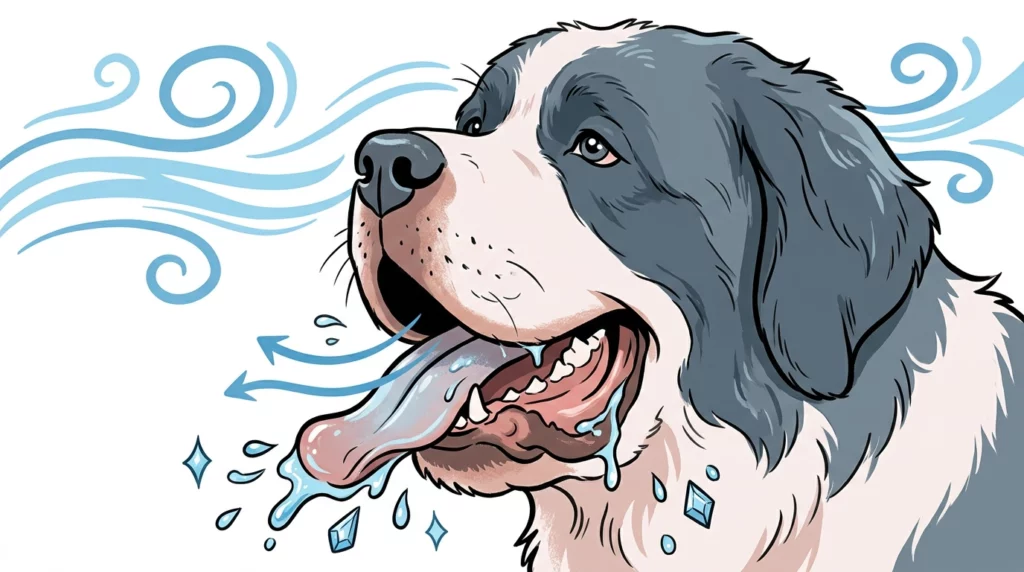
While chameleons use their spit to catch bugs, we dogs use our saliva for much more peaceful (but still very messy) reasons. Our slobber is actually a vital part of our survival gear! Here is why we keep the drool factories running:
- Digestion: Just like you humans, our saliva contains enzymes that help break down food. Because we tend to gulp our kibble down like we have never been fed in our entire lives (well, at least I do), saliva lubricates the food so it slides down safely.
- Thermoregulation: We do not sweat through our skin like you do. Instead, we pant. As we breathe heavily, air flows over our wet tongues and the lining of our mouths, evaporating the moisture and cooling our blood down. Our tongues are basically our personal air conditioners!
- Communication and Healing: Licking is how we show love, soothe ourselves, and clean minor scrapes. It is our way of saying, “You are my pack, and I think you smell great!”
So, the next time your dog gives you a giant, wet kiss that leaves a streak of shiny slobber across your cheek, don’t be mad! Just remember that you are being blessed by a highly advanced, cooling, digestive, and deeply affectionate biological tool. And hey, at least our spit isn’t 400 times stickier than yours—otherwise, you’d never get us off your face!
Now, if you will excuse me, all this talk about licking has made me very hungry. I am off to find where the humans hid the peanut butter jar, and I might just try to stretch my tongue a little bit further today to reach it. Wish me luck!