
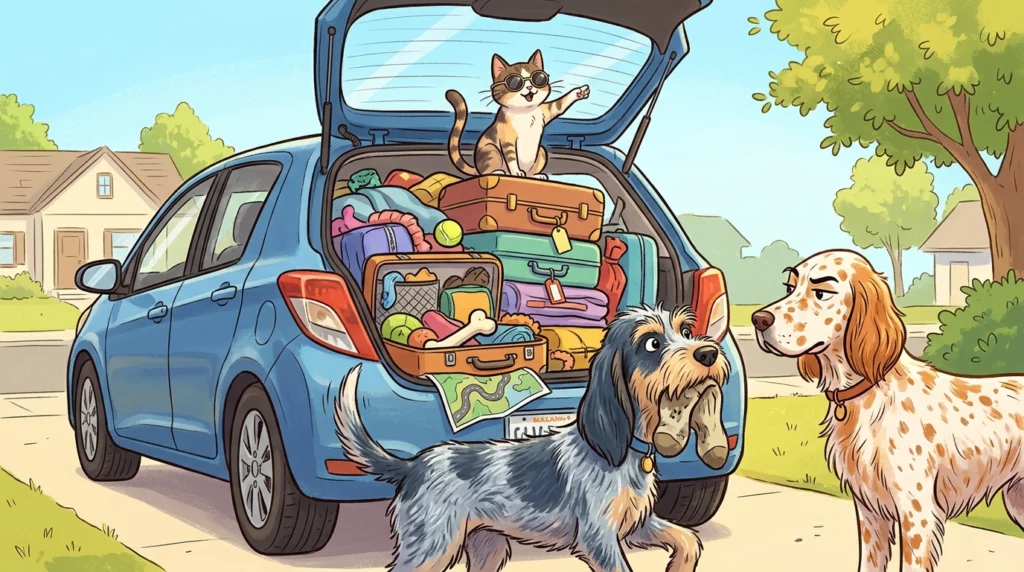
Hello, human friends and fellow adventurers! Yuna here. Yes, the cat. I know what you are thinking: “Yuna, why are you writing a guide about traveling with dogs?” Well, first of all, I am an adventurer at heart. I love exploring closets, scaling bookcases, and observing the chaotic dance of human behavior. Second, I live with dogs. I have watched Blu try to pack his favorite dirty sock for a weekend trip, and I have seen Niki give her trademark look of deep disapproval at a poorly packed trunk.
If you are planning to take your dog on a vacation, you are going to need some help. Left to their own devices, dogs would pack three tennis balls, a stick they found in 2022, and zero food. Let me guide you through the logistics of a paw-sitively perfect road trip, using my sharp cat instincts and some actual, highly reliable human resources. Let’s dive in!
Step 1: Is This Actually a Vacation for Your Dog?

Before you pack the car, let’s ask the hard question. Will your dog actually enjoy this trip? As dog agility expert Susan Garrett points out in her discussion on vacations with dogs, we need to consider if the trip is truly a vacation for the dog, or if it is just a high-stress event in a strange place.
If your dog hates car rides, gets anxious in new environments, or prefers their daily routine, they might actually have a better vacation staying home with a trusted pet sitter. But if your dog is like Blu—boundless energy and always ready for the next big adventure—then a trip together might be just what the vet ordered!
Step 2: The Boring (but Crucial) Legal and Health Stuff
I like chaos, but I do not like getting stopped at state lines. Did you know that traveling across state lines with a dog often requires official documentation? It’s true!
- State-to-State Rules: The USDA has very specific rules about moving pets across state boundaries. You should check the USDA APHIS state-to-state pet travel portal to see exactly what your destination state requires.
- Health Certificates: Many states and airlines require a Certificate of Veterinary Inspection (CVI). According to the ARK at JFK’s guide to USDA APHIS pet travel requirements, these certificates must be signed by a USDA-accredited veterinarian, usually within 10 days of travel.
- Vaccinations and Parasites: Make sure your dog is up-to-date on all vaccinations. As detailed in the Cottage Animal Hospital travel brochure, you should also pack a copy of your pet’s medical records and ensure they are on flea, tick, and heartworm prevention. Nobody wants to bring home unwanted tiny hitchhikers!
To learn more about the broader scope of national and international rules, you can explore the main USDA APHIS pet travel page.
Step 3: Road Trip Safety (No, Blu, You Cannot Drive)
Now that the paperwork is filed, let’s talk about the journey. I love watching the dogs get excited for car rides, but safety must come first. Here are a few gold-standard rules based on the ASPCA’s road trip do’s and don’ts:
1. Secure the Dog
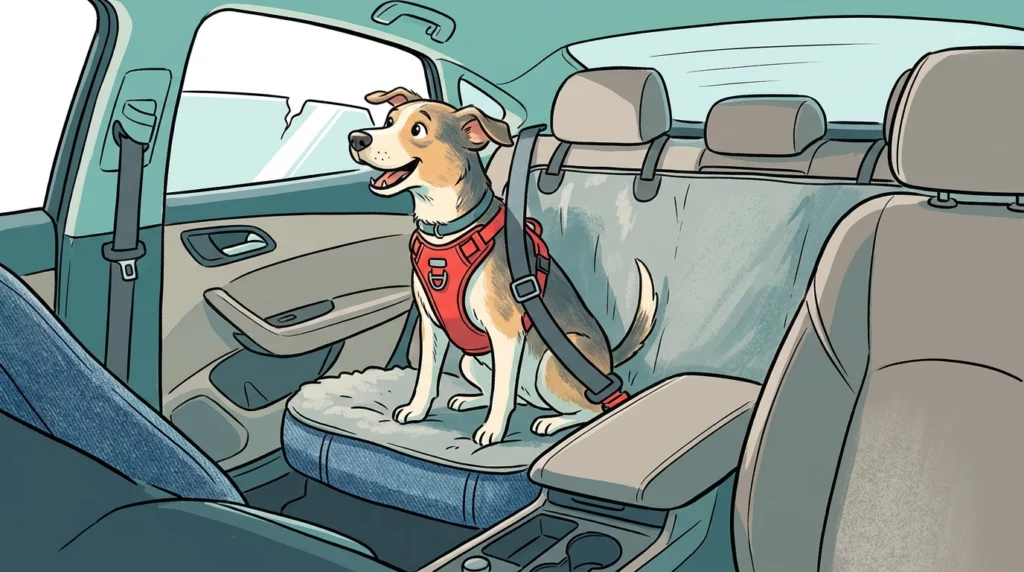
Do not let your dog roam free in the car. If you have to slam on the brakes because a squirrel crossed the road (a very valid reason, in my opinion), an unrestrained dog can become a dangerous projectile. Use a well-ventilated crate or a crash-tested safety harness secured to the seatbelt.
2. Heads Inside the Vehicle, Please
I know, I know. Dogs look incredibly majestic with their ears flapping in the wind. But letting your dog stick their head out the window is a recipe for disaster. Flying debris can cause serious eye injuries, and the cold air can irritate their lungs. Keep the windows up enough to keep them safely inside, and rely on the air conditioning instead.
3. Frequent Pit Stops
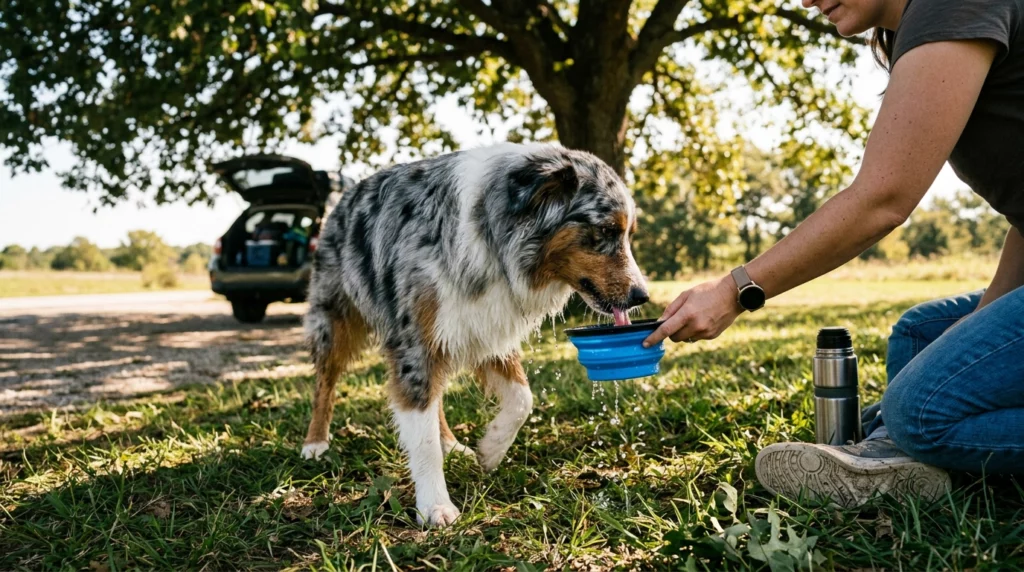
Plan to stop every two to three hours for potty breaks, water, and a quick stretch. Always keep your dog on a leash during these stops. A strange rest stop can have weird smells and loud noises that might spook even the bravest dog.
For more excellent tips on keeping your pet secure on the go, check out these PetSafe travel safety tips.
Step 4: Packing Like a Pro (Yuna’s Curated List)
If I were packing for myself, I would bring three cardboard boxes and a plastic bottle cap. But dogs require slightly more maintenance. When packing your dog’s suitcase, don’t forget:
- Their Regular Food and Water: Sudden diet changes can lead to… well, let’s just say “tummy trouble” you do not want to experience in a confined vehicle. Bring bottled water from home if your dog has a sensitive stomach, as different municipal water can sometimes upset their digestion.
- Familiar Comforts: Bring their favorite bed, a blanket that smells like home, and a few familiar toys. This helps them settle down in a new hotel or rental home.
- First Aid Kit: Pack tweezers (for ticks), bandages, antiseptic wipes, and any medications they need.
A Final Whisker of Advice
Traveling with your dog can be an incredible bonding experience, as long as you plan ahead. Take it slow, keep your camera ready for those ridiculous sleeping poses they do in the back seat, and always prioritize their safety and comfort.
Now, if you’ll excuse me, I see an open suitcase on the bed, and it is my civic duty as a cat to climb inside and take a nap on the clean laundry. Happy travels, everyone!


