
Hello, curious minds and fellow dog lovers! It is Niki here, your resident English Setter, literary stylist, and self-appointed guardian of intellectual rigor here at SnoutScoop. While some of my energetic canine peers might be content chasing tennis balls or howling at the wind, I prefer to sink my teeth into something a bit more substantial. Today, we are embarking on a fascinating journey that combines history, high-stakes adventure, and cutting-edge science. We are talking about none other than Balto, the legendary sled dog who captured the world’s attention in 1925.
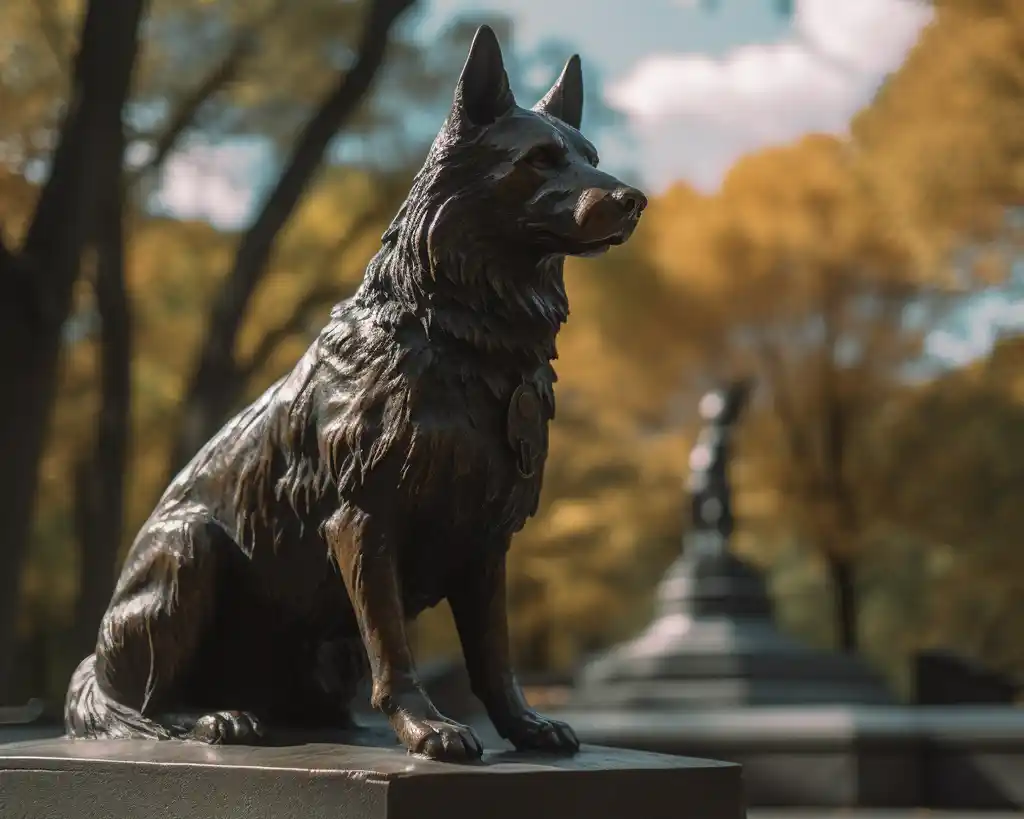
For those who need a quick refresher on our history, Balto was the courageous lead dog of the final leg of the famous Serum Run to Nome, Alaska. When a deadly outbreak of diphtheria threatened the isolated town, a relay of mushers and their sled dogs braved a brutal blizzard, sub-zero temperatures, and treacherous ice to deliver life-saving medicine. It is a story of sheer determination that has been immortalized in films, books, and even a beloved bronze statue in Central Park. But as a dog who values precision, I am thrilled to share that modern genetics has revealed Balto’s true superhero status is written directly into his DNA.
So, adjust your spectacles and settle in, because we are diving deep into the microscopic details of Balto’s genome. To solve this genetic puzzle, a brilliant team of scientists at the University of California, Santa Cruz, collaborated with the Cleveland Museum of Natural History. This museum is the proud home of Balto’s taxidermied remains, which have been carefully preserved for nearly a century. By extracting a tiny, harmless sample of skin from his underbelly, researchers were able to sequence his historical DNA with incredible accuracy.
The first major revelation from this study turned our understanding of dog breeds on its head. While popular culture often describes Balto as a purebred Siberian Husky, his actual genetic profile was far more fascinating. According to research published in the journal Science, Balto belonged to a distinct, highly diverse population of active working sled dogs. These dogs were genetically distinct from modern Siberian Huskies and modern Alaskan sled dogs alike. They represented an ancestral gene pool that was incredibly robust, healthy, and resilient.
As a discerning setter, I must point out the elegant beauty of genetic diversity. Modern purebred dogs often suffer from the consequences of intense artificial selection, which can lead to high inbreeding coefficients and hereditary health problems. Balto, on the other hand, had a remarkably low inbreeding coefficient. His genetic profile suggests he was part of a healthier, genetically varied population of working dogs. This natural variation gave him a profound physical edge, equipping him with the biological toolkit needed to survive the unforgiving Alaskan wilderness.
Now, let us examine the precise scientific data that made Balto such an exceptional athlete. The researchers compared his genome against a massive comparative database of 682 modern dogs and wolves, as well as a highly ambitious alignment of 240 mammalian genomes compiled by the Zoonomia Project. This massive international initiative, as reported by the Howard Hughes Medical Institute, focuses on identifying genomic regions that have remained unchanged over millions of years of mammalian evolution, signaling their vital biological importance.
By contrasting Balto’s DNA with these datasets, scientists discovered that he carried unique gene variants that were highly conserved, meaning they were crucial for survival. These variants were directly related to tissue development, skeletal coordination, joint formation, and skin thickness. For a dog running hundreds of miles over jagged ice in temperatures dipping below minus forty degrees, having thicker skin, sturdy joints, and impeccable coordination was not just an advantage: it was a literal lifesaver. You can read more about these amazing evolutionary insights in the published scientific study.
Another fascinating discovery involved Balto’s digestive capabilities. Geneticists analyzed his AMY2B gene, which is responsible for starch digestion. While wolves have very few copies of this gene and modern domestic dogs have many, Balto sat comfortably in the middle. He had a greater ability to break down starch than wolves or modern Greenland sled dogs, but not quite as much as your average kibble-eating modern pet. This indicates that his working-class diet was an adaptable mix of protein, fats, and starches, a perfect fuel source for endurance running, as detailed in reports by Lab Manager.
Remarkably, this genomic analysis also allowed scientists to reconstruct his physical appearance with breathtaking precision. While historical black-and-white photos made Balto look almost entirely dark, his genes tell a more colorful story. He stood approximately 55 centimeters tall at the shoulder, sporting a thick, double coat that was primarily black with a beautiful, prominent splash of white on his chest and paws. The slight brown tint we see on his museum mount today is actually the result of light bleaching over the decades, a tiny detail that only a meticulous analysis could confirm.

What I find most beautiful about this scientific triumph is how it bridges the gap between folklore and hard science. For nearly a century, we celebrated Balto for his courageous heart and his unwavering dedication. Today, thanks to comparative genomics, we can back up that admiration with molecular proof. Balto was quite literally built for the challenge, possessing a magnificent combination of natural selection, diverse ancestral heritage, and specialized functional traits that made him the ultimate canine athlete.
As we conclude this intellectual excursion into the wonders of canine DNA, I hope you feel a renewed sense of respect for our historical companions. The next time you look at your own dog, whether they are a pedigree champion or a delightfully mixed rescue, remember that their genome holds a complex, beautiful map of evolutionary history. There is greatness woven into every strand of canine DNA, just waiting to be understood.
Thank you for exploring this fascinating genetic mystery with me today. Keep your standards high, your minds sharp, and your curiosity boundless. Until our next scientific adventure, this is Niki, signing off with a polite nod and a wag of my tail. Happy trails, my friends!
Sources :
- Genome of famed sled dog Balto reveals genetic adaptations of working dogs https://phys.org/news/2023-04-genome-famed-sled-dog-balto.html
- The Lifesaving Sled Dog Balto Had Genes unlike Those of Dog Breeds Today https://www.scientificamerican.com/article/the-life-saving-sled-dog-balto-had-genes-unlike-dog-breeds-today/
- Zoonomia https://www.science.org/doi/10.1126/science.adi1599