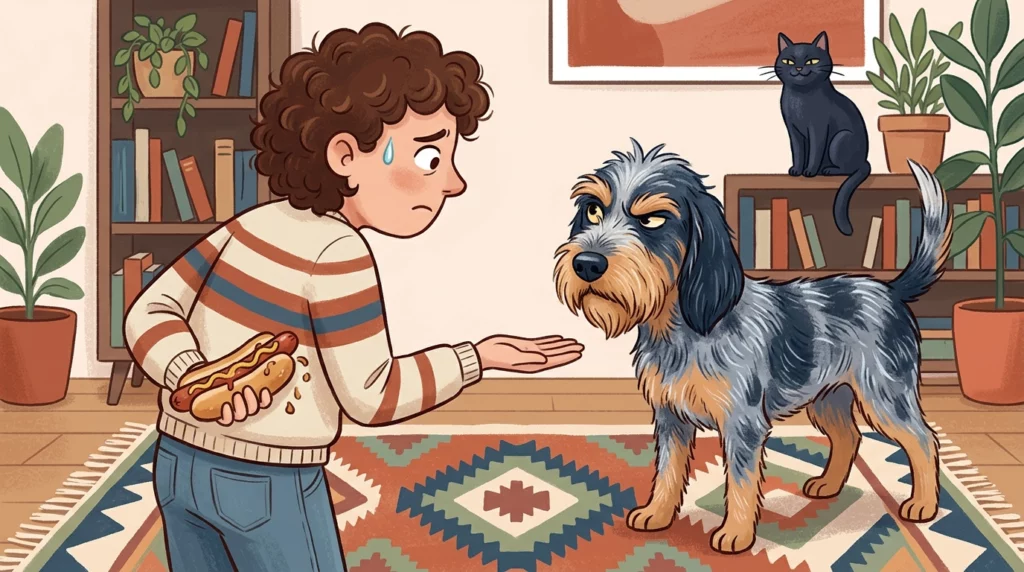
I am Pisino. As a three-year-old black cat and the undisputed chief of the SnoutScoop household, it is my duty to observe, analyze, and keep the peace. Mostly, I observe the humans. And if there is one thing I have learned in my tenure as ruler of the living room, it is this: humans are terrible liars.
When our humans shake the treat bag but it’s actually just a distraction to brush our fur, I see right through it. I simply retreat under the sofa. But my canine colleagues? Blu, our high-energy Griffon Bleu de Gascogne, will run over with eyes full of hope, only to look deeply betrayed. Niki, our discerning English Setter, will offer a polite, elegant tilt of her head, trying to give them the benefit of the doubt.
It makes you wonder: do dogs actually believe your little white lies, or are they just humoring you? For a long time, people assumed dogs were happily gullible. But according to cognitive science, your dog is onto you. They know when you’re lying, and they are keeping score.
The Kyoto Experiment: Fool Me Once, Shame on You
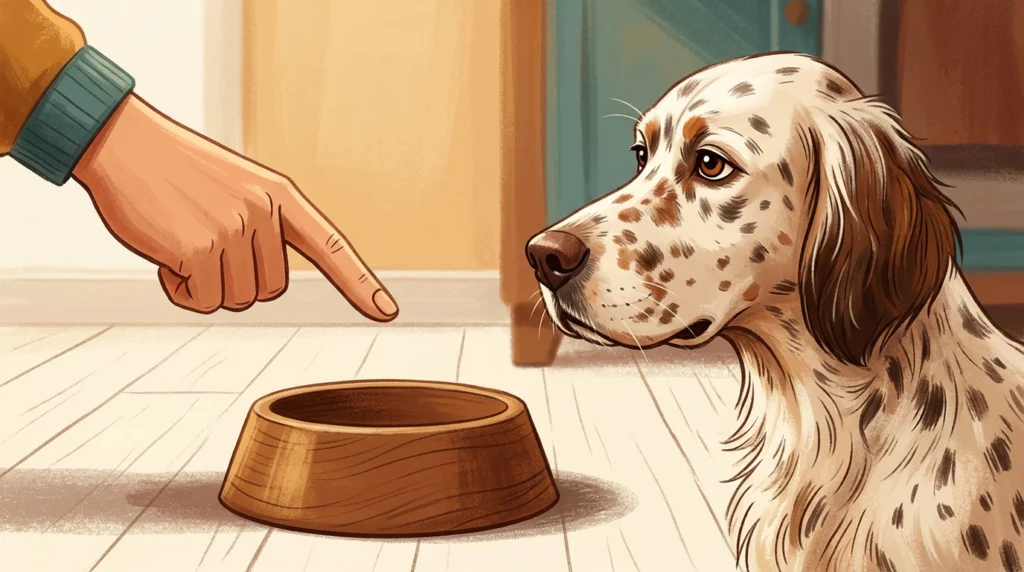
Let’s start with a groundbreaking piece of research that proved dogs do not tolerate fake news. A study led by Akiko Takaoka at Kyoto University, published in Animal Cognition, set out to test whether dogs could determine if a human was a reliable source of information.
The setup was simple but brilliant. A researcher pointed to a container that hid food. The dog ran to it and got the treat. Great! The researcher was deemed trustworthy.
In the second round, the researcher pointed to an empty container. The dog ran over, found nothing, and realized they had been duped.
In the third round, the same researcher pointed to a container with food again. But this time, the dogs flat-out ignored them. They refused to follow the pointing gesture of someone who had lied to them. However, when a new, completely honest researcher stepped in and pointed, the dogs happily followed their lead.
As detailed by Study.com, this experiment proves that dogs use their past experiences with you to decide whether you are a reliable partner. If you repeatedly lie to them, they adjust their behavior accordingly. They don’t just forget; they remember who cheated them out of a snack.
The Vienna Study: Do You Know You’re Lying?

Now, you might think, “Okay, Pisino, but maybe the dog just thinks I made a mistake?”
Science has an answer for that, too. A fascinating study conducted by researchers at the University of Vienna, published in the journal Proceedings of the Royal Society B, looked at whether dogs could distinguish between a human who was genuinely mistaken and one who was intentionally lying.
In this experiment, 260 dogs were shown two opaque bowls. They watched a “communicator” tell them which bowl had a hidden treat. Then, things got tricky. The dogs watched a second person move the food from one bowl to the other.
In some cases, the communicator was in the room and watched the food get moved (meaning they knew where the food actually was). In other cases, the communicator left the room and didn’t see the switch.
When the communicator returned and pointed to the wrong bowl (the empty one), the dogs reacted very differently based on whether the human had been in the room:
- If the communicator had not seen the switch, the dogs were more likely to follow their mistaken advice, seemingly understanding that the human was just making an honest error.
- If the communicator had seen the switch and *still* pointed to the empty bowl (meaning they were actively lying), the dogs ignored them. Over half of the dogs refused to follow the deceptive human’s advice.
As Live Science points out, this suggests that dogs can understand when a human’s belief doesn’t match reality, and they are less likely to trust someone who is actively trying to mislead them. This is a level of social cognitive complexity we once thought belonged only to primates and young children!
How Do They Detect Your Deception?
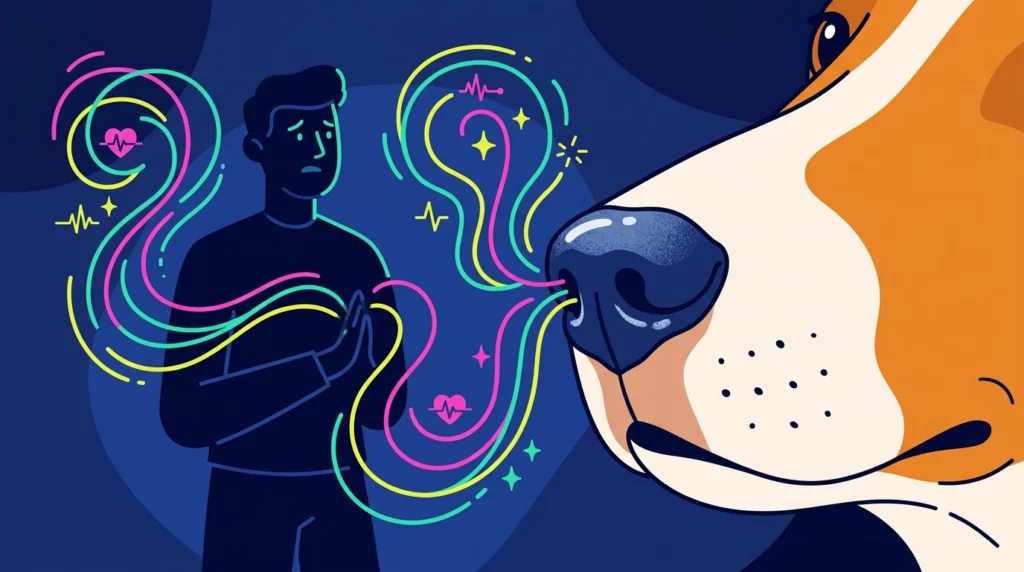
You might be wondering how dogs pull off this impressive mental detective work. They don’t speak human language, so how do they catch you in a lie? It all comes down to their incredible sensory superpowers and deep observation skills, which Nutri-Paw breaks down beautifully:
1. The Smell of a Lie
When humans lie or experience the mild stress of being deceitful, our bodies undergo subtle physiological changes. Our heart rates fluctuate, and we release micro-amounts of stress hormones like cortisol and adrenaline. To another human, this is invisible. To a dog’s nose, which is up to 100,000 times more sensitive than ours, you might as well be wearing a giant neon sign that smells like anxiety.
2. Micro-Expressions and Body Language
Dogs are world-class students of human behavior. They watch your eyes, your posture, and your gestures. If you say, “We’re going to the park!” but your body language is tense because you’re actually taking them to the vet, your dog will notice the discrepancy. They compare your verbal cues with your physical cues, and if the two don’t match, they side with your body language.
3. Voice Tone
Dogs are highly sensitive to the pitch and cadence of your voice. An over-enthusiastic, slightly forced tone of voice (the kind you use when you’re trying to coax them into the bath) sounds completely different to them than your genuine, relaxed voice. Research featured on PMC emphasizes how closely dogs tune into human emotional prosody—the emotional flavor of our speech.
Can We Call Dogs Honest?
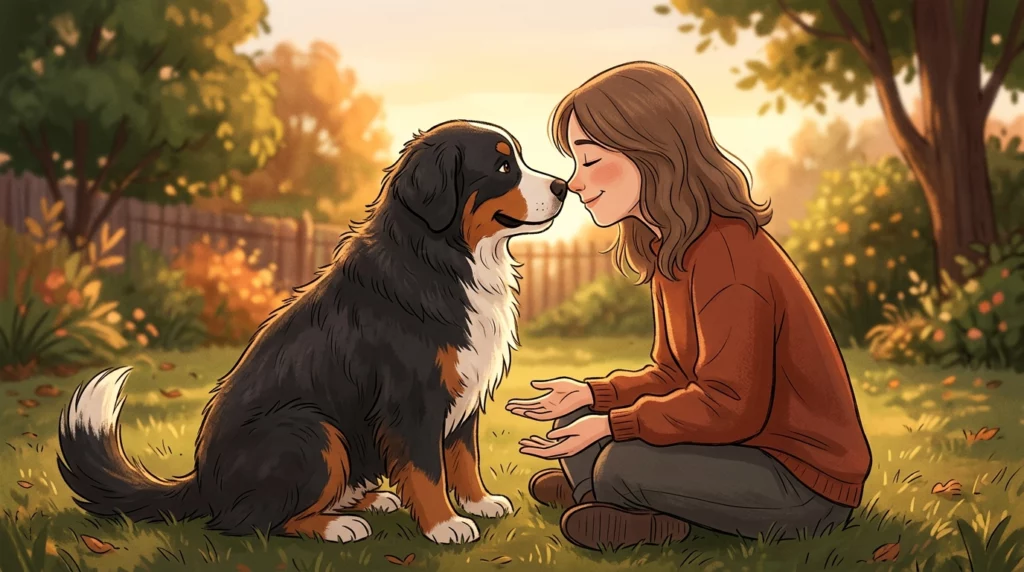
Lest you think dogs are saints of absolute truth, let’s look at the other side of the coin. Do dogs lie to us?
While dogs don’t tell elaborate verbal fibs, they are certainly capable of tactical deception. As discussed in DVM360, dogs can manipulate situations to get what they want. For example, a dog might pretend they haven’t been fed by their first owner to trick the second owner into giving them a second breakfast. (Trust me, I have tried this tactic myself, but my human has a spreadsheet. Unfair.)
Furthermore, an article in Psychology Today notes that while dogs are keenly sensitive to our intentions, their “lie detection” isn’t about moral judgment. They aren’t sitting there thinking, “Gasp, how unethical!” Instead, they are practical survivalists. They are assessing: *Is this human a reliable partner for finding food and staying safe?*
The Takeaway: Be Honest with Your Pack
As the chief of this household, I must advise you to keep things straight with your dog. Every time you do the “fake ball throw,” or promise a treat that never materializes, you are chipping away at your credibility.
If you need to take your dog to the vet, don’t pretend you’re going to the pet store. If it’s bath time, face it like a leader. Blu might splash soapy water all over the bathroom, and Niki might look like she’s enduring a Shakespearean tragedy, but they will respect you more for your honesty.
Trust is the foundation of any good pack. And if you ever need a lesson in how to spot a liar, just ask your dog—or better yet, your cat. We see everything.