Reading stress signals in context
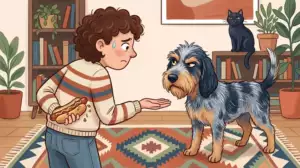
Practise separating an observation from an interpretation of stress. Look at posture, context, sequences of behaviour and useful notes to understand why a single gesture or photograph rarely tells the whole story.
Training mode
Reading stress signals in context
Questions covered in this exam
- A dog yawns once after waking. What can you conclude?
- During a greeting, a dog lowers its body, turns away and tucks its tail. What is sensible?
- A wagging tail accompanies a rigid body. Is an approach certainly welcome?
- Why note how your dog looks while relaxed at home?
- A dog becomes very still when someone leans over it. What should the person do?
- Which note is most useful after a difficult encounter?
- One dog barks when worried; another withdraws. Which needs consideration?
- After several demanding outings, your dog seems less able to cope. What is reasonable?
- A dog steps away from a person offering a hand. What respects its choice?
- A dog pulls towards another dog and then retreats. What is the safest interpretation?
- What is missing from a single photo used to judge a dog's feelings?
- A normally sociable dog suddenly avoids touch. What should you include in your response?
- Your dog relaxes after you move away from a crowd. What does this help you plan?
- A dog growls when cornered beside furniture. What is the priority?
- Which statement separates observation from interpretation?
- A dog accepts a treat but remains stiff beside a stranger. Does eating prove comfort?
- How should you judge readiness after a frightening experience?
- How can you document a recurring reaction for a professional?
- A dog stops growling after being shouted at. What cannot be assumed?
- Avoidance and distress keep returning despite easier routines. What is appropriate?