Hello, fellow dog lovers, adventure seekers, and speed enthusiasts! Blu here! If you know anything about me, you know that I have two gears: fast asleep on the couch, and absolute, chaotic, wind-in-my-floppy-ears ZOOMIES! I like to think I’m the fastest thing on four legs when I’m chasing a tennis ball. But my humans recently told me about some wild, spotted cats that make my top speed look like a slow-motion crawl.
Yes, I’m talking about cheetahs! These incredible cats can spring from 0 to 60 miles per hour in just three seconds. That is wild! But do you know what else is wild? Despite being the ultimate speed champions of the animal kingdom, these big cats are incredibly sensitive, easily stressed, and prone to major anxiety.
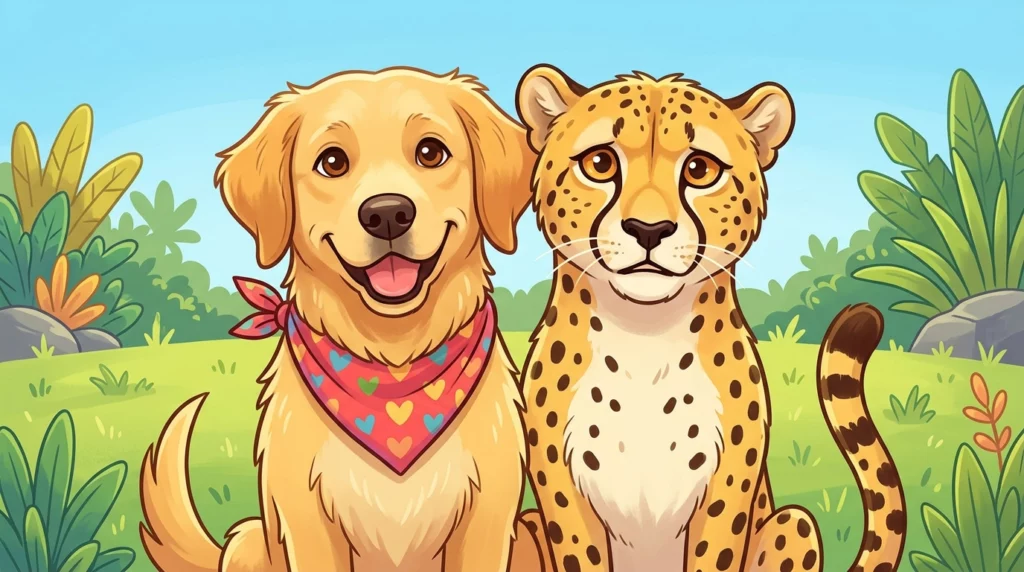
Luckily, the scientific community found the ultimate solution to help these nervous cats navigate life in the spotlight: us! Dogs! Let’s dive into the fascinating, heartwarming, and scientifically-backed world of cheetah support dogs
The High-Strung Life of a Speed Demon
You might think a predator that can outrun a sports car would fear nothing. But in reality, cheetahs are the ultimate worrywarts of the African savannah. In the wild, they aren’t heavy-duty fighters like lions or hyenas. If a larger predator shows up to steal their dinner, the cheetah’s natural instinct is to run away rather than fight. Because of this, their survival relies on being hyper-vigilant, constantly scanning the horizon for danger.
As the Columbus Zoo points out, this natural cautiousness translates to high levels of anxiety when cheetahs find themselves in human care. Zoos play a massive role in global conservation efforts for this threatened species, but public spaces filled with camera flashes, children laughing, and strange noises can easily overwhelm a naturally shy cheetah cub. When a cheetah gets stressed, they shut down or hide, which isn’t good for their physical or mental health.
Enter the Canine Calm: How the Program Works
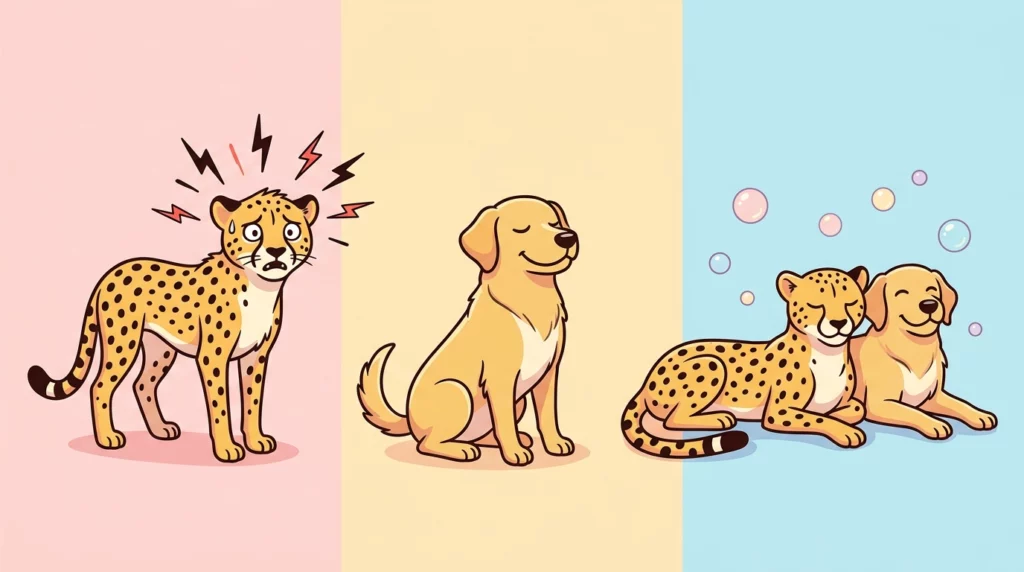
So, how do you teach a highly sensitive wild cat to take a deep breath and relax? You pair them with a dog, of course!
This brilliant idea didn’t start yesterday. According to historical records shared by Atlas Obscura, the pioneering program began back in 1981 at the San Diego Zoo Safari Park. The zoo directors realized that domestic dogs are naturally confident, highly adaptable, and incredibly relaxed around humans and loud noises.
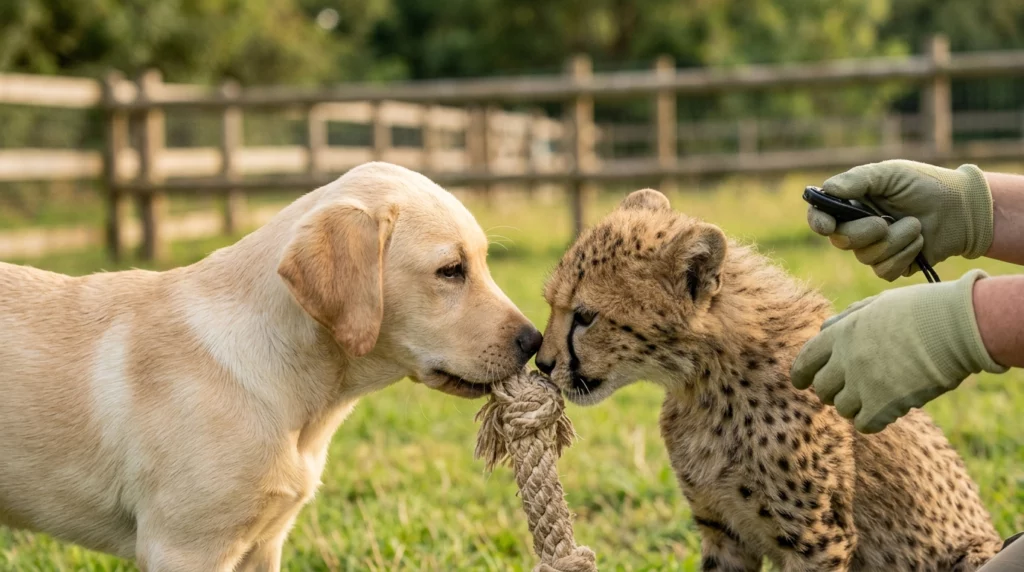
When zoos pair an orphan or single cheetah cub with a companion puppy, magic happens. Usually, zoos select calm, confident breeds like Golden Retrievers, Labradors, or friendly rescue mutts (my personal favorites!). The puppy and the cub are introduced when they are just a few months old. They play, wrestle, share toys, and sleep together in a supervised, highly structured environment.
The Awesome Science of “Social Buffering”
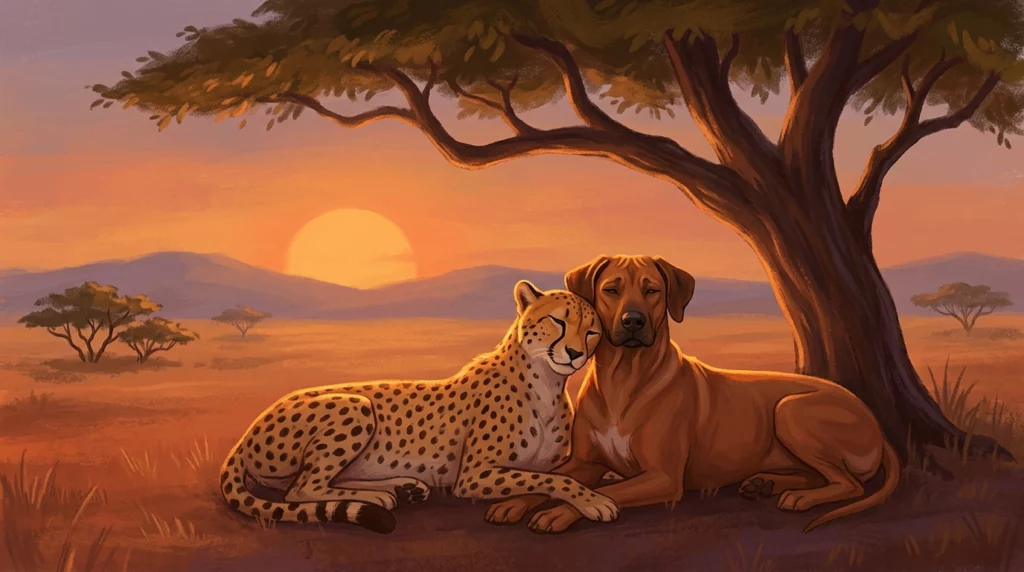
This isn’t just a cute gimmick to make zoo visitors go “aww” (though it definitely does that!). There is real evolutionary science at play here, and it’s called social buffering.
Social buffering is a biological phenomenon where the presence of a calm social partner helps reduce an individual’s physiological stress response. When a cheetah cub is paired with a dog, the dog acts as a behavioral guide. Cheetahs are masters at reading body language, but they don’t always understand human environments.
When a loud truck drives by or a crowd cheers, the cheetah’s immediate instinct is to panic. But then, the cheetah looks over at their dog buddy. The dog is sitting calmly, wagging their tail, perhaps chewing on a tennis ball, completely unbothered. The cheetah reads this body language and thinks: “Hey, if this goofy furry guy isn’t worried, I guess I don’t need to be worried either.”
Studies and reports from organizations like the Zoological Society of New Jersey show that this relationship significantly lowers the cheetah’s cortisol (stress hormone) levels, allowing them to grow up confident, active, and healthy.
Legendary Besties: Ruuxa and Raina
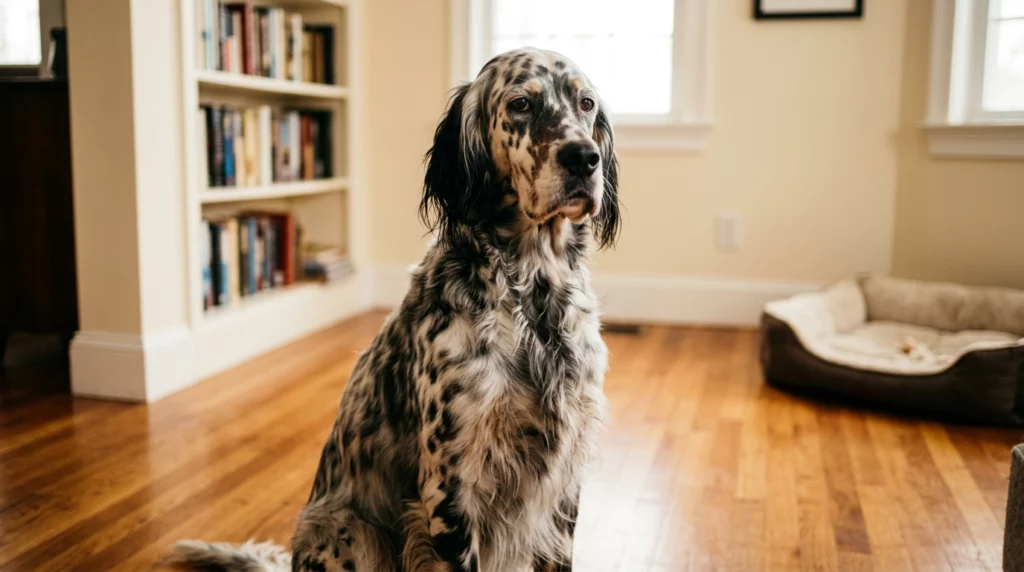
One of the most famous examples of this beautiful bond is the story of Ruuxa and Raina at the San Diego Zoo Safari Park.
Ruuxa, a cheetah cub, was rejected by his mother and required hand-rearing. To make things more challenging, Ruuxa was born with a genetic limb abnormality called chondrodysplasia, which caused his front legs to bow outward. The zoo paired him with a Rhodesian Ridgeback mix puppy named Raina.
When Ruuxa had to undergo major corrective surgery to fix his legs, Raina never left his side. She sat calmly by his crate, gently playing with him when he was allowed to move, and encouraging him during his physical therapy. With Raina’s constant support, Ruuxa made a full recovery and even learned to run at top speed! Their beautiful journey has been documented by news outlets and showcased in moving video tributes by the San Diego Zoo Safari Park.
A Quick Word from My Wise Friend, Niki
Before I get too carried away planning a playdate with a local mountain lion, my very smart and discerning English Setter sister, Niki, insisted that I include a very important safety warning for all our readers:
Please do not try this at home! While these friendships are absolutely heartwarming, they are created, monitored, and managed by professional wildlife biologists and veterinary behaviorists in accredited facilities. Cheetahs are still wild, powerful predators, and domestic dogs should never be introduced to wild animals without professional intervention.
Thanks, Niki! Always keeping my ears out of trouble.
Dogs: The Best Friends (and Therapists) in the World
Learning about cheetah support dogs makes my heart swell. It proves what we dogs have known all along: a little warmth, a wagging tail, and a steady friend can make even the scariest world feel safe and fun. Whether we are helping our human companions after a long day at work, or helping the fastest cat on Earth feel brave in front of a crowd, dogs truly are life’s greatest support system.
Now, if you’ll excuse me, all this talk of running and friendship has given me a serious case of the zoomies! I’m going to go find my squeaky toy and chase my tail for a bit. Stay curious, stay friendly, and keep wagging!