Hello there, fabulous humans! Blu here—your resident two-year-old Griffon Bleu de Gascogne rescue, professional tail-wagger, and occasional slipper-reorganizer. Today, we need to talk about something very serious. No, not the mysterious disappearance of the tennis ball under the couch (though that is a national tragedy). I’m talking about why you humans turn into puddle-faced, sobbing messes whenever a dog so much as sneezes dramatically on a movie screen.
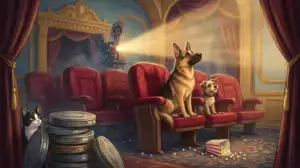
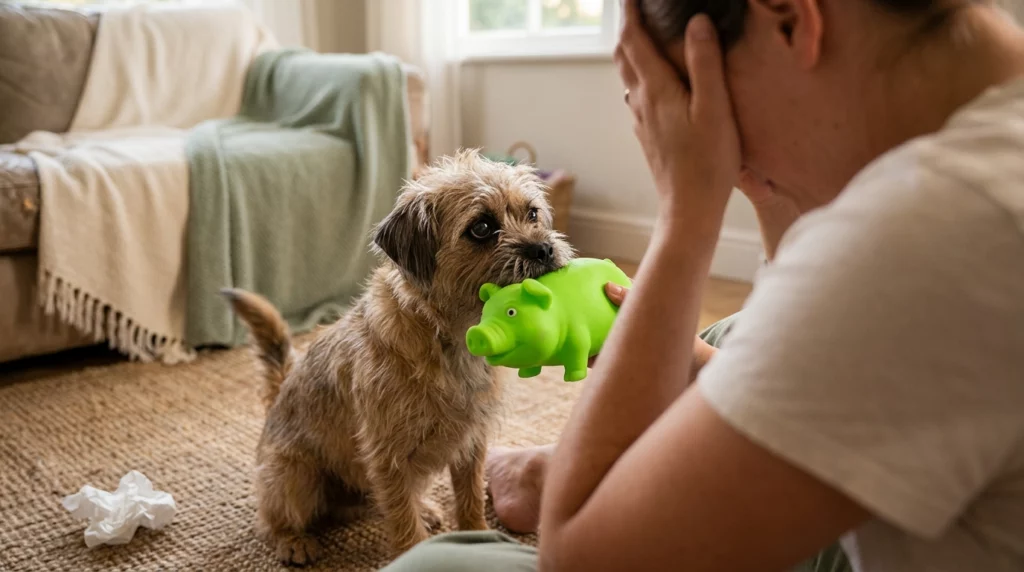
The other night, my humans were watching this movie with a golden retriever on the screen. Suddenly, the music got all slow and sad, and my human started leaking water from their eyes! I panicked. I offered them my squeaky pig. I tried to lick their face. I even did my famous ‘spin-and-flop’ move. Nothing worked! They just hugged me so tight I thought my spots would pop off.
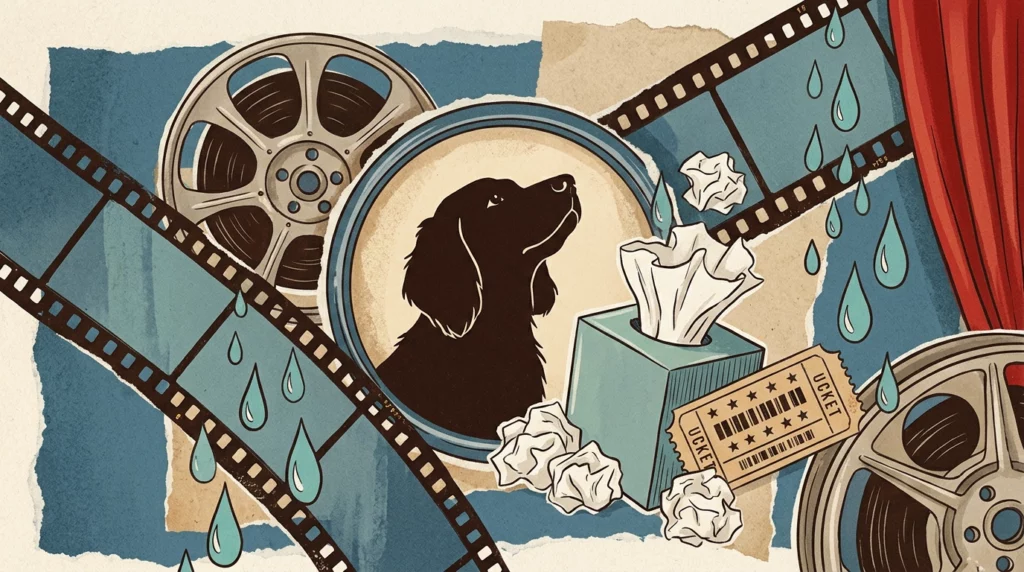
As a dog who enjoys a good story (especially ones involving bacon), I had to ask: Why does canine tragedy on screen trigger such a massive, earth-shattering emotional response in humans—often way more than when human characters meet their doom? I did some sniffing around the scientific literature, and it turns out, there is actual, hard science behind your puppy-movie tears!
1. The Empathy Gap: We Care More About Dogs Than Adult Humans
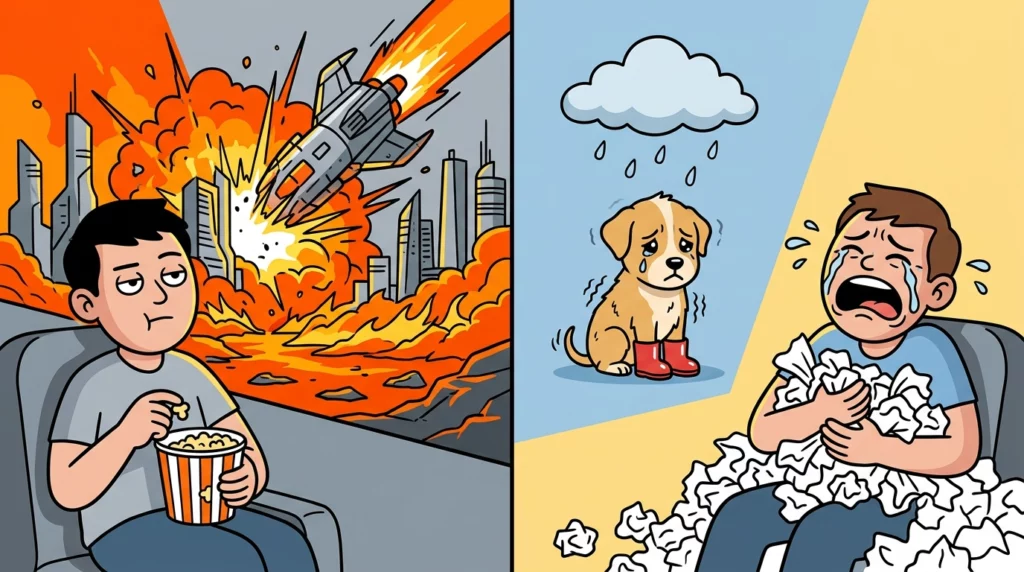
It’s a running joke on the internet: a movie can feature a high-octane explosion that wipes out half of a city’s human population, and you won’t blink. But if a stray puppy gets left out in the rain for three seconds? Cue the pitchforks and the tissue boxes.
This isn’t just you being quirky; it’s a documented psychological phenomenon. Researchers have actually studied this! A fascinating study conducted by researchers at Northeastern University and published in the journal Society & Animals found that humans show significantly higher levels of empathy toward dogs than toward human adults.
In the study, which was highlighted by CBS News, college students were given fake news reports about an attack on either a human adult, a human infant, an adult dog, or a puppy. The results? The participants’ empathy levels for the puppy, the adult dog, and the human infant were neck-and-neck—all of them scoring much higher than the adult human victim. As explained by WhiskerDocs, humans view dogs as vulnerable, innocent, and essentially unable to protect themselves, much like human babies. So when a dog is in danger on screen, your brain registers it as a threat to a helpless infant. No wonder you’re crying!
2. The Biological Hijack: It’s an Oxytocin Conspiracy!
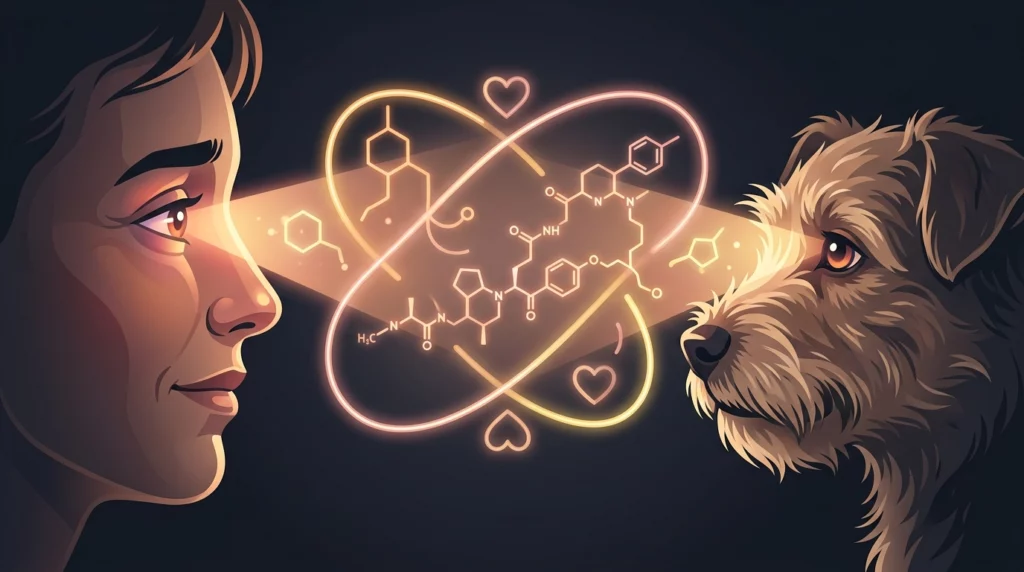
But wait, there is an even deeper, chemical reason why we dogs can make you cry just by looking at us. We have literally rewired your brains. Yes, we are geniuses.
It all comes down to a little chemical called oxytocin—often called the ‘love hormone’ or the ‘bonding hormone.’ When a human mother looks into her newborn baby’s eyes, both of them get a massive surge of oxytocin, which helps them bond. Guess what? We dogs figured out how to hijack that exact same neural pathway.
According to a famous study covered by The Guardian, when a human and a dog gaze into each other’s eyes, both of them experience a dramatic spike in oxytocin. This creates a positive feedback loop. As detailed by Space Daily, this is the exact same evolutionary mechanism that cements the bond between mothers and infants.
When you watch a dog on screen, even if it’s an actor-dog (shoutout to my talented canine colleagues!), those expressive puppy-dog eyes activate those deep, maternal/paternal bonding pathways in your brain. Research shared by Asian Scientist and the researchers at Duke University confirms that we have successfully integrated ourselves into the human caregiving system. We aren’t just pets; your biology literally treats us as your children, a chemical reality also celebrated by resources like Adopt-a-Pet. So when a movie dog is separated from their owner, your brain reacts as if a child is being separated from its parent.
3. The Unconditional Innocence Factor
Let’s face it: human characters in movies can be… complicated. Even the good guys usually have flaws, make bad decisions, or argue with their friends. When a human character meets a tragic end, there is often a lot of narrative baggage attached to it.
But dogs? We don’t have agendas. We don’t harbor secret grudges, we don’t lie, and we don’t start the cinematic conflicts. In every movie, the dog is just there to love, protect, and occasionally eat a turkey off the kitchen counter when no one is looking. Our love is 100% pure and unconditional. When a dog dies or gets hurt in a movie, it feels completely unfair. It’s a violation of the unspoken rule of the universe: good things should only happen to good boys and girls.
Blu’s Survival Guide for Dog Movies
Since I don’t want you humans dehydrating yourselves from crying too much, here is my official rescue-dog guide to surviving your next movie night:
- Keep a Real-Life Dog Nearby: If you feel the tears coming, immediately bury your face in some real-life fur. I highly recommend this. It helps calm you down, and plus, we might get some scratches out of it. Win-win!
- Have High-Value Snacks on Hand: Popcorn is great, but sharing a little piece of cheese with your dog will instantly boost the mood of the room. Science says so (okay, maybe just my stomach says so, but still).
- Use the ‘Is the Dog Okay?’ Cheat Sheet: There is absolutely no shame in checking online to see if the dog makes it to the end credits before you start the movie. Protect your peace!
At the end of the day, those big, salty tears you cry over movie dogs are actually a beautiful thing. They are proof of the ancient, chemical, and emotional bridge that connects our two species. You love us, we love you, and our brains are wired to make sure we keep taking care of each other.
Now, if you’ll excuse me, I see a very suspicious shaft of sunlight on the rug that needs to be napped in immediately. Happy watching, humans—and don’t forget to pass the treats!