Hello there, fellow dog lovers, science enthusiasts, and curious minds! Niki here, your resident English Setter. As a dog who prides herself on analytical thinking, high behavioral standards, and the occasional complex puzzle-solving session, I have always been fascinated by how our minds work, particularly when it comes to the humans we live with. Have you ever wondered why you feel an instant wave of calm when you pet your dog? Or why we dogs look at you as if you hung the moon? Today, we are diving deep into the psychological and biological mechanisms that make the canine-human bond so extraordinarily unique.
I have done the research (and by research, I mean consulting the finest scientific papers and observing my own humans with clinical precision). Together, we will unpack how this relationship evolved, how our brains chemically synchronize, and what makes our connection so incredibly robust. Let us begin at the very beginning.
- The Origins of Dog-Human Relationships

To truly grasp the psychology of our modern bond, we must first look at how we got here. The story of dogs and humans is one of the greatest partnerships in planetary history. Domestication began thousands of years ago, when our wolf ancestors and early humans realized they were far more successful working as a team than competing as rivals. According to genetic studies of ancient bones in Europe, this partnership was not a brief historical accident, but a slow, profound evolutionary journey.
As we trace the genetic history of dog domestication, we see that our ancestors gradually traded the wild life to share hearths, hunt cooperatively, and eventually protect human settlements. Over millennia, this practical arrangement blossomed into something far more sophisticated. We did not just remain tools for hunting; we became protectors, emotional confidants, and full-fledged family members. This evolutionary history paved the way for the complex psychological mechanisms we observe today.
- Attachment and Bonding

At the heart of the dog-human relationship is a deeply rooted system of emotional attachment. Psychologists and animal behaviorists have discovered that dogs bond with their owners in a way that is incredibly similar to how human children bond with their parents. This is known as the secure base effect, which has been thoroughly documented in scientific studies on canine attachment. Just as a human infant uses their parents as a safe harbor to explore the world, we dogs use you as our secure base. When we are faced with a scary situation, your presence alone gives us the confidence to handle it.
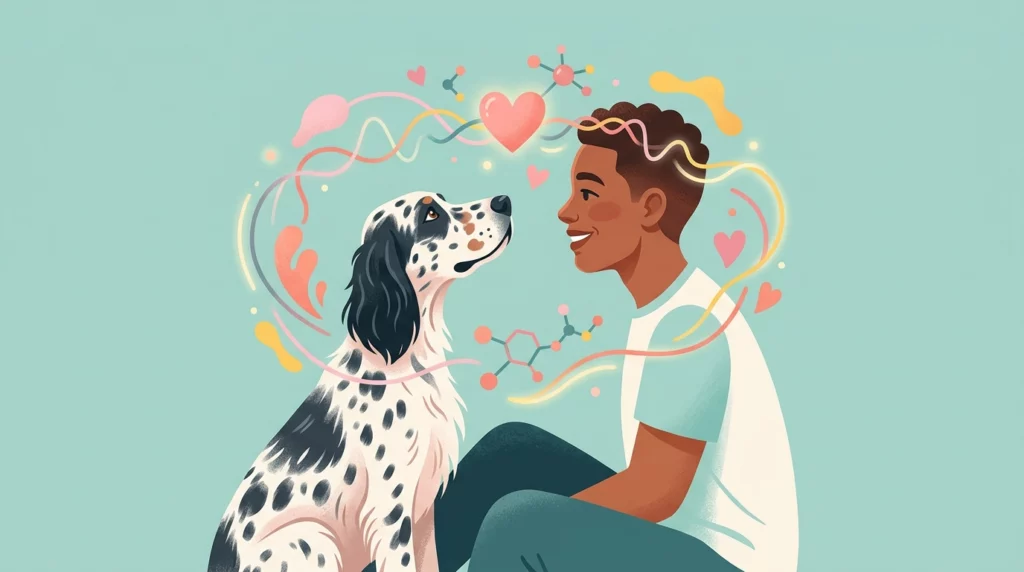
This attachment is not just psychological; it is deeply chemical. Research shows that gazing into each other’s eyes triggers a massive surge of oxytocin, often called the “love hormone,” in both the dog and the human. This is the exact same hormonal loop that cements the bond between a mother and her newborn baby. By studying this oxytocin-mediated social bond, scientists have proven that our love for you is not merely about a desire for treats (though I do highly appreciate a premium biscuit). It is a genuine, biologically hardwired emotional connection.
- Communication and Understanding

Any healthy relationship requires clear communication, and dogs and humans have mastered this art to a degree that baffles researchers. Despite not speaking the same verbal language, we are experts at reading each other’s signals. Dogs are master observers. We watch your body language, monitor your facial expressions, and listen to the subtle shifts in your vocal tones. In fact, we are often better at reading human micro-expressions than humans are at reading ours!
When you point your finger toward a hidden toy, we instantly understand your intent, a cognitive feat that even chimpanzees struggle with. In turn, humans have learned to decipher our complex vocabulary of barks, tail wags, and sighs. When I give my human that elegant, highly specific head tilt, they know exactly whether I am asking for an intellectual challenge, a walk in the park, or a gentle ear scratch. This bidirectional communication keeps our daily lives running smoothly and deepens our mutual trust.
- The Social Nature of Dogs
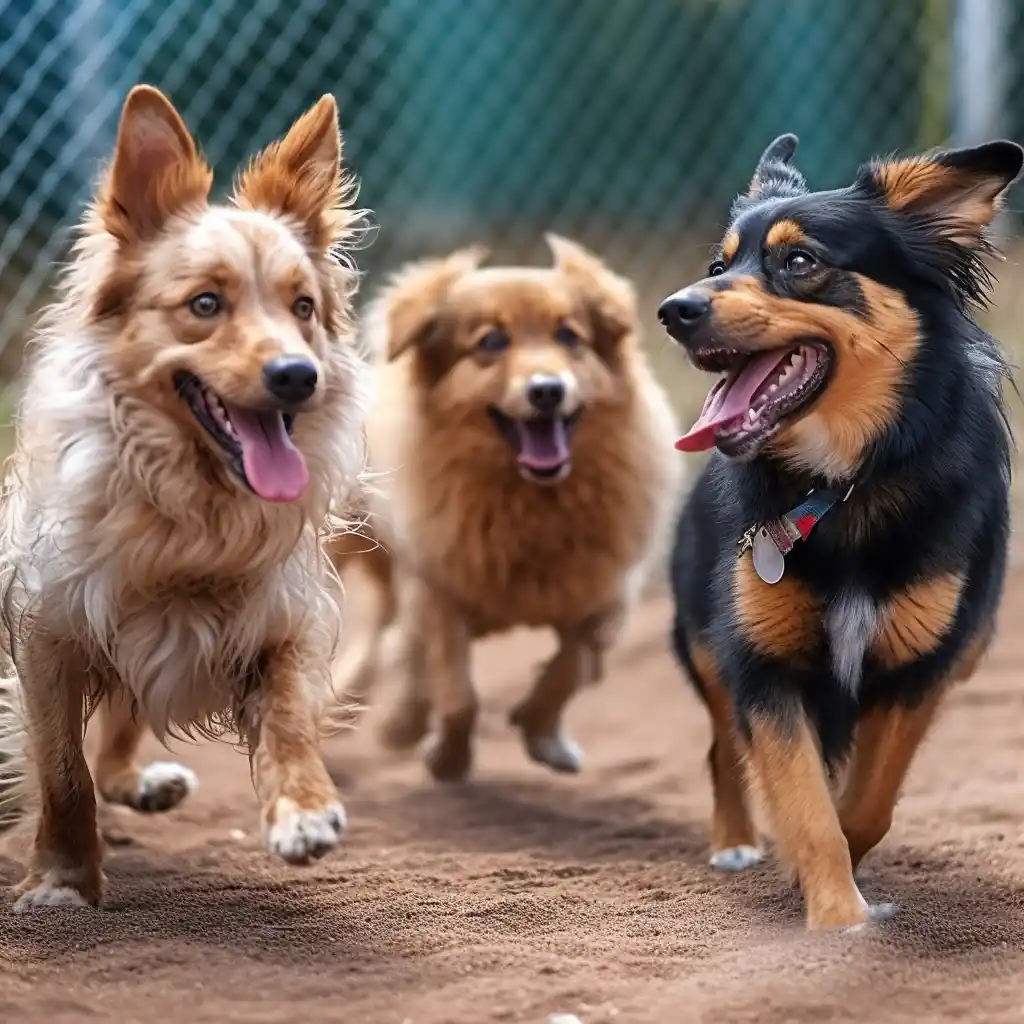
As descendants of pack-dwelling ancestors, dogs are inherently social creatures, a trait that beautifully aligns with human social structures. We thrive on companionship, collaboration, and shared experiences. This inherent sociality makes us incredibly empathetic. Have you ever noticed that if you are feeling sad, your dog will quietly come over and rest their chin on your knee? That is not a coincidence; it is emotional contagion.
Because we are so closely attuned to your emotional landscape, we can detect stress, joy, anxiety, and grief. This high level of social intelligence is why dogs are so exceptionally suited to work as therapy animals, service guides, and emotional support companions. We do not just live alongside you; we actively participate in your emotional world, adjusting our behavior to offer comfort, security, and a reassuring presence whenever you need it most.
- The Benefits of Dog-Human Relationships

The psychological bond we share yields incredible benefits for both ends of the leash. For humans, sharing your life with a dog does wonders for your health. Studies show that spending time with a canine companion lowers cortisol levels, reduces blood pressure, and helps alleviate feelings of loneliness. We keep you active, encourage you to explore the outdoors, and even help you connect with other humans in your neighborhood. In short, we make your lives richer and healthier.
For us dogs, the benefits are equally profound. A stable, loving bond with a human companion provides us with a sense of safety, structured mental enrichment, and a clear role within our family unit. When our physical and cognitive needs are met, we live happy, well-adjusted lives filled with confidence and joy. It is a perfect, mutually beneficial cycle of care and affection.
In conclusion, the dog-human relationship is a beautiful evolutionary masterpiece. It is built on thousands of years of cooperation, shared biology, and a unique form of love that crosses species barriers. By understanding the deep science and psychology behind our connection, we can treat each other with greater empathy, communication, and respect. Now, if you will excuse me, I believe it is time for me to go find my human, look deeply into their eyes, and trigger a lovely mutual oxytocin boost. I highly recommend you do the same!