Hello, human friends! Blu here, your favorite blue-furred, scent-obsessed Griffon Bleu de Gascogne rescue. I’ve just finished a very important lap around the yard (I had to make sure the fence was still there—good news, it is!), and now I’m ready to talk about something that’s been wrinkling my snout. It’s about how old I am.
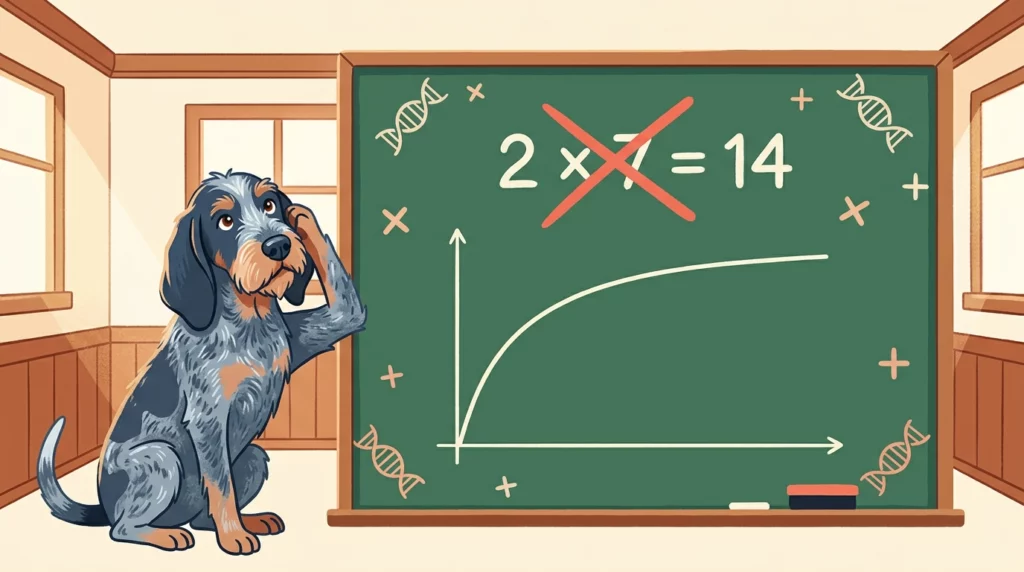
My humans tell me I’m two years old. But then they do this weird thing where they multiply it by seven and say, “Wow, Blu, you’re fourteen! No wonder you still try to eat your weight in socks.” But wait a minute. If I’m a teenager, why don’t I have a driver’s license or an attitude problem? (Okay, Pisino says I have an attitude problem, but he’s a cat, so his opinion on dog behavior is biologically biased.)
As it turns out, the old “one human year equals seven dog years” rule is a total myth. It’s outdated, unscientific, and frankly, bad math. Thanks to some incredible scientific breakthroughs at the cellular level, we now know exactly how dogs age. And trust me, it’s much cooler than a simple multiplication table.
The DNA Secret: What is Methylation?

To understand how we age, we have to look past our floppy ears and wet noses, right down into our cells. Scientists at the University of California, San Diego (UCSD) decided to study something called DNA methylation. Think of your DNA like a giant instruction manual for building and maintaining a dog. As we get older, our bodies add tiny chemical tags called methyl groups to certain pages of that manual. These tags don’t change the words, but they change how those pages are read.
According to the UCSD epigenetic clock explained by geneticists, these chemical markers accumulate at highly predictable rates. By tracking these molecular changes, researchers created a formula that maps canine years to human years based on actual biological aging rather than just guessing.
The Curve: Why Puppyhood is a Turbo-Boost
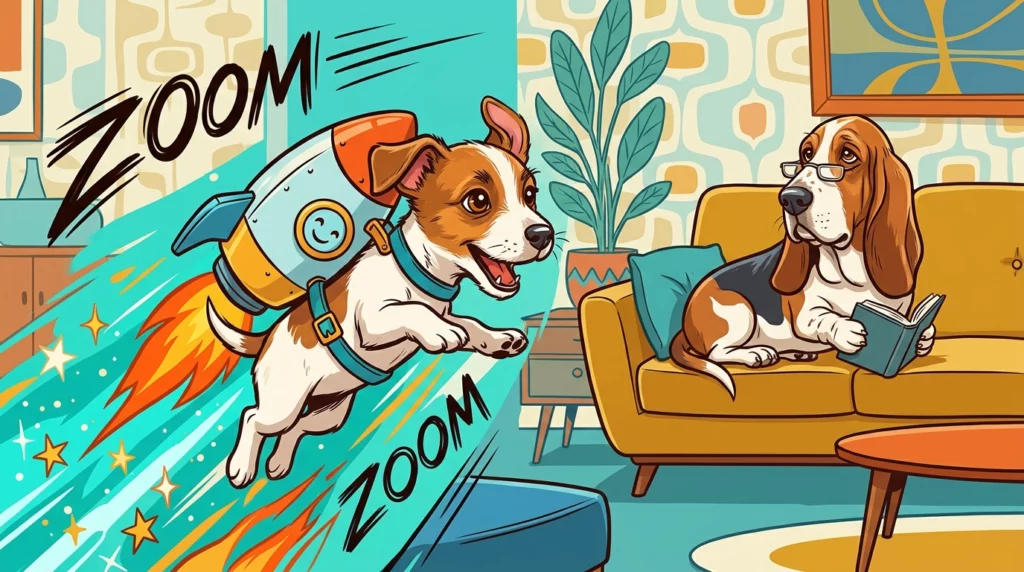
Here is the mind-blowing part: we don’t age in a straight line. If you think about it, a one-year-old dog can breed, run, and fetch like an adult. A seven-year-old human child… well, they are mostly just sticky and learning long division. We age incredibly fast during our first couple of years, and then our biological clock slows down significantly.
The actual scientific formula developed by researchers is a bit of a head-scratcher: Human Age = 16 * ln(Dog Age) + 31. (Don’t ask me to calculate that; I can barely count to three treats). According to this formula, a one-year-old dog is biologically similar to a 30-year-old human! And at two years old—my current age—I am actually closer to a 42-year-old human. I know, I know. I look fantastic for 42. It’s the raw diet and the daily mud baths.
By the time a dog reaches four, the aging curve flattens out. We go from aging like hyperactive sports cars to cruising like comfortable station wagons. To dig deeper into this math, you can check out this comprehensive dog aging science guide.
Why We Age So Similarly to Humans
Have you ever wondered why scientists study dogs to understand human aging? It’s not just because we are incredibly charming and cooperative research assistants (though we are). It’s because we share the exact same environment as you. We breathe the same air, sometimes eat the same dropped pizza crusts, and experience many of the same age-related health issues.
The massive Dog Aging Project has shown that dogs and humans age a lot alike on a molecular level. This shared journey means that what scientists learn about our biological clocks can actually help humans live healthier, longer lives too. Talk about being man’s best friend! We’re literally helping you decode the secrets of longevity while cuddling on your lap.
Furthermore, researchers studying molecular clues to aging have identified specific proteins in our blood that act as markers for biological decline. These proteins are remarkably similar to the ones found in aging humans, paving the way for targeted treatments that could extend the healthy years of both species.
Size Matters (And It’s a Bit of a Mystery)
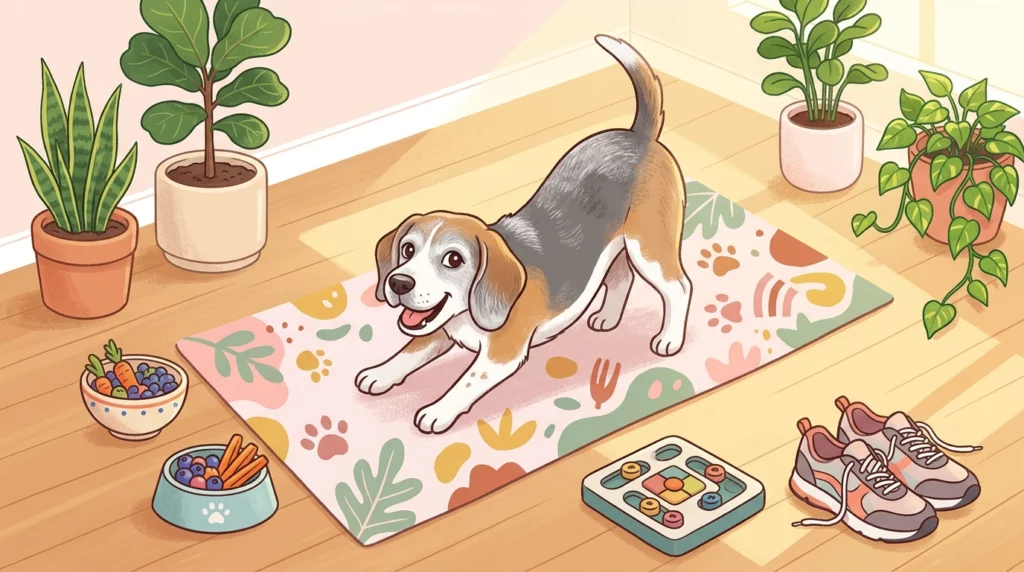
Now, here is a twist that puzzles scientists. In almost every other part of the animal kingdom, bigger animals live longer. Whales live longer than mice; elephants live longer than squirrels. But in the dog world, a tiny Chihuahua might live to be 18, while a massive Great Dane might only live to 8.
This is a major focus for NHGRI researchers who are working to reframe how we compare dog-to-human aging across different breeds. When we look at large versus small breeds, the cellular clocks tick at vastly different speeds. Large dogs don’t necessarily start aging earlier; they just age much faster once they get going. Genetic and physical differences mean we can’t use a single formula for every single dog breed.
Recent studies published in canine aging databases and highlighted by clinical research reports indicate that size-specific cellular pathways are responsible for this discrepancy. These insights are helping veterinarians customize care plans specifically tailored to a dog’s breed size, rather than treating a Golden Retriever and a Pomeranian with the same age-based milestones.
How to Help Your Pup Age Gracefully
So, what can you do with this fancy cellular knowledge? First, stop treating your one-year-old pup like they are seven. They are actually a fully-formed young adult who needs structure, training, and lots of mental stimulation! Second, knowing that our aging slows down later in life means we have plenty of high-quality “middle-aged” years to enjoy together.
To keep our cellular clocks ticking smoothly, focus on the basics:
- High-quality nutrition: Keeps those methyl tags happy!
- Regular exercise: Keeps our joints moving and our minds sharp (and lets me sniff all the neighborhood gossip).
- Mental enrichment: Puzzle toys, scent games, and learning new tricks can keep our brains young.
At the end of the day, whether I am 2, 14, or 42 in human equivalent years, my goal remains exactly the same: to find the squeakiest toy, chase the fastest squirrel, and make sure my humans feel loved every single day. Now, if you’ll excuse me, my biological clock says it is officially nap time!