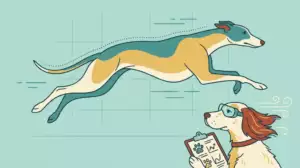
Dogs and children
Explore the adult's role in safe, respectful relationships between dogs and children. Everyday situations cover rest, play, food, warning signals and preparing family changes without relying on a dog's reputation alone.
Training mode
Dogs and children
Questions covered in this exam
- Who remains responsible for a child's interactions with the family dog?
- You must leave the room to answer the door. What should happen first?
- A child wants to hug the dog's neck for a photo. What is preferable?
- The dog retreats to its bed. What should a child learn?
- During a supervised greeting, the dog walks away. What should happen?
- A dog stiffens over a chew when a child approaches. What is the adult's priority?
- A child says the dog enjoys being used as a cushion. What should the adult do?
- An excited chase game starts between a child and dog. What is safer?
- Your newly adopted dog meets the children. Which plan is better?
- A breed is advertised as perfect with children. What should guide adoption?
- A baby will arrive soon. When should you introduce manageable household changes?
- The baby begins crawling. Should the household safety plan be reviewed?
- A child can recite all the dog-safety rules. Does this replace adult oversight?
- Small children's toys are scattered near the dog. What should an adult do?
- A dog turns away, stiffens and tries to retreat during contact. What is sensible?
- The family dog growls during an interaction with a child. What should the adult avoid?
- Repeated discomfort around children is appearing. Must you wait for a bite to seek help?
- The dog approaches to sniff a seated child. Must the child immediately stroke it?
- While an adult supervises family time, the dog relaxes on its familiar mat. What supports this?
- With a new baby, what still needs a realistic daily plan for the dog?