Hi there, curious human friends! It’s Yuna here—the resident two-year-old feline adventurer at SnoutScoop. Normally, my daily quest for chaos involves knocking glass ornaments off high shelves, exploring the mysterious depths of open laundry baskets, or stalking imaginary hallway phantoms. But every now and then, I hear a story about another pet whose relentless curiosity changed history, and I just have to tip my whiskers in respect.
Today, we are talking about a legend. A black-and-white mongrel named Pickles. In March 1966, the entire sport of international football (soccer, if you’re on my side of the Atlantic) was facing absolute, unmitigated catastrophe. The World Cup trophy had been stolen! The police were baffled, the nation was embarrassed, and the tournament was only four months away. Who solved the crime of the century? Not Scotland Yard. Not elite detectives. A dog who just wanted to sniff a suspicious hedge in South London.
The Great Heist of 1966: A National Embarrassment
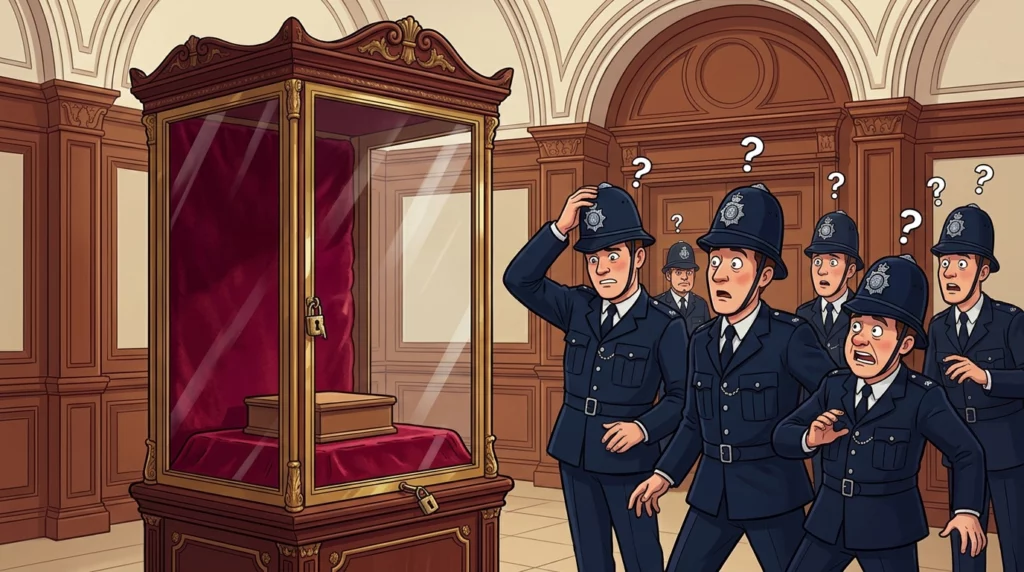
To understand why Pickles is an absolute icon, we have to travel back to March 1966. England was set to host the FIFA World Cup that summer. Naturally, the iconic gold trophy—known as the Jules Rimet Trophy, depicting Nike, the Greek goddess of victory—was put on display at a stamp exhibition in Westminster Central Hall, London.
Despite being insured for £30,000 and guarded by officers, the unimaginable happened on Sunday, March 20. According to historical records from FIFA, a thief slipped past guards during a church service held in the same building, picked the lock on the display case, and snatched the trophy right out from under everyone’s noses.
The scandal was immediate. Scotland Yard took over the investigation, and panic gripped the Football Association. Anonymous ransom letters soon arrived demanding £15,000 for its safe return. The police set up a sting operation and managed to arrest a middleman named Edward Betchley, but Betchley claimed he was merely a messenger and refused to reveal where the actual trophy was hidden. Days ticked by, the trail grew cold, and the global football community began to panic. The English authorities even secretly commissioned a replica trophy, terrified they would have to present nothing at the final match!
Enter Pickles: A Walk, a Bush, and a Suspicious Parcel
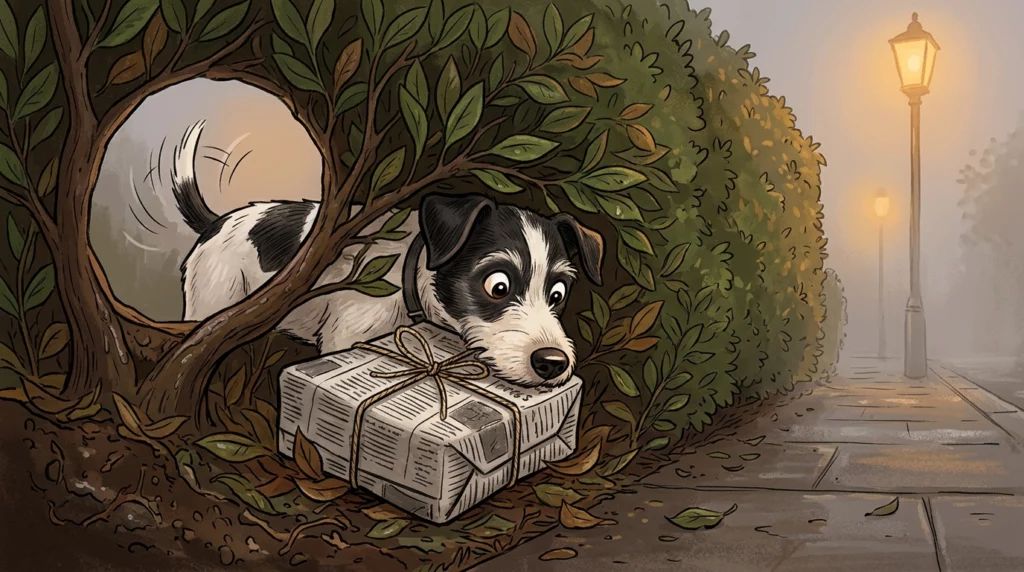
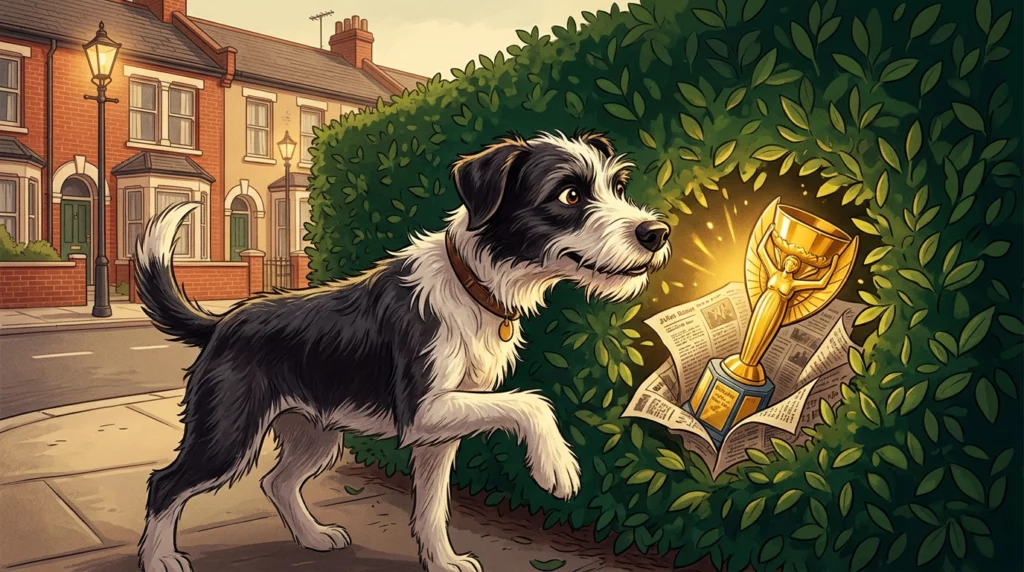
Fast forward to Sunday, March 27, 1966—exactly one week after the heist. A lighter-man named David Corbett stepped out of his house in Beulah Hill, Norwood, South London, to take his four-year-old dog Pickles for an evening walk to put him on a lead. Pickles, being a fine, inquisitive canine with a healthy appreciation for strange odors, trotted over toward his owner’s neighbor’s car.
There, lying at the base of a garden hedge, was a tightly wrapped package bound in old newspaper and tied with string. As Corbett recounted in various interviews preserved by The Guardian, Pickles was fascinated by the bundle. As a fellow explorer who loves tearing apart brown paper packages, I completely understand Pickles’ instinct here: if there is something wrapped up outdoors, it must be investigated!
Corbett picked up the heavy parcel. Thinking it might be a bomb—it was the Cold War era, after all—he set it back down, then curiosity got the better of him. He tore off a piece of the newspaper and saw a black marble base. He tore a bit more, and gold statuettes emerged. On the base were the stamped names of Uruguay, West Germany, and Brazil. Corbett instantly realized what his four-legged buddy had sniffed out: it was the missing Jules Rimet Trophy!
From Primary Suspect to World-Famous Super-Pup

Corbett rushed the trophy to the local police station in South Norwood. When he slammed the heavy parcel onto the desk and declared he had found the World Cup, the desk sergeant famously gave him an incredulous look and reportedly said, “Doesn’t look very World Cup to me, son.”
Once detectives verified that it was indeed the authentic gold statuette, things took a brief, dramatic turn. As detailed on Wikipedia’s entry on Pickles, David Corbett was taken in for extensive questioning by Scotland Yard as the prime suspect! Police wondered if this humble citizen had somehow orchestrated the heist himself. Fortunately, after several tense hours, Corbett’s alibi checked out, and he was cleared of any wrongdoing. The real hero of the day was undeniably Pickles.
Overnight, Pickles became a massive global media sensation. News cameras descended on Norwood. The black-and-white mongrel who saved England’s international reputation was featured in newspapers, magazines, and television broadcasts across the globe, as documented in archives from the British Newspaper Archive.
Fame, Ribeye Steaks, and Silver Medals
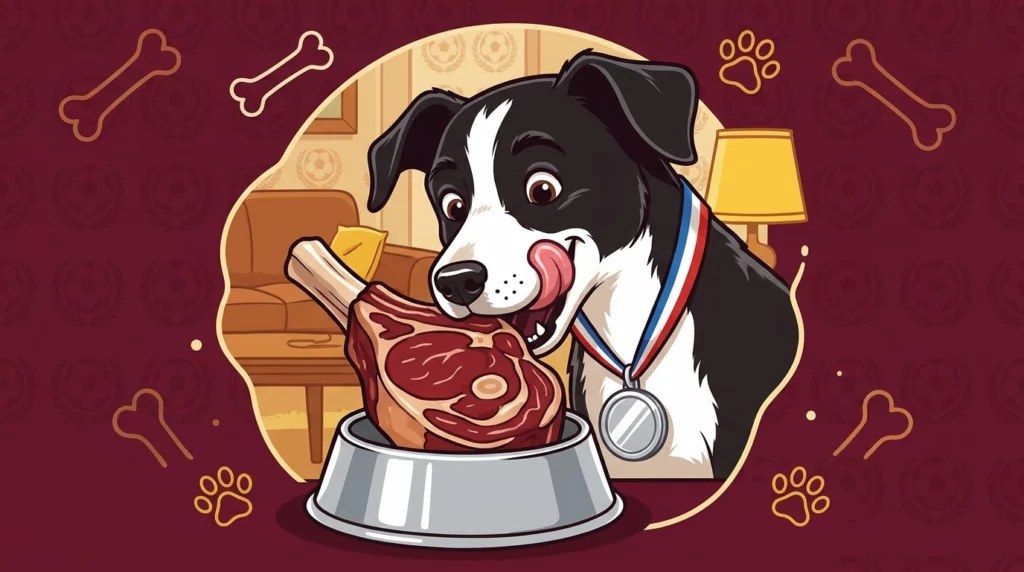
Pickles didn’t just get a pat on the head for his detective work; he was treated like absolute royalty. Here are just a few of the amazing perks Pickles enjoyed after his miraculous discovery:
- A Financial Reward: David Corbett received rewards totaling nearly £5,000 (equivalent to well over £100,000 today!), which allowed him to buy his very first home in Sussex.
- Free Food for Life: The pet food company Spillers awarded Pickles a full year’s supply of free dog food, though rumor has it Pickles preferred real meat!
- Silver Medal Honors: The National Canine Defence League (now Dogs Trust) awarded Pickles a prestigious silver medal for his incredible nose work, an artifact now commemorated by the National Football Museum.
- Movie Stardom: Pickles was cast in the 1966 comedy film The Spy with a Cold Nose, appearing alongside famous British actors.
- VIP Banquet Access: When England went on to win the World Cup in July 1966, Pickles and David Corbett were officially invited to the victory celebration banquet. Pickles was even permitted to lick his owner’s dinner plate clean at the fancy hotel!
As a cat, I usually think humans make too much fuss over simple achievements, but honestly? Getting a private house, endless food, and movie stardom just because you refused to stop poking a mysterious paper bag under a bush is an absolute masterclass in living your best life.
The Curious Legacy of Pickles the Dog
Pickles’ story remains one of the most heartwarming and bizarre chapters in sports history. His incredible discovery saved the Football Association from unprecedented embarrassment, and four months later, Bobby Moore famously lifted the very trophy Pickles had saved as England won their first (and so far, only) World Cup title.
Tragically, Pickles passed away just a year later in 1967, while chasing a cat in his new garden (okay, as a cat myself, I have mixed feelings about that part!). However, his memory lives on forever in football folklore. Today, his original collar and silver medal are held with pride in museums, reminding us that sometimes the greatest heroes don’t wear capes—they wear collars, have cold noses, and follow their instincts wherever curiosity leads.
So the next time your dog drags you toward a messy pile of leaves or insists on investigating a strange bush during your evening walk, don’t pull back too quickly. You never know—they might just be saving the next World Cup!