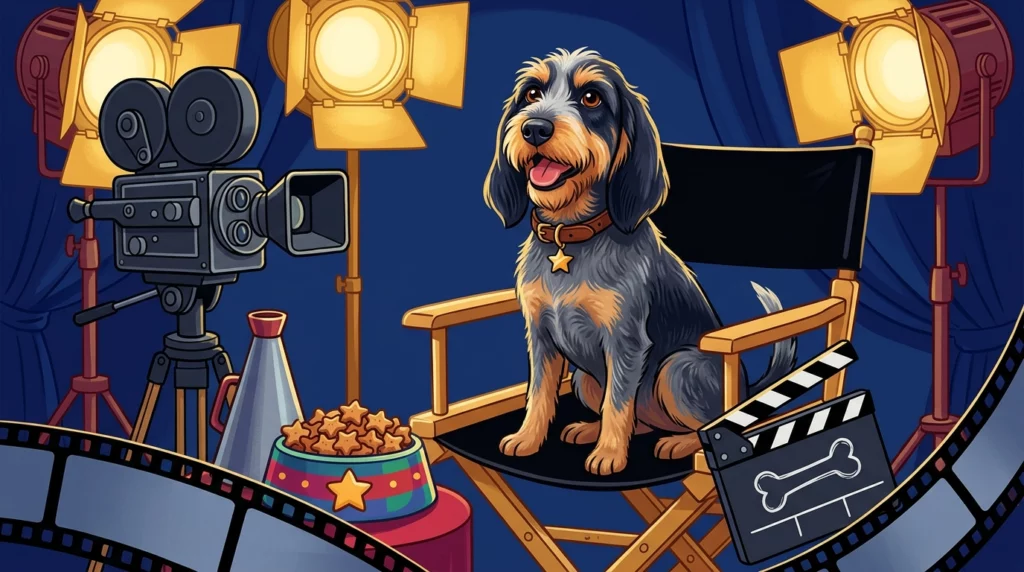
Hello, my fabulous human friends! Blu here, your resident 2-year-old Griffon Bleu de Gascogne rescue. If you know me, you know I have two major passions in life: chasing very fast, very imaginary squirrels, and howling at the giant, glowing screen in the living room whenever a fellow dog appears.
The other night, I was watching a movie where a golden retriever successfully flew an airplane (okay, maybe it was a skateboard, but it felt very heroic). It got me thinking: how do these movie dogs do it? I tried to recreate a dramatic dramatic-roll-and-sigh on the couch, and I just ended up falling off and landing on my favorite squeaky toy. Obviously, there is some serious wizardry going on behind the camera.
So, I put my highly trained nose to the ground (and by that, I mean I let the SnoutScoop team help me browse the web) to find out exactly how Hollywood hounds learn their craft. Pull up a cushion and grab a treat, because we are going behind the scenes!
Lights, Camera, Action (and Lots of Treats!)
First things first: how do trainers get these dogs to act so natural on a chaotic, noisy movie set? According to the experts at Paddington Pups, the secret isn’t some magical dog-whispering spell. It actually starts with desensitization. Before a dog ever learns to “speak” on cue or jump through a window, they have to get used to the strange sights, blinding lights, and weird smells of a production set.
Movie sets are loud, busy, and full of humans carrying massive, scary equipment. Trainers spend weeks socializing prospective canine actors, teaching them to ignore distractions and focus entirely on their handler. If I were on a set, I would probably try to lick the camera lens, so kudos to these professional pups for their incredible self-control!
The Science of Stardom: Positive Reinforcement
You won’t find any old-school, harsh training methods on modern film sets. Today’s Hollywood trainers rely entirely on positive reinforcement. As detailed by CatDog Central, trainers use clicker training, high-value treats, and plenty of praise to teach complex behaviors.
Shaping and Chaining
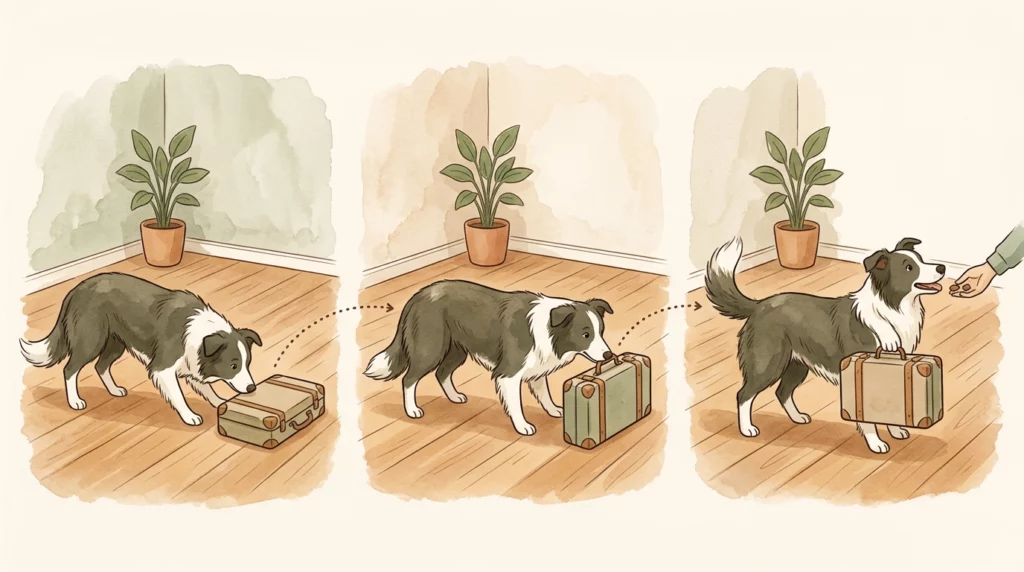
When you see a dog in a movie do something incredibly complex—like opening a fridge, grabbing a specific soda can, and bringing it to an actor—they didn’t learn that all at once. Trainers use a technique called “chaining.”
They break the trick down into tiny, bite-sized actions:
- Step 1: Touch the fridge door handle. (Click, treat!)
- Step 2: Pull the tug rope attached to the handle. (Click, treat!)
- Step 3: Grab the specific can inside. (Click, treat!)
- Step 4: Bring the can to the actor and release. (Click, jackpot treat!)
By connecting these individual behaviors together, the dog eventually performs one seamless, Oscar-worthy action sequence. In the movie Think Like a Dog, the trainers had to teach the canine stars to perform highly specific, natural-looking everyday tasks that fit perfectly into the comedic flow of the film. You can read more about that process on Motion Picture Association.
Sneaky On-Set Secrets: How Trainers Work Behind the Camera

How does a dog look so lovingly at an actor when their real human parent and handler is standing twenty feet away? It turns out, trainers have some brilliant, sneaky tricks up their sleeves.
The Magic “Eye-Line” Stick
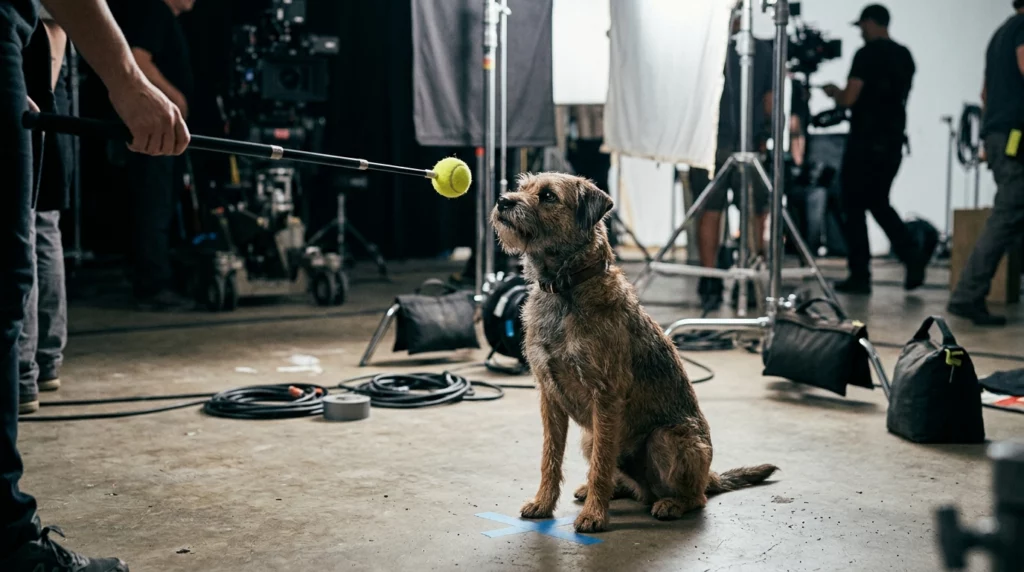
If you watch behind-the-scenes footage, like this fascinating clip from Entertainment Insider, you’ll see that trainers often stand just out of the camera’s frame holding a long stick with a treat, a toy, or a tennis ball on the end. This is called a target stick. By moving the stick, the trainer can guide the dog’s eyes to look exactly where they need to—whether that’s gazing up at a human actor or staring suspiciously at a suspicious-looking closet.
Silent Hand Cues
Dogs can’t hear a trainer shouting “Sit!” or “Look left!” while the actors are delivering their dramatic dialogue. Because of this, movie dogs are trained extensively with silent hand signals. A flick of the wrist means “lie down,” a raised index finger means “stay,” and a hand wave means “walk forward.” The actor on screen gets the credit for being a master dog trainer, but the pup is actually watching their handler’s hands just off-screen!
The Double-Pup System
Just like human superstars, movie dogs sometimes have stunt doubles! A production might cast two or three dogs that look identical but have very different personalities. One dog might be the “social butterfly” who is great at cuddly close-up scenes with the actors. Another dog might be the “action star” who loves jumping over fences and fetching objects. This keeps the dogs from getting bored or tired, ensuring everyone has fun on set.
Safety First: “No Animals Were Harmed”

Being a dog actor isn’t all glamor and peanut butter; it’s also a highly regulated job. You have probably seen the famous credit “No Animals Were Harmed” at the end of your favorite films. This trademark is awarded by the American Humane Association (AHA), which monitors sets to ensure safety and welfare guidelines are strictly followed.
The rules are incredibly thorough. As outlined in the American Humane Guidelines for Filmed Media, there are strict limits on how many hours a dog can work, and they must be provided with comfortable rest areas, plenty of fresh water, and a safe environment.
Furthermore, specialized crew instructions must be followed to keep the environment stress-free. For instance, the production team has to coordinate closely to avoid sudden loud noises or dangerous obstacles that could scare a canine actor, a topic detailed in the AHA Production Cast & Crew Guidelines. These protections are backed by legally binding union contracts, which you can explore further via SAG-AFTRA and legal overviews on Animal Law Info. If a scene is too dangerous or stressful, the production must use CGI (computer-generated imagery) or a prop dog instead. Safety always comes first!
Could Your Pup Be the Next Lassie?
So, does your dog have what it takes to be a Hollywood star? Trainers look for specific traits when scouting for animal actors:
- High Toy or Food Drive: A dog who is willing to do anything for a piece of chicken or a tennis ball is much easier to train on a busy set.
- Confidence: The dog must be unfazed by weird noises, strange people, and new environments.
- Strong Bond with the Handler: Movie dogs need to have laser-focus on their handlers, even when surrounded by distractions.
As for me? I think I’ll stick to my current career as a professional couch tester and blogger. The hours are fantastic, the pay is strictly in belly rubs, and I don’t have to share my spotlight with any stunt doubles.
What about your dog? Do they have a signature trick that deserves an Academy Award? Let me know in the comments below! Until next time, keep your tails wagging and your cameras rolling!