
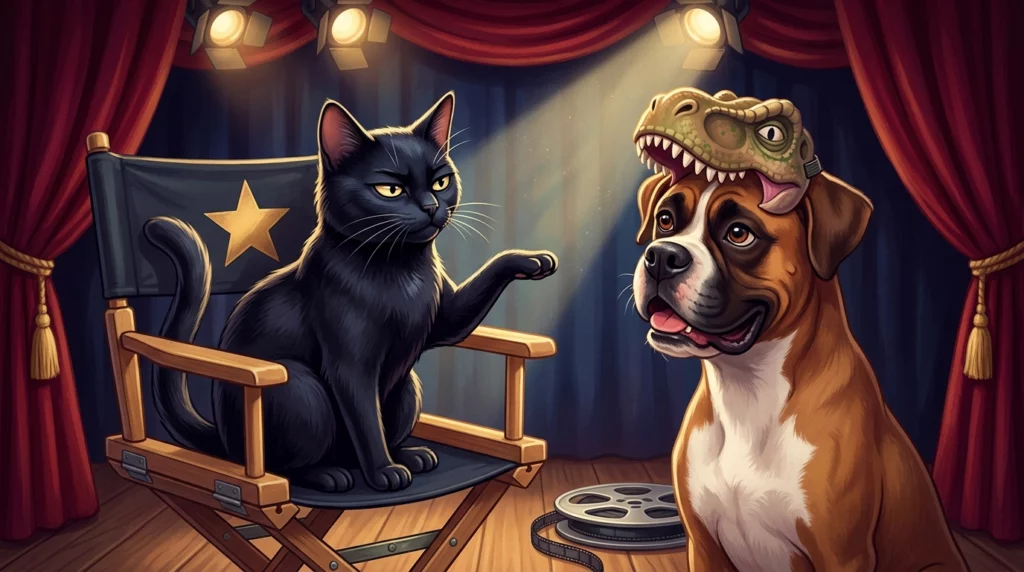
Greetings, human readers. Pisino here. Yes, the sleek, black, undisputed chief of the SnoutScoop household. While my canine subordinates, Blu and Niki, are currently occupied with chasing their own tails and napping in patches of sunlight, I have taken it upon myself to address a matter of grave cultural importance.
As a cat of refined taste, I enjoy a good cinematic thriller. However, I must draw the line when Hollywood starts passing off pure fiction as canine reality. When movies misrepresent how dogs think, bite, and communicate, it is not just bad screenwriting—it is downright dangerous for dogs and the humans who love them.
Pour yourself a saucer of milk (or coffee, if you must) and let us deconstruct three of the most pervasive, scientifically inaccurate dog tropes Hollywood keeps shoving down our throats.
Trope 1: The Biological Bear Trap (The “Lockjaw” Myth)

We have all seen the action flick where a muscular dog—usually a bully breed or a mastiff—clamps onto a villain’s sleeve, and the characters scream that the dog’s jaw is “locked.” The implication is that these dogs possess a mechanical, hydraulic lock-and-key skeletal structure that physically prevents them from releasing a bite.
Let us be entirely clear: this is anatomically impossible. According to veterinary dental experts at Advanced Animal Care, there is absolutely no unique physical mechanism, enzyme, or anatomical structure in any dog breed that allows their jaw to lock. Whether it is a tiny Chihuahua or a massive pit-bull-type dog, the jaw joint (the temporomandibular joint) operates exactly the same way.
Why does this myth persist? Bully breeds are incredibly strong and determined. When they grip something, they have the muscle density and the sheer willpower to hold on, but it is a conscious behavioral choice, not a mechanical trap. As the ASPCA notes, grouping breeds under sweeping behavioral caricatures ignores the fact that dogs are individuals. Painting certain breeds as biological monsters with locking mechanisms only fuels unfair stigma and leads to poor handling choices in real life.
Trope 2: The “Alpha Dog” and the Need for Physical Dominance
If I had a nickel for every time a movie protagonist grabbed a growling dog, flipped it onto its back, and stared intensely into its eyes to “assert dominance,” I would have enough money to buy the fancy salmon pate for a year. Hollywood loves the rugged hero who “tames” a wild dog by proving he is the “alpha of the pack.”
In the real scientific world, this is a fast track to getting your face bitten off.
The entire concept of “dominance theory” and “alpha rolls” is based on highly flawed, outdated studies of unrelated, captive wolves from the mid-20th century. The researcher who popularized the term “alpha wolf,” Dr. David Mech, spent the later decades of his career trying to correct his own mistake, realizing that natural wolf packs operate more like cooperative human families than strict, militaristic hierarchies.
Modern canine behavior experts completely reject the idea that humans need to dominate their dogs. The American Veterinary Society of Animal Behavior (AVSAB) explicitly states that training methods using physical dominance, force, or intimidation can trigger fear, breed anxiety, and actually increase defensive aggression.
When you force a dog into an “alpha roll” (pinning them on their back), you are not teaching them respect; you are terrifying them into helplessness. As highlighted by Carolina Boxer Rescue and Paws on the Plains, true leadership is about clear, positive communication and managing resources, not physical combat. Applying these outdated Hollywood tactics damages the human-canine bond, as discussed by trainers at Belle & Bark and detailed in educational resources from ARWOB. If you want a well-behaved dog, put down the “alpha” attitude and pick up a bag of high-value treats.
Trope 3: The Movie-Star Growl (Misinterpreting Canine Body Language)
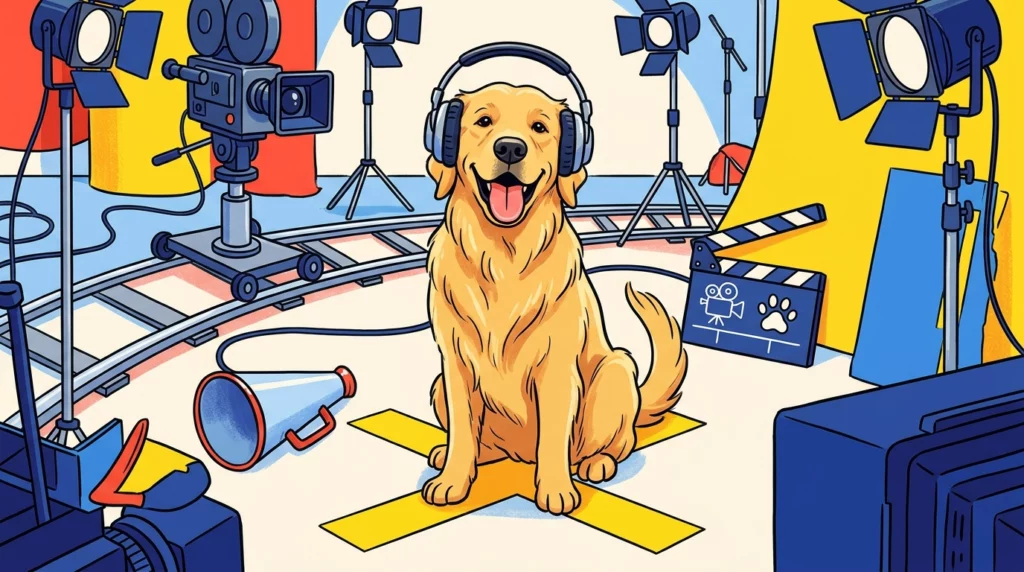
In the movies, a dangerous dog is incredibly loud. They stand stiffly in the middle of a room, baring their teeth perfectly for the camera, growling like a revving chainsaw for a solid two minutes before making a move. Conversely, if a movie dog is wagging its tail, the audience is led to believe the dog is perfectly happy and safe to approach.
This is a highly dangerous misunderstanding of canine communication.
In reality, the most dangerous dog is often the silent one. Dogs do not always growl before they bite. In fact, many dogs have been punished for growling (another terrible side effect of “dominance” training), which teaches them to skip the warning growl entirely and go straight to a bite.
Furthermore, a wagging tail does not always mean a happy dog. According to the Whole Dog Journal, a stiff, high, rapidly vibrating tail is actually a sign of high arousal and potential aggression. Real-life warning signs of a stressed, uncomfortable dog are much more subtle than Hollywood’s dramatic snarling:
- “Whale Eye”: When a dog turns its head slightly away but keeps its eyes on you, revealing the whites of its eyes.
- Licking the Lips or Yawning: When no food is present, this is a clear sign of anxiety and stress.
- Freezing: A sudden, rigid stillness. This is the dog’s final warning before action.
- Tension around the Eyes and Mouth: A tight muzzle, rather than loose, relaxed jowls.
If you only watch for the theatrical growls, you will miss all the polite, quiet requests for space that a dog gives before they feel forced to defend themselves.
The Chief’s Final Verdict
Hollywood wants high stakes, loud noises, and easy-to-digest conflicts. But dogs are complex, sensitive, and highly communicative social animals. They are not mindless, lock-jawed monsters, nor are they plotting a coup to overthrow you as the “alpha” of the living room (that is my job, obviously).
The next time you watch an action star wrestle a dog into submission on screen, roll your eyes, pet your own dog behind the ears, and remember that science, patience, and positive reinforcement will always win over theatrical drama.
Now, if you will excuse me, I must go make sure Blu has not gotten his head stuck in the cereal box again. He has many talents, but critical thinking is not one of them.